How to Crochet a Cactus (Easy Amigurumi for Beginners)

CrochetEasy17:0310 stepsBrowse more →
Also in:Crafts

By CraftingStepByStepPublished

Based on a video by Libby.

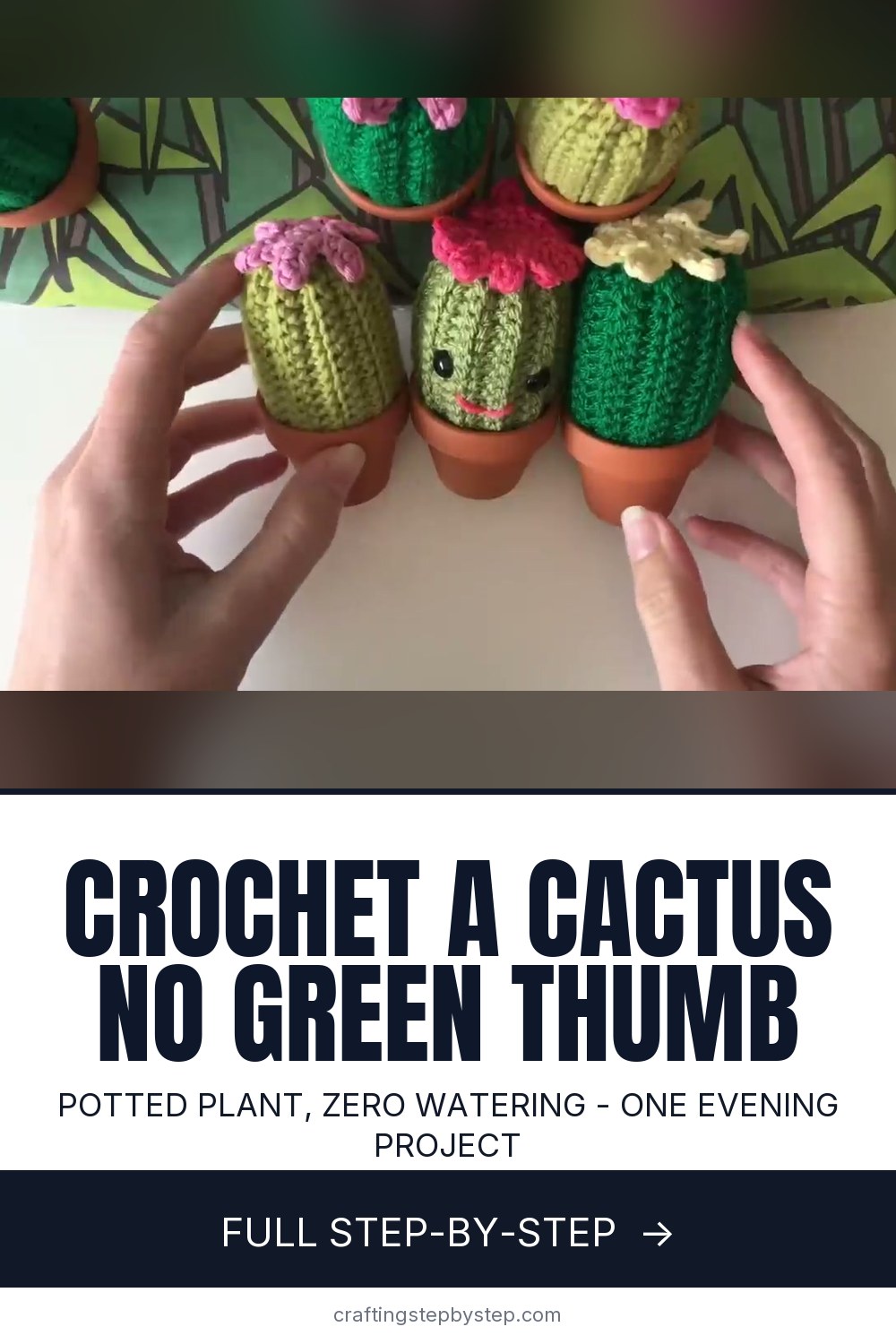
This little crochet cactus is the kind of project you can finish in an afternoon, then make four more of by dinner. The body is worked completely flat - just a chain of 19 and 20 rows of single crochet in the back loops. That back-loop trick is the whole secret. It creates vertical ribs that mimic the pleats of a real cactus once you cinch the rectangle into a barrel shape.

Libby at LMLM Crochet walks through the whole pattern in real time. If you've made any other amigurumi - even something as simple as our crochet sphere - you already know every stitch you need. The flower on top is just a magic ring with six petals.

What you'll need

The version in the video uses Stylecraft Special DK in green plus a small amount of contrast yarn for the flower, worked on a 3.75 mm hook. A 3.5 mm or 4 mm hook is fine - just keep the stitches tight enough that the stuffing won't show through. You'll also need a yarn needle, scissors, polyester fiberfill, and one small terracotta pot per cactus.

Safety eyes and an embroidered smile are optional. Skip them and you get a chic plant-looking cactus. Add them and you get the kawaii Pinterest-aesthetic version with a tiny face. The bare-shape and the face version photograph equally well grouped together.

Stitch abbreviations

The pattern uses standard US crochet terms:

  • ch - chain
  • sc - single crochet
  • slst - slip stitch
  • BLO - back loop only (the loop of the V furthest from you)
  • MR - magic ring (used for the flower - see our magic ring walkthrough)

Why the back-loop trick matters

When you single crochet through both loops (the normal way), the fabric is smooth on both sides. When you single crochet through only the back loop, the unused front loop stays as a visible horizontal bar. Because you turn your work every row, those bars line up into vertical columns once you fold the rectangle into a tube. That's what gives the finished cactus its ribbed, pleated look without doing anything fancy.

Variations to try

Once you've made one, the same construction scales to a whole shelf of variants:

  • Barrel cactus - chain 12 instead of 19 for a shorter, rounder shape. Stuff fully for the ball look.
  • Saguaro - make a tall main cactus, then a smaller second piece and sew it on as an arm. Bend the arm upward before securing.
  • Prickly pear - work two short pieces and sew them together at an angle to form the paddle shape.
  • Flowering cactus - add one, three, or six tiny magic-ring flowers around the top instead of just one. Pink, white, and yellow all work.

More amigurumi animals and plants to try next

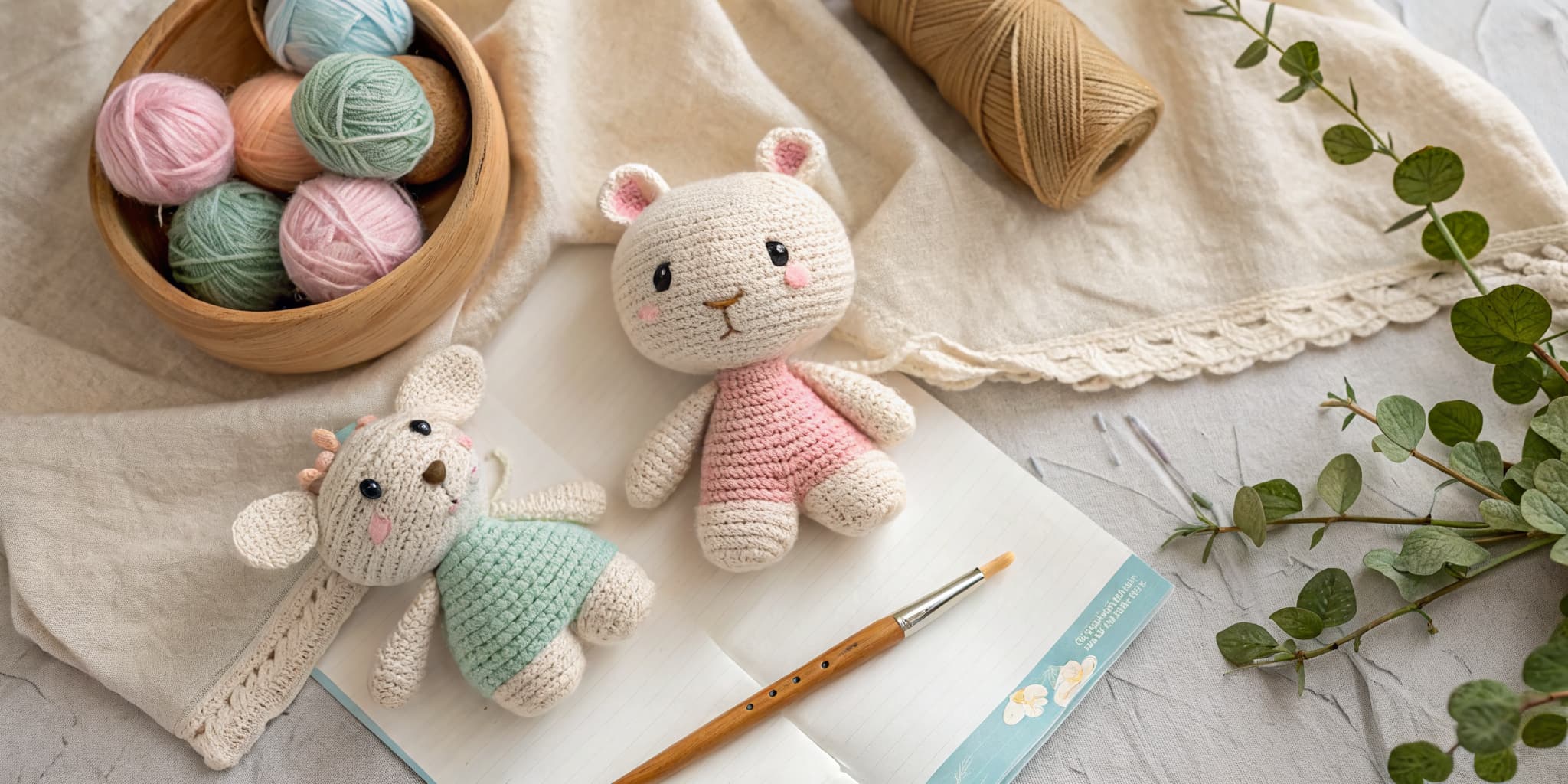
Every amigurumi project on the site starts from the same handful of stitches. Once you're comfortable with single crochet, magic rings, and basic increases, you can make any of these in an afternoon:

Tips before you start

Cut a much longer tail than you think you need when you finish the green panel. You'll use it to drawstring the top closed, sew the long side seam, and drawstring the bottom. Running out partway through and having to attach more yarn is annoying.

Save your scrap green yarn. The drawstring at the bottom of the cactus rarely closes all the way, and a few extra random stitches across the hole make it disappear inside the pot.

For the most photogenic display, group three or more cacti of different shapes and flower colors in matching terracotta pots. One looks cute. A cluster looks like a styled plant shelf.

Step-by-Step Guide

1

Step 1: Gather Your Yarn, Hook, and Safety Eyes

0:33
Step 1: Step 1: Gather Your Yarn, Hook, and Safety Eyes

Lay everything out before you cast on. You need DK or worsted-weight green yarn for the body, a small amount of contrasting yarn for the flower (pink, yellow, or white all work), a 3.75 mm hook (3.5 mm or 4 mm are fine substitutes), a yarn needle, scissors, polyester fiberfill stuffing, and a small 2 to 3 inch terracotta pot.

If you want the kawaii face look, also grab a pair of 6 mm safety eyes and a length of embroidery thread for the smile. Skip both for the more naturalistic plant-only version. Both look great - the kawaii version photographs better on Pinterest, the plain version blends into real plant groupings.

Tip

Safety eyes lock on permanently once the washer snaps. If this cactus is going to a child under three, embroider French knots or sew on small felt circles instead - the post can pull loose with enough chewing.

2

Step 2: Make a Slip Knot in the Green Yarn

1:50
Step 2: Step 2: Make a Slip Knot in the Green Yarn

Start the body with a slip knot. Wrap the yarn once around your finger so you have an X shape on top of your fingertip. Pick up the strand on the right and cross it over to the left. Reach through the X with your hook, grab the back strand, and pull a loop up through the front.

Slide the loop off your finger and pull the working yarn gently to snug the knot around your hook. The loop should slide freely on the hook shaft - if it's tight enough to squeak, loosen it before you start chaining.

Tip

If you've never made a slip knot, practice three or four times before you start the cactus. A slip knot that's too tight binds your hook on the first chain and tells you bad things about your tension.

Products used in this step

3

Step 3: Chain 19 and Single Crochet 18 Across

2:48
Step 3: Step 3: Chain 19 and Single Crochet 18 Across

Yarn over and pull through the loop on your hook nineteen times. Each pull-through is one chain stitch. The slip knot doesn't count. Count out loud - it's worth slowing down to be sure you have exactly nineteen because every row after this one builds on it.

Now work back across the chain. Skip the first chain right at the hook (you can't comfortably work into it anyway) and single crochet into each of the next 18 chains. Insert your hook under the top loop of the chain, yarn over, pull up a loop, yarn over, and pull through both loops on the hook. That's one single crochet. Do that 18 times and your foundation row is done.

Tip

If your stitch count is off at the end of this row, count again. It's much easier to rip out 19 chains than to discover the problem 20 rows later when the cactus is the wrong height.

4

Step 4: Work 20 Rows of Back-Loop Single Crochet

4:00
Step 4: Step 4: Work 20 Rows of Back-Loop Single Crochet

This is the row that builds the whole cactus. Chain 1 and turn your work. Now single crochet across, but only insert your hook through the back loop of each stitch (the loop furthest from you when the row faces up). The front loop sits there unused as a visible horizontal bar.

At the end of the row, chain 1 and turn again. Repeat. Do this for 20 rows total. The rectangle will grow into a flat panel about three inches tall with clear horizontal ridges. Those ridges become the vertical cactus pleats once you fold the panel into a tube.

Tip

Drop a stitch marker into the first row so you can count rows without losing your place. The back-loop stitches blur into each other once you have 10 or 12 rows piled up.

Products used in this step

5

Step 5: Cut a Long Tail and Attach the Safety Eyes

5:45
Step 5: Step 5: Cut a Long Tail and Attach the Safety Eyes

When the panel is 20 rows tall, cut your yarn but leave a very long tail - at least 18 inches. You'll use it to drawstring the top, sew the side seam, and drawstring the bottom. Better to have too much than have to attach more partway through.

If you want the kawaii face, place the safety eyes now while the panel is still flat. Fold the rectangle in half lengthwise to find the center, then position the eyes a few stitches apart in the middle of the panel. Push each post through from the front, then snap the washer onto the back of the post on the inside of the work. The washer locks on permanently - check positioning before you commit.

To add the smile, thread a small length of pink or red yarn onto your needle. Come up between the eyes a few rows down, stitch a shallow U-shape across, then back to the start. A handful of stitches is all you need.

Tip

Hold the panel up and squint at it from a few feet away before snapping the washers on. Eyes that look reasonable up close often read as too far apart or too low once you step back.

6

Step 6: Drawstring the Top of the Cactus Closed

8:30
Step 6: Step 6: Drawstring the Top of the Cactus Closed

Thread the long tail onto a yarn needle. Working along the short edge of the panel that will become the top of the cactus, weave the needle in and out along the row ends - in through one row end, out through the next, all the way around the short edge.

When you've gone all the way across, pull the tail. The weave should cinch into a puckered closed circle like the top of a drawstring pouch. This is the same technique you use to close a magic ring. The opening doesn't need to seal perfectly - the flower will cover the top, so a small gap is fine.

Tip

If the cinch leaves a gap that's wider than your flower base will cover, take a few extra random stitches across the hole before you tie off the tail. Don't tie the tail yet - you still need it for the side seam.

Products used in this step

7

Step 7: Sew the Side Seam and Stuff the Body

10:00
Step 7: Step 7: Sew the Side Seam and Stuff the Body

Bring the two long sides of the rectangle together to form a tube and sew them with a whip stitch using the same long tail. Insert the needle through both edges, pull tight, move down a row, and repeat. Work all the way down the seam.

Before the seam fully closes, stop and stuff the body. Pull the fiberfill into walnut-sized pieces and push them in from the bottom up. More stuffing gives you a rounded barrel shape - less keeps the cactus slimmer and more saguaro-like. Stuff firmer than feels comfortable. The cactus should bounce back when you press it. If your finger leaves a dent, add more.

Finish the seam, then drawstring the bottom closed the same way you closed the top. Take a few extra stitches across the bottom hole if it doesn't fully seal - the bottom hides inside the pot.

Tip

If you stuff the cactus into a perfect ball shape, you can skip the flower and you've got a barrel cactus. If you stuff it long and thin, you've got the foundation for a saguaro - just sew a small second piece on as an arm.

8

Step 8: Start the Flower with a Magic Ring and 6 Single Crochets

12:00
Step 8: Step 8: Start the Flower with a Magic Ring and 6 Single Crochets

Switch to your contrast color yarn for the flower. Make a magic ring - wrap the yarn around your finger so you have an X, pick up the back strand, pull a loop through, and snug it onto your hook. (Our magic ring walkthrough has a full breakdown if this is new to you.)

Chain 1 to anchor, then work 6 single crochets inside the ring. Pull the starting tail to close the ring - all 6 stitches will pull together into a tight little cluster. Then slip stitch into the first stitch of the round to join.

Round 2: increase in every stitch. That means 2 single crochets into each of the 6 stitches around (12 stitches total).

Tip

The magic ring will sometimes loosen when you pull the increase round tight. After you finish round 2, tug the tail one more time to recinch the center before you start the petals.

Products used in this step

9

Step 9: Add 6 Petals Around the Flower Base

13:20
Step 9: Step 9: Add 6 Petals Around the Flower Base

Each petal is just three stitches plus a slip stitch anchor. Chain 3, then single crochet into the second chain from your hook, single crochet into the next chain, then slip stitch into the next stitch on the flower circle. That's one petal.

Repeat all the way around the circle. Because the base has 12 stitches and each petal uses 2 stitches of the base (one for the petal foot, one for the slip stitch anchor), you'll get 6 evenly spaced petals. Cut the yarn leaving a 10-inch tail for sewing the flower onto the cactus.

Tip

The petals will curl naturally because of the height difference between the chain and the single crochets. Don't try to flatten them - that curl is what makes the flower look real.

Products used in this step

10

Step 10: Sew the Flower On and Wedge the Cactus Into the Pot

15:20
Step 10: Step 10: Sew the Flower On and Wedge the Cactus Into the Pot

Thread the flower tail onto a yarn needle. Push the needle down through the center of the flower and out through the top of the cactus, then back up through the cactus and out near the edge of the flower. Repeat around the flower base to anchor it firmly. Use the starting tail of the magic ring for an extra row of stitches if the flower flops.

Bury any remaining tails by pushing the needle through the stuffing and out somewhere on the body. Snip flush. Wedge the finished cactus down into your terracotta pot - the bottom drawstring keeps it sitting upright. Add a pinch of stuffing or a small ball of brown yarn in the bottom of the pot first if you want it to sit higher.

Make three or four more in different shapes and flower colors for the full Pinterest-worthy plant shelf. Cylindrical body plus pink flower is the classic. Round body without a flower is the barrel cactus. Tall body with a small arm sewn on is the saguaro. Same five materials, four different plants.

Tip

If the cactus sits too low in the pot, slip a small wad of fiberfill under it before pushing it in. If it sits too high, trim the bottom drawstring tighter or pinch the base inward. Either way, the cactus should sit just above the rim of the pot, not buried inside it.

Products Used

☐ The Checklist

How to Crochet a Cactus (Easy Amigurumi for Beginners)

Tools
4
Materials
6
Steps
10
Video
17 min

Your Guide

Libby

As an Amazon Associate we earn from qualifying purchases. Links on this page may be affiliate links - clicking them and buying doesn't change your price, but helps support ShowMeStepByStep.

Tags

Free printable

Get the Crochet Cheat Sheet

Every basic stitch on one printable page. No spam, one-click unsubscribe.

What's next

Related collections

Curated theme pages that include this tutorial.

Weekly Digest

Liked this crochet tutorial?

Pick the categories you want to hear about. Weekly digest of new step-by-step tutorials. No spam, easy unsubscribe.

Send me tutorials about

We only email about new tutorials. Easy unsubscribe anytime.