How to Crochet a Magic Ring (Magic Circle)

The finished result: How to Crochet a Magic Ring (Magic Circle)
  • Difficulty: Easy
  • About 10 minutes
  • 7 steps

You tapped Save

Save this project for later

We'll email you a link, no password.

How to Crochet a Magic Ring (Magic Circle)

  • Your saved projects in one list
  • Your ticked steps on any device

Check your inbox for an email from us. Not there? Look in your spam folder.

Print

Steps written out by Crafting Step by Step from Lexie Loves Stitching's video (opens YouTube) (4:57). Published .

Step 1 of 5 inCrochet for Complete Beginners

The magic ring (sometimes called the magic circle) is how you start any crochet project worked in the round when you don't want a hole in the middle. It's the foundation of every amigurumi toy out there, and it shows up in hats, mandalas, granny rounds, and anything that starts at a single point and spirals outward.

If you've tried it once and given up, you're not alone. The yarn slips, the loop won't tighten, the whole thing falls apart. Alexandra from Lexie Loves Stitching walks through it slowly so you can see exactly where the yarn goes and what your hook is doing.

By the end you'll have a closed circle of stitches with a tail you can pull to cinch the center shut. Grab a hook, some yarn, and follow along.

What to make with your magic ring

Once you can pull a magic ring closed without it unraveling, you're ready for actual projects. Every tutorial below starts with the magic ring you just learned.

Beginner-friendly first projects:

Wearables:

Amigurumi animals (small toys):

Roundup: If you want a single page that shows what's possible with everything you'll learn here, 10 easy crochet projects for beginners is your overview.

Techniques to learn next

The magic ring is your start. These are the techniques you'll layer on top of it to actually build projects.

Magic ring FAQ

Frequently asked questions

Why does my magic ring keep falling apart?

The first 6 single crochets are the most fragile moment - the loop wants to unravel before there's enough yarn locking it in place. Hold the tail and the ring tightly between your thumb and middle finger while you work the first 2-3 stitches. After the third stitch, the structure holds itself.

Is the magic ring the same as the magic circle?

Yes. Pattern designers use both names interchangeably. Some patterns also call it an "adjustable ring" or "sliding loop." All refer to the same closed-center start.

Can I crochet without a magic ring?

Yes. The alternative is the "chain 2, work into the second chain from hook" method. It's easier to learn but leaves a small hole in the center. For amigurumi where you stuff the toy, that hole is a problem because stuffing pokes through. For coasters and mandalas it doesn't matter as much.

Why do I need a magic ring for amigurumi?

Amigurumi toys are stuffed. If your starting ring has a hole, the stuffing shows through. The magic ring closes completely when you pull the tail, so the finished toy has a clean, fully enclosed shape.

How tight should I pull the tail when closing the ring?

Tight enough that no light passes through the center, but not so tight that the first round of stitches gets distorted. After cinching, weave the tail through the back of the stitches so it can't slip loose later. Weaving in ends covers the finishing pass.

Ready to make a whole animal with your magic rings? Try a crochet unicorn or a crochet lion, both beginner amigurumi.

Ready to put the magic ring to work? Make a crochet dragon, a crochet chicken, or a crochet avocado - each one starts here.

New to crochet? The magic ring is the adjustable way to start working in the round. For flat projects you start with a slip knot instead. See how to make a slip knot.

Free printable

Print the steps and supply list for this project

One page you can take to the table. Free with a free account, no password.

Get the free printable

Quick answer

How to crochet a magic ring step by step. An easy project: about 10 minutes. The 7 steps: identify your tail end and working yarn, cross the yarn and pinch the loop, hook the back strand and twist, yarn over and pull through, slide your fingers out of the ring, work your stitches into the ring and pull the tail to close the ring.

Step-by-step guide

7 steps, about 5 minutes. Tap a picture to jump to that step. Your progress saves automatically.

Tick each step off as you go.

  1. Step 1: Identify your tail end and working yarn

    Watch this step · 0:50

    Before you wrap anything, look at your yarn. The loose end - the one not attached to the ball - is your tail. The strand that runs back to the ball is your working yarn.

    You'll be cinching the tail at the end to close the ring, so it needs to be long enough to weave in later. Six inches is plenty.

    Tip:

    If your yarn is dark or fuzzy and you can't tell the strands apart, drape the working end over the back of your hand so you don't lose track mid-wrap.

    Back to all steps

  2. Step 2: Cross the yarn and pinch the loop

    Watch this step · 1:05

    Lay the yarn across your fingers and cross it over itself the same way you would for a slipknot. Pinch that crossing point under your thumb so it can't slide.

    Tuck the working end between your thumb and little finger. You should now see two parallel strands stretched across your palm with the X-shaped crossing held tight under your thumb.

    Tip:

    Keep the loop a little slack. A tight pinch fights you when you try to bring the hook through next.

    Back to all steps

  3. Step 3: Hook the back strand and twist

    Watch this step · 1:26

    Slide your hook under the front strand of yarn. Catch the back strand on the throat of the hook and pull it forward, under the front strand.

    As you bring the back strand through, give the hook a quarter turn so the yarn locks onto it. It feels and looks the way the start of a slipknot does. Don't yank it tight - the loop needs to stay loose for the next step.

    Back to all steps

  4. Step 4: Yarn over and pull through

    Watch this step · 1:47

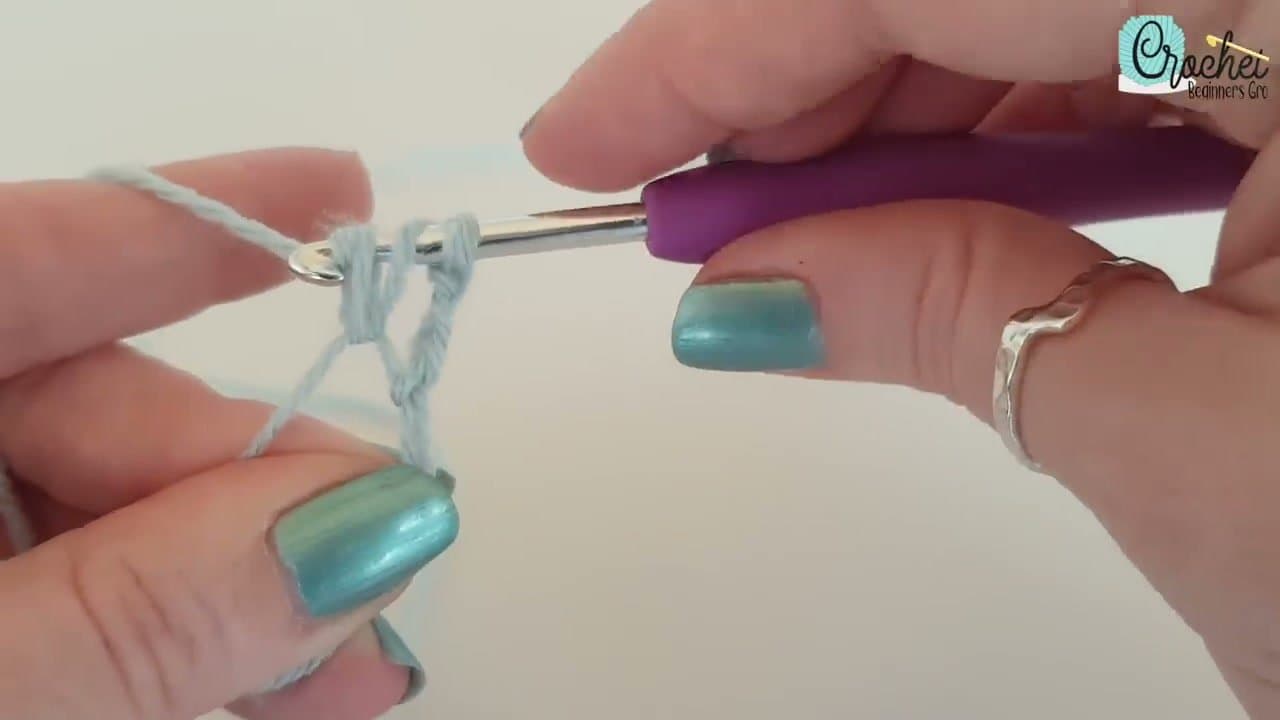
    Grab the working yarn with your hook and pull it through the loop already sitting there. This locks the ring in place and gives you the single loop on the hook that will count as your starting chain.

    The whole thing should still feel loose. If it's tight or knotted, back up a step. A tight magic ring will not slide closed when you pull the tail at the end, and the entire technique falls apart.

    Tip:

    Some patterns ask you to chain one to lock the ring before you stitch. Others count this loop as the chain. Read your pattern.

    Back to all steps

  5. Step 5: Slide your fingers out of the ring

    Watch this step · 2:10

    Carefully slip your fingers out from inside the loop. You'll be left holding a soft circle of yarn with one loop sitting on the hook and the tail hanging off to the side.

    This is the magic ring. From here you start working your stitches.

    Tip:

    Pinch the ring between your thumb and index finger as you slide out, so the wraps don't unravel before you start stitching.

    Back to all steps

  6. Step 6: Work your stitches into the ring

    Watch this step · 2:25

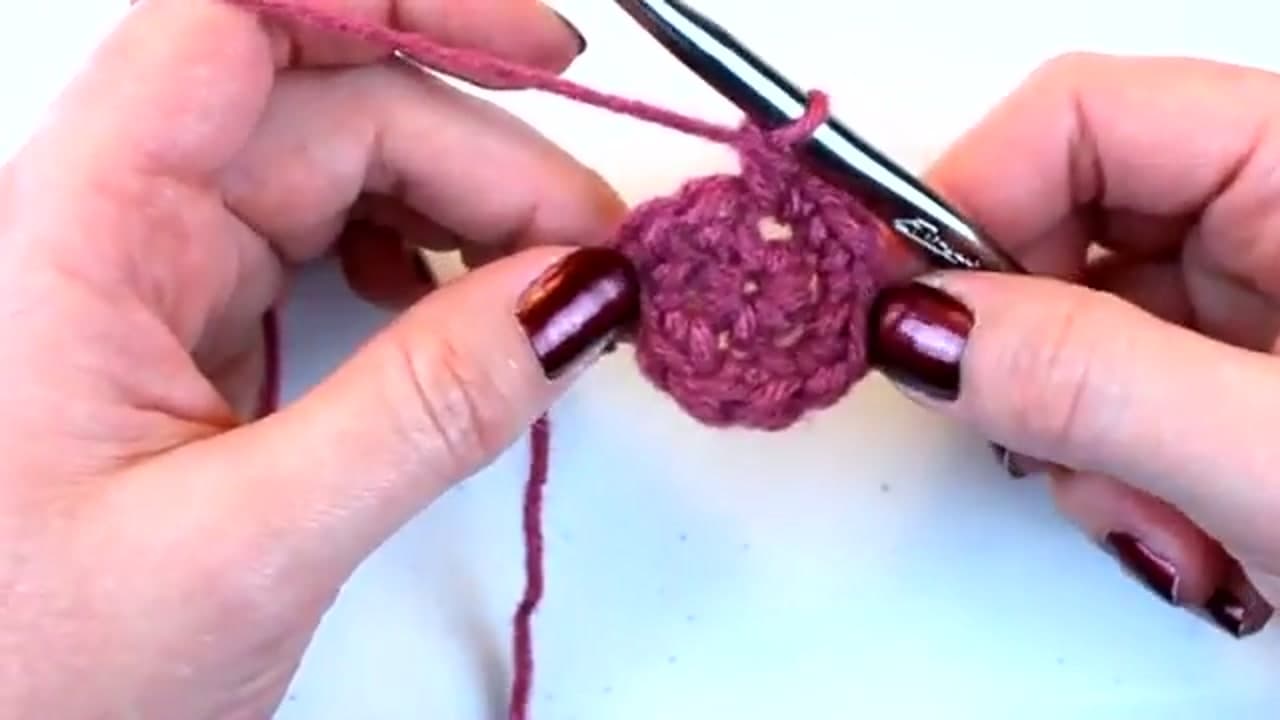
    Insert the hook into the center of the ring (not into a single loop) and crochet your pattern's stitches around the whole strand of yarn. Most amigurumi rounds call for six single crochets to start. A flat circle in double crochet usually wants twelve.

    Keep the stitches snug against each other. They should sit shoulder-to-shoulder around the ring like beads on a bracelet.

    Tip:

    Drop a stitch marker into the first stitch. When you finish the round you'll need it to find your starting point.

    Back to all steps

  7. Step 7: Pull the tail to close the ring

    Watch this step · 4:06

    Once your stitches are in, pick up the tail end and pull. The ring cinches shut, drawing every stitch tight into a clean closed center with no hole in the middle.

    That's the whole trick. From here you join the round (or keep spiraling for amigurumi) and carry on with the pattern. When the project is finished, weave the tail in with a tapestry needle so the ring can never reopen.

    Tip:

    If only one strand cinches and the other doesn't, you pulled the working yarn instead of the tail. Tug the other one.

    Back to all steps

How to Crochet in the Round: Foundational Technique

Keep going

How to Crochet in the Round: Foundational Technique

Keep going with crochet

More on this topic, picked for this magic ring.

You reached the last step

Save this project to come back to it

Your ticked steps, the free printable and your other saved makes, together in My Projects. Free, no password.

You tapped Save

Save this project for later

We'll email you a link, no password.

How to Crochet a Magic Ring (Magic Circle)

  • Your saved projects in one list
  • Your ticked steps on any device

Check your inbox for an email from us. Not there? Look in your spam folder.

Free printable

Printable sheet for this project

The bonus is hidden until you sign up.

Free with a free account, no password. Every step above stays open to everyone.

Products Used

Tools we recommend

As an Amazon Associate we earn from qualifying purchases. Links on this page may be affiliate links - clicking them and buying doesn't change your price, but helps support Crafting Step by Step.

Tags

The Crafter's Weekly

New crochet tutorials, every Sunday

One short email with the week's best step-by-step guides. Free, no spam, unsubscribe anytime.

Test your knowledge

Did the lesson stick? Start with this one.

5 questions covering what you just read. No signup, no score saved, and you can stop after this one.

Question 1 of 5

What's the magic ring used for?

Quick reference

Key takeaways from How to Crochet a Magic Ring (Magic Circle)

5 questions, answers, and one-line explanations. Tap to expand.

  1. 1.What's the magic ring used for?

    Answer: Starting in the round

    Magic ring = the adjustable starting loop for round projects (amigurumi, flat circles). Alternative to chain-then-join, with no center hole.

  2. 2.Why does the tail need to be ~6 inches?

    Answer: Needs weaving in later

    Short tail = no anchor to weave in. The tail is what permanently locks the cinched ring closed after the project is done.

  3. 3.Pulling the back strand through, you should...

    Answer: Keep the loop loose

    The whole technique relies on the ring being slideable. Tight at this step = won't cinch closed at the end.

  4. 4.How many singles do amigurumi rounds start with?

    Answer: 6 stitches

    6 single crochets is the standard amigurumi opening. A flat circle in DOUBLE crochet typically wants 12.

  5. 5.Final move that closes the magic ring?

    Answer: Pull the tail end

    That's the magic. The tail acts as a drawstring. Then weave the tail in so the ring can't reopen later.

Did this work for you?

What's next

Related collections

Curated theme pages that include this tutorial.

Similar tutorials

Hand-picked next reads based on the one you just finished.

Liked this crochet tutorial?

Pick the crafts you want to hear about. One email every Sunday with new step-by-step tutorials. No spam, easy to unsubscribe.

Get more like this in your inbox

Weekly digest. Pick the categories you want. Unsubscribe anytime.

Send me tutorials about

We only email about new tutorials. Easy unsubscribe anytime.