Complete guide
Mosaic for Beginners
Published October 13, 2026
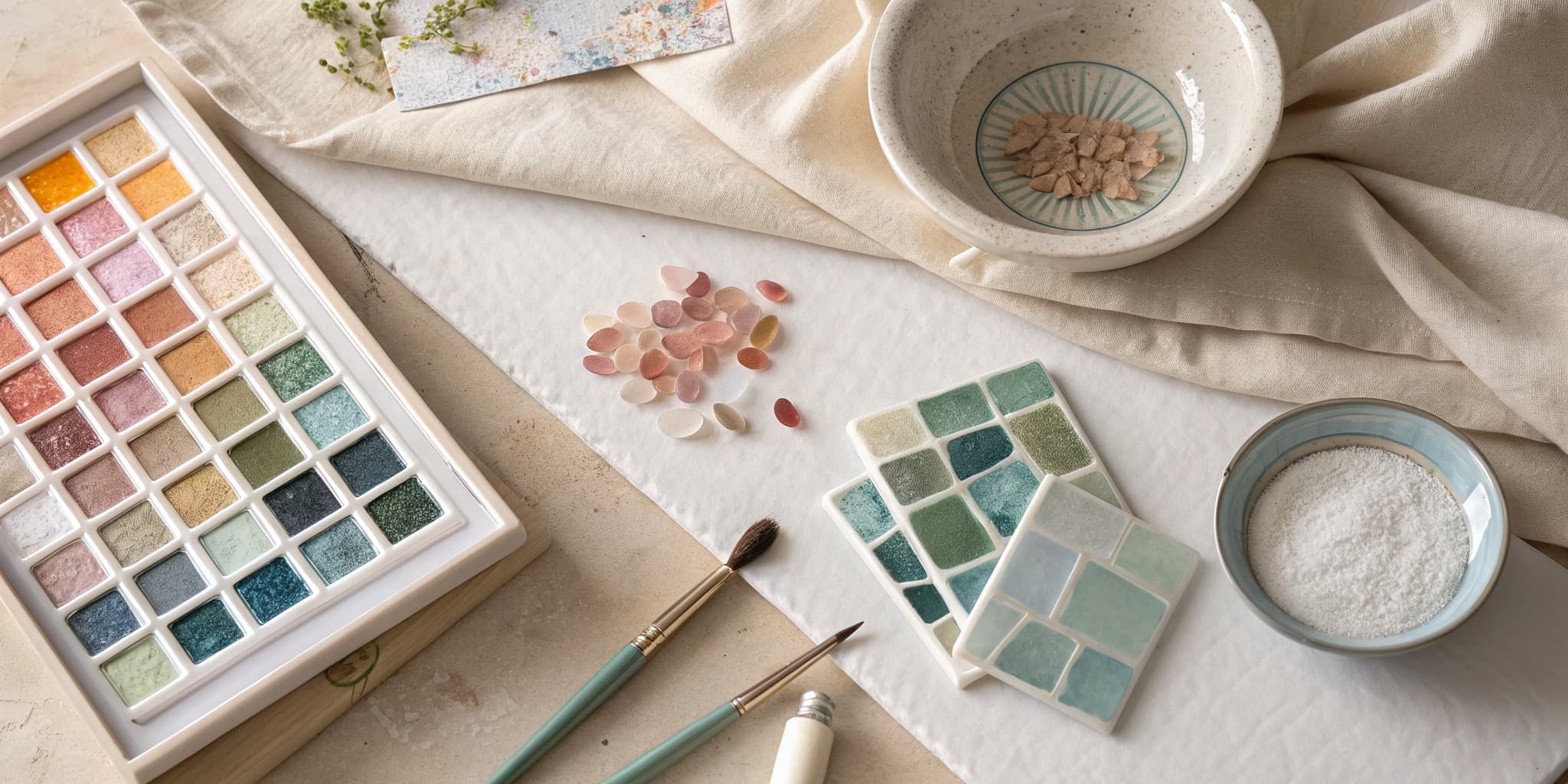
A mosaic is small pieces of glass, tile or china glued to a base and locked in with grout. That is the whole craft. Every project on this page, from a coaster to a garden bird bath, uses the same handful of steps, and every guide shows a photo of each one so you can match your work to the picture instead of guessing.
Start With a Project That Needs No Cutting
Cutting is the step that puts people off, so skip it on your first go. A mosaic coaster uses pre-cut glass tiles, a wooden blank, PVA glue and white grout. The bird bath is a no-cut project on a terracotta saucer. The stepping stone sets pre-cut ceramic tiles onto a plain concrete paver. Any of the three teaches you gluing and grouting on a piece that forgives mistakes.
The Steps Every Mosaic Uses, in Order
- Plan the design. Build the design on clear contact paper and move the whole thing onto the base in one piece. You can stop and come back, and nothing drifts.
- Cut what needs cutting. Wheeled nippers cut glass tiles and stained glass. Blunt-jaw nippers are the ones for ceramic and china, and how to cut plates for mosaic shows how to turn a thrift-store plate into flat pieces. For a full sheet of glass, score it with a glass cutter and snap it with running pliers.
- Glue each piece down. PVA craft glue for indoor pieces, thinset or an outdoor tile adhesive for anything that lives outside. Every project guide below says which one it uses.
- Grout the gaps. Mix sanded grout to the thickness of peanut butter, let it rest a few minutes, work it into every joint with gloved hands, then wipe the tiles clean with a damp sponge.
- Seal it if it goes outside. Brush a penetrating sealer onto the grout so rain and frost cannot soak in. Indoor pieces can skip this step.
Then Try These Projects
Once you have grouted one piece, the rest of the collection opens up. A picture frame and a flower pot made from a thrift-store plate are good second projects. A broken-mirror wall piece and a suncatcher from stained glass offcuts use up scraps. The side table is the bigger weekend project, and pebble stepping stones take the same idea into poured concrete.
What You Need to Start
- Tesserae. Pre-cut glass tiles for a first project, then broken china or stained glass offcuts.
- Nippers. Wheeled nippers for glass. Add blunt-jaw nippers if you plan to cut china or ceramic.
- Adhesive. PVA for indoor pieces, thinset or an outdoor tile adhesive for anything that gets wet.
- Sanded grout, rubber gloves, a spreader and a sponge.
- A base. A wooden coaster blank, a terracotta saucer or a concrete paver.
- Safety glasses whenever you cut, and a dust mask when you mix grout.
Mosaic sits inside our larger collection of crafts for beginners. If you enjoy cutting glass, stained glass uses the same cutting skills.
Frequently Asked Questions
What is the easiest mosaic for a beginner?
A coaster made with pre-cut glass tiles. It needs no cutting, the base is small enough to finish in one sitting, and grouting a small flat circle is the easiest grouting there is. The bird bath and the stepping stone are the next easiest, and both are no-cut too.
Which nippers cut glass, and which cut ceramic or china?
Wheeled nippers are for glass: stained glass, glass mosaic tiles and smalti. Blunt-jaw (compound) nippers are for ceramic, porcelain, unglazed tile and china. Blunt nippers crush glass instead of cutting it, so a project that mixes glass and china needs both pairs.
What is the difference between offset and wheeled nippers?
Offset, or compound, nippers have blunt offset jaws and a lever that add force to snap thick, hard tile like ceramic and porcelain. Wheeled nippers have two small carbide wheels that press into glass and start a break that runs where you place them. When one spot on the wheels gets dull, loosen the screw and turn them a little.
What glue do you use for mosaic?
PVA, the white craft glue, for anything that stays dry indoors. Thinset or an outdoor-rated tile adhesive for garden pieces, bird baths, stepping stones and anything else that sees rain, because PVA softens every time it gets wet. On mirror, use a clear-drying glue that is safe for mirrors, since some adhesives spoil the silver backing.
Do I need to seal a mosaic for outdoor use?
Yes. Use a penetrating grout sealer, not one that dries as a film on top, because a film traps moisture underneath. Wait at least three days after grouting, brush on two coats about 15 minutes apart, and let it cure indoors for 24 to 72 hours before it meets rain. Re-seal once a year for anything flat or out in the weather.
Tutorials in This Guide
14 step-by-step tutorials

Crafts
How to Make a Mosaic Side Table
17:28 video · 7 steps
Based on a video by Lovin' Life's Journey DIY


Crafts
How to Use a Glass Cutter
12:57 video · 10 steps
Based on a video by Delphi Glass Creativity Center


Crafts
How to Make a Mosaic Picture Frame
6:36 video · 8 steps
Based on a video by City Self-Sufficiency


Crafts
How to Make a Mosaic Mirror (Broken Mirror Wall Art)
6:35 video · 8 steps
Based on a video by Sewphilia Studio

Crafts
How to Make a Mosaic Coaster (Beginner Tile Craft)
9:01 video · 9 steps
Based on a video by City Self-Sufficiency

Crafts
How to Use Tile Nippers to Cut Mosaic Glass
5:27 video · 8 steps
Based on a video by Jen Jamē Mosaics

