How to Use a Glass Cutter

CraftsEasy12:5710 stepsBrowse more →
The finished result: How to Use a Glass Cutter

By CraftingStepByStepPublished

Based on a video by Delphi Glass Creativity Center.

A glass cutter does not cut glass. It scores it. You draw a hardened wheel across the surface to open a tiny fracture, then you break the glass along that fracture with a second tool. Once that clicks, the whole job gets easier, because you stop pressing hard and start paying attention to the line.

Karina from Delphi Glass walks through the basics here: the cutters, the grips, and the two kinds of pliers that turn a score into a clean edge. Everything below is a beginner setup for stained glass, mosaics or fusing.

The three tools you actually need

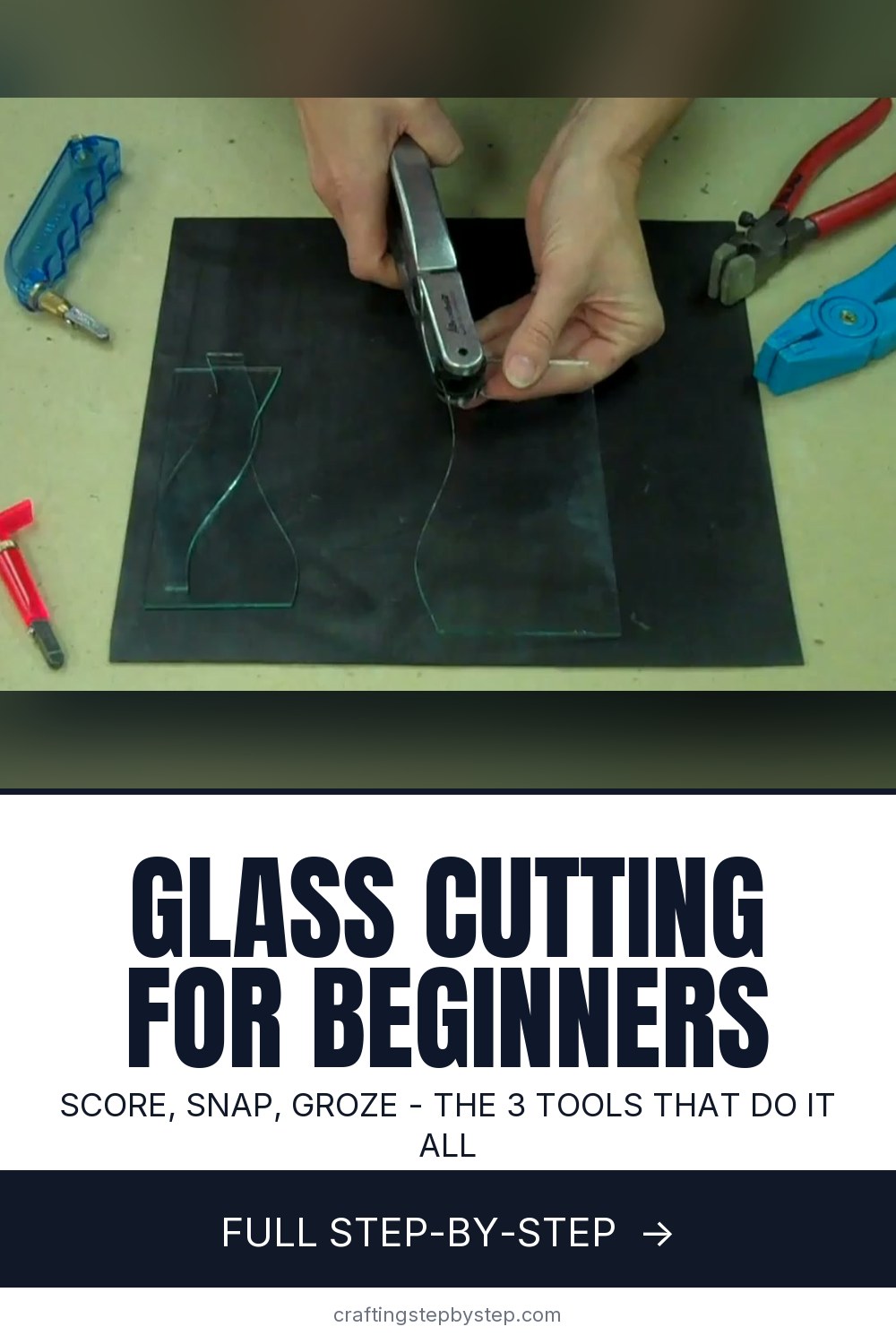
A cutter, a pair of running pliers, and a pair of breaker-grozer pliers. That is the whole kit. The cutter makes the score. Running pliers apply even pressure on both sides of the score so it opens along its whole length. Breaker-grozer pliers grab strips too narrow for running pliers, and the curved jaw crumbles rough spots back toward the line.

Which cutter should you buy?

There is no correct answer, and anyone who tells you otherwise is selling something. A pistol-grip cutter sits in your fist and lets you push from the shoulder, which is kind to arthritic hands and to anyone cutting for an hour. A pencil-style cutter goes between your fingers like a pen and gives you finer control on tight curves. Custom-grip and Thomas-grip cutters split the difference with a saddle that rests in the web of your thumb.

Try one. Practice on scrap. Comfort beats brand every time.

Oil-filled or dry?

Many pencil cutters have a reservoir you fill through a knob on the back end. Add a few drops, not a full tank, or the oil runs straight through and makes a mess. You do not need oil on every score. It is worth keeping in the workshop anyway so you can lubricate the wheel now and then, and always before the cutter goes away for a while.

What a good score looks like

Run the wheel from one edge of the glass to the other in a single pass. Do not go back over it. You should hear a soft scratchy creak the whole way across. Then look at the line: a good score is faint, like a hair laid on the surface. If it looks like you trailed salt across the glass, you pressed too hard, and that score will fight you when you try to break it.

Three ways to break a score

On transparent or lightly textured glass, flip the sheet score-side down on a breaking mat and press gently from the back. Gentle curves pop apart on their own.

For anything with at least half an inch of glass on both sides of the line, use running pliers. Set them on the glass, tighten the screw until it touches, then back it off a quarter turn. That sets them to your glass thickness.

When the strip is narrower than that, running pliers cannot get purchase and you switch to breaker-grozer pliers.

Safety

Glasses on before the first score, every time. Cutting glass throws shards and slivers you will not see. Sweep the bench with a brush between pieces and tip the sweepings into a bin rather than brushing them onto the floor.

Step-by-Step Guide

10 steps · about 13 minutes.Check off each step as you go and your progress saves automatically.

1

Set Out Your Tools and Put On Safety Glasses

0:45
Step 1: Set Out Your Tools and Put On Safety Glasses - How to Use a Glass Cutter

Lay the glass flat on a breaking mat with your cutters on one side and your pliers on the other, so you are not reaching across a sheet of glass every time you swap tools. Put the safety glasses on now, before the first score. Cutting glass throws slivers you cannot see coming, and they do not care that you were only doing one quick cut.

Tip

Keep a bench brush in reach and sweep between pieces. Shards collect under the glass and score marks are hard to see through grit.

2

Find a Grip That Feels Steady

1:10
Step 2: Find a Grip That Feels Steady - How to Use a Glass Cutter

A pistol-grip cutter sits down in your hand. Thumb on top, thumb alongside, or first finger over the barrel are all fine. There is no correct grip here, only the one that lets you push from your shoulder instead of your fingertips. That is the whole point of this style: it spreads the effort up your arm so your wrist and hand do not give out halfway through a project.

Tip

If your hand aches after a few cuts, the grip is wrong or you are pressing too hard. Usually both.

Used in this steppistol grip glass cutter
3

Score From Edge to Edge in One Pass

1:35
Step 3: Score From Edge to Edge in One Pass - How to Use a Glass Cutter

Set the cutter head right at the near edge of the glass and draw it straight across to the far edge without lifting. One pass. Do not go back over a spot you are unsure about, because a second pass on the same line wrecks the fracture and the glass will break somewhere you did not ask it to. Listen while you go: a good score makes a soft, even scratching sound the whole way.

Tip

Starting a hair in from the edge is the most common beginner mistake. The score has to break the edge or the glass will not run.

4

Try a Pencil Cutter and Top Up the Oil

2:10
Step 4: Try a Pencil Cutter and Top Up the Oil - How to Use a Glass Cutter

A pencil-style cutter is held like a pen, either overhand or between the fingers. Many come with an oil reservoir you reach by unscrewing the knob on the back end. Put in a few drops and stop. Fill it to the top and the oil runs straight through the head and puddles on your glass. Cap it, wipe the head, and you are ready.

Tip

Oil on every score is optional. Oil before the cutter goes into a drawer for a month is not, if you want the wheel to turn freely next time.

5

Score Again With the Pencil Grip

3:08
Step 5: Score Again With the Pencil Grip - How to Use a Glass Cutter

Same rules as before. Start at the edge, keep the wheel upright, and pull through in a single continuous stroke with your free hand flat on the glass to stop it sliding. The pencil grip buys you finer control, which is what you want on curves and tight corners. Straight cuts are more forgiving, so practice a few of those before you try anything with a bend in it.

Tip

Cut scrap for an afternoon before you cut anything you paid real money for. Art glass is expensive practice material.

6

Push From the Shoulder, Not the Wrist

4:35
Step 6: Push From the Shoulder, Not the Wrist - How to Use a Glass Cutter

This is the difference between a score that breaks where you want and one that wanders. Lock your wrist, keep your arm fairly straight, and let the movement come down from the shoulder. Fingertip pressure is uneven by nature, so the score ends up deep in places and shallow in others, and glass follows the path of least resistance.

Check your work. A clean score is a faint line like a stray hair. A gritty white line that looks like spilled salt means you leaned on it.

Tip

Too much pressure is far more common than too little. If your scores keep breaking badly, ease off before you change anything else.

7

Break a Gentle Curve on the Mat

5:30
Step 7: Break a Gentle Curve on the Mat - How to Use a Glass Cutter

For transparent or lightly textured glass with a soft curve in the score, you do not need pliers at all. Turn the sheet over so the score faces the mat, line your hands up either side of the line, and press down gently from the back. The fracture opens from underneath and the two pieces separate along the score.

Tip

This works best on thinner clear glass. Dense opalescent glass usually wants running pliers instead.

8

Run the Score With Running Pliers

7:50
Step 8: Run the Score With Running Pliers - How to Use a Glass Cutter

Set the pliers down anywhere on the glass and turn the screw until the jaws just touch the surface, then back it off a quarter turn. They are now set for this thickness. Line the centre mark up on the score, pointing the same way the score runs, and squeeze gently. Turn the glass around and squeeze from the other end to carry the break through. Use these only where you have at least half an inch of glass on both sides of the line.

Tip

Squeeze, do not crush. The jaws are shaped to push down on either side and up underneath, so a light press does the work.

9

Snap a Narrow Strip With Breaker Pliers

10:00
Step 9: Snap a Narrow Strip With Breaker Pliers - How to Use a Glass Cutter

When the offcut is a quarter inch wide, running pliers have nothing to grip. Hold breaker-grozer pliers with the flat jaw on top and come at the glass perpendicular to the score, with the tips sitting about a sixteenth of an inch back from the line. Grip firmly without pinching, then pull straight away from the glass. Do not rock it. Work along the score in short sections if the whole strip will not come at once.

Tip

A rocking motion crumbles the edge instead of breaking it. Straight out, every time.

10

Groze the Edge Back to the Line

11:40
Step 10: Groze the Edge Back to the Line - How to Use a Glass Cutter

Some spots will not break cleanly, usually where the score was uneven. Flip the pliers so the curved jaw is on top, bite the high spot, and rock downward. Little flakes crumble away and the edge creeps back toward the score line. It is not pretty work and it is not meant to be. Every bit you groze off now is time you do not spend at the grinder later.

Tip

Groze in small bites near the line rather than one big grab. Take too much and the crack runs past where you wanted it.

Keep going

How to Make a Thanksgiving Centerpiece

Products Used

The Checklist

How to Use a Glass Cutter

Tools
7
Materials
2
Steps
10
Video
13 min

Tools we recommend

Your Guide

Delphi Glass Creativity Center

As an Amazon Associate we earn from qualifying purchases. Links on this page may be affiliate links - clicking them and buying doesn't change your price, but helps support CraftingStepByStep.

Tags

Sunday How-To

New crafts tutorials, every Sunday

One short email with the week's best step-by-step guides. Free, no spam, unsubscribe anytime.

Did this work for you?

What's next

Related collections

Curated theme pages that include this tutorial.

Weekly Digest

Liked this crafts tutorial?

Pick the categories you want to hear about. Weekly digest of new step-by-step tutorials. No spam, easy unsubscribe.

Send me tutorials about

We only email about new tutorials. Easy unsubscribe anytime.