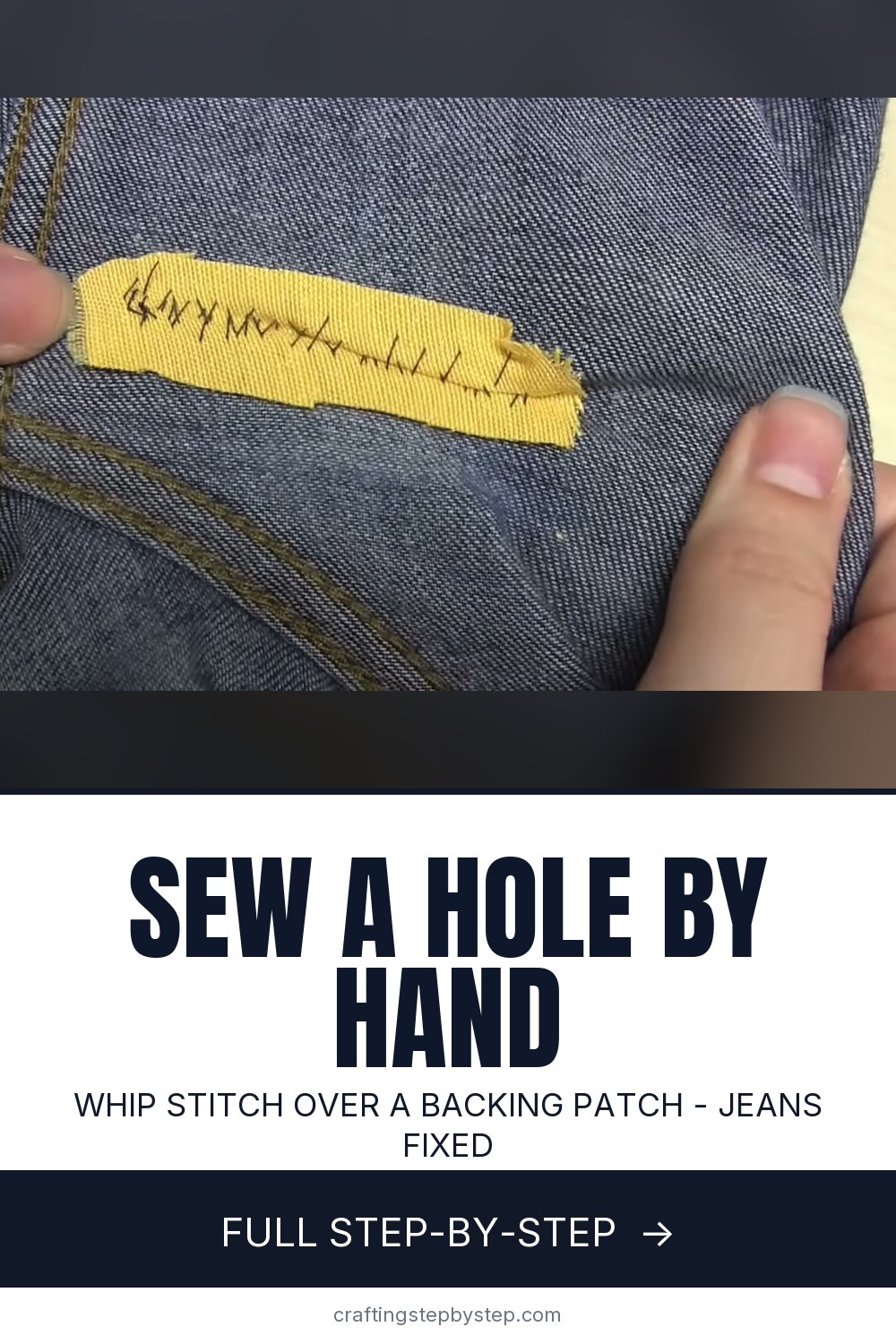
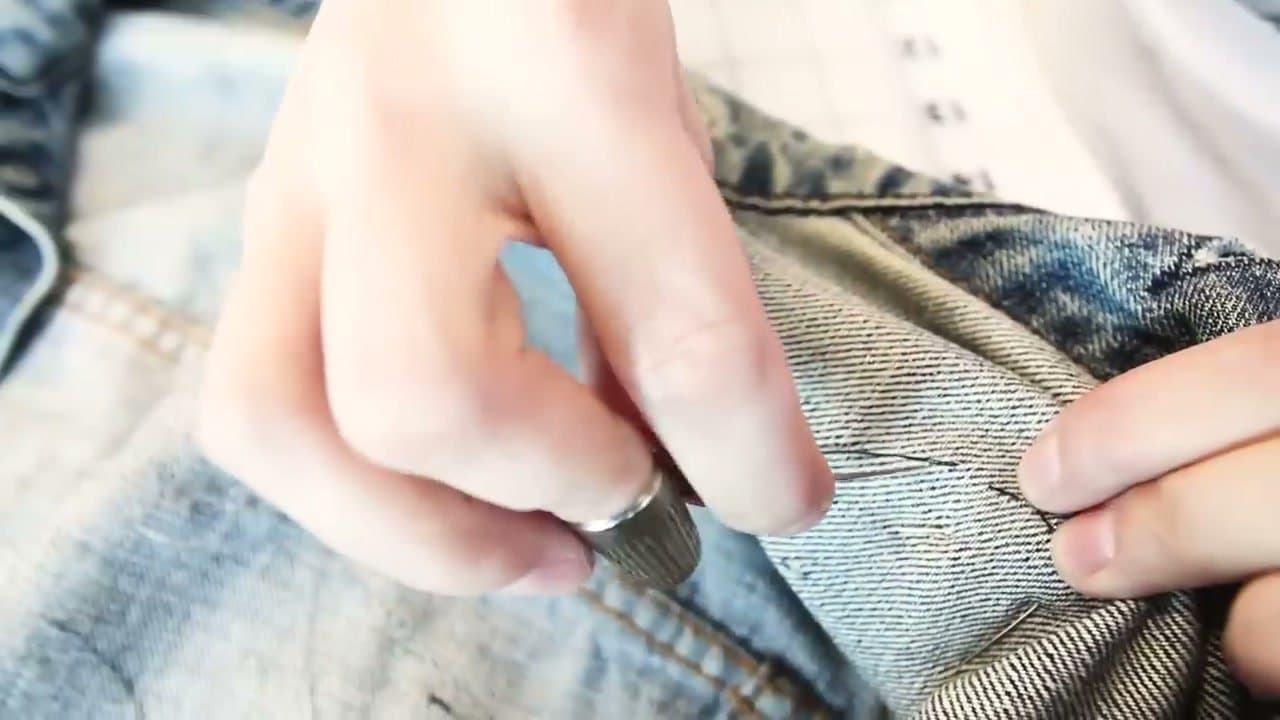
A slit tear on the thigh of a pair of jeans, closed by hand with a needle, thread and a scrap of woven fabric. No machine, no iron-on kit. The finished seam is a line of small stitches that fades into dark denim, and the patch on the inside holds it so it does not rip open again.
The method comes from Rokolee DIY on YouTube, filmed straight down over the jeans on a table so you can see every stitch go in. The whole thing is one stitch, the whip stitch, done three times along the same line. What makes it hold is the backing patch: the stitches bite into the patch as well as the denim, so the load sits on fresh fabric instead of the worn edges of the tear.
Hole or tear, same repair
The creator works on a tear, a clean slit about the length of a thumb. A small hole with a bit missing repairs the same way. Trim the frayed edges, back it with the patch, and whip stitch across the gap so the edges pull together over the patch. If the hole is wider than a fingertip the stitches will gather the denim, so leave the patch showing and stitch around the edge of the hole onto the patch instead of pulling it closed.
Where it goes wrong
The needle goes through both layers. Hold the jeans with a hand inside so you can feel the point. If it pokes through the back of the leg, you have sewn the front of the jeans to the back.
The seam puckers at the ends. That is normal. Add two or three extra stitches at each end and the second pass flattens it.
The stitches pull out. They were placed in the frayed edge. Go a few threads further in, into the sound denim.
More hand mending
For a knit sock the same idea uses a weave instead of a patch, in how to darn a sock. If the hole is too big to close, cover it from the outside with a sewn-on patch. For the basics under all of these, start with how to sew, and if the zip is the part that has failed, how to sew a zipper covers that.
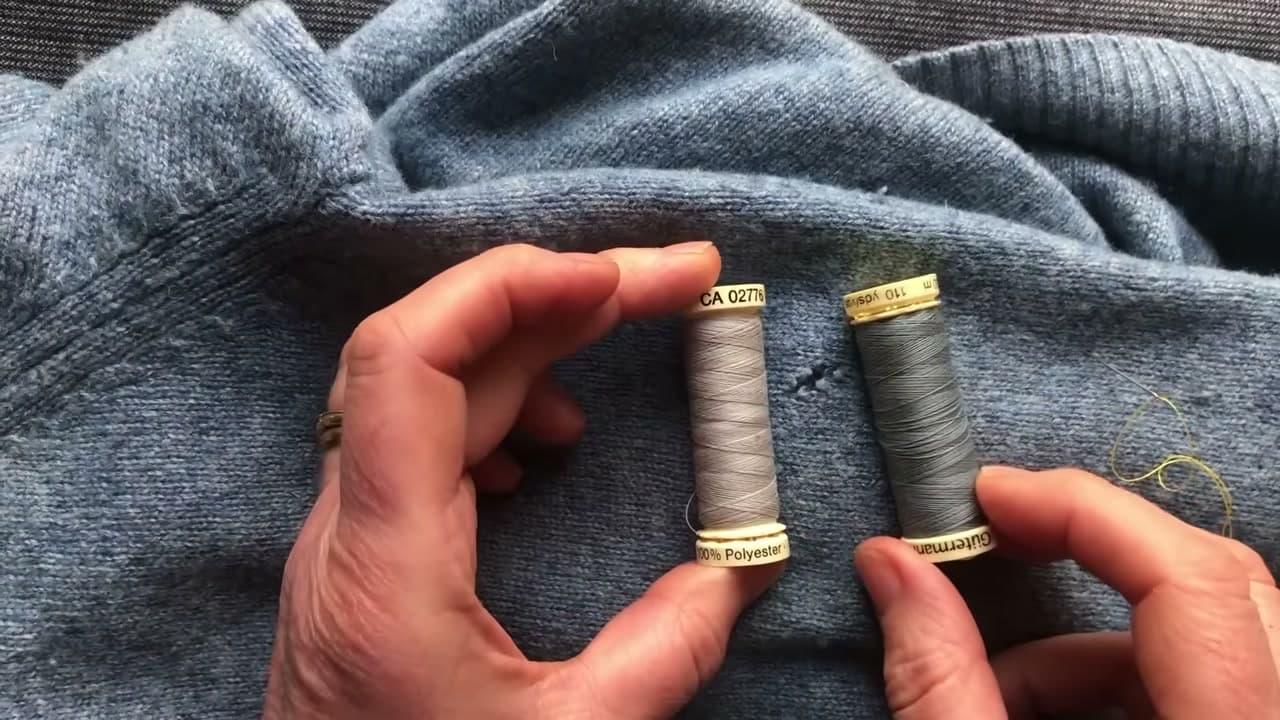
Knitwear needs its own method, because a woven patch pulls out of stretchy fabric. How to fix a hole in a sweater covers that case.