A sewn patch stays put. That is the whole argument for doing it by hand. Iron-on adhesive softens in a hot dryer and lets go at the corners, and fabric glue goes stiff and yellow inside a year. Thread does neither.
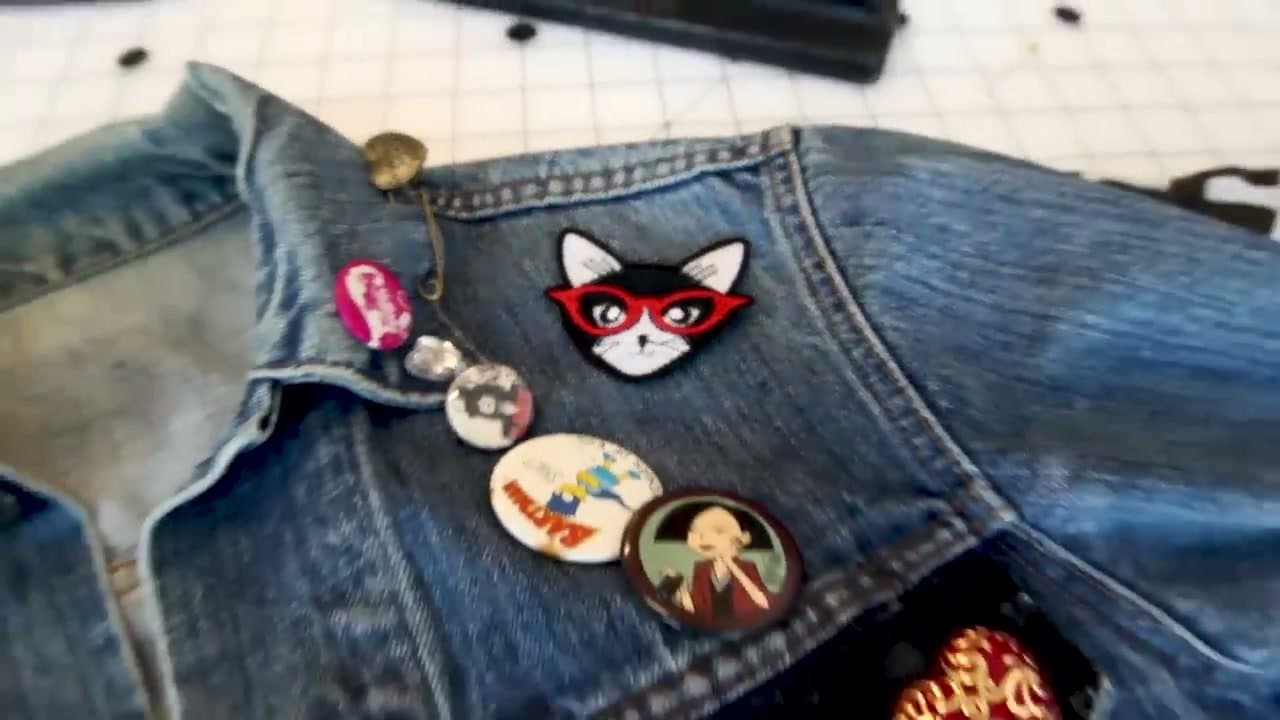
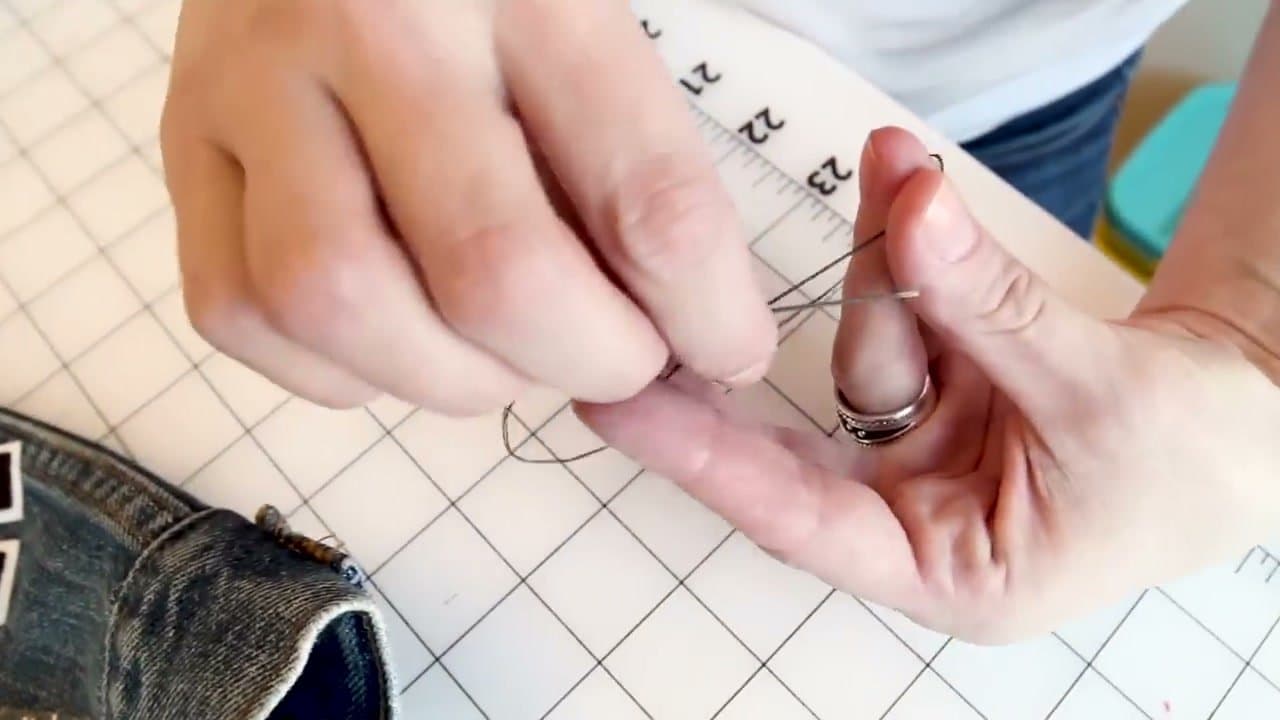
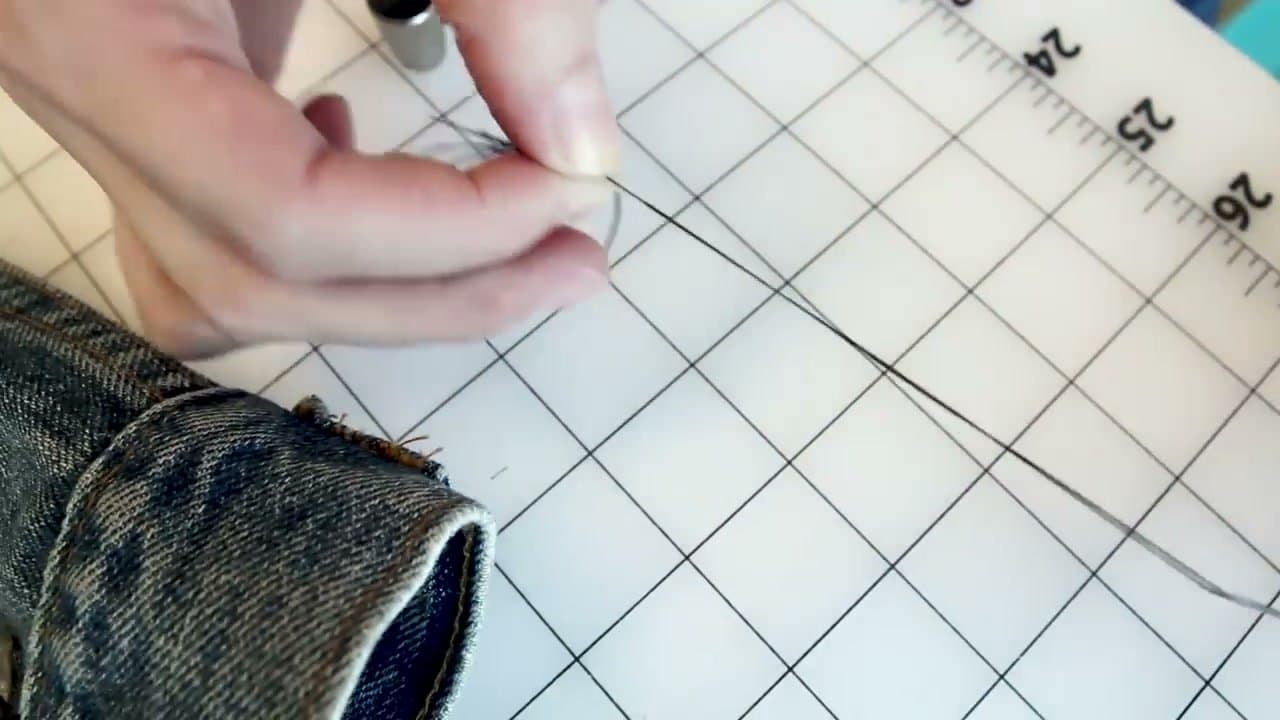
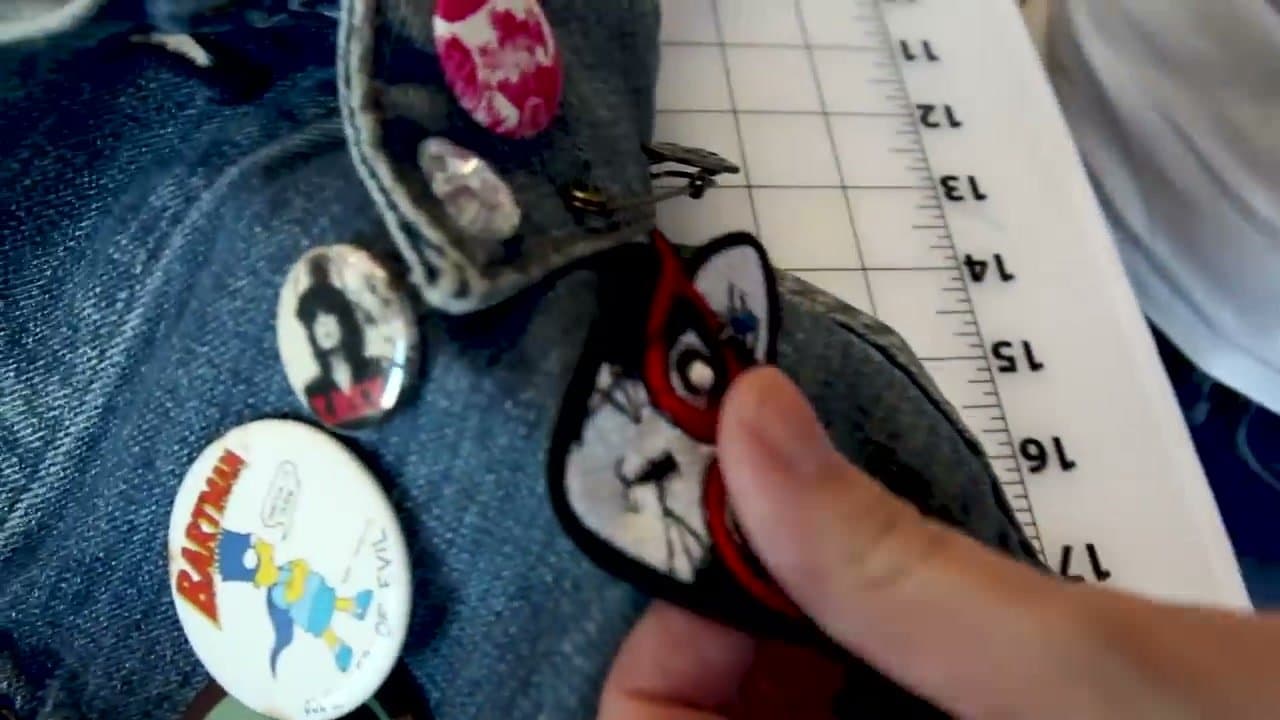
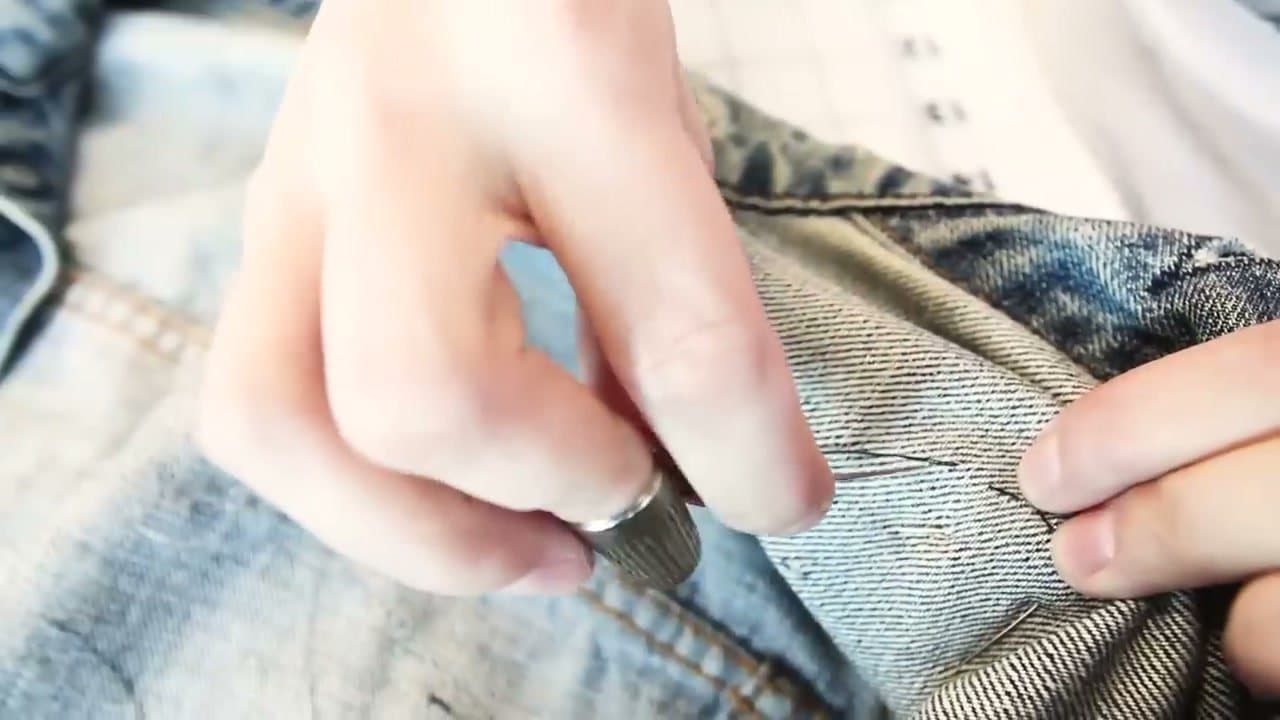
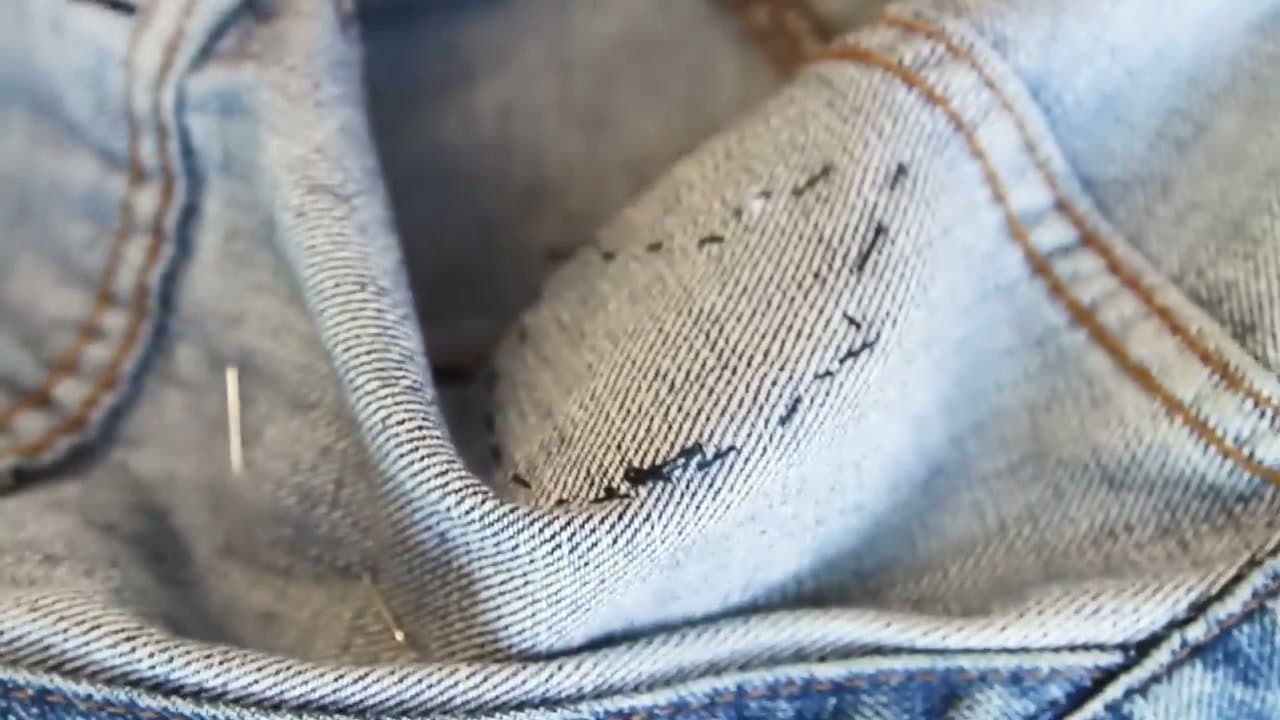
This walkthrough follows Anastasia of Sew Anastasia, who puts a patch on a denim jacket with a hand needle, doubled thread, a few pins and a running stitch. The steps below show where the needle goes. This part covers the choices before you thread it: which stitch, which thread, and what changes on a backpack or a hat.
Sew-on vs iron-on: why sewn lasts
Iron-on backing is a glue film. It bonds to the surface of the fabric, and fabric surfaces flex, stretch and shed fibers, so every wash works at that bond. Thread is mechanical. Each stitch is a loop through both layers, the load spreads across dozens of them, and none of them care about heat, water or detergent.
Most patches ship with iron-on glue on the back anyway. You can still sew them. Skip the iron, or press for a few seconds to tack the patch down and stitch over it. Pushing a needle through cured glue is hard on fingertips, so pin instead and wear a thimble.
Which stitch to hand sew a patch with
Three stitches cover nearly every patch:
- Running stitch - the one Anastasia uses. Fast, and near invisible in matching thread. Strong enough for jackets, jeans and sweatshirts.
- Whip stitch - wraps over the edge instead of passing through it. Use it on thin or soft-edged patches and on anything that gets rough handling, like a kid's backpack.
- Blanket stitch - thread along the border with short legs running in. In a contrasting color it becomes part of the design. Slower, so save it for showpiece patches.
If hand sewing is new, how to sew by hand covers threading, knotting and the backstitch. The running stitch is also the one that closes a hole in a sock; how to darn a sock uses it in a woven grid.
Thread color and weight
Match the thread to the border of the patch, not the garment. A stitch in the border color disappears into the merrowed edge. A stitch in the denim color shows as a dotted line.
All-purpose polyester, doubled, is the default. It is stronger than cotton and does not rot. For canvas bags or heavy work jackets, step up to heavy-duty thread and a larger needle. Skip embroidery floss for the structural stitches; it frays under strap friction.
Denim jackets, backpacks and hats
Denim is the easiest surface. It is flat, holds pins well, and is thick enough that the inside knot never shows through. On a sleeve, slide your free hand inside so the needle does not catch the other layer.
Backpacks and canvas bags are stiffer and often lined. Reach inside and confirm the needle is passing through the outer layer only. Canvas fights back, so wear the thimble. For a padded panel you cannot get behind, a curved upholstery needle goes in and comes out on the same side.
Hats are the awkward one. The crown curves, so pin the patch at top and bottom first and ease the sides in. Tie off under the sweatband. Felt patches on a knit beanie want a whip stitch so the edge does not curl.
Can you use a sewing machine?
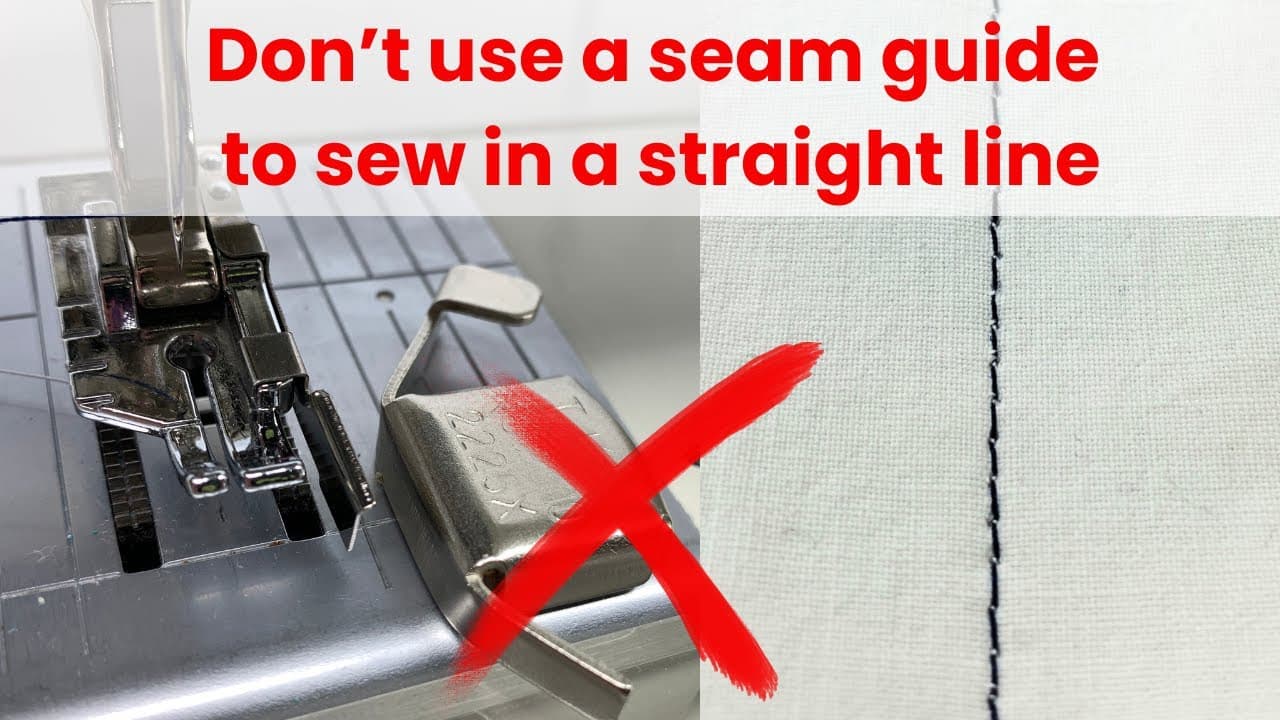
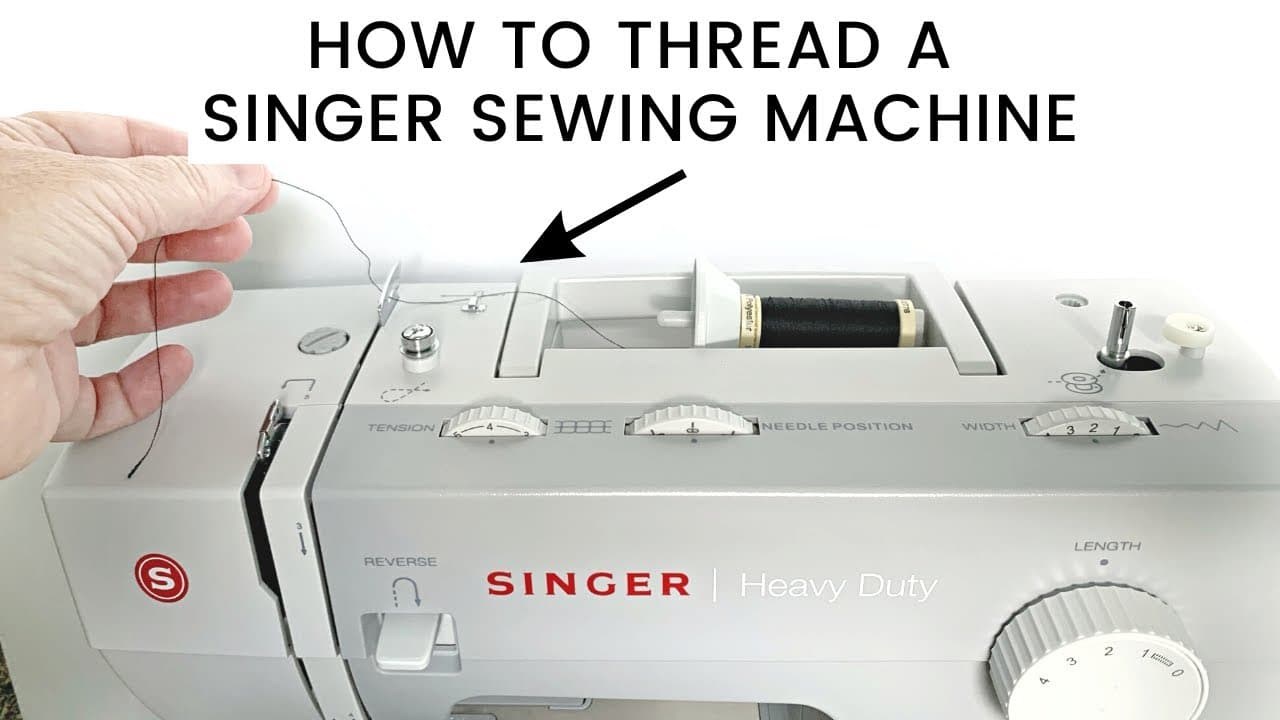
Yes, on flat things. A machine straight stitch around a patch on a jacket back or a tote takes two minutes. Use a denim needle, lengthen the stitch a touch, and pivot at the corners with the needle down. How to thread a sewing machine and how to sew a straight line cover the setup.
Sleeves, hats and anything already assembled are hand-sewing jobs. The machine cannot reach into a sleeve without unpicking a seam, and it will chew a curved crown. Hand sewing is slower, but it goes anywhere. You do not have to buy patches either. Cut shapes from old denim, and what to do with fabric scraps has more uses for the rest.
If the patch has an adhesive back and you would rather skip the needle, how to iron on a patch walks through the household-iron method.
For a moth hole in a jumper, where a patch would look wrong, see how to fix a hole in a sweater.