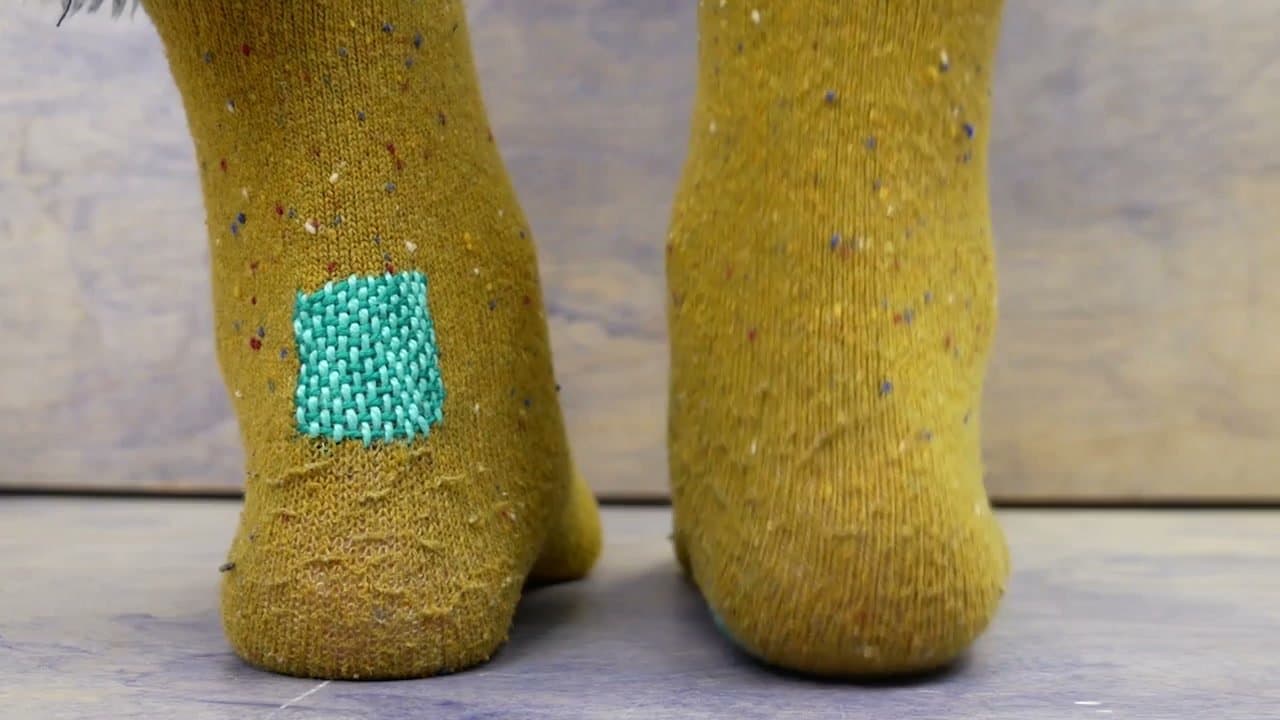
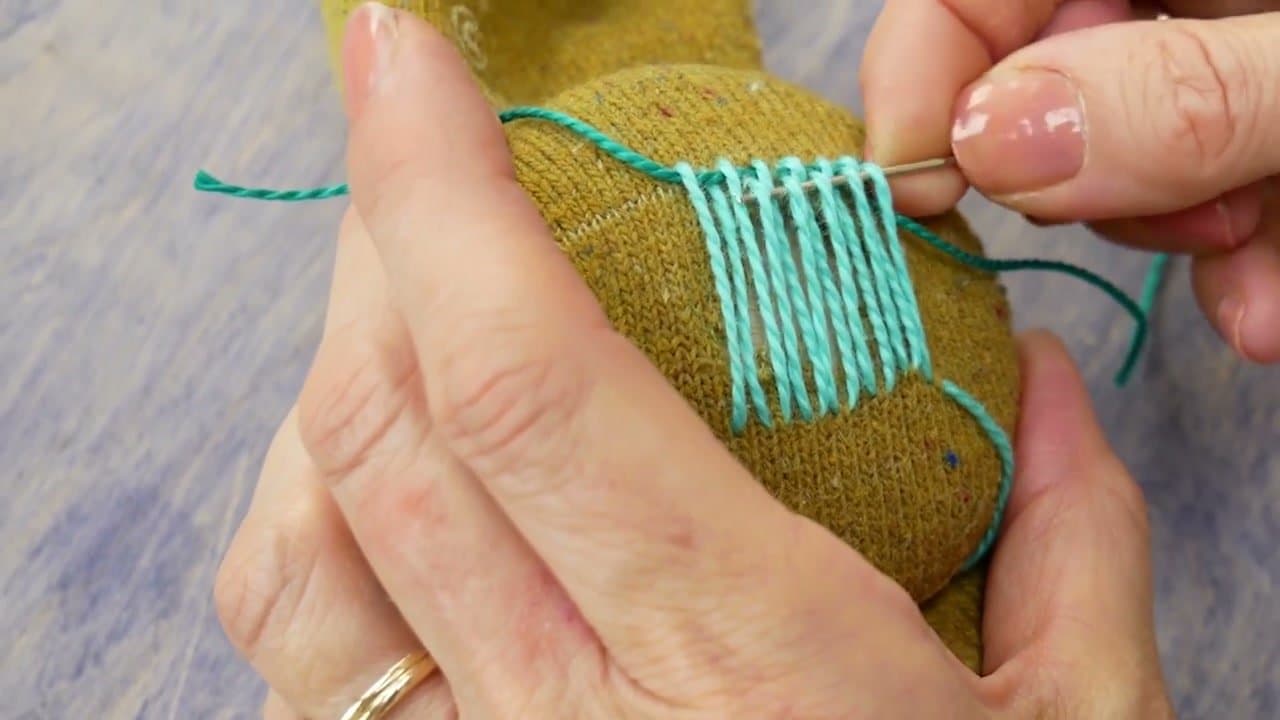
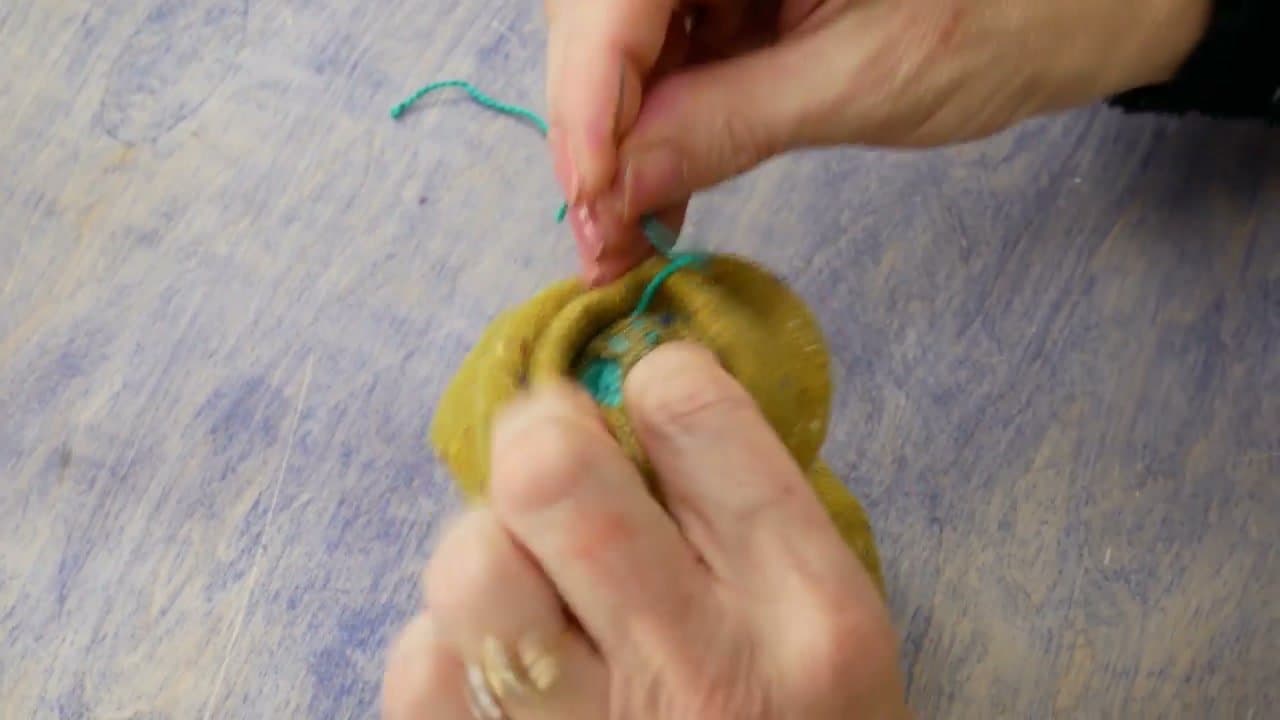
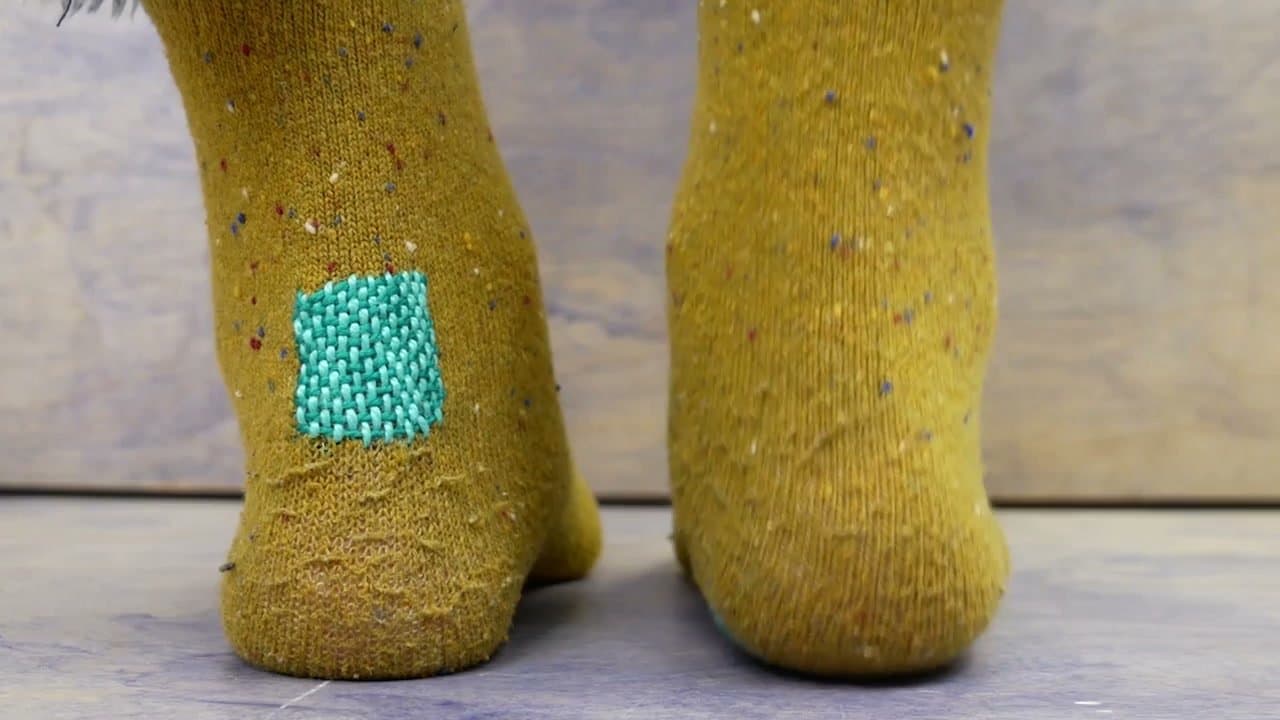
A hole in the heel does not mean the sock is done. Darning rebuilds the missing fabric with a small woven patch that ends up tougher than the knit around it, and once you have done one you stop throwing socks away. It takes about fifteen minutes.
The walkthrough below comes from WonderFil Specialty Threads, using their Eleganza pearl cotton for an invisible mend and a contrast color for the visible-mending version. The technique is the same either way: straight threads across the hole, then a second pass woven through them. If threading a needle and tying off are new to you, how to sew by hand covers that groundwork.
Darning egg, light bulb or tennis ball
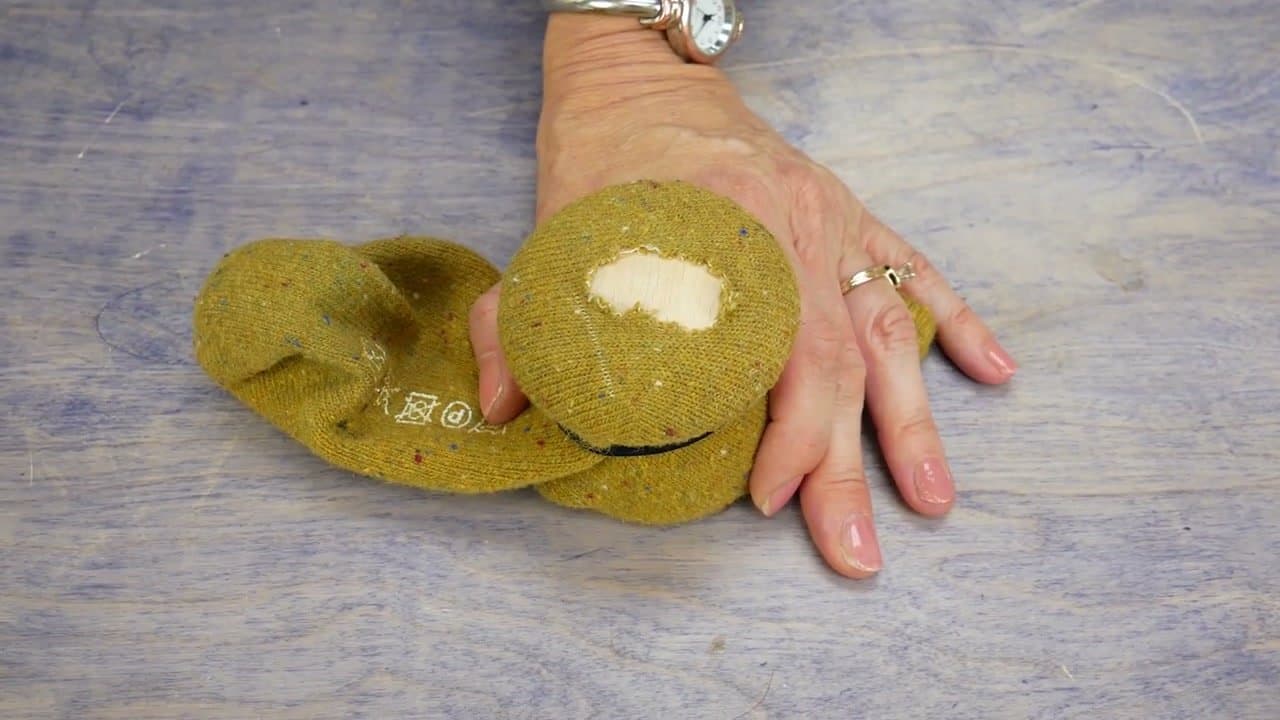
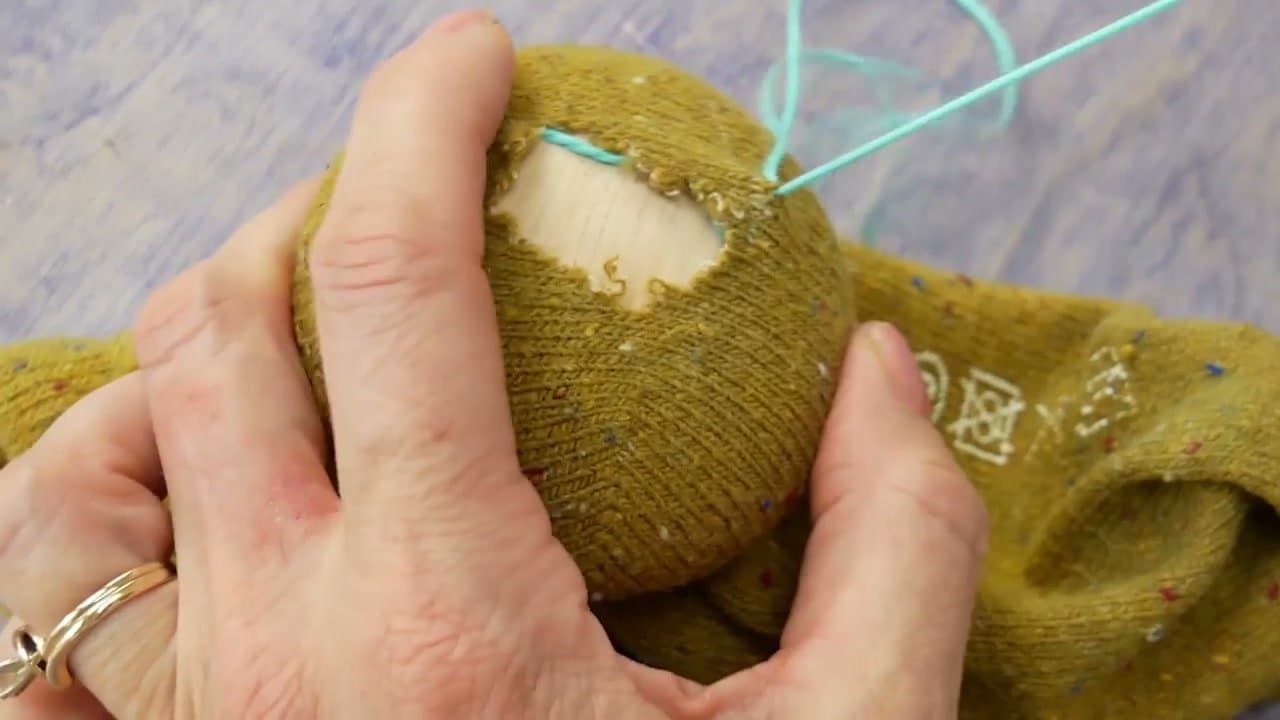
You need something hard and curved inside the sock so the hole is held open and flat while you stitch. A wooden darning egg or darning mushroom is the proper tool, and the mushroom's stem gives you somewhere to wrap a rubber band to keep the sock taut. Thrift shops sell them for a few dollars.
No egg? An old incandescent light bulb is the classic stand-in because the glass is smooth and the neck holds the sock. A tennis ball is safer and works for a heel hole, though it is large for a toe. The point is a hard surface that stops the needle catching the far side of the sock.
Thread or yarn: match the sock, or make it show
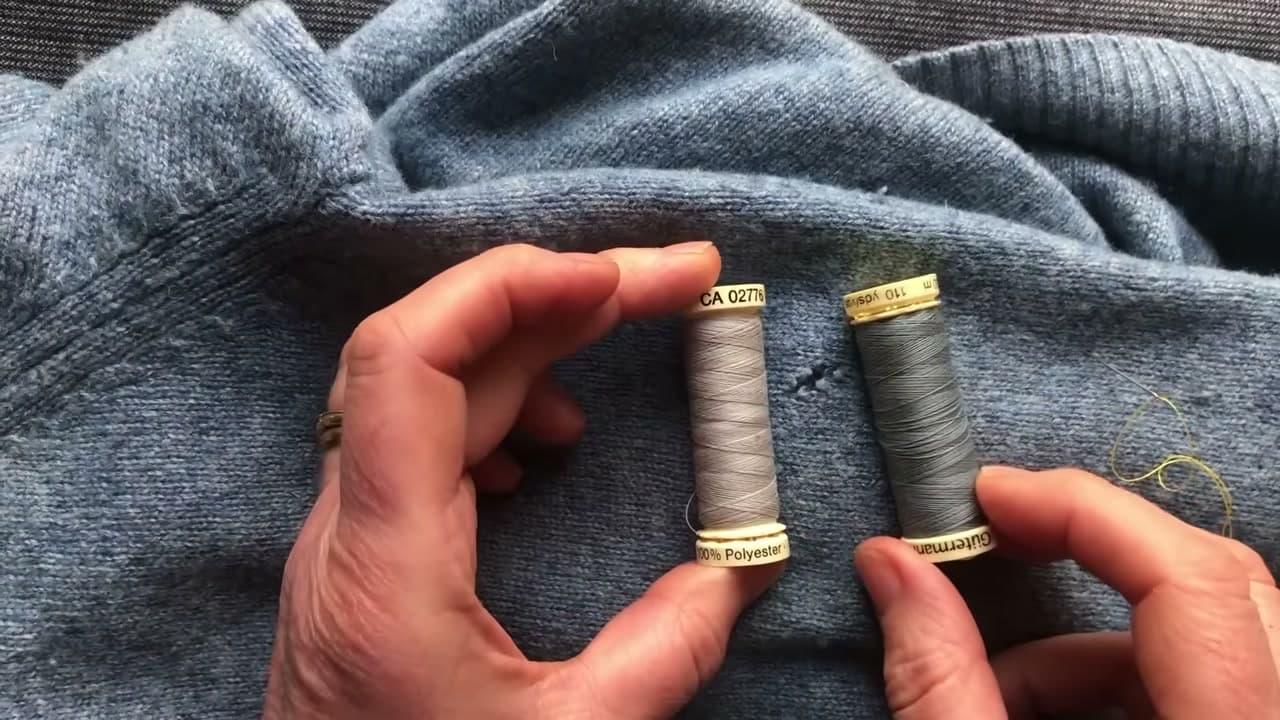
The patch only disappears if the thread is about as thick as the sock's own yarn. A chunky wool boot sock wants a heavy #3 pearl cotton or fingering-weight wool. A dress sock or thin athletic sock wants a fine #8 pearl cotton or two strands of embroidery floss. Too heavy and you get a stiff pad you feel every step. Too fine and the patch wears through fast.
Wool on wool is the best match for warmth and stretch, and a yarn with a little nylon in it lasts longest on a heel. Visible mending flips the rule on color only. Pick a bright contrast thread in the right weight and the darn becomes a deliberate feature, a little woven square on a grey sock.
Why the weave holds
The temptation is to pull the edges of the hole together and stitch them shut. Do not. That makes a hard ridge that rubs a blister, and it strains the thin knit around the hole so it tears again beside the seam. Darning does the opposite. The warp threads span the hole and anchor into sound fabric a few rows past the worn edge, and the weft goes over and under them. The result is new cloth in the gap rather than a seam.
Two things decide whether it lasts. Anchor into strong fabric, not the frayed edge. And keep the tension relaxed: a woven patch pulled tight puckers the sock and cannot stretch with your foot. Let it sit flat on the egg and leave a hair of slack on each turn.
Darn it or patch it
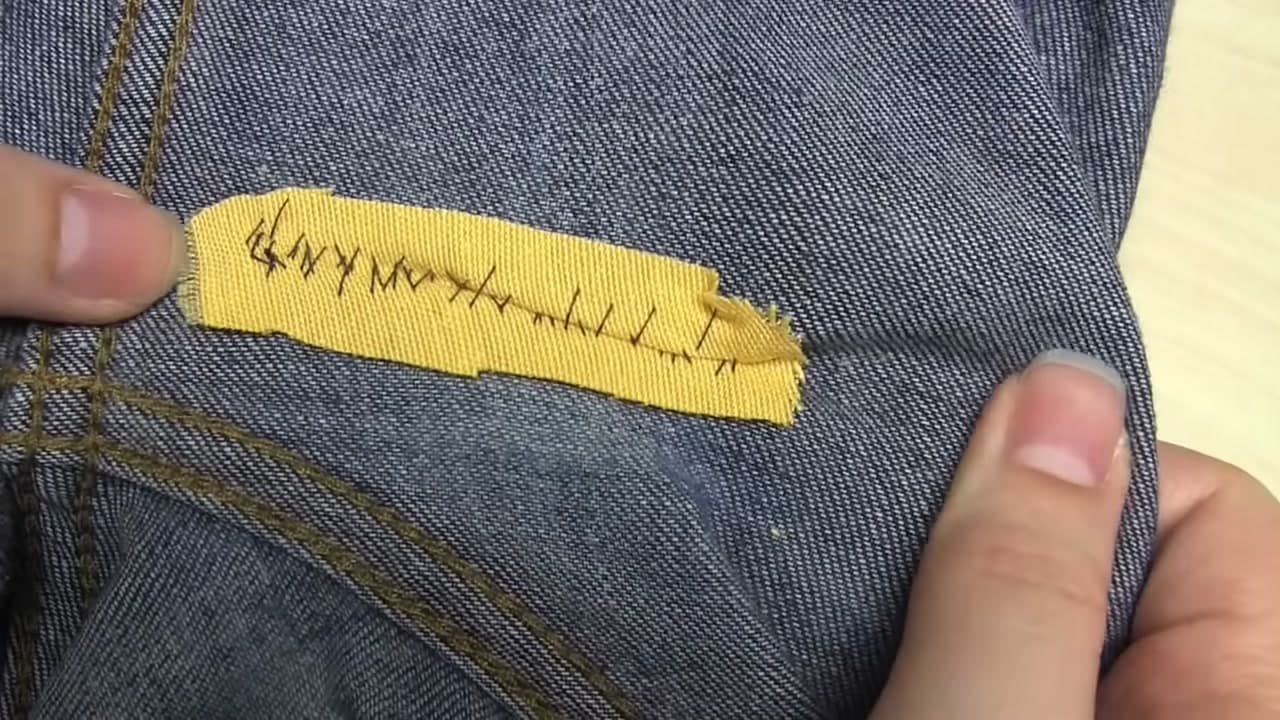
Darning suits a hole up to about the size of a quarter, or a thin spot that has not opened yet. Catching the thin spot before it opens is the easiest darn of all, with no gap to bridge. Bigger than a quarter and the weave gets sloppy and lumpy. Sew a patch over it instead, a scrap of knit or soft cotton stitched around the edge, which how to sew on a patch walks through. Old socks make good stretchy patch fabric, and the leftovers belong in the scrap bin rather than the trash. If the whole heel has worn to a thin mesh, the sock is finished.
Washing and wearing a darned sock
A darn anchored into good fabric goes through the wash like the rest of the sock. Turn it inside out for the first couple of washes and use a cooler cycle if the darn is wool, since hot water can felt the new yarn tighter than the knit around it. Skip the dryer for wool. Cotton pearl thread does not shrink.
Press it with a warm dry iron if it bunches after washing, then wear it. A good darn outlasts the original heel, and the other sock of the pair usually needs the same treatment a month later. When you are comfortable with a darning needle and wool, a hand-sewn Christmas stocking is the next project up.
For a hole in woven fabric rather than a knit, how to sew a hole uses a backing patch and a whip stitch instead of a darn.
A knit jumper takes a different approach from a sock: how to fix a hole in a sweater catches the broken loops instead of weaving a patch across them.