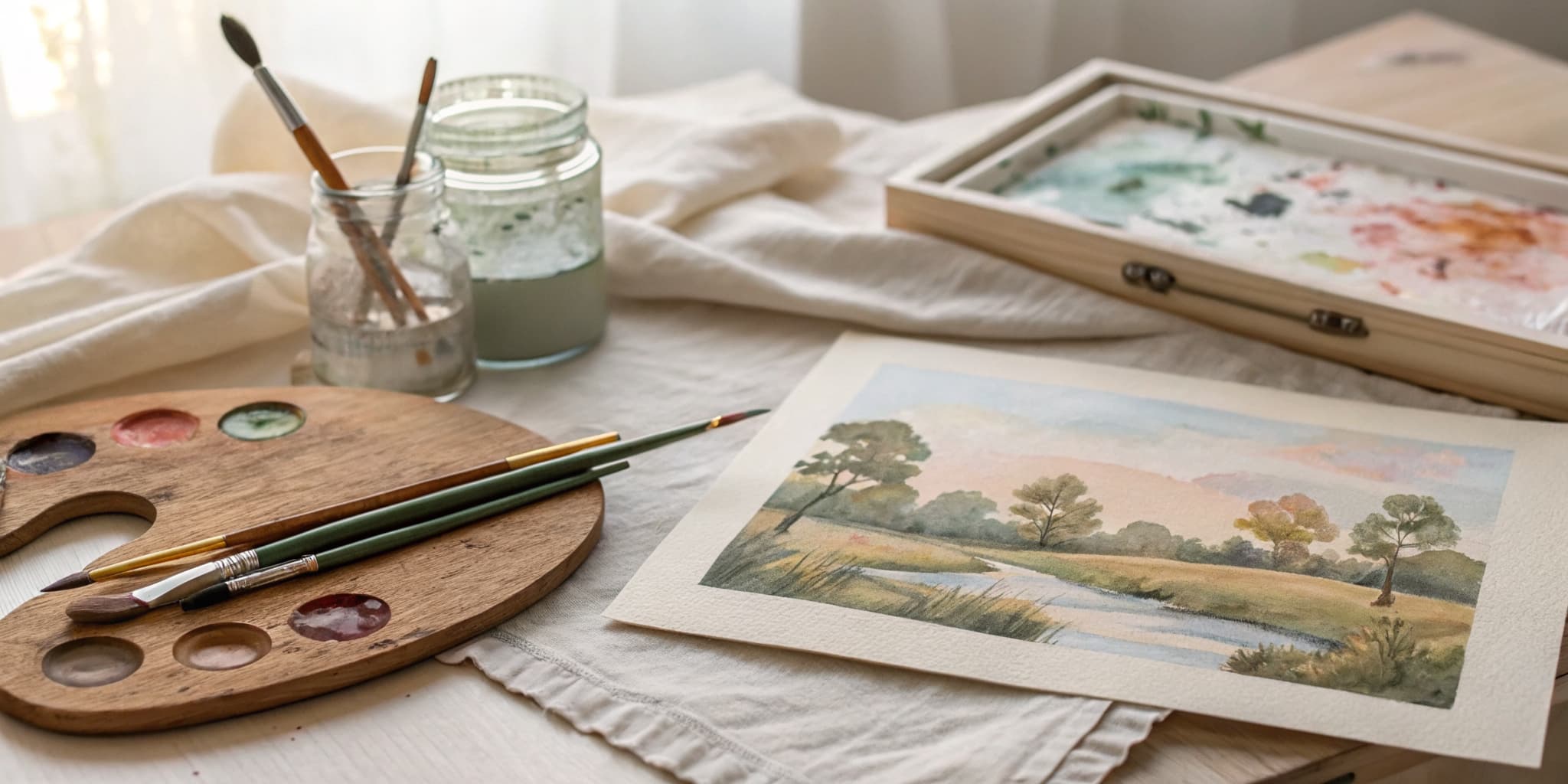
How to Paint With Gouache

PaintingEasy17:0610 stepsPart of DIY Crafts for BeginnersBrowse more →
The finished result: How to Paint With Gouache

By CraftingStepByStepPublished

Based on a video by Jess Chung.

Gouache is the paint for people who love watercolor but hate that you can never take anything back. Jess Chung, a landscape painter, walks through it from the first swatch to six tiny finished landscapes. It is opaque, it dries flat and matte, and it re-wets with water, so a mistake can be painted over or lifted off.

How to paint with gouache: what makes it different

GouacheWatercolorAcrylic
CoverageOpaqueTransparentOpaque
FinishMatte, velvetyMatteSatin to glossy
Re-wets when dryYesYesNo
Light over darkYesNoYes

That last row is the big one. In watercolor you save the white of the paper for highlights. In gouache you can paint the white clouds in at the end.

Getting the consistency right

Jess calls the target creamy, and it helps to think of melted ice cream. Thick enough to cover a black line, wet enough to glide. Too dry and the brush skips and leaves a scratchy texture. Too wet and you get streaks you can see through. If brushstrokes show in a flat area, add more paint, not more water.

Tube gouache is creamiest fresh. Paint that has dried on the palette will come back with a few drops of water and a minute of stirring, though it is never quite as smooth. A spray bottle misted over the palette every so often keeps it workable for a whole session.

Why colors change as they dry

Light colors dry a little darker, and dark colors dry a little lighter. Everyone trips on this at first. Paint a test dab on scrap paper, let it dry, and compare it with the mix on your palette before you commit to a big area. It gets easier with every painting.

Layering order

Work thin to thick. Start with watery washes, then build up opaque paint on top. Thin layers underneath grip the paper and will not lift when you paint over them. When you go light over dark, let the dark layer dry completely and lay each stroke once. Scrubbing back and forth is what pulls the lower color up.

Paper that will not buckle

Use 300 gsm (140 lb) watercolor paper. Cold press has a little tooth that catches the dry brush texture. Tape all four edges to the table with washi or masking tape before you start. It keeps the sheet flat as it dries, and peeling the tape off at the end gives you crisp white borders.

Common gouache mistakes

  • Too thick: paint piled on like frosting can crack as it dries.
  • Too thin: streaky, see-through patches where you wanted solid color.
  • Overworking: going over a wet area again and again lifts the layer below and turns it muddy.
  • Not enough paint: a flat sky takes more than you expect. Mix a big puddle.

Where to go next

The cloud and night sky studies here make good warm-ups for painting clouds and painting a galaxy. If you want a medium that blends slower and does not re-wet, try blending acrylic paint. For something closer to drawing, watercolor pencils are an easy step sideways.

What you'll need

Step-by-Step Guide

10 steps · about 17 minutes.Check off each step as you go and your progress saves automatically.

1

Test Gouache Paint Consistency Over a Black Strip

4:35
Step 1: Test Gouache Paint Consistency Over a Black Strip - How to Paint With Gouache

Paint a black strip across scrap watercolor paper and let it dry. Squeeze out a generous blob of gouache and pick some up with a damp brush. Paint a swatch over the strip. Then add a little water to the mix and paint another, and another. Watch the black line. Where it vanishes but the paint still glides, that is your creamy consistency. Where the line shows through, you have gone too thin.

Tip

Do this test with a dark color. Yellows and other light colors are less opaque by nature and make the test harder to read.

2

Block In a Flat Area of Opaque Gouache Color

5:08
Step 2: Block In a Flat Area of Opaque Gouache Color - How to Paint With Gouache

Tape a panel on your watercolor paper and fill it with one even color. This forces you to mix a big batch, which is good practice because most beginners mix far too little. Keep the paint creamy and work in overlapping strokes. If you start to see brush marks or patchy spots, the mix has too much water. Add more paint from the tube and go over it.

Tip

Keep a towel next to your water jar. Touching the brush to it after rinsing stops extra water thinning your mix.

3

Layer Light Gouache Over a Dried Dark Layer

6:02
Step 3: Layer Light Gouache Over a Dried Dark Layer - How to Paint With Gouache

Paint a strip in a dark color and let it dry all the way. Load a brush with thick white and press a few marks on top. Lay each stroke once and lift away. Going back and forth with a wet brush will pull up the dark paint and turn the white grey. If you want it more solid, let the first coat dry and add a second.

Tip

Made a mistake? Re-wet the spot with a clean damp brush and blot it with a tissue. That lifts most of the pigment so a lighter layer can cover it.

Used in this stepRound brush set
4

Blend a Blue Gouache Gradient Into White

7:28
Step 4: Blend a Blue Gouache Gradient Into White - How to Paint With Gouache

Start at the top of a panel with dark ultramarine. As you work down, add a little more white to the brush each pass so the blue fades out. Then rinse, pick up pure white, and brush it upward into the blue. Sweep back and forth across the middle until the steps disappear. A clean, barely damp brush over the join smooths any last bands.

Tip

Keep the paint creamy the whole way down. Thin, watery paint dries before you can blend it.

5

Blend a Two-Color Gouache Gradient From Blue to Pink

8:06
Step 5: Blend a Two-Color Gouache Gradient From Blue to Pink - How to Paint With Gouache

Paint the top of a panel blue and the bottom in a second color like magenta. Leave a gap in the middle. Then sweep a damp brush across where they meet, pulling each color into the other until the line softens. You need plenty of paint on the paper for this. Once it feels easy, chain colors together: blue to purple to pink to orange makes a sunset sky.

Tip

Jess prefers to mix the second color into the first on her palette and work top to bottom. Try both and keep whichever feels more natural.

6

Drag a Dry Brush Gouache Texture

9:34
Step 6: Drag a Dry Brush Gouache Texture - How to Paint With Gouache

Wet the brush, squeeze most of the water out on a paper towel, then dip into the paint. Drag it lightly across the paper. The bristles catch on the tooth of the paper and leave a broken, scratchy stroke. Play with how much water you leave in. Too much and the texture fills in to a solid line. Too little and the paint will not leave the brush at all.

Tip

Pinch the belly of the brush in a paper towel to pull water out without losing the paint on the tip.

Used in this stepRound brush set
7

Glaze Thin Rays of Light Over Dark Gouache

10:12
Step 7: Glaze Thin Rays of Light Over Dark Gouache - How to Paint With Gouache

Glazing is the opposite of dry brush. Thin a pale color with lots of water and sweep it over a dried dark area in one long, gentle stroke. It reads as a soft beam of light. Because the brush is wet, the layer below wants to lift, so make one pass and leave it. Let it dry and add a second ray beside it.

Tip

Use a flat brush for rays. Its straight edge gives a clean beam that narrows as you ease off the pressure.

Used in this stepWatercolor brush set
8

Stipple Gouache Foliage Texture With a Blunt Brush

11:24
Step 8: Stipple Gouache Foliage Texture With a Blunt Brush - How to Paint With Gouache

Take a blunt round brush and press the base of the bristles so the hairs split apart. Pick up thick green paint and dab straight down on the paper. Each tap leaves a cluster of little marks that look like leaves. Build darker clusters first, then lighter ones on top for sunlit patches.

Tip

If the hairs clump together, the brush is too wet. Blot it on a paper towel and the bristles will split again.

9

Paint Dry Brush Gouache Clouds on a Blue Sky

13:22
Step 9: Paint Dry Brush Gouache Clouds on a Blue Sky - How to Paint With Gouache

Tape six small panels and paint a sky gradient in the first one. Let it dry fully. Then load a round brush with white gouache, blot it, and sweep thick strokes across the sky. The dry brush texture makes the clouds look soft and wispy. For brighter centers, wait for the first white to dry and add a second layer in the middle only, so the edges stay see-through.

Tip

Work on other panels while one dries. Painting several at once keeps you from touching wet paint.

10

Flick In a Gouache Grass Field With a Grainer Brush

16:20
Step 10: Flick In a Gouache Grass Field With a Grainer Brush - How to Paint With Gouache

Block in the field with a very dark green that lightens toward the horizon. Once it is dry, take a filbert grainer brush, whose split hairs make several fine lines at once. Flick upward strokes from the bottom, working dark to light and building toward the front. Peel the tape off the panels at the end to reveal the clean edges.

Tip

No grainer brush? A fan brush or an old flat brush with splayed bristles gives a similar grassy texture.

Used in this stepWatercolor brush set

Keep going

How to Use Texture Paste

Products Used

The Checklist

How to Paint With Gouache

Tools
9
Materials
3
Steps
10
Video
17 min

Tools we recommend

Your Guide

Jess Chung

As an Amazon Associate we earn from qualifying purchases. Links on this page may be affiliate links - clicking them and buying doesn't change your price, but helps support CraftingStepByStep.

Tags

Sunday How-To

New painting tutorials, every Sunday

One short email with the week's best step-by-step guides. Free, no spam, unsubscribe anytime.

Did this work for you?

What's next

Related collections

Curated theme pages that include this tutorial.

Weekly Digest

Liked this painting tutorial?

Pick the categories you want to hear about. Weekly digest of new step-by-step tutorials. No spam, easy unsubscribe.

Send me tutorials about

We only email about new tutorials. Easy unsubscribe anytime.