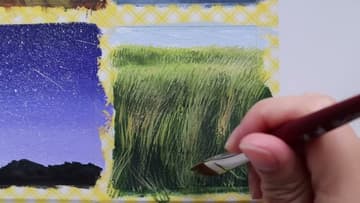
How to Paint With Gouache
Source: Jess Chung • Full tutorial: www.craftingstepbystep.com/painting/how-to-paint-with-gouache
- Difficulty
- Easy
- Hands-on time
- About 1 hour
- Wait time
- 20 minutes
- Cost
- About $15 to $25

Tools
- round brushes
- flat or angled brush
- blunt round brush
- filbert grainer or fan brush
- liner brush
- paint palette
- two jars of water
- spray bottle
- towel or paper towels
Materials
- gouache paint
- 300 gsm cold press watercolor paper
- washi or masking tape
Steps
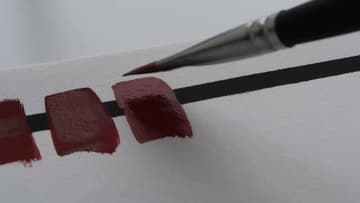
1. Test Gouache Paint Consistency Over a Black Strip
Paint a black strip across scrap watercolor paper and let it dry. Squeeze out a generous blob of gouache and pick some up with a damp brush.
Tip: Do this test with a dark color. Yellows and other light colors are less opaque by nature and make the test harder to read.
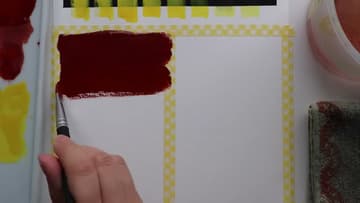
2. Block In a Flat Area of Opaque Gouache Color
Tape a panel on your watercolor paper and fill it with one even color. This forces you to mix a big batch, which is good practice because most beginners mix far too little.
Tip: Keep a towel next to your water jar. Touching the brush to it after rinsing stops extra water thinning your mix.
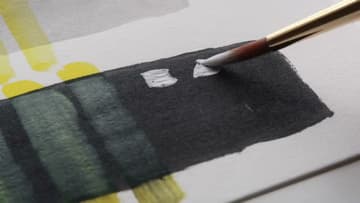
3. Layer Light Gouache Over a Dried Dark Layer
Paint a strip in a dark color and let it dry all the way. Load a brush with thick white and press a few marks on top.
Tip: Made a mistake? Re-wet the spot with a clean damp brush and blot it with a tissue. That lifts most of the pigment so a lighter layer can cover it.
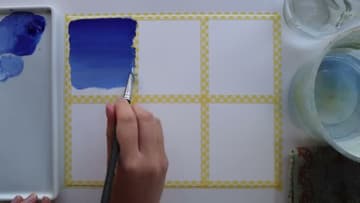
4. Blend a Blue Gouache Gradient Into White
Start at the top of a panel with dark ultramarine. As you work down, add a little more white to the brush each pass so the blue fades out.
Tip: Keep the paint creamy the whole way down. Thin, watery paint dries before you can blend it.
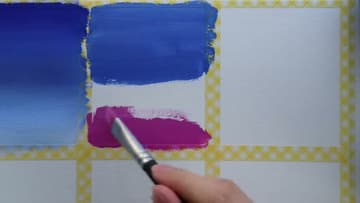
5. Blend a Two-Color Gouache Gradient From Blue to Pink
Paint the top of a panel blue and the bottom in a second color like magenta. Leave a gap in the middle.
Tip: Jess prefers to mix the second color into the first on her palette and work top to bottom. Try both and keep whichever feels more natural.
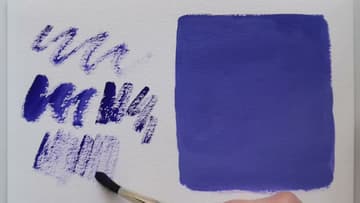
6. Drag a Dry Brush Gouache Texture
Wet the brush, squeeze most of the water out on a paper towel, then dip into the paint. Drag it lightly across the paper.
Tip: Pinch the belly of the brush in a paper towel to pull water out without losing the paint on the tip.
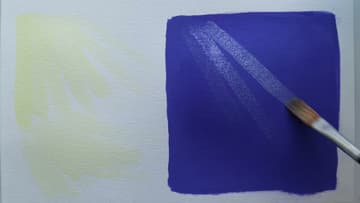
7. Glaze Thin Rays of Light Over Dark Gouache
Glazing is the opposite of dry brush. Thin a pale color with lots of water and sweep it over a dried dark area in one long, gentle stroke.
Tip: Use a flat brush for rays. Its straight edge gives a clean beam that narrows as you ease off the pressure.
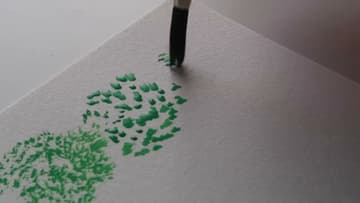
8. Stipple Gouache Foliage Texture With a Blunt Brush
Take a blunt round brush and press the base of the bristles so the hairs split apart. Pick up thick green paint and dab straight down on the paper.
Tip: If the hairs clump together, the brush is too wet. Blot it on a paper towel and the bristles will split again.
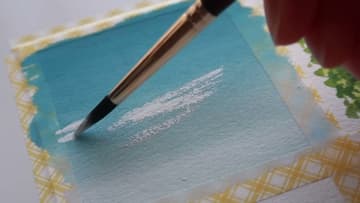
9. Paint Dry Brush Gouache Clouds on a Blue Sky
Tape six small panels and paint a sky gradient in the first one. Let it dry fully.
Tip: Work on other panels while one dries. Painting several at once keeps you from touching wet paint.
10. Flick In a Gouache Grass Field With a Grainer Brush
Block in the field with a very dark green that lightens toward the horizon. Once it is dry, take a filbert grainer brush, whose split hairs make several fine lines at once.
Tip: No grainer brush? A fan brush or an old flat brush with splayed bristles gives a similar grassy texture.