How to Decrease in Knitting - K2tog, SSK and Two More

KnittingEasy9:048 stepsPart of DIY Crafts for BeginnersBrowse more →
The finished result: How to Decrease in Knitting - K2tog, SSK and Two More

By CraftingStepByStepPublished

Based on a video by NimbleNeedles - Two.

A decrease turns two stitches into one. That is the whole trick. What matters is which of the two ends up on top, because that decides whether the new stitch leans right or left, and patterns lean on that to shape sleeve caps, hat crowns and raglan seams.

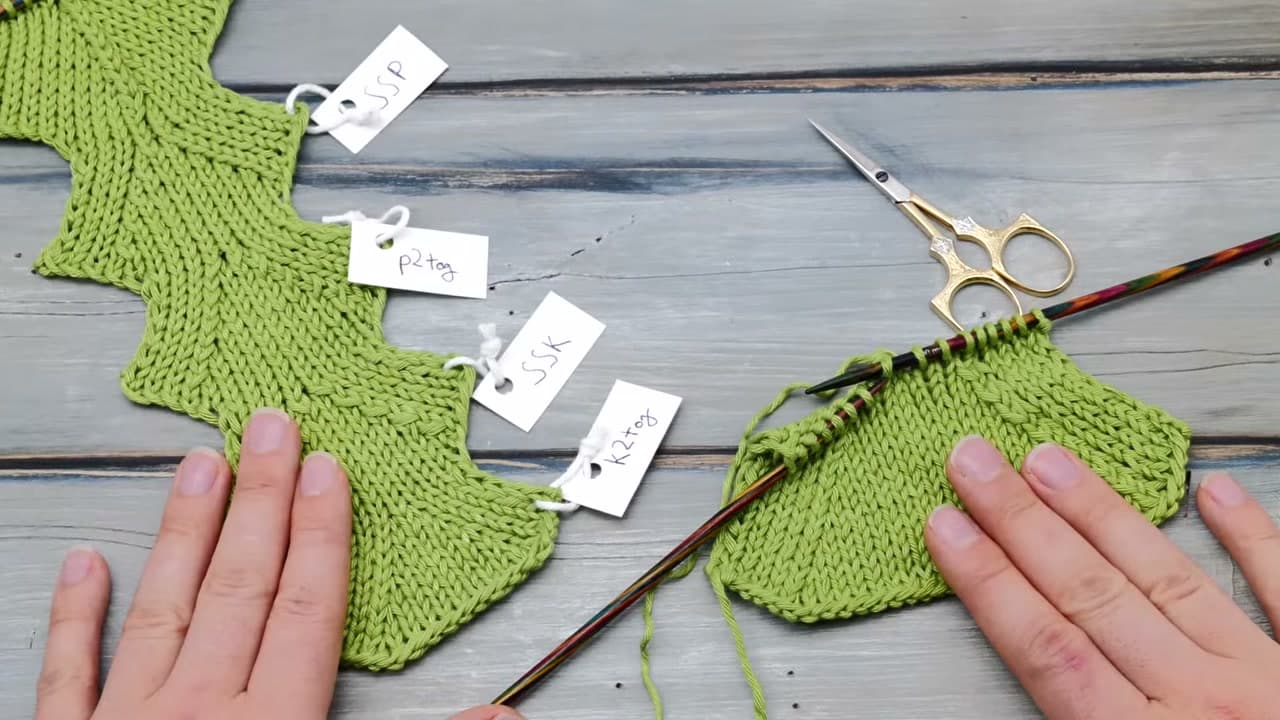
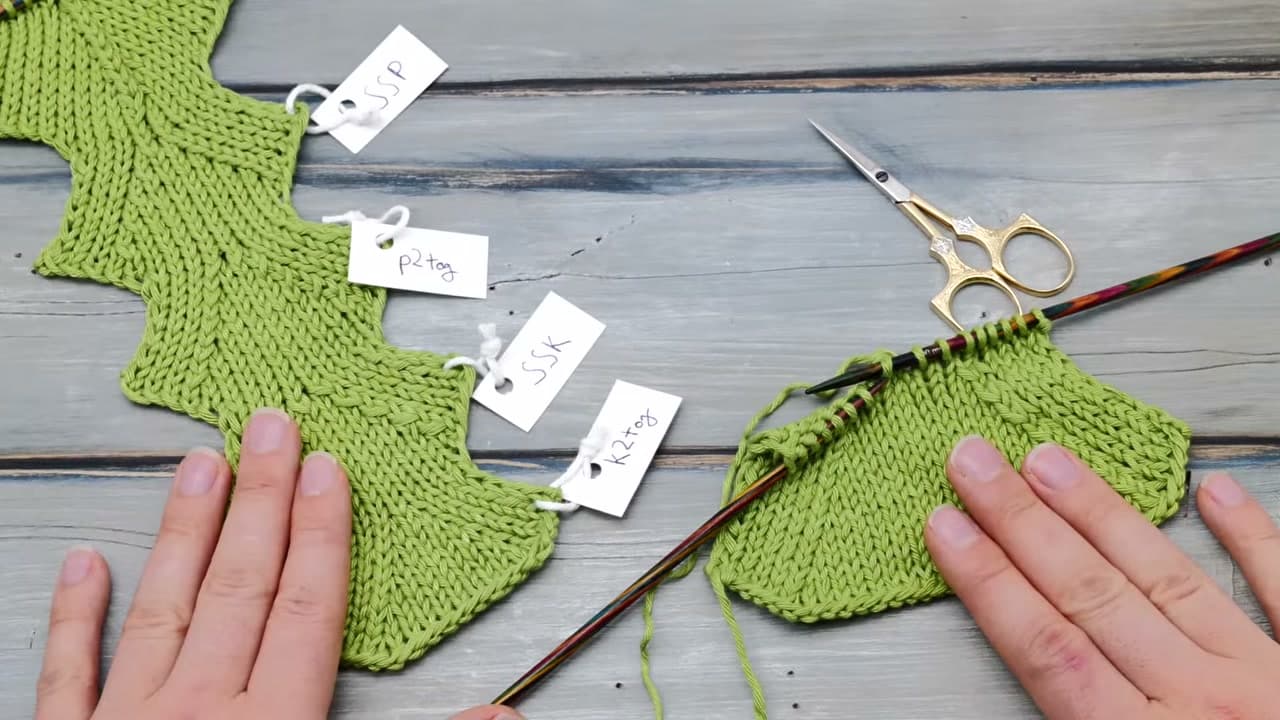
Norman at NimbleNeedles works through four of them on a bright green swatch, with the names written on little paper tags so you can see each finished edge sitting next to its label. Knit two together and ssk cover most of what you will meet. The purl-side pair, p2tog and ssp, turn up when the pattern wants the shaping worked on a wrong-side row.

Shaping needs the opposite move too, and increasing in knitting runs the same logic in reverse. Crocheters have their own version, and decreasing in crochet works by a different mechanism. Once the shaping makes sense, knitting a hat is the obvious first project, because the crown is nothing but paired decreases. If the abbreviations are the part tripping you up rather than the stitches, start with reading a knitting pattern.

Practice on a swatch before you take this to a real project. Twenty stitches of stockinette in a light, smooth yarn will show the slant clearly. Dark or fuzzy yarn hides the one thing you are trying to see.

What you'll need

Step-by-Step Guide

8 steps · about 9 minutes.Check off each step as you go and your progress saves automatically.

1

Insert the Right Needle Through Two Stitches at Once

1:10
Step 1: Insert the Right Needle Through Two Stitches at Once - How to Decrease in Knitting - K2tog, SSK and Two More

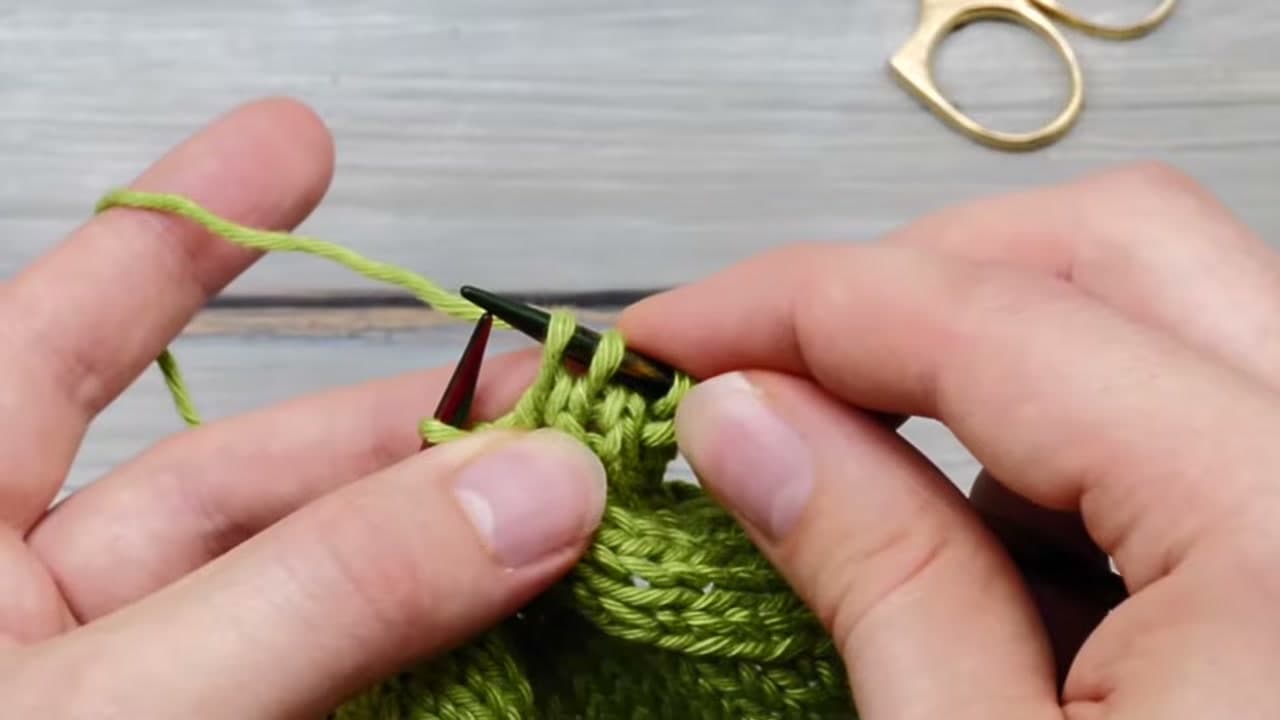
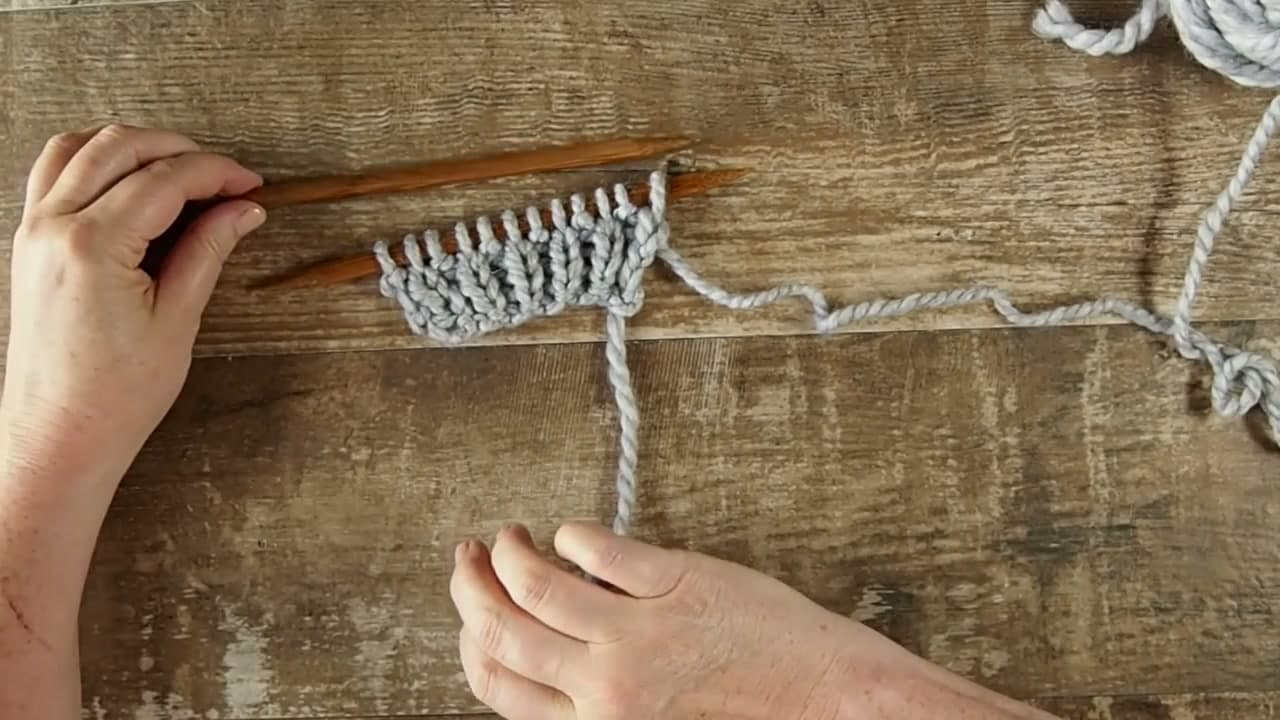
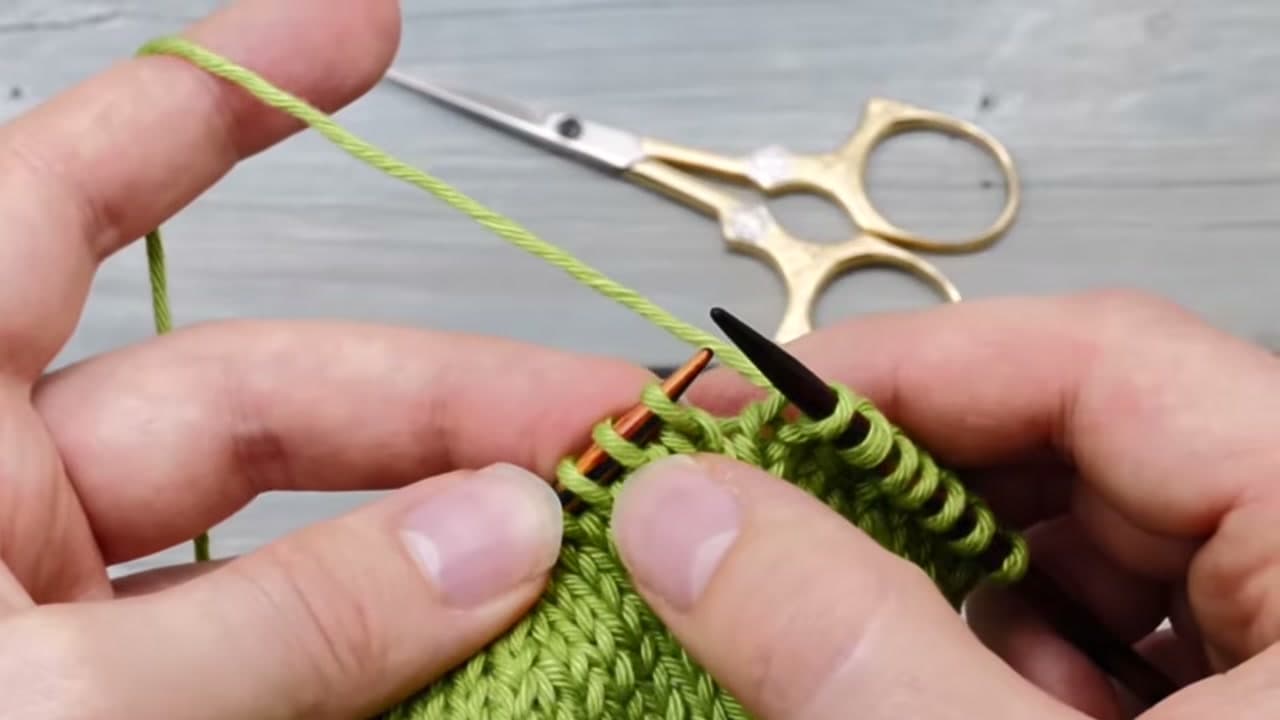
Work along the row to the spot the pattern marks. Instead of putting the right needle into one stitch, push the tip through the first two stitches on the left needle at the same time, entering from left to right the way you would for any knit stitch.

That is the only difference between a knit stitch and a knit two together. Everything after this point is the same wrap and pull you already know. If the two stitches sit too tight to take the needle, ease them along the left needle with a fingernail before you go in.

Tip

Keep the needle tip low and flat as it goes in. Angling it up splits the strand instead of passing under both loops.
2

Wrap the Yarn and Pull It Through Both Stitches

2:22
Step 2: Wrap the Yarn and Pull It Through Both Stitches - How to Decrease in Knitting - K2tog, SSK and Two More

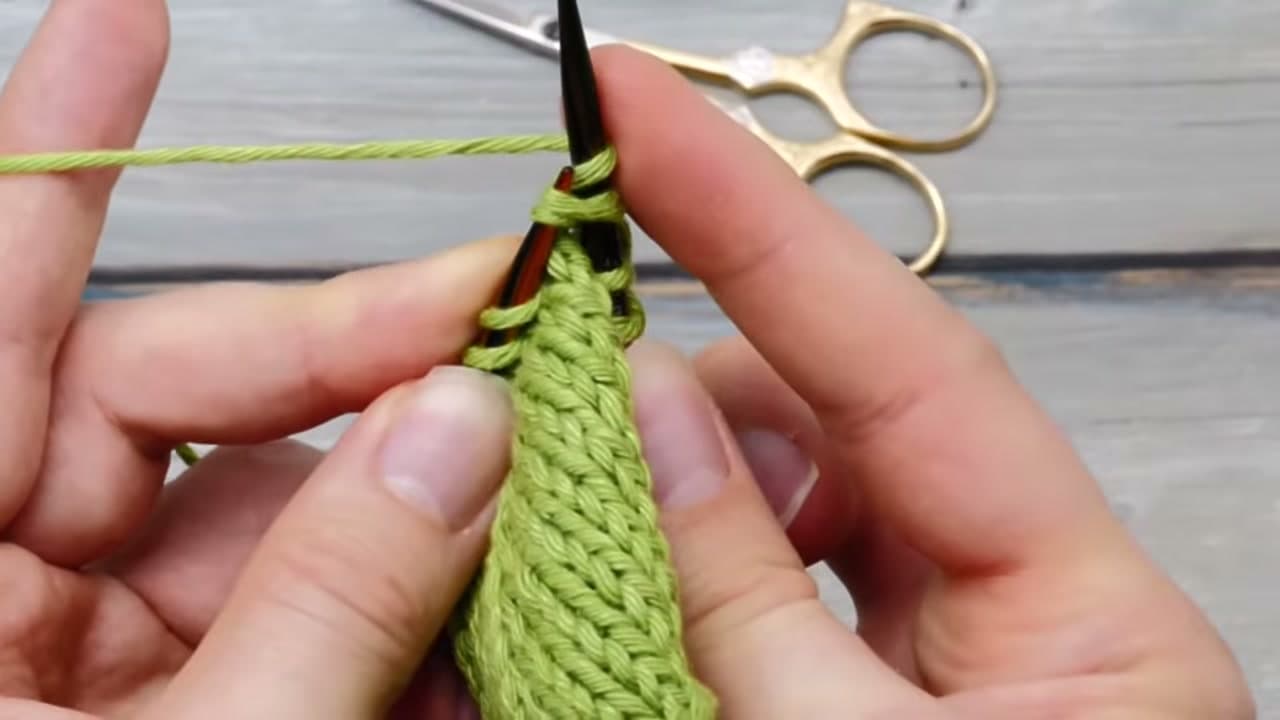
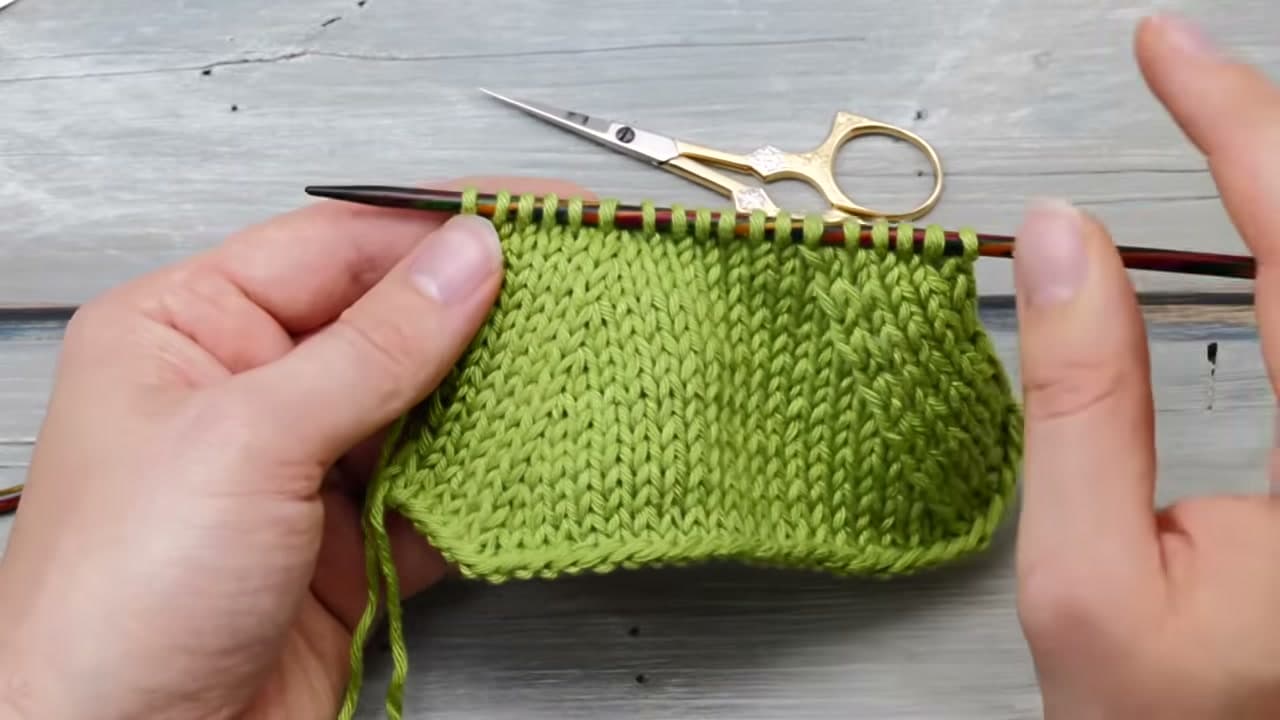
Take the working yarn over the right needle counterclockwise, the same wrap as a plain knit stitch. Draw that loop back through both stitches at once, then slide the old pair off the left needle.

You have one stitch where there were two, and the row is a stitch narrower. Written down it is k2tog. It leans to the right, so patterns put it wherever a right-slanting edge is wanted.

Tip

Pull the new loop through slowly. Two strands make more friction than one, and yanking is how you end up with a stretched, loose decrease that shows.

3

Read the Right-Leaning K2tog Line on the Swatch

3:20
Step 3: Read the Right-Leaning K2tog Line on the Swatch - How to Decrease in Knitting - K2tog, SSK and Two More

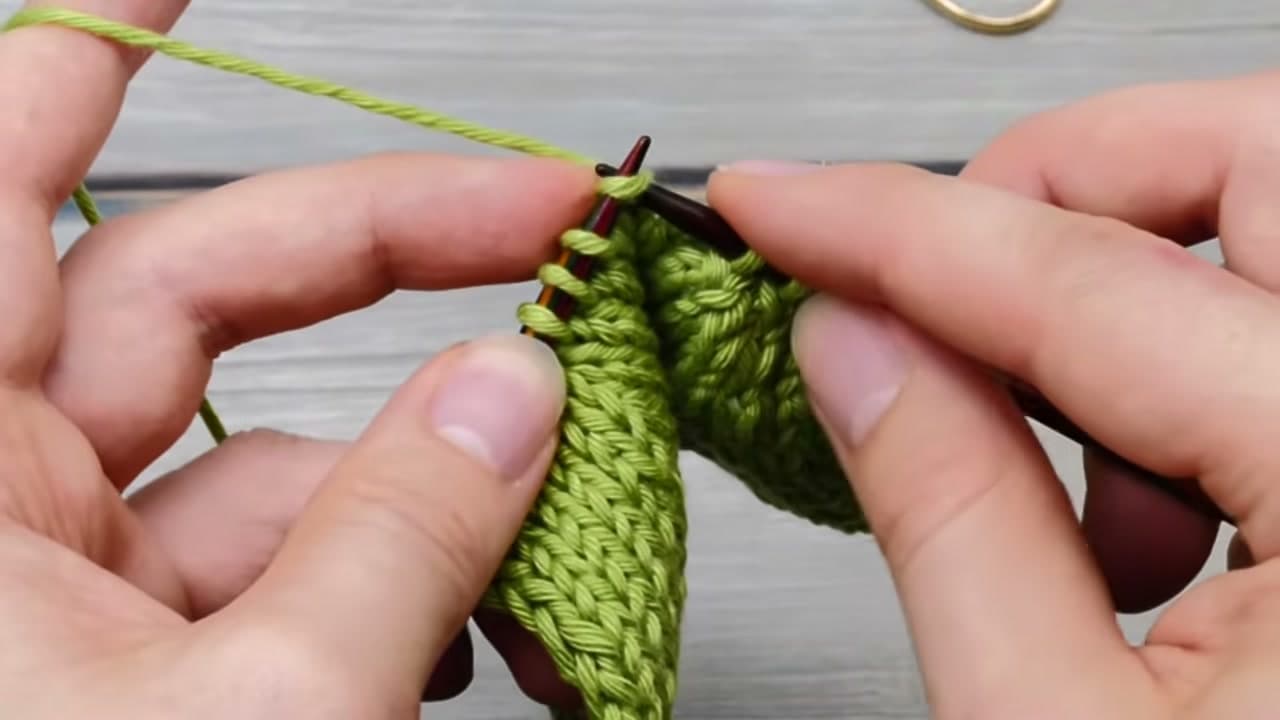
Lay the swatch flat and look at the column where the decreases stack up. Work a k2tog in the same place every other row and the line of stitches tips to the right, because the second stitch of the pair ends up sitting on top of the first.

This is the fact the whole technique turns on. K2tog leans right. Run a fingertip up the line and you can feel the slope as well as see it.

Tip

A light solid yarn shows the slant best. On dark or variegated yarn the lean is still there, but you will not be able to read it, which turns checking your work into guesswork.

Used in this stepstitch markers
4

Slip Two Stitches Knitwise Onto the Right Needle

3:50
Step 4: Slip Two Stitches Knitwise Onto the Right Needle - How to Decrease in Knitting - K2tog, SSK and Two More

The left-leaning partner needs the stitches prepared first. Slip the first stitch knitwise onto the right needle without working it, then slip the second one the same way. Both loops now sit on the right needle, turned the opposite way round from how they started.

No yarn gets wrapped here. Slipping knitwise is what twists the pair, and that twist is what makes the finished stitch fall to the left instead of the right.

Tip

Slip knitwise, not purlwise. Slipping purlwise leaves the stitches untwisted and the decrease comes out looking like a sloppy k2tog.

5

Knit the Two Slipped Stitches Through the Back Loop

4:42
Step 5: Knit the Two Slipped Stitches Through the Back Loop - How to Decrease in Knitting - K2tog, SSK and Two More

Put the left needle back through the front of both slipped stitches while the right needle stays in them. Wrap the yarn counterclockwise, pull it through, and drop the pair off the needles.

That is ssk, slip slip knit. Because the first stitch of the pair lands on top this time, the new stitch leans left. Put an ssk at one edge and a k2tog at the other and both decrease lines angle in toward the middle.

Tip

Some patterns write this as skp or sl1-k1-psso. They land in the same place, a left-leaning single decrease, so swap one for the other without worrying about it.

6

Purl Two Stitches Together With the Yarn in Front

6:16
Step 6: Purl Two Stitches Together With the Yarn in Front - How to Decrease in Knitting - K2tog, SSK and Two More

On a wrong-side row you decrease with purl stitches. Bring the yarn to the front, then slide the right needle from right to left into two stitches instead of one. Wrap counterclockwise, pull through, drop the pair off.

That is p2tog. Turn the work over and it reads as a k2tog on the right side, leaning the same way. Its left-leaning partner is ssp: slip two stitches knitwise, return them to the left needle, then purl them together through the back loop.

Tip

Check the yarn is in front before the needle goes in. Leaving it at the back gives you an accidental yarn over and a hole where the decrease should be.

7

Slide the Right Needle Through Three Stitches at Once

7:38
Step 7: Slide the Right Needle Through Three Stitches at Once - How to Decrease in Knitting - K2tog, SSK and Two More

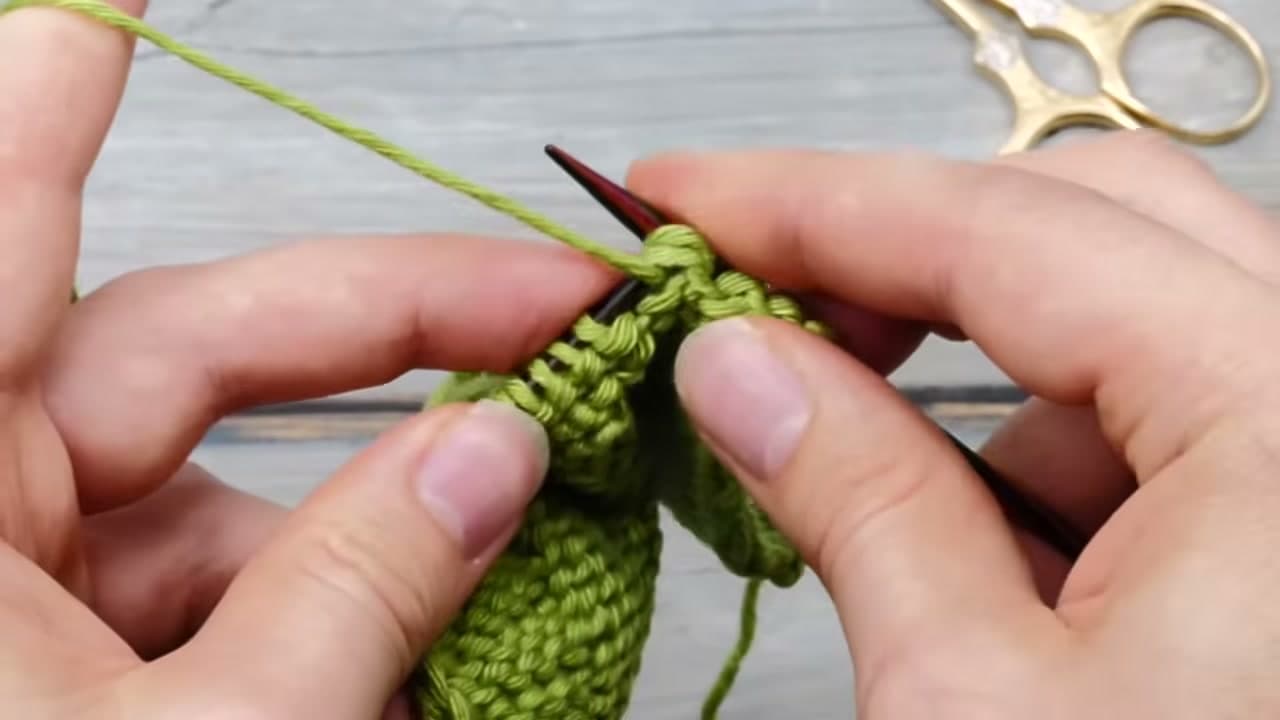
To lose two stitches in one move, go into three stitches at the same time and knit them together. Wrap and pull through as usual. Three loops come off the left needle and one stitch goes on the right.

Take it slowly. Three strands are tight and the needle has further to travel, so loosen the stitches on the left needle first if they will not open up. K3tog is the easiest of the double decreases and it leans right, the same as k2tog.

Tip

Double decreases eat stitches fast. Count the row after you work one, because losing two where the pattern wanted one throws the stitch count off for every row that follows.

8

Compare the Left-Leaning SSK and Right-Leaning K2tog Edges

8:44
Step 8: Compare the Left-Leaning SSK and Right-Leaning K2tog Edges - How to Decrease in Knitting - K2tog, SSK and Two More

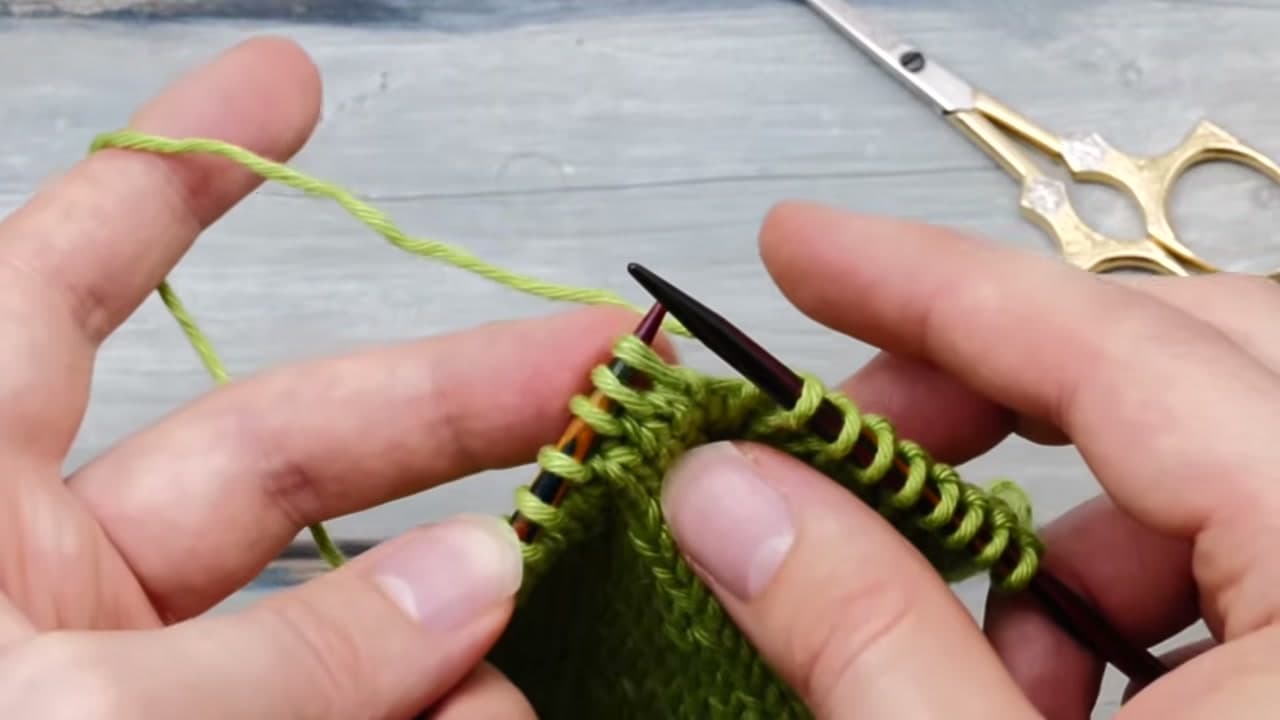
Here are all four decreases worked into one swatch, four stitches in from each edge, with a paper tag naming each one. Look at the edges rather than the tags. Each technique cuts a different slope into the fabric.

Put the right-leaning k2tog on the left edge and the left-leaning ssk on the right edge and the two lines angle in toward the center of the work. That mirrored pair is what gives sleeve caps, hat crowns and raglan seams their even shaping.

Tip

Keep a small labeled swatch like this in your project bag. When a pattern calls for a decrease and you cannot remember which way k2tog falls, the swatch answers it faster than looking it up.

Keep going

How to Knit Cables

Products Used

The Checklist

How to Decrease in Knitting - K2tog, SSK and Two More

Tools
3
Materials
2
Steps
8
Video
9 min

Tools we recommend

Your Guide

NimbleNeedles - Two

As an Amazon Associate we earn from qualifying purchases. Links on this page may be affiliate links - clicking them and buying doesn't change your price, but helps support CraftingStepByStep.

Tags

Sunday How-To

New knitting tutorials, every Sunday

One short email with the week's best step-by-step guides. Free, no spam, unsubscribe anytime.

Did this work for you?

What's next

Related collections

Curated theme pages that include this tutorial.

Weekly Digest

Liked this knitting tutorial?

Pick the categories you want to hear about. Weekly digest of new step-by-step tutorials. No spam, easy unsubscribe.

Send me tutorials about

We only email about new tutorials. Easy unsubscribe anytime.