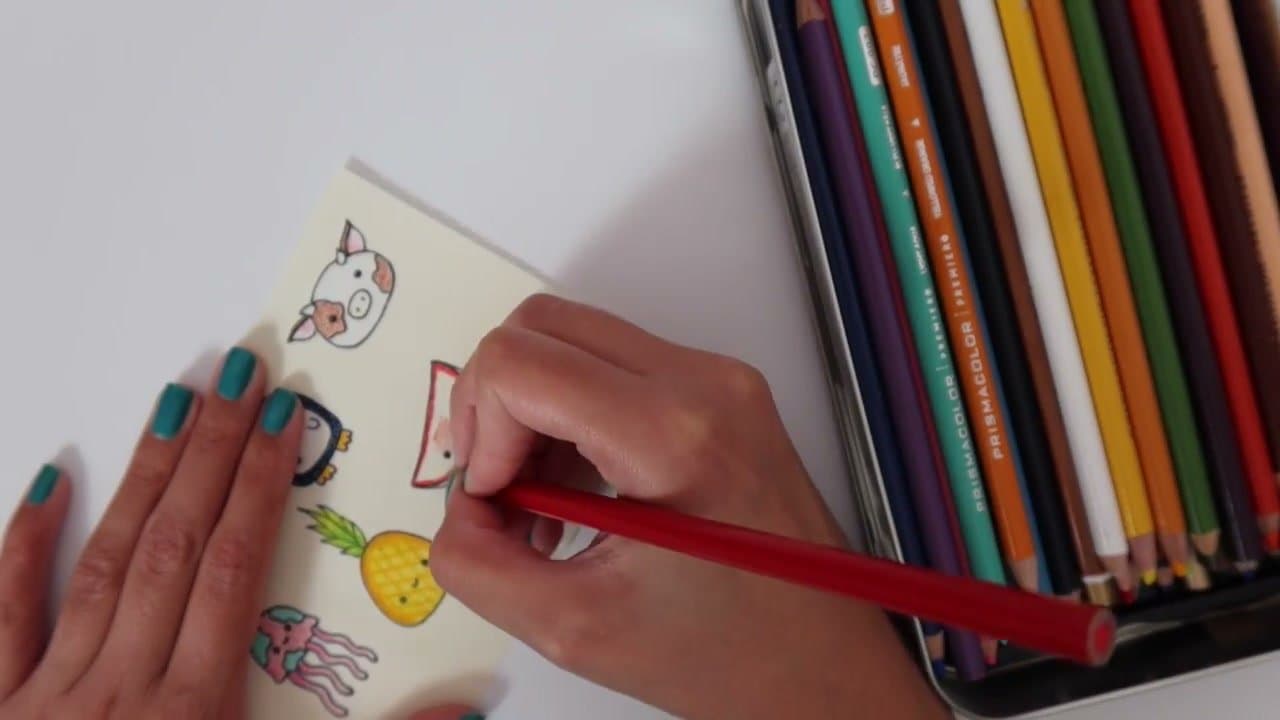
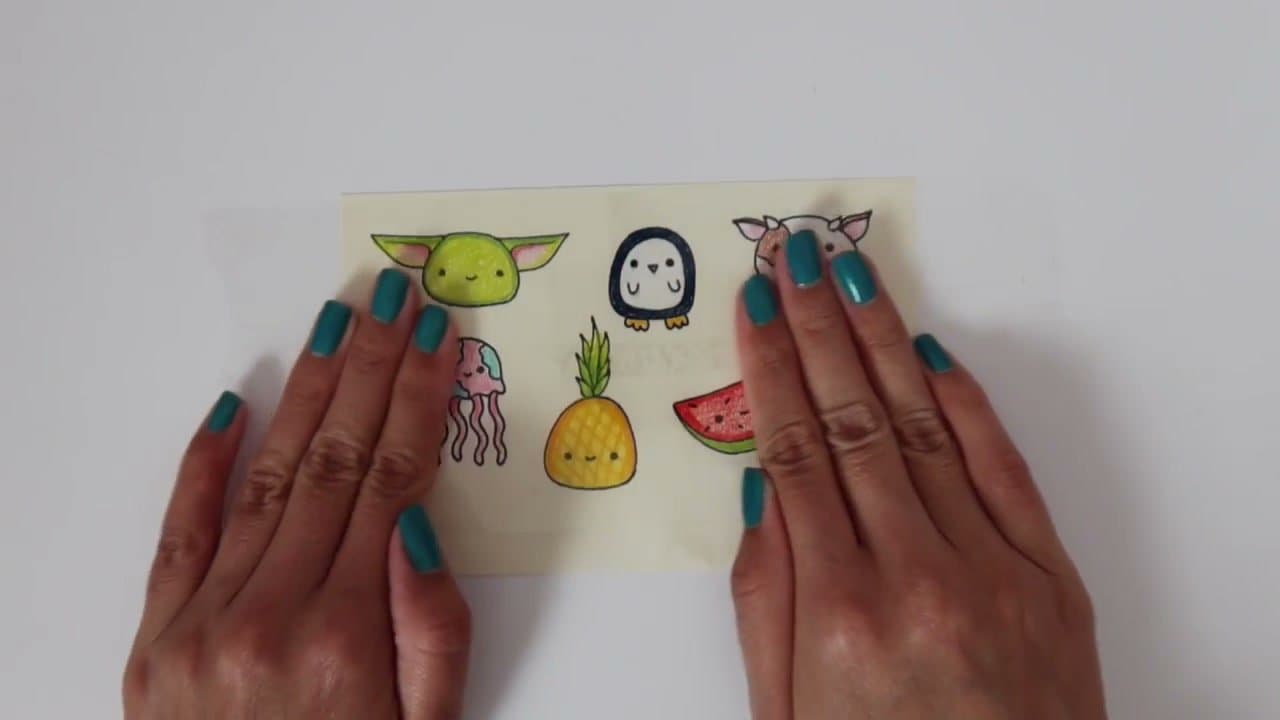
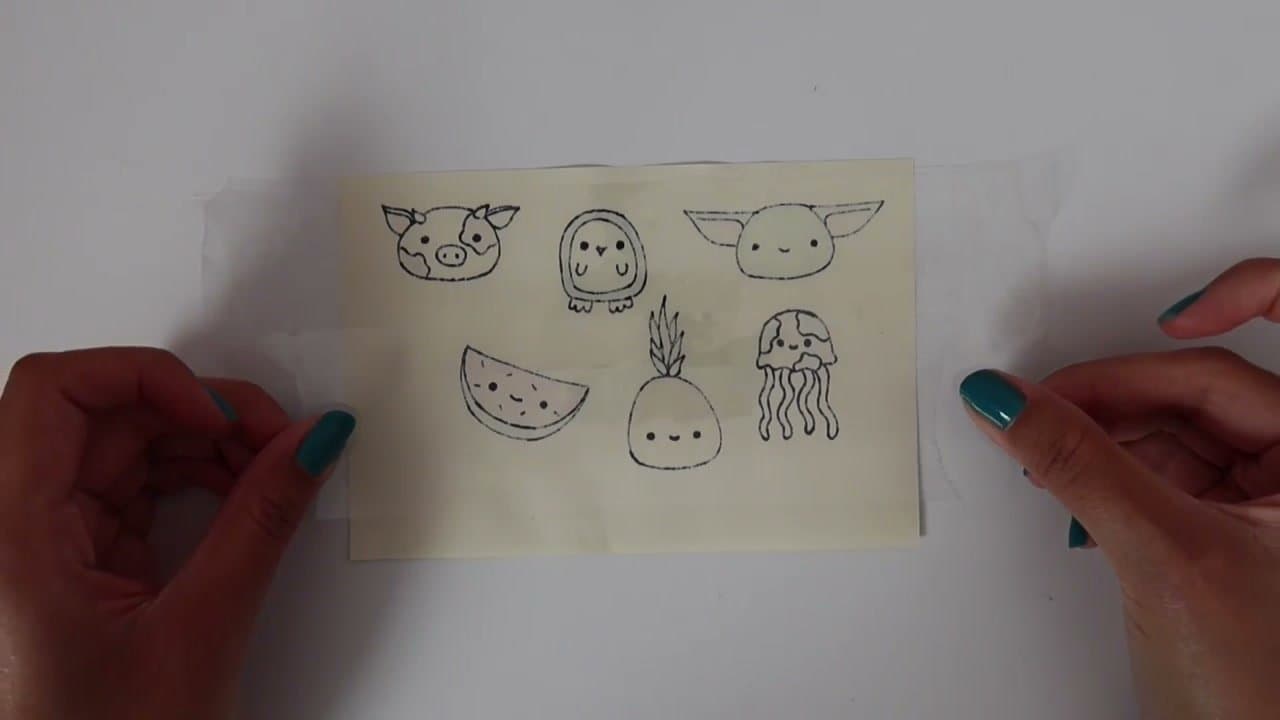
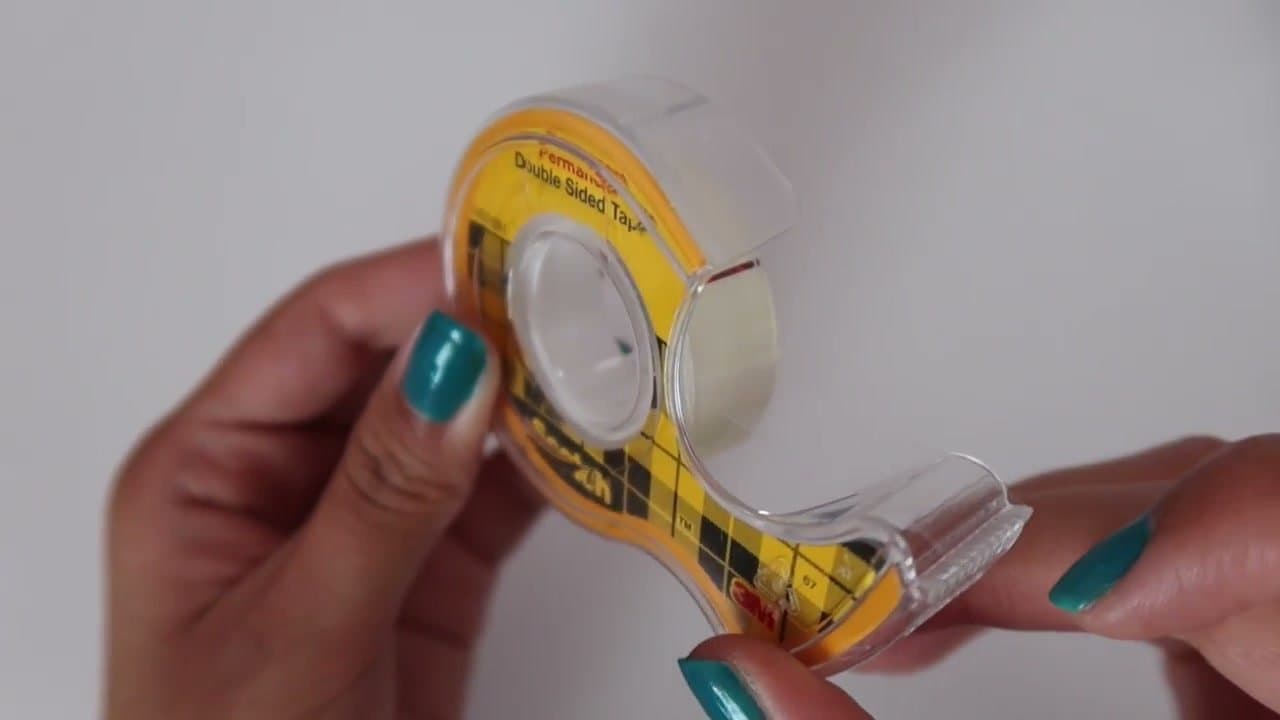
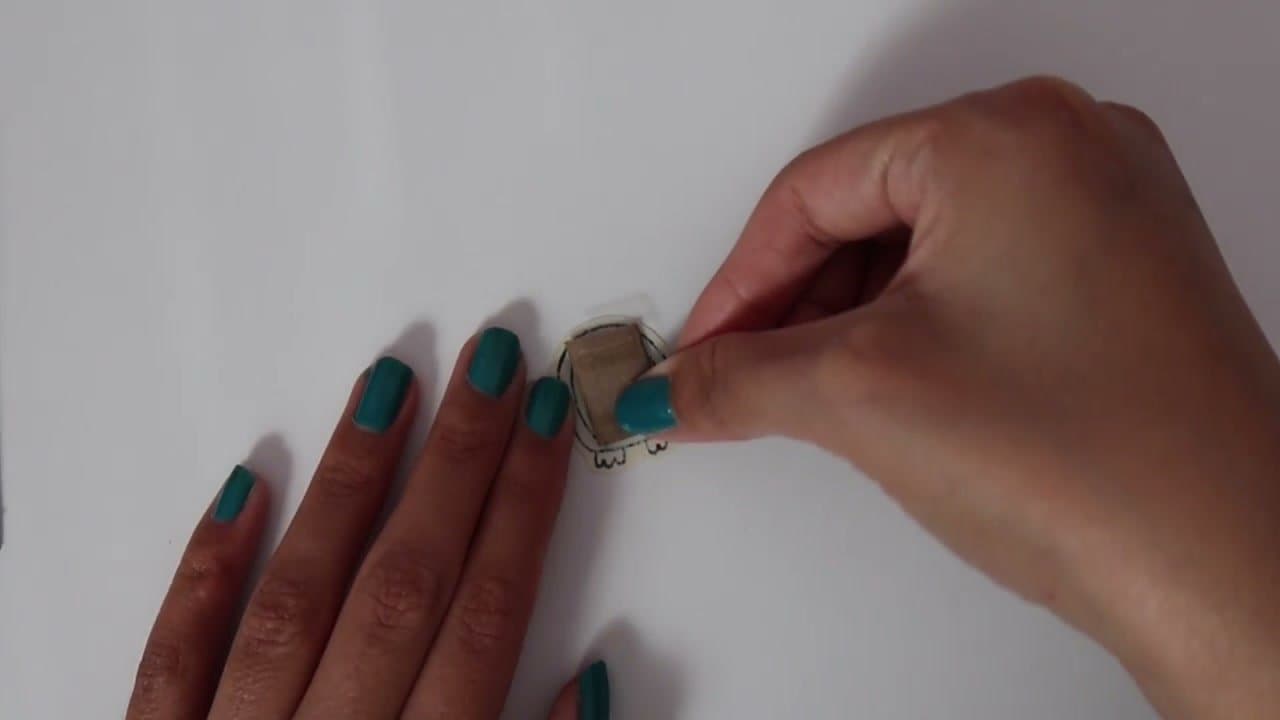
Custom stickers used to mean sticker paper, a printer that cooperates, or a cutting machine. Laurynn Ashley skips all three. Her method seals a hand-drawn doodle between two layers of clear packing tape, then backs it with double-sided tape. The result is glossy, water-resistant, and holds up on a laptop lid for months.
The steps below cover her tape method and a puffy variation. This page fills in why the tape works, where it goes wrong, and how it compares to sticker paper and a Cricut.
Three ways to make stickers, and which one to pick
Each route trades money for effort in a different place.
- Packing tape - the method on this page. Costs almost nothing. Every sticker is drawn by hand, so forty copies means forty drawings.
- Printable sticker paper - adhesive sheets for an inkjet printer. Best for repeats or art that lives on a computer, though most of it needs a laminate on top to shed water.
- Cricut or Silhouette - a cutting machine that trims around designs from your home printer. Clean edges and fast batches, but it costs a few hundred dollars.
Start with tape. Move to sticker paper when you want repeats. Buy the machine when cutting by hand becomes the bottleneck.
Why packing tape works, and which tape does not
Clear packing tape is a thin polypropylene film with an acrylic adhesive. Tape both sides of a doodle and the paper is fully enclosed in plastic, which is what keeps water out.
Not every clear tape behaves. Bargain-bin tape often uses a hot-melt adhesive that yellows and goes brittle within months. Regular Scotch tape is too narrow, so bigger doodles end up with seams, and every seam lets moisture creep in. A 2-inch roll of name-brand packing tape avoids both problems.
Drawing tools matter too. Water-based markers and colored pencils laminate cleanly. Crayon and oil pastel leave a waxy surface the adhesive cannot grab, and those stickers peel apart at the edge.
The mistakes that ruin a batch
Air bubbles are the common one. Anchor one end of the tape strip, then lower the rest in one slow sweep while pressing behind it with a ruler or an old gift card. A bubble under the front layer is permanent.
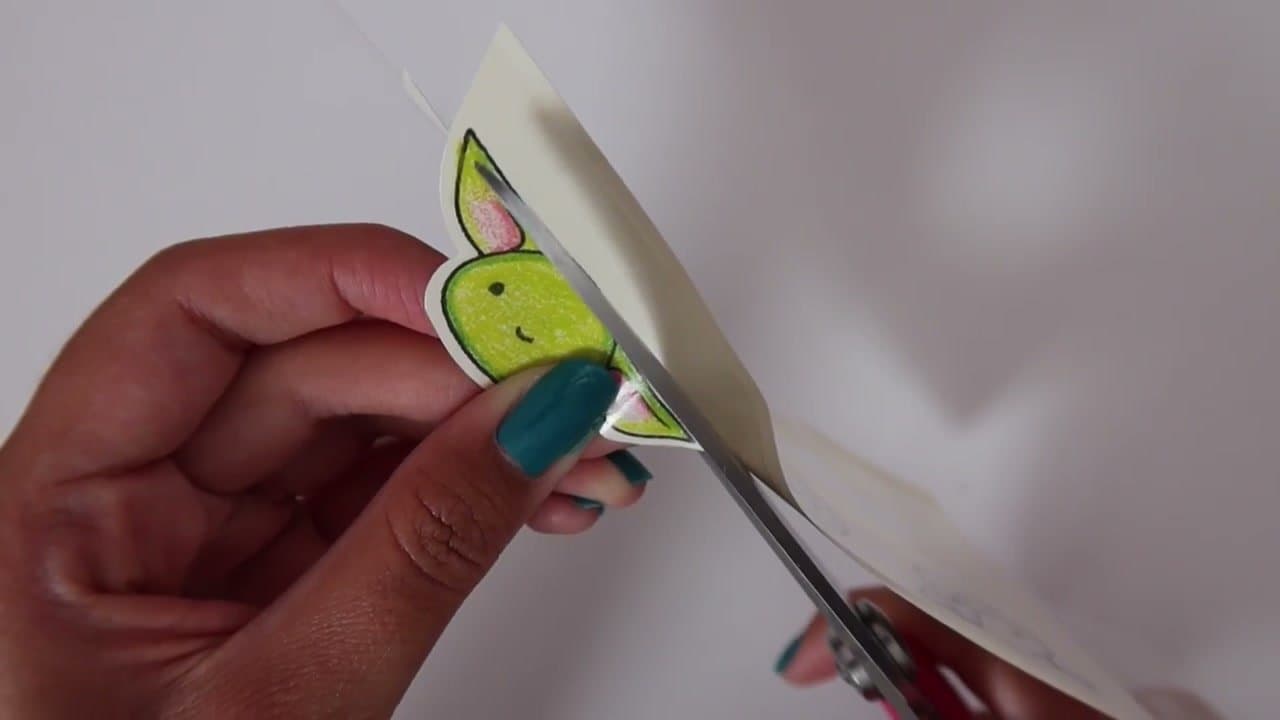
Cutting too close is another. If the scissors nick the seal at the paper's edge, water wicks in and the paper goes soft. Leave a 1-2 mm border of sealed tape around each doodle; sticker shops leave that white outline on purpose.
The last is peeling the double-sided tape liner too early. Stacked stickers with exposed adhesive fuse into a brick. Keep the liner on and store them flat in a paper envelope.
Puffy stickers and other variations
The puffy version in step 6 puts thin cardboard behind the laminated doodle, so the sticker sits proud of the surface and casts a small shadow. Cereal-box chipboard is the right thickness. Corrugated cardboard is too thick, and the sticker rocks instead of lying flat.
A few more ideas with the same materials:
- Draw on patterned scrapbook paper for a built-in background.
- Skip the backing tape and punch a hole through the top for a laminated gift tag that survives a damp gift bag. The gift tag tutorial has sizes and string that work.
- Cut the laminated sheet into a long strip for a glossy page marker, or fold a paper one with the origami corner bookmark.
Where to use them
Laptop lids, water bottles, planner covers, and locker doors all take a tape sticker well. The bond is repositionable once or twice, so a crooked sticker can be lifted and reset. For a permanent hold, brush Mod Podge on the back instead.
Sticker sheets also make good party favors. If the doodle-and-cut idea sounds like fun at wall size, paper butterflies cut from cardstock cover a bedroom wall in an afternoon.