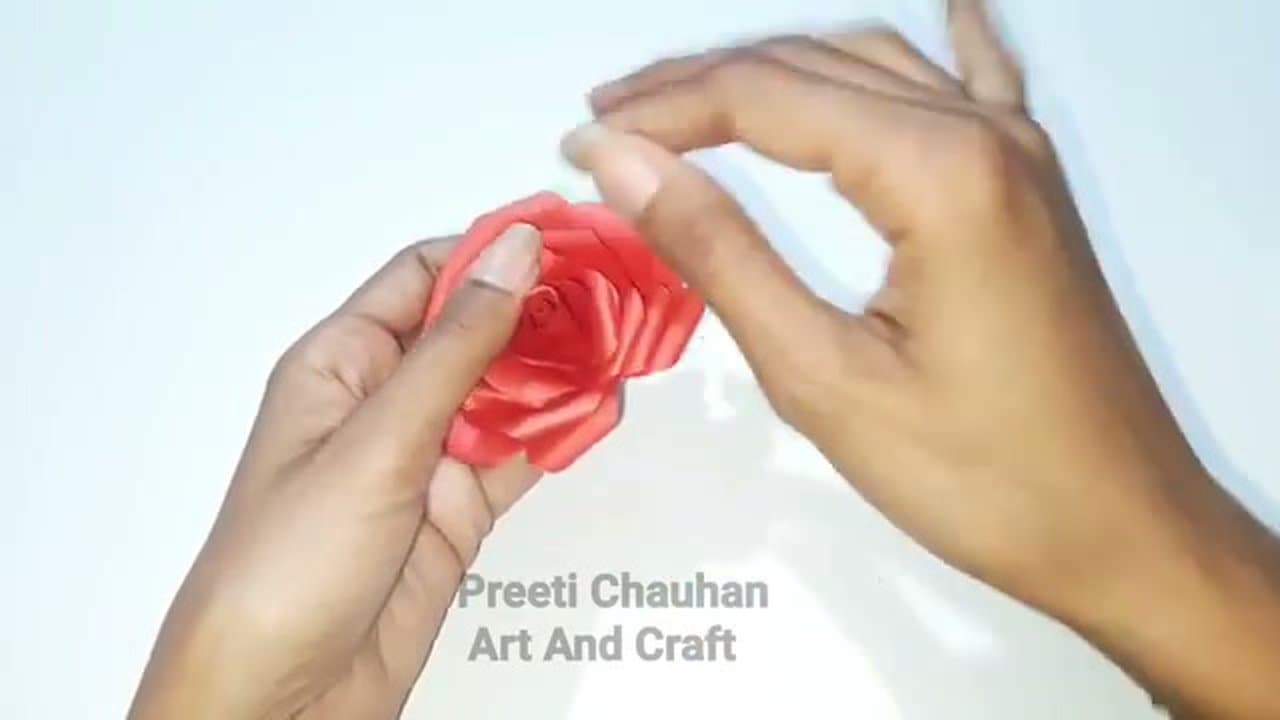
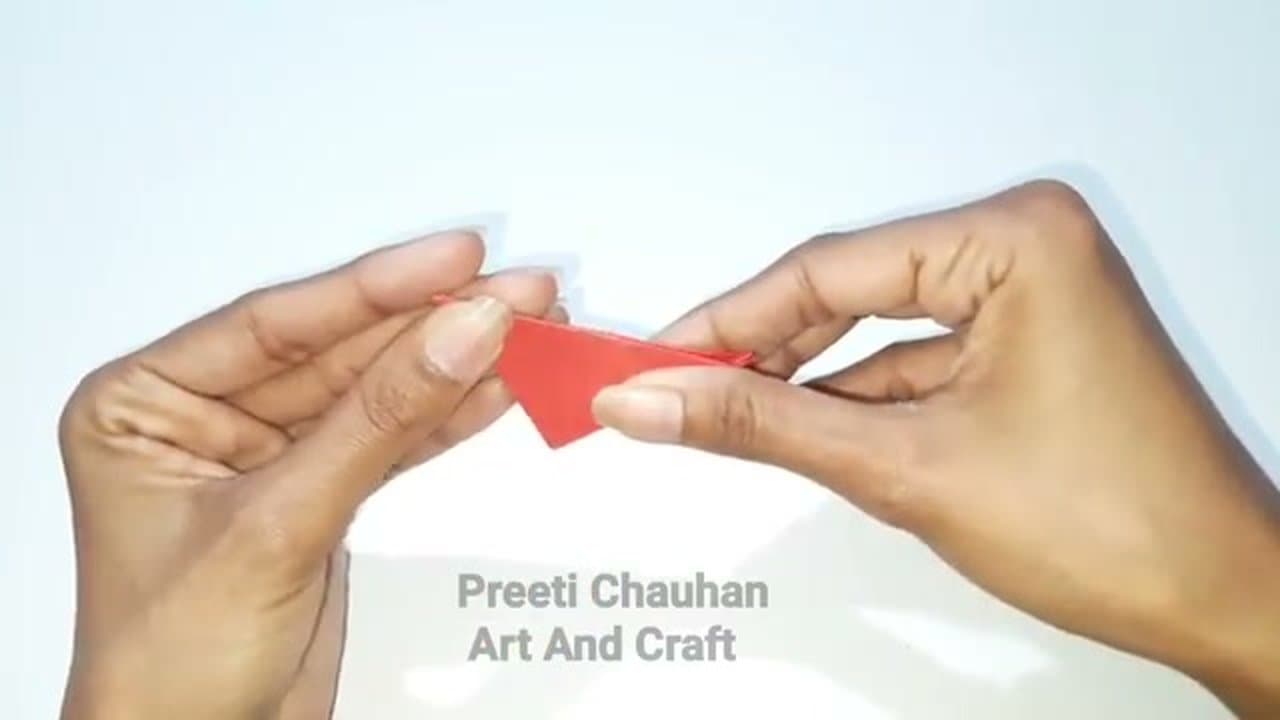
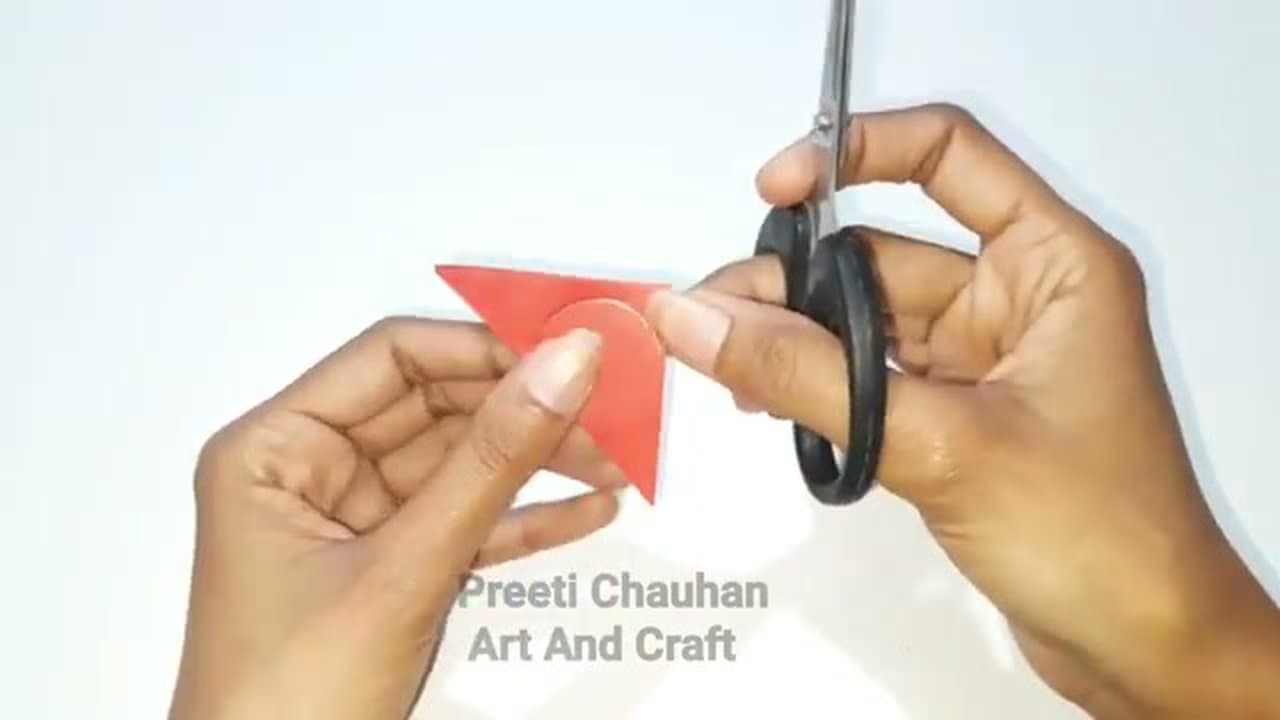
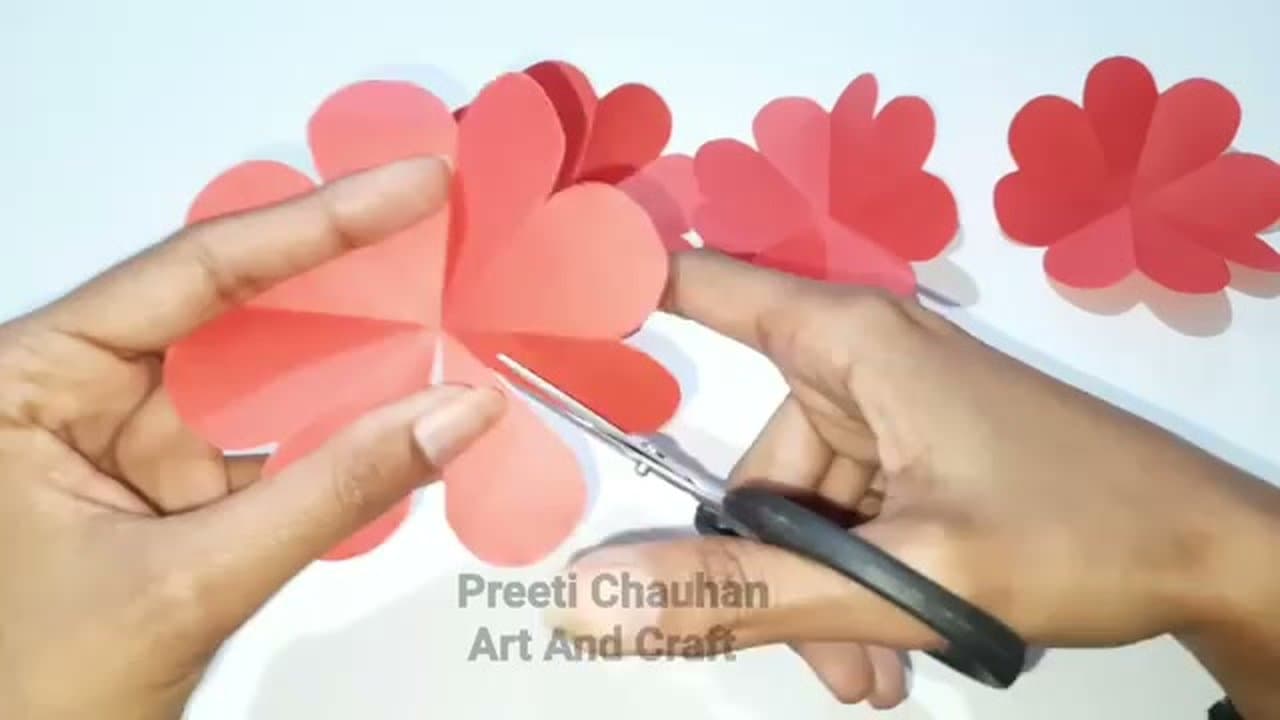
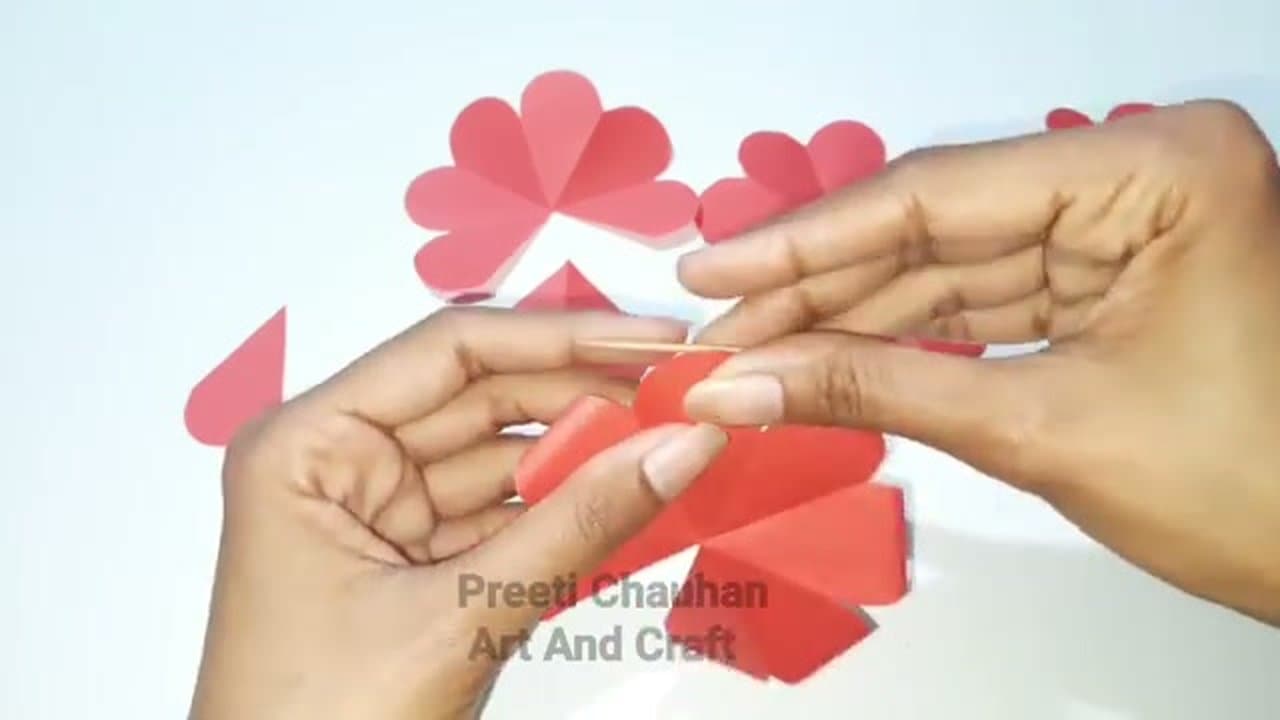
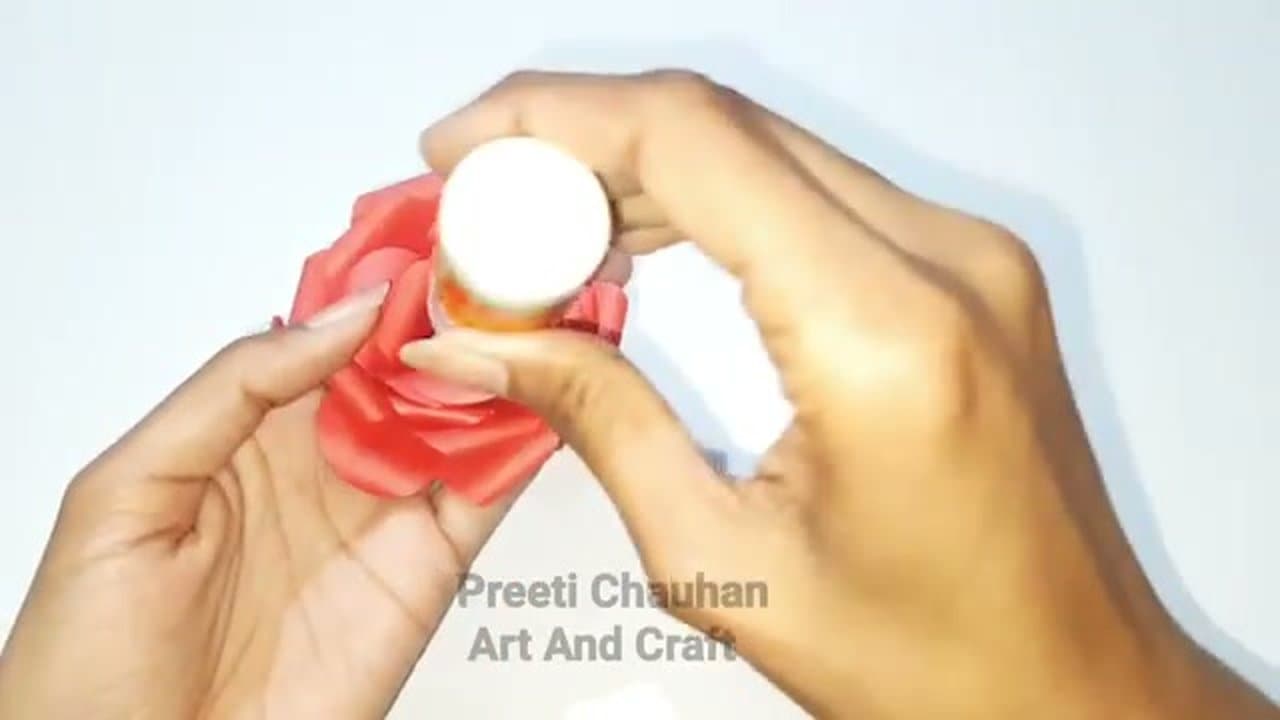
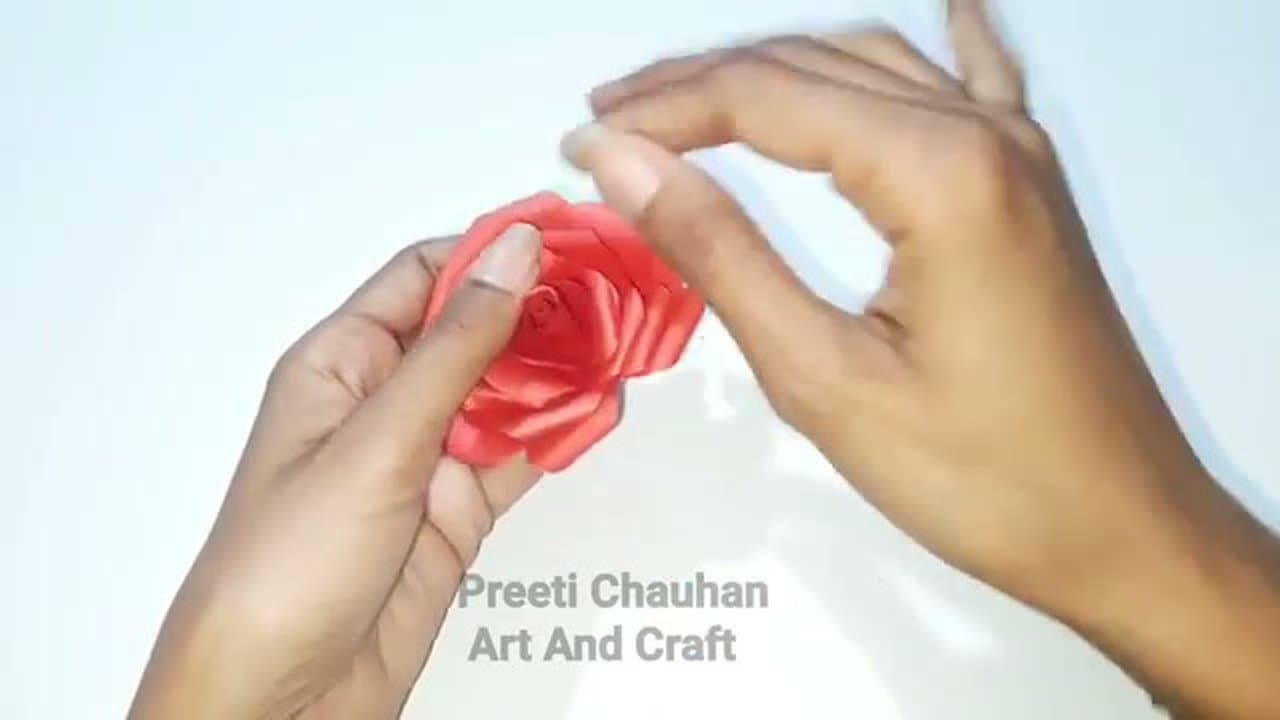
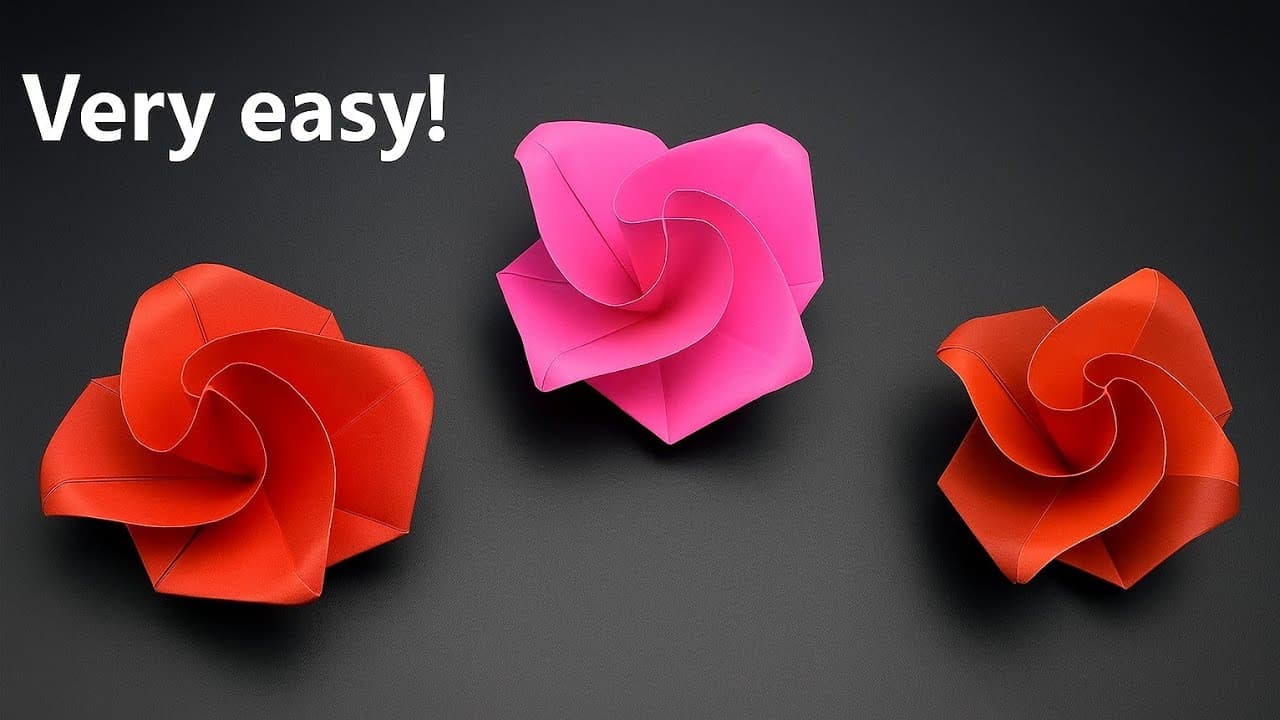
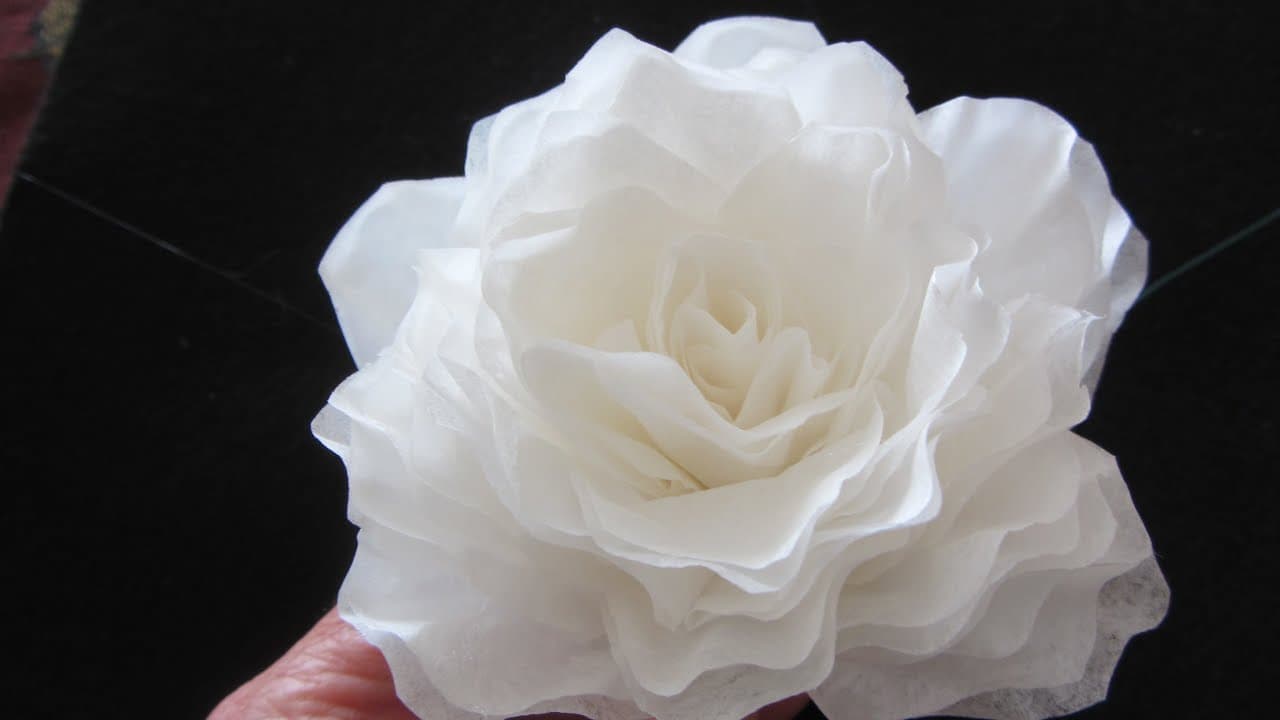
A paper rose is one of those crafts where the finished thing looks harder than it was. Cut the shapes, curl the edges, stack them from the middle out. The petals do the work - once the tips roll outward, flat paper starts reading as a real bloom.
This walkthrough follows Preeti Chauhan Art And Craft on YouTube and uses the layered method: five flower shapes in decreasing sizes, stacked around a tightly rolled center bud. Any thin craft paper works. Red and pink for traditional roses, white for wedding decor, yellow for friendship, or whatever color is in the drawer. To compare this against the other approaches side by side, the paper flowers guide covers five of them.
One rose takes about five minutes once the petals are cut. Cutting is the slow part, so cut a batch in one sitting if a bouquet is the goal.
What you need
- Craft paper or cardstock, cut into squares of about 4", 3", 2.5", 2" and 1.5"
- Sharp scissors
- A pencil, skewer or thin dowel for curling the petals
- Glue stick, or a low-temp hot glue gun for a firmer hold
- Floral wire and green floral tape, only if you want a stem
Which paper to use
Text-weight craft paper is the easy default and it is what the steps below use. It curls under almost no pressure and it holds that curl.
Cardstock gives a rose with real structure. It stands up on a wreath or a gift box without flattening, but it fights the curling tool and it creases if you rush. Crepe paper behaves nothing like either one: it stretches, so you shape a petal by pulling it into a cup with your thumbs instead of rolling it, and it gives the most convincing rose of the three. Book pages and old sheet music make a matte cream rose that photographs well and costs nothing - paperback pages are thin enough to curl straight off the spine. Tissue paper is too floppy for a rose on its own, though it works doubled up.
Skip printer paper for anything you want to keep. It curls fine, but the cut edges go fuzzy and the rose sags within a week.
The spiral cut method
Most of the quick paper rose videos you have seen use this one, and it is worth knowing alongside the layered version. Draw a rough circle on your paper, then cut a continuous spiral inward from the outside edge, stopping about an inch from the middle so a small solid disc is left uncut. A wavy spiral line gives softer petals than a straight one.
Roll the strip starting at the outer end, tight for the first few turns, looser as you work in. When you reach the disc at the center, let the whole coil relax in your palm until it opens to the size you want, then glue the loose end down onto that disc. The disc folds up underneath and becomes the base the rose sits on.
One cut instead of five, and the result is a tighter bud-shaped rose. The layered method in the steps gives an open bloom with separate visible petals. Same difficulty, different flower.
Curling petals without tearing them
Curl the tip, never the base. Lay the top quarter inch of a petal against the dowel and roll it away from you, hold for a second, let go. Pressing down near the point where the petal meets the flower puts a crease there, and a creased petal never sits right again.
Tears come from two places: a dull scissor blade leaving a nicked edge that splits under tension, and curling heavy paper too fast. On cardstock, run the closed blade of your scissors along the underside of the petal to soften the fibers before you curl it. Give a stubborn petal a second gentle pass rather than forcing the first one.
Stem and leaves
Push a 12-inch length of green floral wire up into the base of the rose before the last outer layer goes on, so the wire end sits trapped inside the layers. A dot of hot glue on the wire tip helps it grab.
Wrap the wire in green floral tape, stretching the tape as you go - it only sticks to itself once stretched. For leaves, cut a pointed oval from green paper, fold it down the middle to make a center vein, and tape it to the stem an inch or two below the bloom. Two leaves at slightly different heights looks more like a real stem than a matched pair.
Sizing, and how many make a bouquet
Petal size drives the whole thing. A 4-inch outer square produces a rose about two and a half inches across, which is the size that works on cards, gift toppers and garlands. Double every square to 8 inches and you get the statement bloom used for backdrops and photo walls - giant paper flowers covers how those get mounted.
For a hand-held paper bouquet, 12 to 15 roses reads full. A jar or small vase needs 7 to 9. Wreaths swallow far more than you expect, 20 or more on a 14-inch form. Mix two or three sizes and a couple of shades instead of making them all identical. A dozen matching roses looks like a craft project; a mixed bunch looks like flowers.
Common problems
The layers slide apart or the rose unrolls. Glue stick on its own rarely holds a stacked base. Put a dab of hot glue at the center of each layer as it goes on and press for five seconds. Glue the base only, never the petals - a glued petal cannot be reshaped later.
The center is a hard little knot. The bud cone was wound too tight. Roll the next one loosely and let it relax in your palm for a moment before you glue the bottom. On a spiral rose, the same fix applies to the first few turns.
Edges tear as you curl. Either the paper is too heavy for the dowel or you are rolling too close to the base. Soften cardstock with a scissor blade first and work only the outer quarter of the petal.
Petals point inward instead of opening out. Bend them back by hand after the layer is glued. The glue holds the layer, not the petal shape, so you can keep adjusting right up until the last layer goes on.
The rose will not sit flat. The base is uneven because a layer went on crooked. Trim the bottom of the stack flat with scissors. Nobody sees the underside once it is on a card or in a vase.