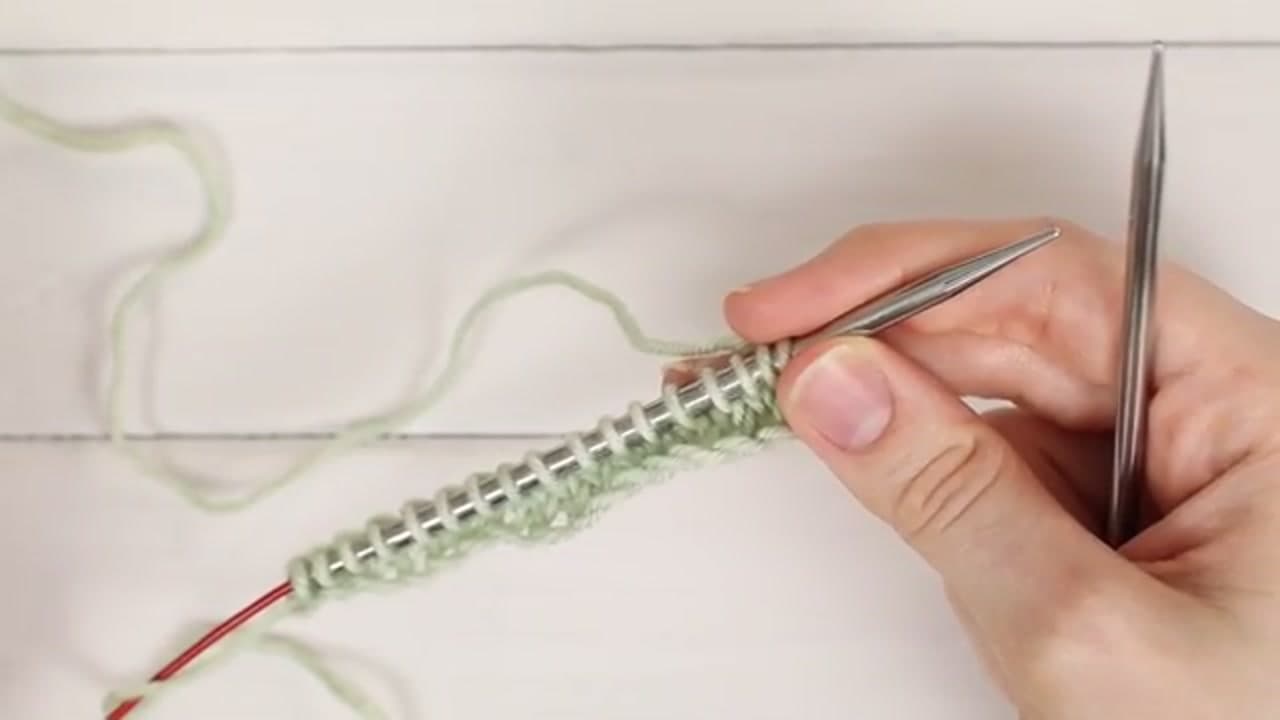
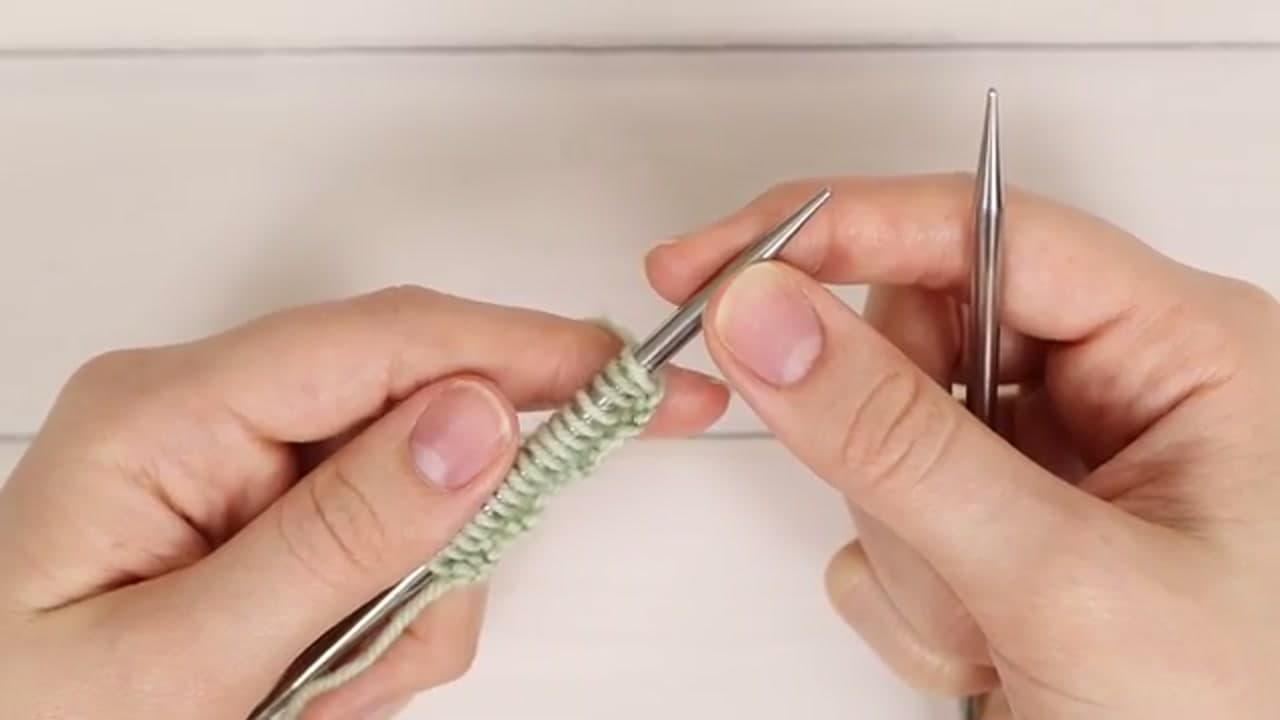
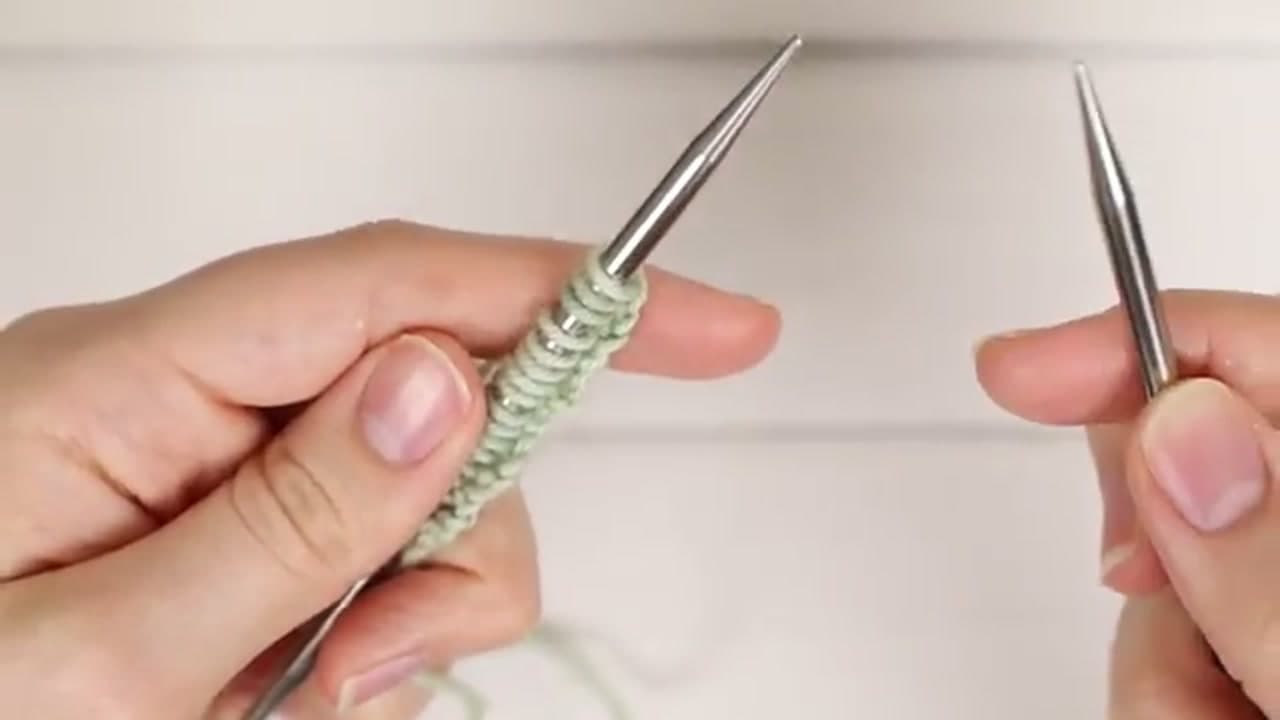
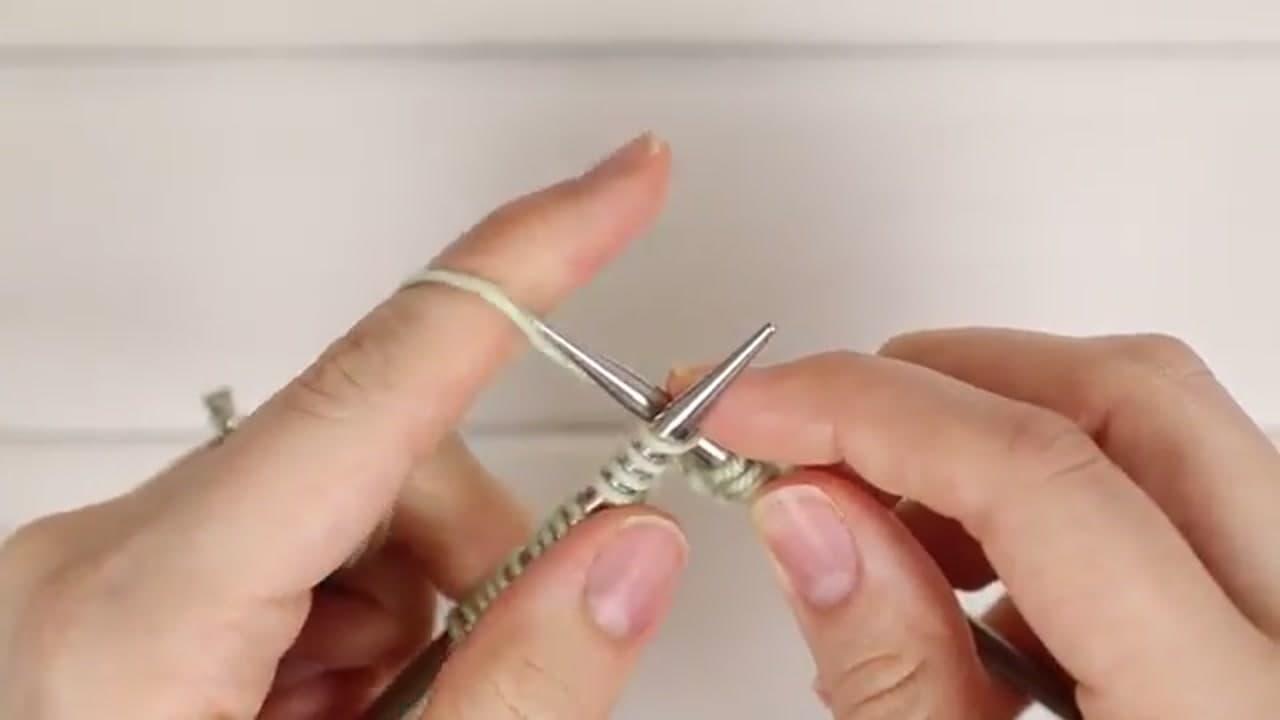
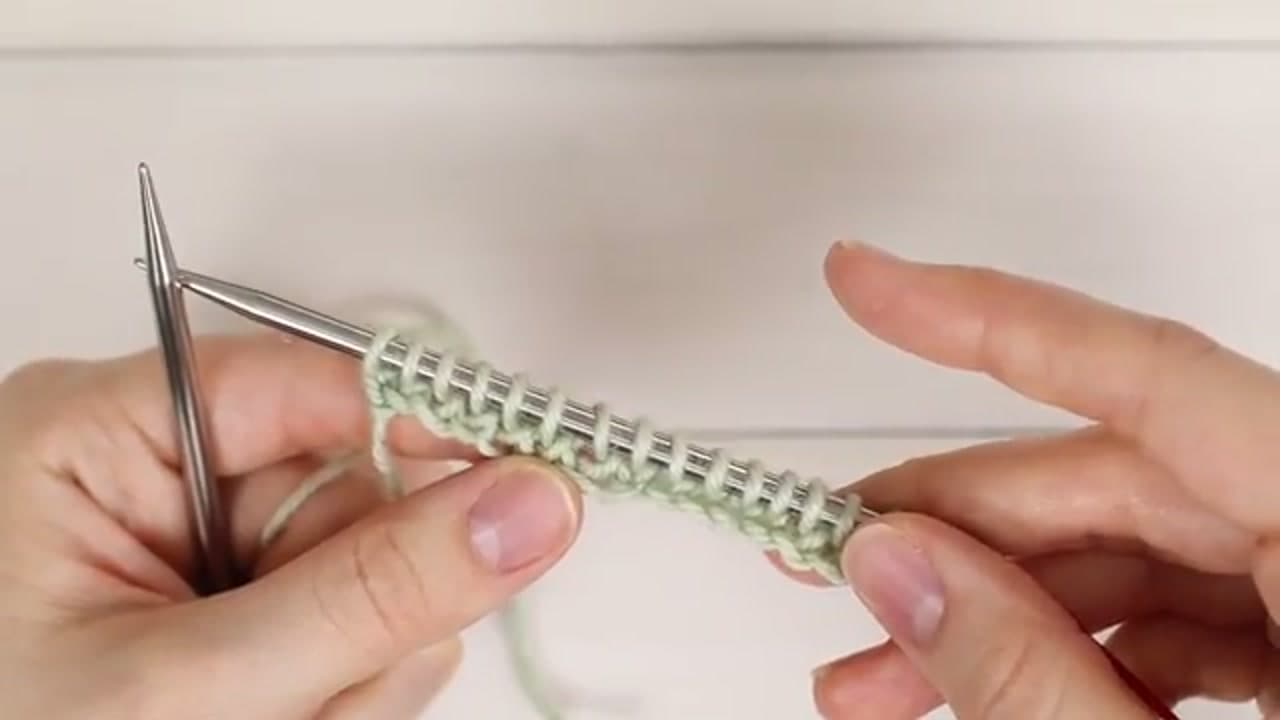
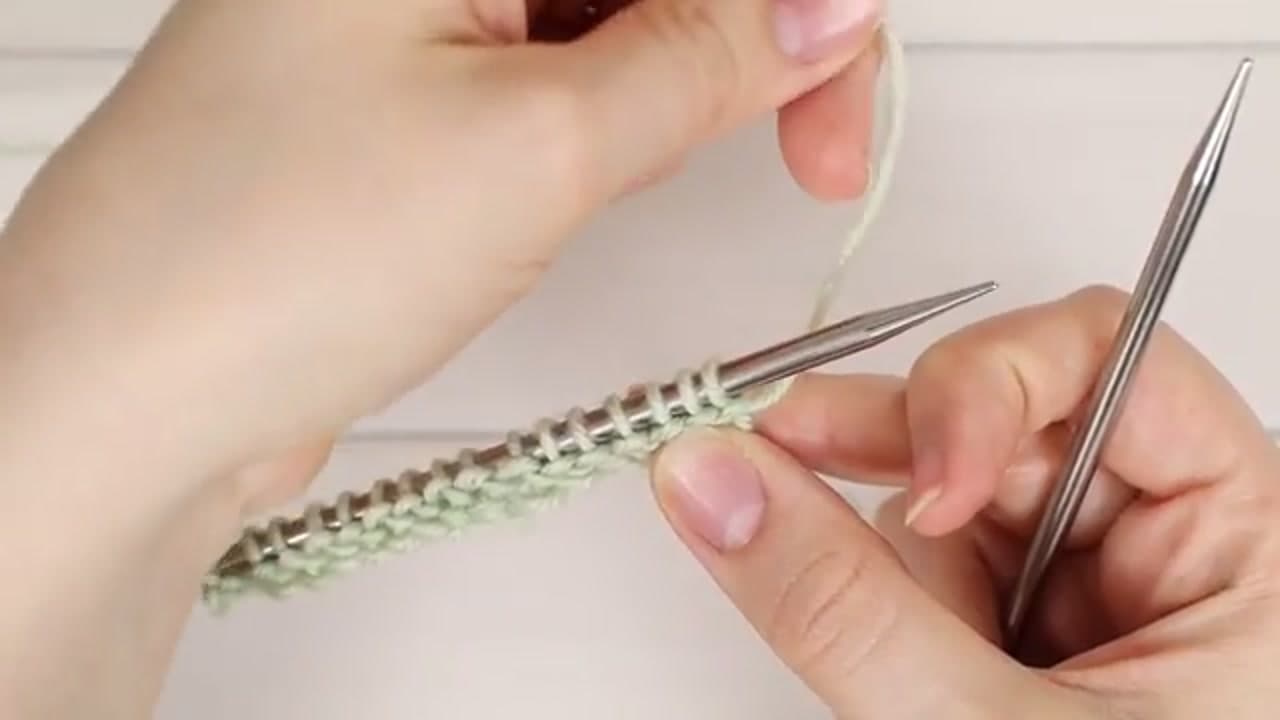
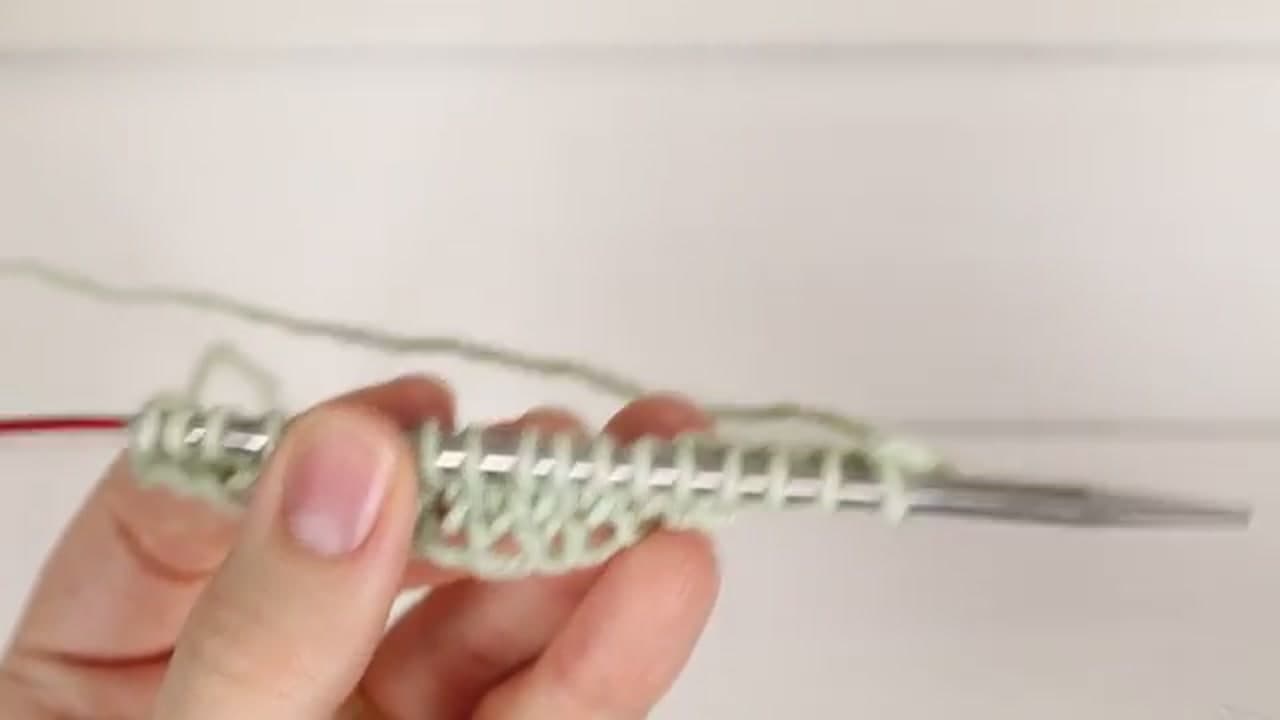
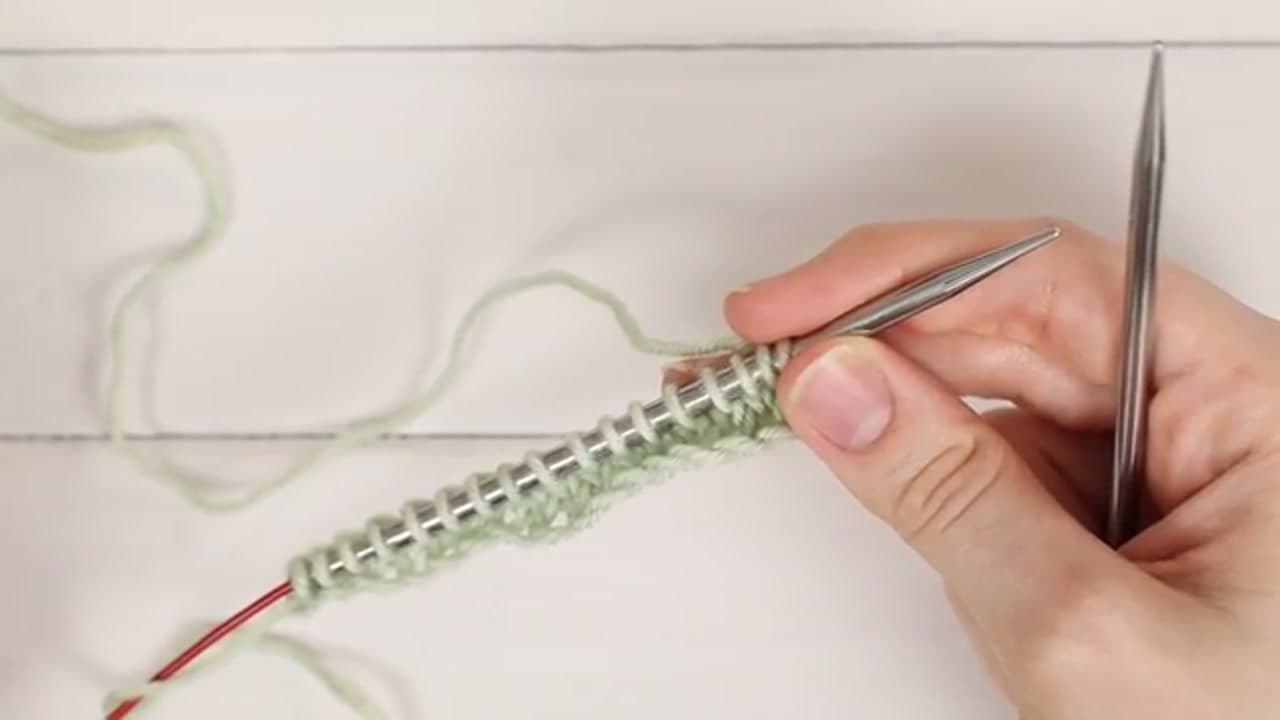
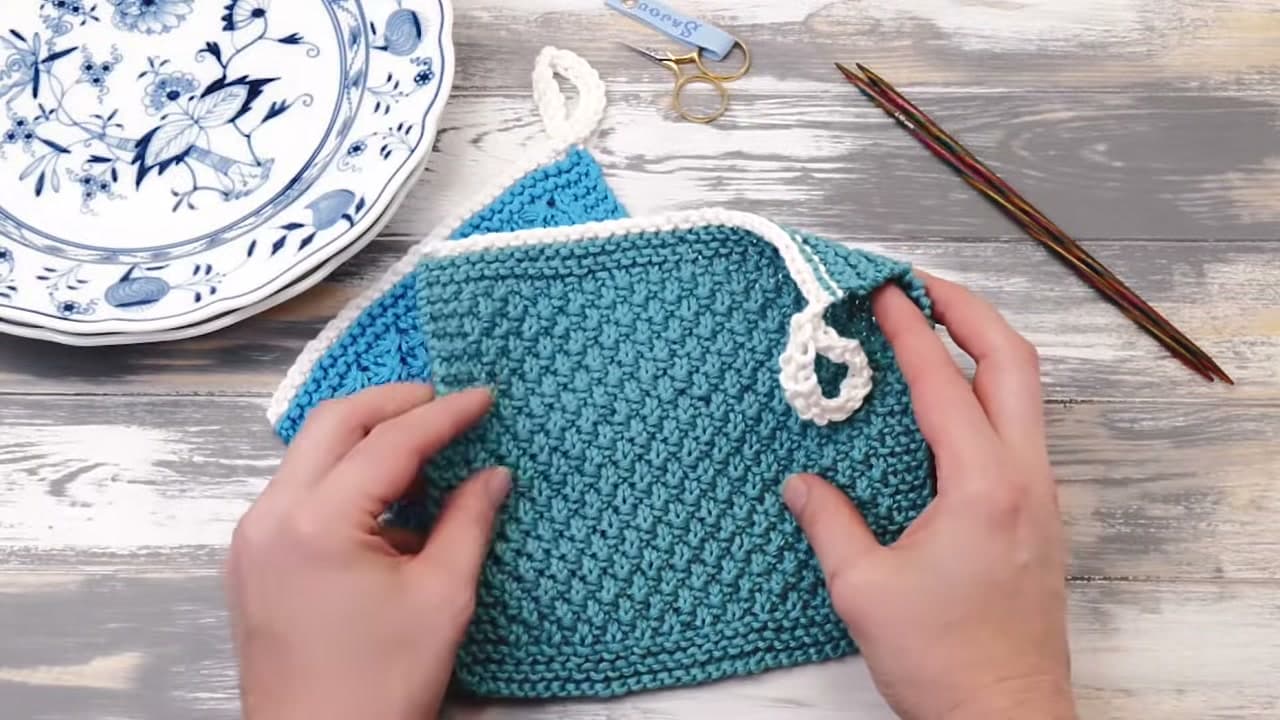
If you've been wanting to learn how to knit, this is the place to start. Stockinette stitch is the most recognizable fabric in knitting (those tidy columns of little V's you see on every store-bought sweater), and it teaches you the two foundational stitches at the same time: the knit and the purl. One row of knits, one row of purls, repeat. That's it.
This walkthrough follows along with The Blue Mouse Knits, whose beginner series is the clearest one we've found on YouTube. By the end of this tutorial you'll have a small practice swatch, you'll be able to tell the right side from the wrong side at a glance, and you'll know what to do when your tension feels off or a stitch looks twisted.
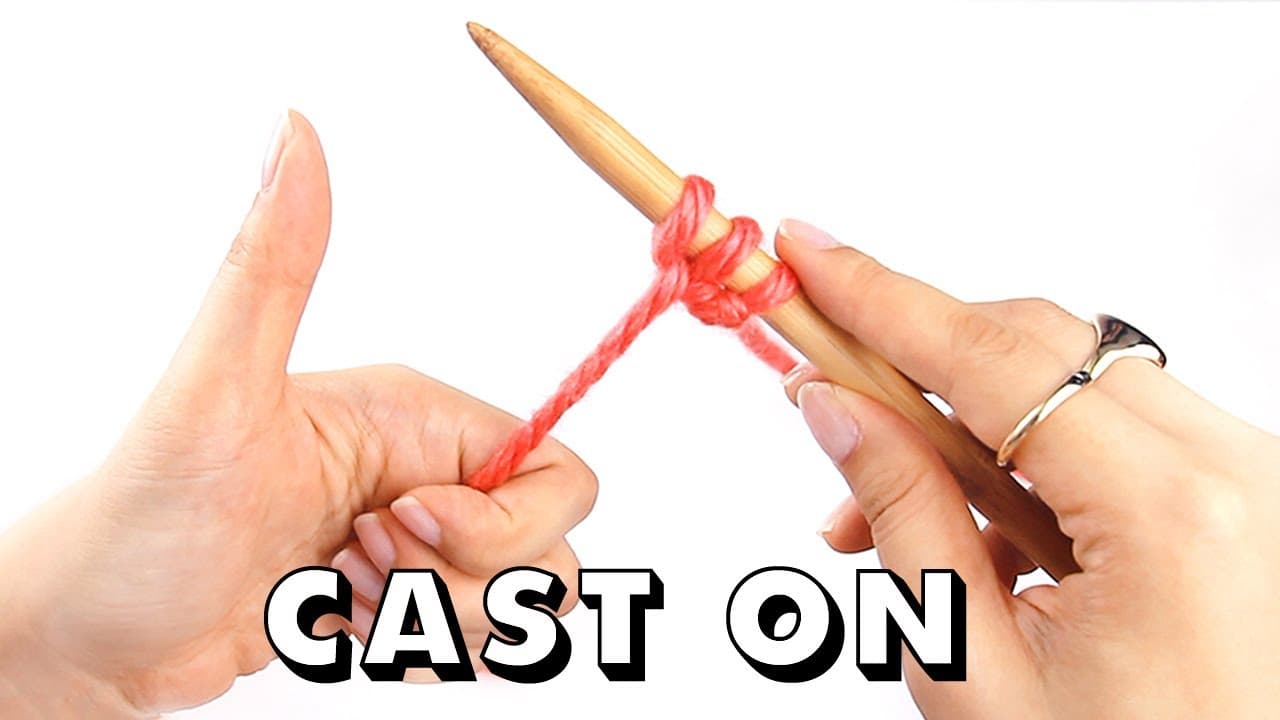
You need a pair of US 7 or 8 needles, a ball of smooth worsted yarn in a light color, and about half an hour. Never cast on before? Do casting on first.
Knit vs purl
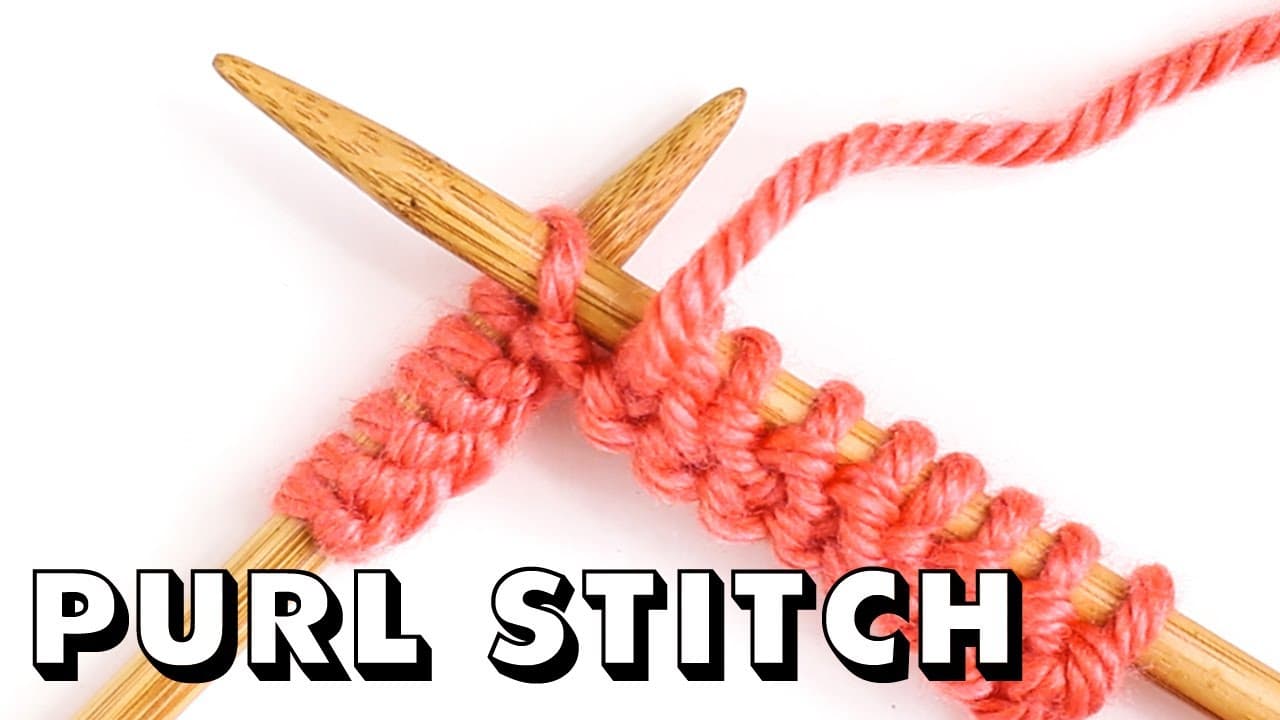
A knit stitch pulls the new loop through from the back, so the yarn sits behind the work and a V shows on the side facing you. A purl pulls the new loop through from the front, so the yarn sits in front and a bump faces you. They are the same stitch seen from opposite sides. That is why a knit row on one side reads as purl bumps from the other.
What stockinette is and why it curls
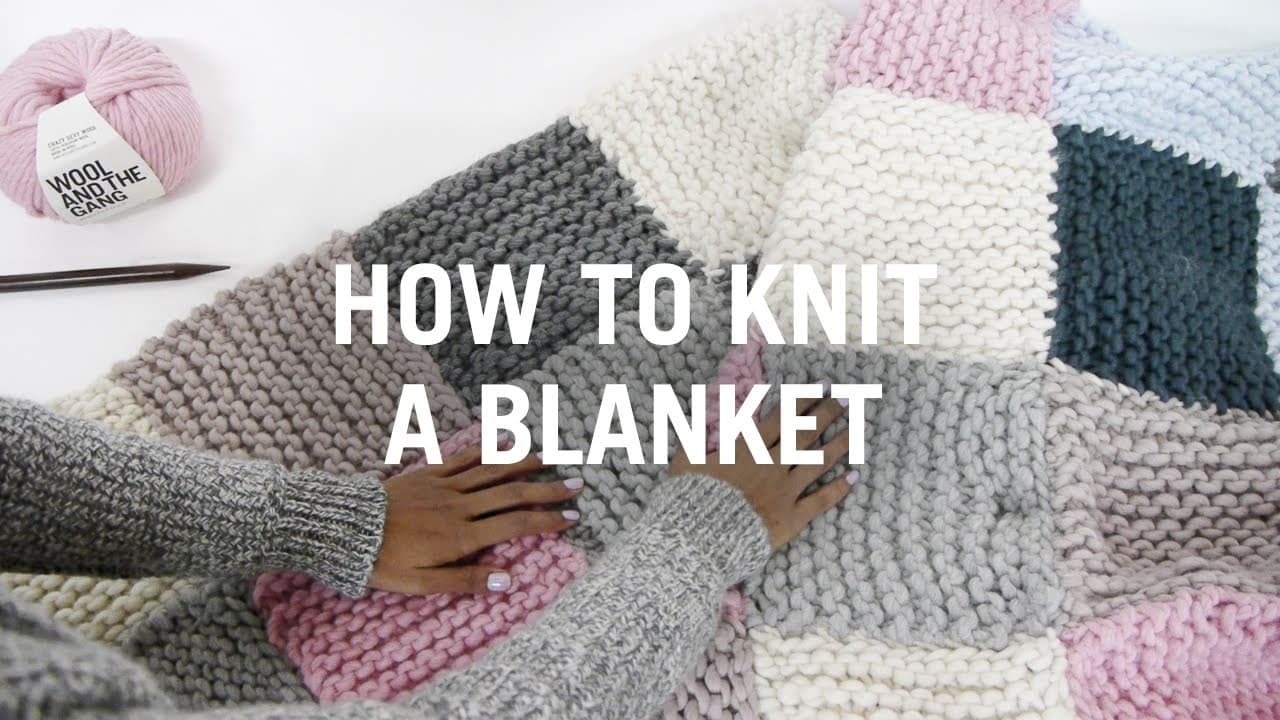
Stockinette is knit on the right side, purl on the wrong side. It is smooth, stretchy and fast. It also curls. The V side pulls tighter than the bump side, so the edges roll toward the back and the top and bottom roll toward the front. Blocking helps a little. A border of garter or ribbing fixes it for good, which is why most scarves and blankets have one.
Garter vs stockinette vs ribbing
| Stitch | How you work it | Looks like | Curls? |
|---|
| Garter | Knit every row | Ridges on both sides | No |
| Stockinette | Knit a row, purl a row | Vs on the front, bumps on the back | Yes |
| Ribbing | Knit 1, purl 1 (or 2 and 2) across | Stretchy vertical columns | No |
Ribbing is its own lesson - see how to knit ribbing for cuffs and hat brims.
Look at the side facing you. Vs mean that side is the knit side, so the next row is a knit row. Bumps mean purl. Counting rows is easier on the V side: each V is one row, stacked like a chain. Get used to reading this now and you will rarely need a row counter.
Fixing a dropped stitch
A dropped stitch leaves a ladder of loose bars running down a column. Stop before it runs further and pin it with a safety pin or spare needle. Work to that spot, slip a crochet hook into the loop from the front on the V side, and hook each bar through in order, bottom to top, then put the loop back on the left needle. Our dropped stitch guide shows it frame by frame.
Common knit and purl mistakes
- Yarn in front on a knit row. You get an extra loop over the needle, which becomes a hole and an extra stitch. Move the yarn back before every knit.
- Extra stitches at the edge. Pulling the first stitch over the needle makes it look like two. Keep the yarn low and count every few rows.
- Tight rows. Work on the thick part of the needle, not the tip, and loosen your grip.
Once you have a few inches of swatch, bind off and keep it. Want to go faster? Try continental knitting next.