How to Draw a Dog - Step-by-Step Puppy Sketch

  • 7 steps
  • 15:09 video
  • Medium
  • Crafts

Based on a video by Cartooning Club How to Draw

Opens their YouTube channel

Steps written out by CraftingStepByStep · Published · Updated

Watch the original video (opens YouTube)
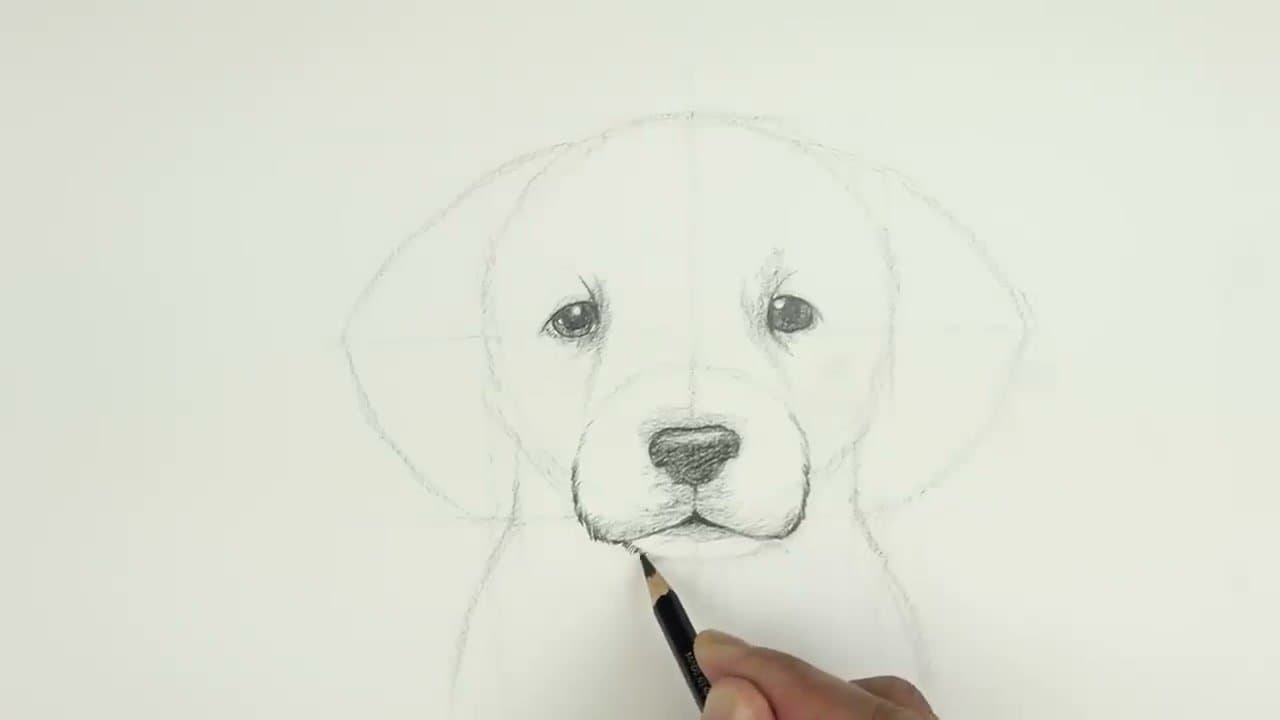
The finished result: How to Draw a Dog - Step-by-Step Puppy Sketch
Also in:Painting

Drawing a dog is easier than it looks once you stop trying to draw a dog and start drawing a circle, then a grid, then features one at a time. The finished puppy at the end is a stack of simple decisions about where things go.

Marty from Cartooning Club builds a golden lab puppy with a head circle, a few guidelines and a feature-by-feature block-in. It looks rough in the early steps and that's the point. Once everything sits in the right place, you erase the scaffolding and lay in fur and shading. Work big to small and light to dark.

Start with shapes, not a dog

Every breed sits on the same frame: a circle for the head, a bean for the body, and tubes for the legs. Get those three shapes on the page lightly before you draw one ear. If the circle and the bean look right together, the dog will look right. If they don't, no amount of fur fixes it.

What makes it read as a puppy

Puppies and adult dogs use the same parts in different sizes. For a puppy:

  • The head is big - close to the width of the chest.
  • The muzzle is short and round.
  • The paws look a size too large for the legs.
  • The body is short and a little chubby.

Stretch the muzzle, shrink the head and lengthen the legs, and the same drawing grows up into an adult dog.

Drawing other breeds

Three things change a lab into any other dog: the ears, the length of the muzzle and the coat.

BreedEarsMuzzleCoat
LabSoft, folded, hangingMedium, broadShort, smooth strokes
BeagleLong, low, roundedMedium, squareShort, patchy markings
PoodleLong, fluffyLong, narrowTight curls and loops
HuskyUpright trianglesMedium, pointedThick, with a face mask

Shading fur with a pencil

Fur is direction, not detail. Draw short strokes that follow the way the hair grows: out from the nose, back over the head, down the ears and chest. Keep the side of the pencil for soft broad areas and the tip for the darker clumps under the ears and chin. Leave the lightest areas as bare paper. You can't get white back once it's gone.

Drawing a dog with kids

Skip the grid. Kids do better with a circle head, two floppy ears, three dots for the eyes and nose, and a smile. Let them pick the breed and the colors. A cartoon dog with a fat marker is a win at six. The construction method can wait until they ask why theirs looks different from yours.

Dog drawing ideas to try next

The head circle and guidelines from Steps 1 and 2 work for all of these.

  • Sleeping dog. Curl the body into one bean, rest the chin on the front paws and close the eyes with two short curves.
  • Dog in profile. Turn the head sideways and stretch the muzzle forward. The ear sits behind the eye.
  • Your own dog from a photo. Grid the photo and your paper the same way, then match the ears, muzzle and coat using the breed table above.
  • Dog with a toy. A ball or a stick in the mouth. Draw the toy right after the muzzle so the jaw opens around it.

Common mistakes

  • Legs too thin. Dog legs are thicker than they look, and puppy legs even more so. Draw them as tubes, not lines.
  • Eyes too high. The eyes sit on the middle line of the head circle, not near the top. High eyes make a dog look like a seal.
  • Stiff pose. Tilt the head a little or turn the body. A straight-on dog standing at attention looks like a stamp.
  • Pressing hard too early. Heavy construction lines won't erase clean.

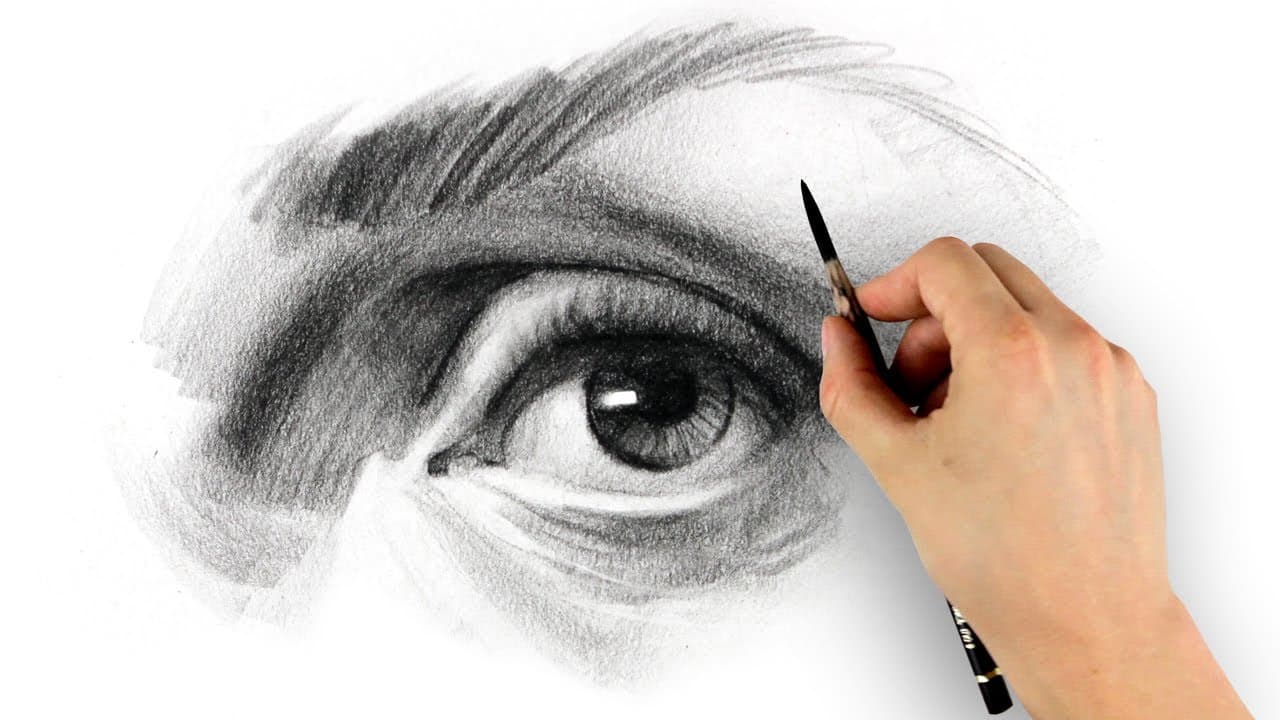
Once the puppy works, try the same shapes on a cat, a wolf or a fox. For livelier eyes, see how to draw eyes. If the sketching and shading here feel like guesswork, the fundamentals - pencil grades, the light-pass method and picking a light source - are at how to draw.
What you'll need

Step-by-step guide

7 steps, about 15 minutes. Tap a picture to jump to that step. Your progress saves automatically.

Tick each step off as you go.

  1. Step 1: Sketch the Head Circle with the Flat Edge of Your Pencil

    Watch this step · 0:20

    Hold the pencil with a side grip, flat edge to the paper, and sketch a loose circle in the center of the page. Start at the top, work down the left side, back through the middle, and around the right.

    Use short, choppy lines. You're not trying to nail a perfect circle in one go - you're feeling out the size. Re-adjust as you trace, smoothing the edges. The light, searching marks are easier to erase later than a single heavy committed line.

    Tip:

    The flat-edge grip keeps your strokes loose. A traditional writing grip will make you stiff and your circle will look like a stop sign instead of a head.

    Back to all steps

  2. Step 2: Add Vertical and Horizontal Guidelines

    Watch this step · 1:05

    Draw a vertical line straight down the center of the circle, extending top and bottom past the page if needed. Add a second vertical line to the side of the circle so you have two parallel verticals.

    Then run a horizontal line through the middle from left to right - this is the eye line. Add another horizontal along the top of the circle and one along the bottom. These five lines are the anchor points for every feature you're about to draw.

    Tip:

    Make these guidelines lighter than your circle. They need to be visible enough to use as reference but faint enough to erase cleanly when you're done.

    Back to all steps

  3. Step 3: Block In the Eyes, Nose, and Mouth

    Watch this step · 1:40

    Place two small circles on the horizontal eye line - one on each side of the center vertical. These are the eyes. Keep them small; puppies have proportionally large heads, so the eyes shouldn't dominate.

    Drop down halfway between the eye line and the bottom of the circle to start the nose. Curl up, around, and back down to draw a soft triangular nose shape. Connect the bottom with a half-circle to close it.

    For the mouth, angle two straight lines down and out from the bottom of the nose. Connect those corners with a curve that lifts back up to wrap around the nose - that's the muzzle's top edge.

    Back to all steps

  4. Step 4: Draw the Muzzle Sides and Start the Body

    Watch this step · 2:45

    From the outside corners of the mouth, draw straight angled lines going up and out toward the bottom of the head circle. Mirror this on both sides. These form the wide base of the muzzle.

    Step inward from each outside line and drop a short straight line down. This gives the muzzle definition rather than letting it flow into the chin.

    From the bottom corners of the head, curve outward and then down to start the body. Don't overthink the shape - just suggest a chest and shoulder line for now.

    Tip:

    The muzzle on a lab puppy is shorter and rounder than an adult lab's. Resist the urge to extend it - puppy proportions mean a stubbier muzzle.

    Back to all steps

  5. Step 5: Block In the Ears

    Watch this step · 3:15

    Start at the left side of the head circle, just below the top guideline. Curve out and away from the head, then bring the line back down toward the center vertical line at the bottom of the cheek.

    Mirror this exact shape on the right side. Then curl each ear back down and in toward the point where it meets the head - this adds weight and gives the ears a folded, floppy look characteristic of a lab.

    At this point the entire puppy silhouette should be visible: head, ears, eyes, nose, muzzle, neck, and shoulders. It looks rough, but every feature is in place.

    Back to all steps

  6. Step 6: Erase Guidelines and Detail the Eyes

    Watch this step · 5:20

    Lightly erase the guidelines. You want them gone, but don't scrub - a kneaded eraser pressed and lifted is gentler than rubbing.

    Switch to the tip of your pencil for detail. Slope the eyelids down from the top of each eye. Add a pupil in each eye with a tiny highlight on top and a smaller second highlight on the outside. Fill in the iris around the highlights.

    Round out the bottom corners of the muzzle and add a fold along the inside of each eye. Blend the bottom of the neck into the chest with a soft curve.

    Tip:

    The highlight is what makes the eye look alive. Leave it as bright paper and darken everything around it instead of trying to lift it back out later.

    Back to all steps

  7. Step 7: Add Fur Texture and Final Shading

    Watch this step · 9:00

    Use short, bending lines to suggest fur. Work around the side of the muzzle first - little curved strokes that follow the direction the fur grows. Repeat across the chin.

    Switch to the side edge of the pencil for soft, broad texture across the top of the head and around the ears. This is the same flat-edge grip you used for the original circle, just controlled tighter.

    Finish by casting a shadow underneath the head on the right side. That shadow grounds the puppy on the page instead of letting it float. A few more passes of fur and shadow blend, and the portrait is done.

    Tip:

    Don't try to draw individual hairs. The illusion of fur comes from groups of short directional marks, not detail. Your eye fills in the rest.

    Back to all steps

Keep going

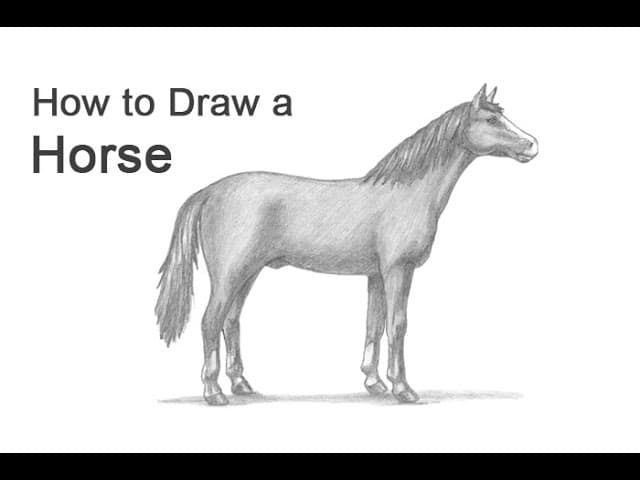
How to Draw a Horse (Step by Step Pencil Tutorial)

7 steps · about 14 minutes

Products Used

The Checklist

How to Draw a Dog - Step-by-Step Puppy Sketch

Tools
4
Materials
2
Steps
7
Video
15 min

Tools we recommend

As an Amazon Associate we earn from qualifying purchases. Links on this page may be affiliate links - clicking them and buying doesn't change your price, but helps support CraftingStepByStep.

Tags

The Crafter's Weekly

New crafts tutorials, every Sunday

One short email with the week's best step-by-step guides. Free, no spam, unsubscribe anytime.

Test your knowledge

Did the lesson stick? Start with this one.

5 questions covering what you just read. No signup, no score saved, and you can stop after this one.

Question 1 of 5

Why hold the pencil with a side grip (flat edge) for the initial head circle?

Quick reference

Key takeaways from How to Draw a Dog - Step-by-Step Puppy Sketch

5 questions, answers, and one-line explanations. Tap to expand.

  1. 1.Why hold the pencil with a side grip (flat edge) for the initial head circle?

    Answer: Light searching marks are easier to erase than committed lines

    Loose, light scaffolding marks are throwaway - you'll erase them before final detail.

  2. 2.How big should the puppy's eyes be relative to the head?

    Answer: Small - puppies have proportionally large heads, eyes shouldn't dominate

    Small eyes preserve the puppy proportion; cartoon-large eyes overpower the face.

  3. 3.Where does the nose sit on the guideline grid?

    Answer: Halfway between the eye line and bottom of the head circle

    Halfway between eye-line and bottom positions the nose for proper proportion.

  4. 4.To erase the guidelines without smearing, what's the right tool and technique?

    Answer: A kneaded eraser pressed and lifted

    Press-and-lift with a kneaded eraser is gentler than rubbing.

  5. 5.What grounds the puppy on the page in the final step?

    Answer: A shadow cast underneath the head

    A shadow underneath stops the drawing from looking like it's floating.

Did this work for you?

What's next

Related collections

Curated theme pages that include this tutorial.

Similar tutorials

Hand-picked next reads based on the one you just finished.

Liked this crafts tutorial?

Pick the crafts you want to hear about. One email every Sunday with new step-by-step tutorials. No spam, easy to unsubscribe.

Get more like this in your inbox

Weekly digest. Pick the categories you want. Unsubscribe anytime.

Send me tutorials about

We only email about new tutorials. Easy unsubscribe anytime.