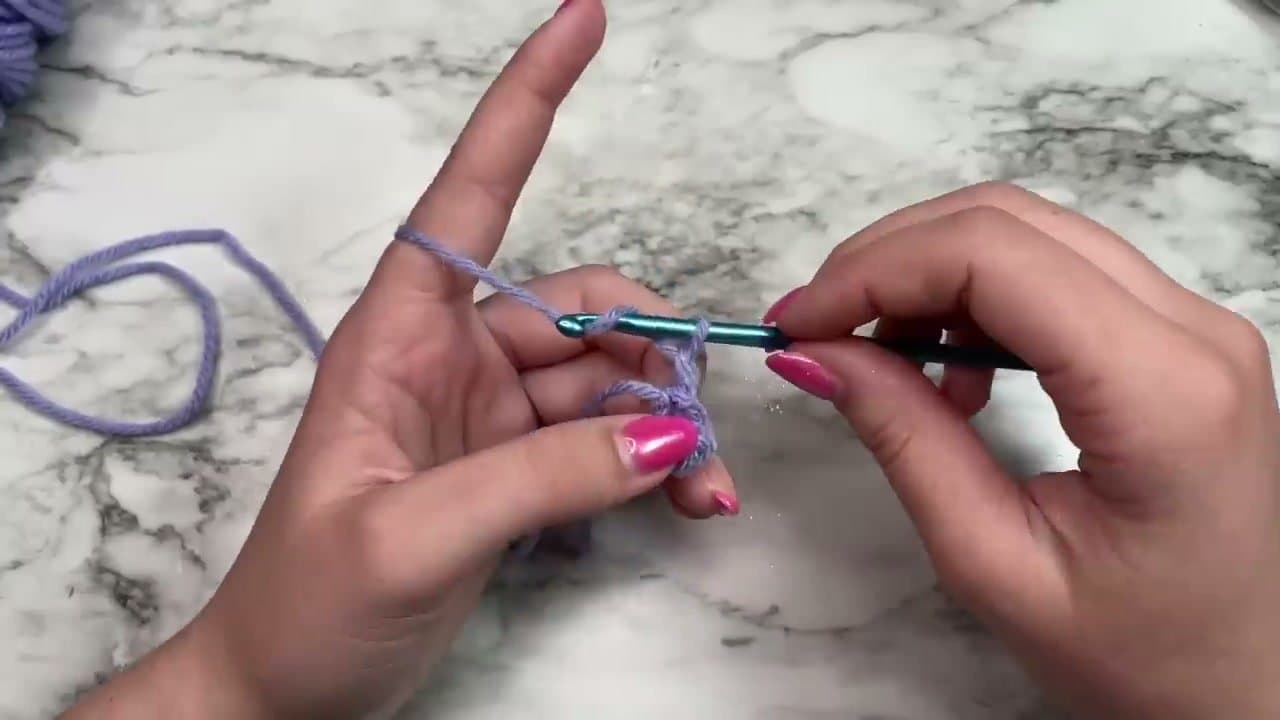
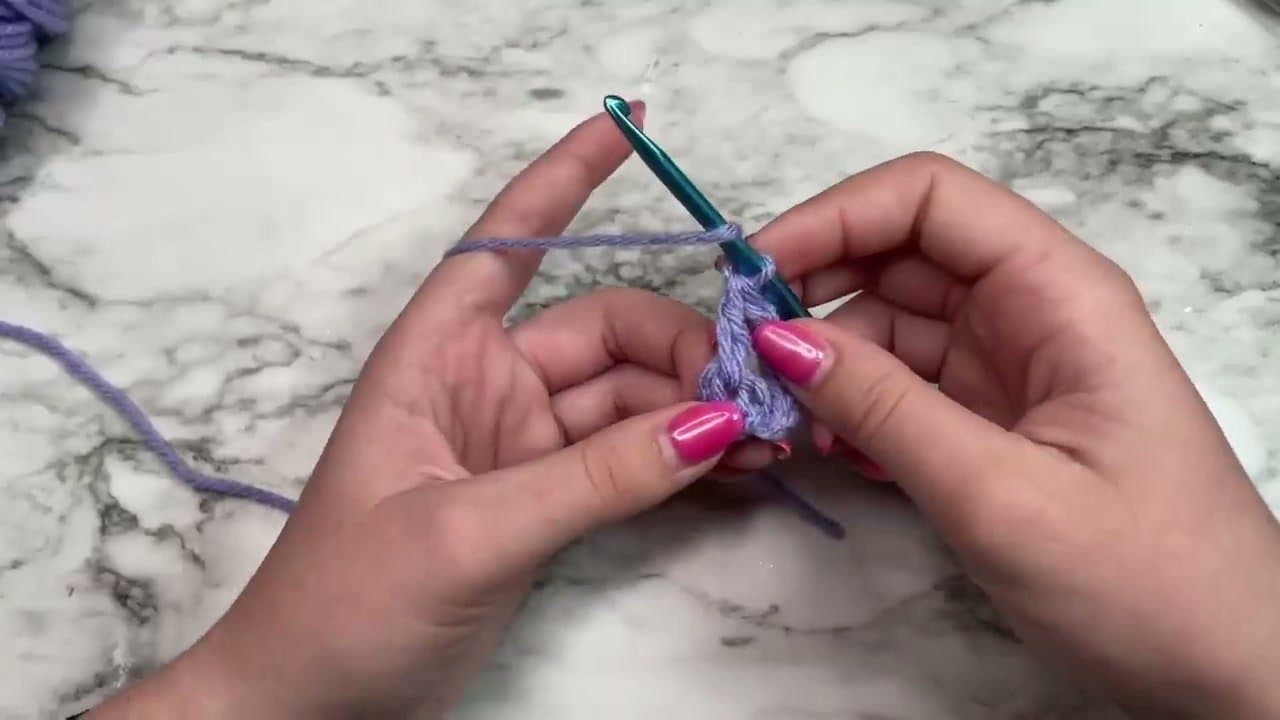
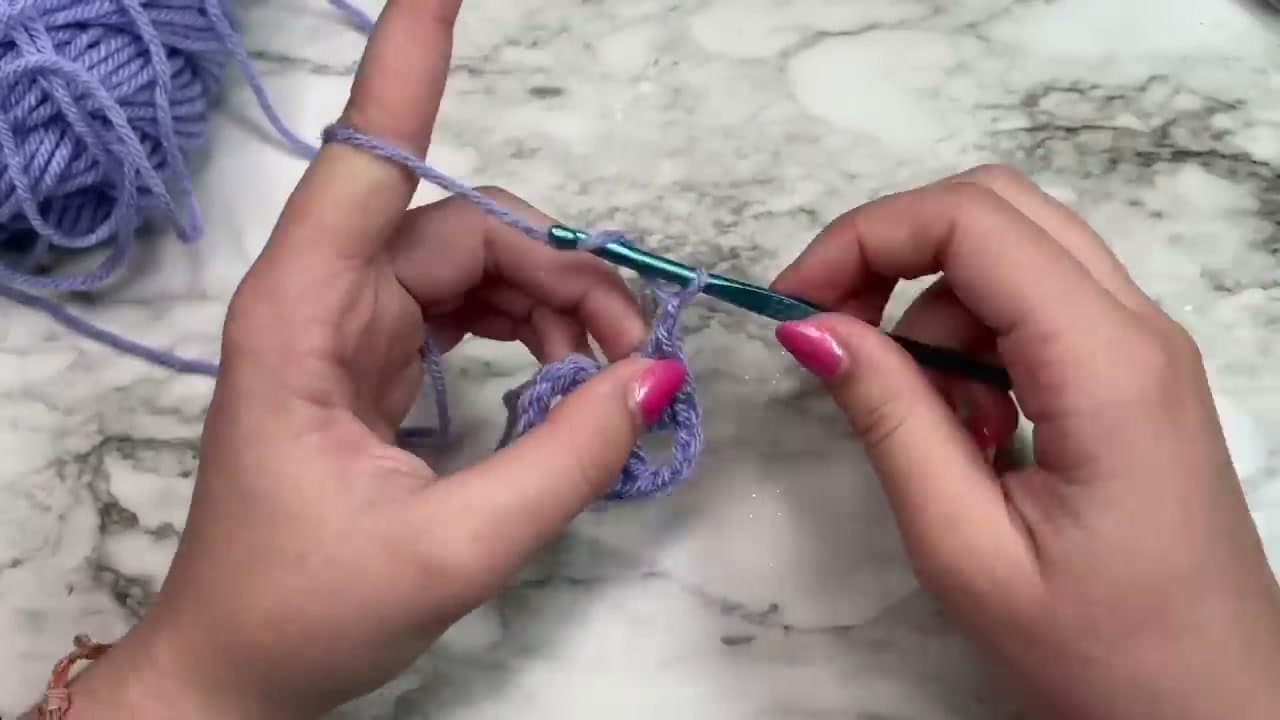
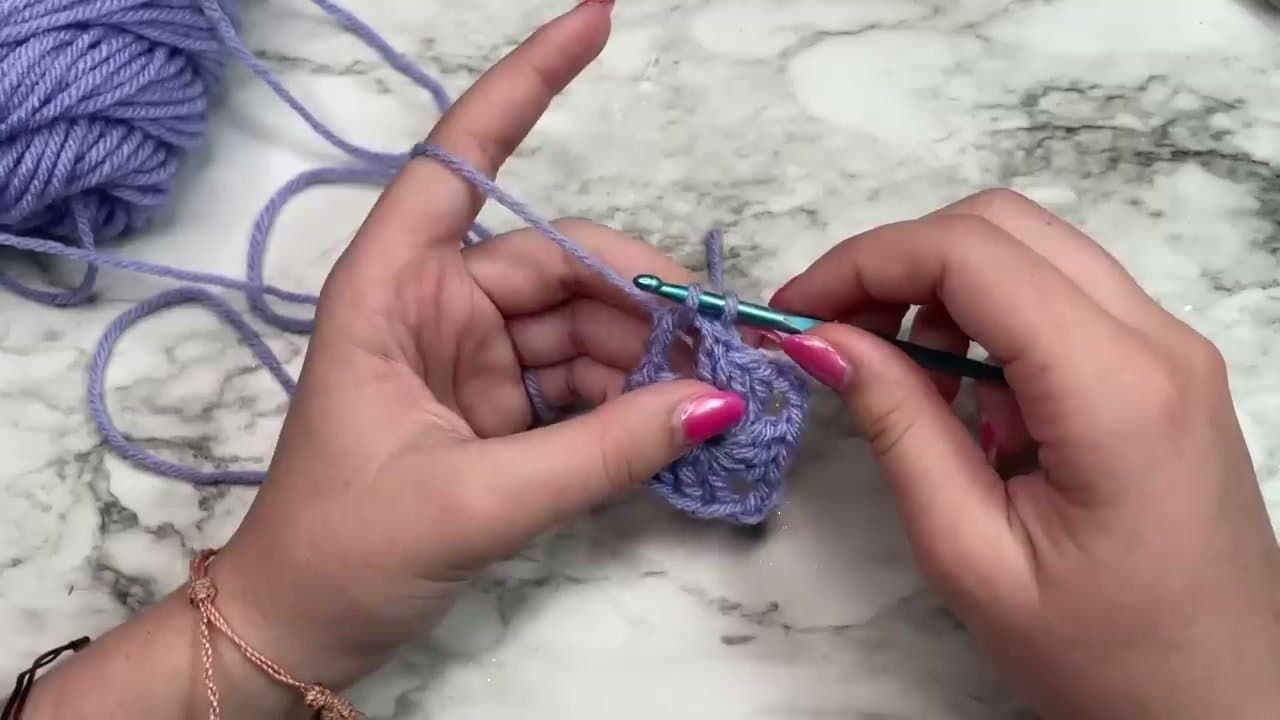
The granny square is the right first crochet project because it teaches almost everything at once. Slip knot, chains, double crochet, slip stitch, working in rounds, turning corners. The only fundamental it leaves out is colour changes, and you can add those on round two whenever you feel like it.
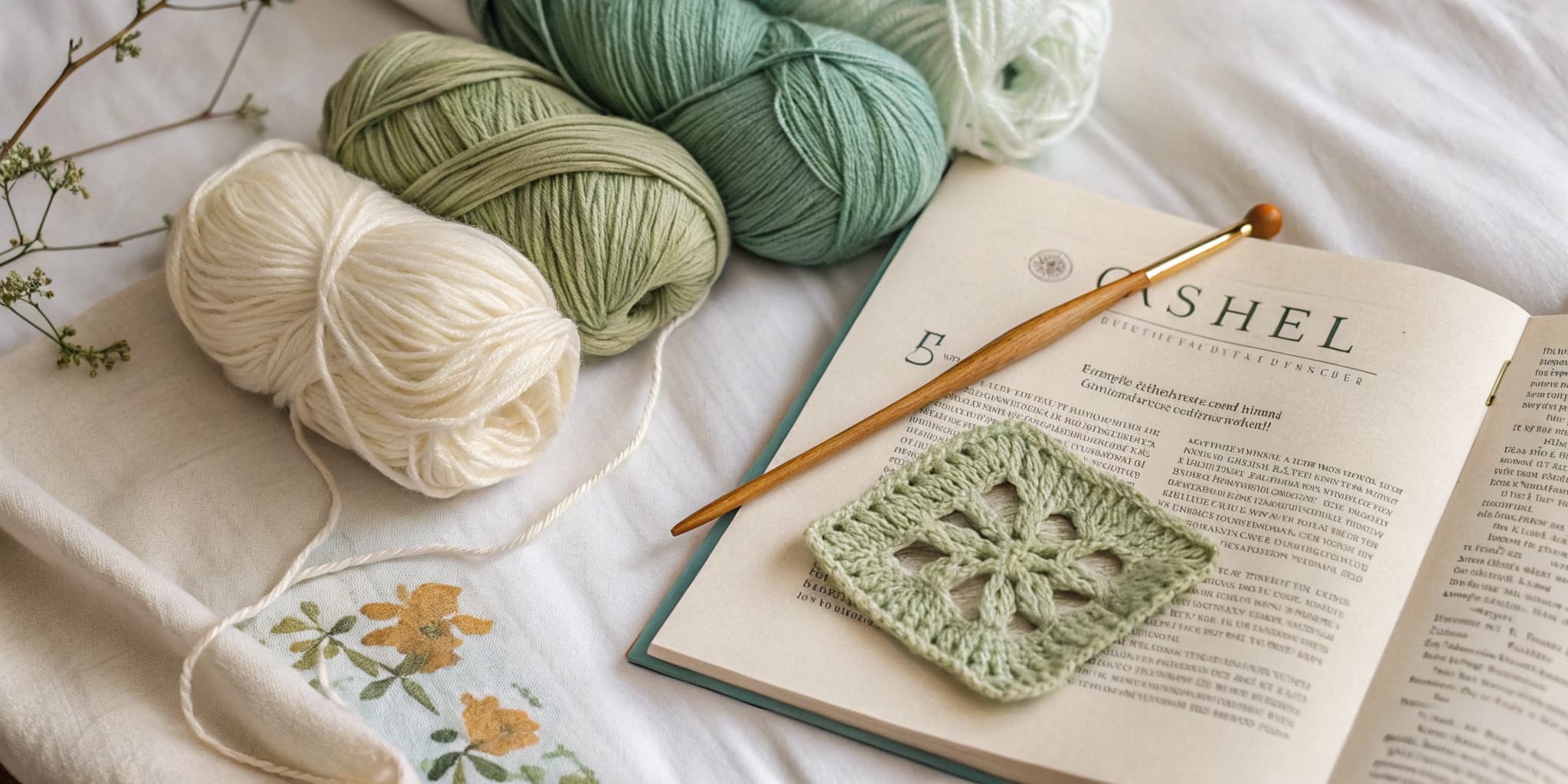
You need a 5mm (H-8) hook, a skein of medium-weight yarn, and a yarn needle for the ends. Pick something smooth and light for the first square. Stitch definition matters while you are still learning to recognise where the hook goes.
How a granny square is built
Every round is the same idea: clusters of three double crochets separated by chain spaces. Three double crochets, chain one, three double crochets, chain one, on around. At each corner you chain two or three instead of one, and that extra chain is what lets the work turn ninety degrees rather than curling into a circle.
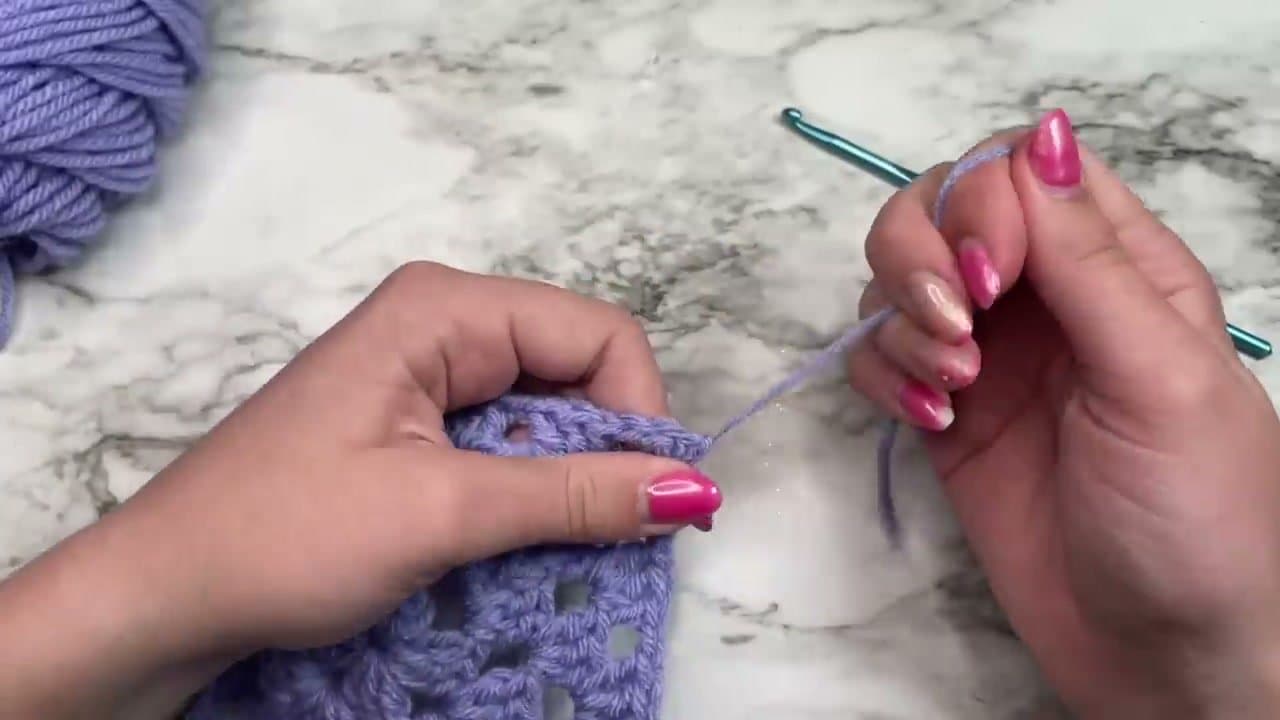
Round one goes into the centre ring. Every round after that goes into the chain spaces of the round below, never into the tops of the stitches themselves. That is the part that clicks late for most people. After round one, you are always working into the gaps.
The three mistakes everyone makes
Working into stitches instead of spaces. The square goes lumpy and stops being square. If your edges are bowing outward, check where the hook is landing before you check anything else.
Losing count of the corners. A granny square has exactly four corner spaces per round. End a round with five and you added a corner somewhere in the middle of a side. Count corners at the end of every round and you will catch it immediately.
Pulling the centre ring too tight. Round one is crowded. Twelve double crochets into a chain-4 ring feels wrong while you are doing it. Keep the tension loose and let the ring open out as the stitches go in.
Joining squares into something bigger
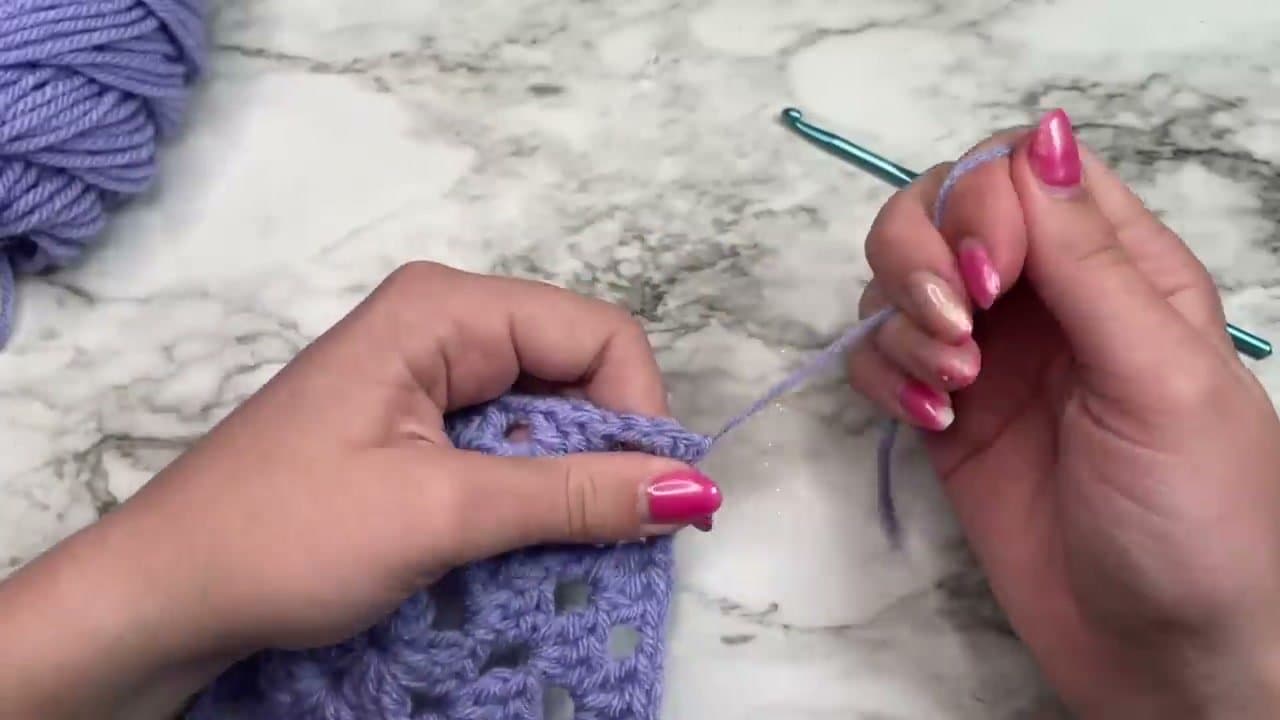
One square is a coaster. Sixteen make a cushion cover, and somewhere around a hundred and twenty make a throw. Squares get joined either by sewing through the back loops with a yarn needle, or by slip-stitching them together as you go. Sewing is slower and disappears into the fabric. Slip-stitching leaves a visible ridge, which some people choose on purpose.
Block the squares before you join them. Damp them, pin them square, let them dry flat. Unblocked squares are never quite the same size as each other, and across a blanket that difference compounds into a wavy edge you cannot fix afterwards.
Skills this square uses
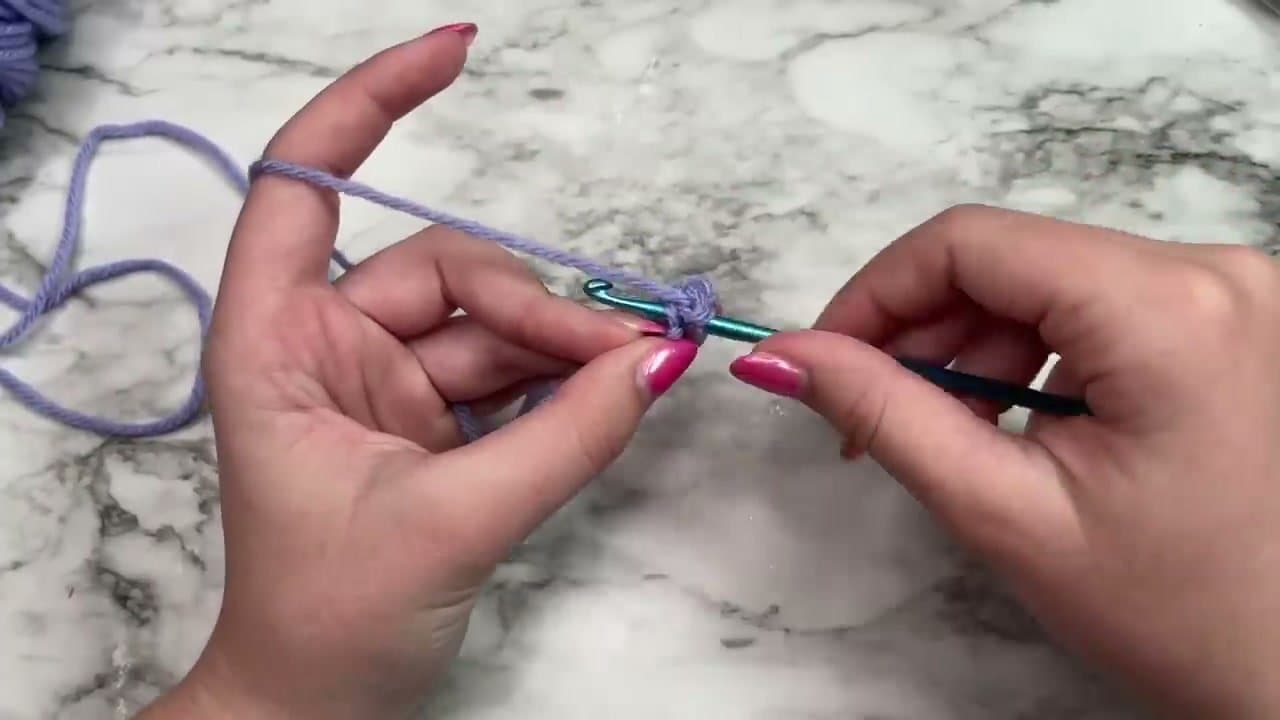
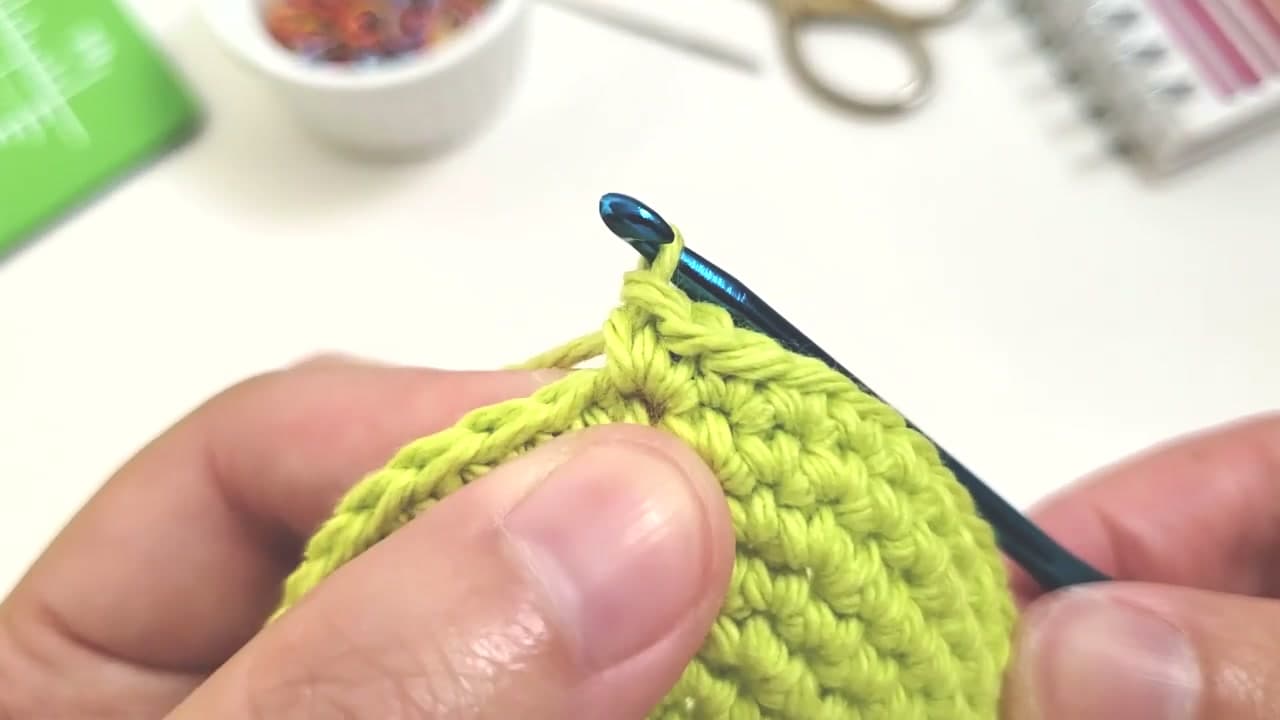
If one move in particular is giving you trouble, work through it on its own: double crochet, slip stitch, the foundation chain, and fastening off and weaving in ends.
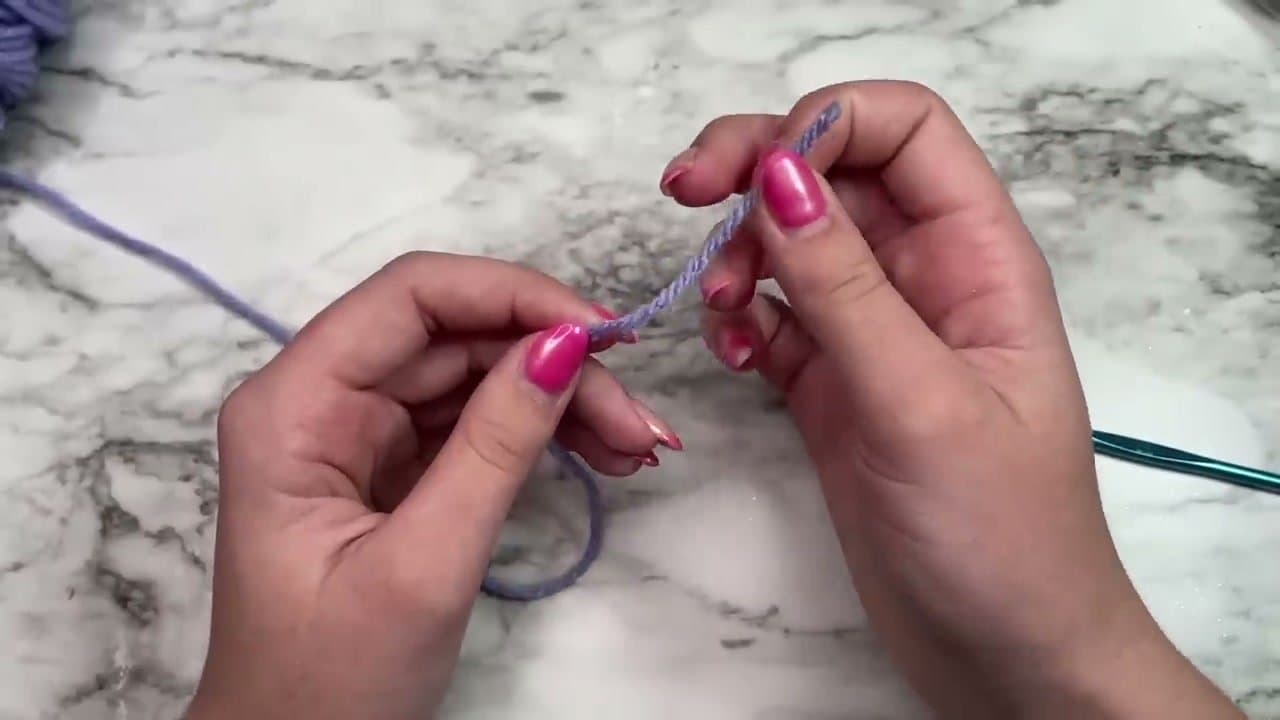
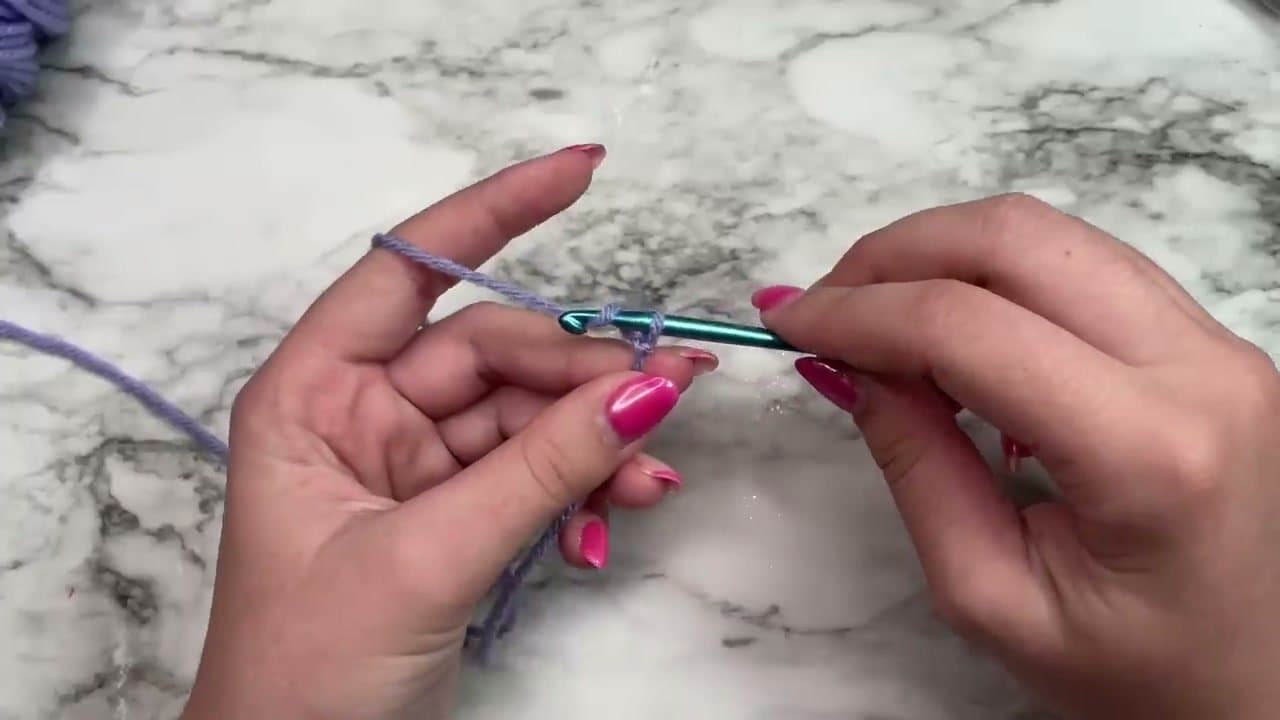
Starting from scratch entirely? How to crochet covers the slip knot, the yarn over and single crochet before you get to this square. And if you would rather start with a tighter centre than a chain ring gives you, the magic ring closes the hole completely.
For a bigger piece built from the same stitch pattern, the granny stripe blanket works those clusters in rows instead of rounds.