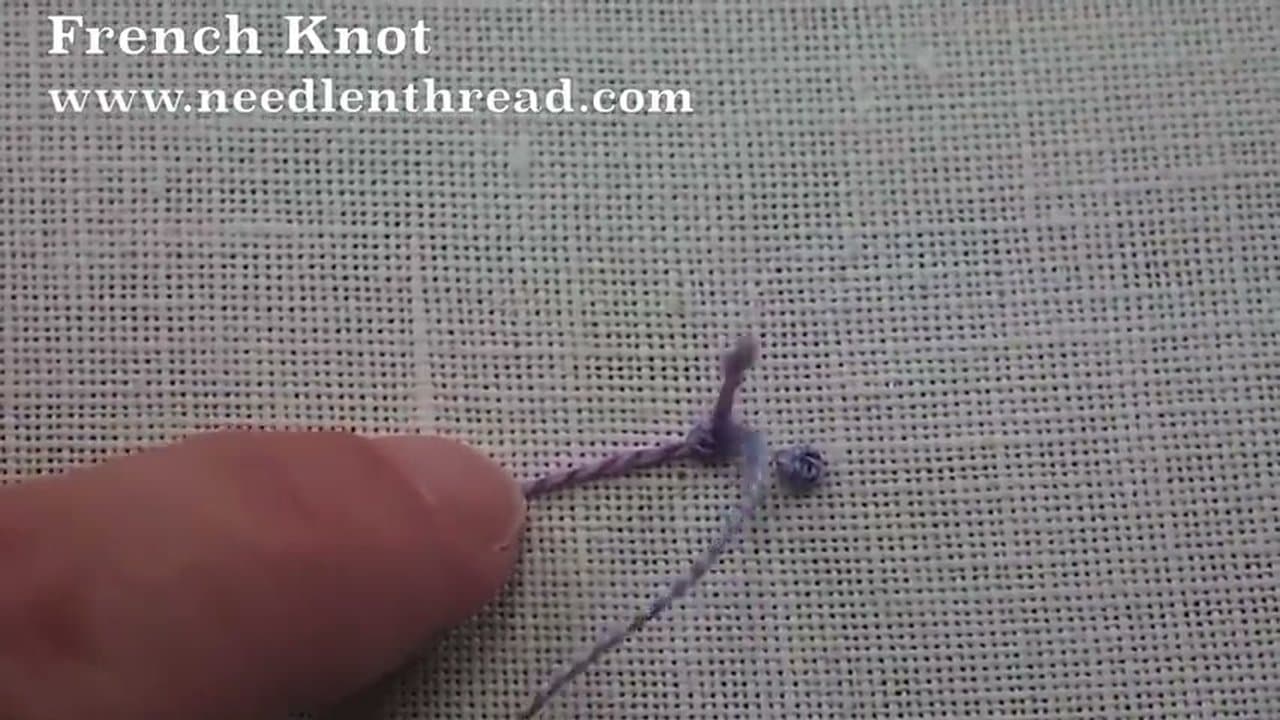
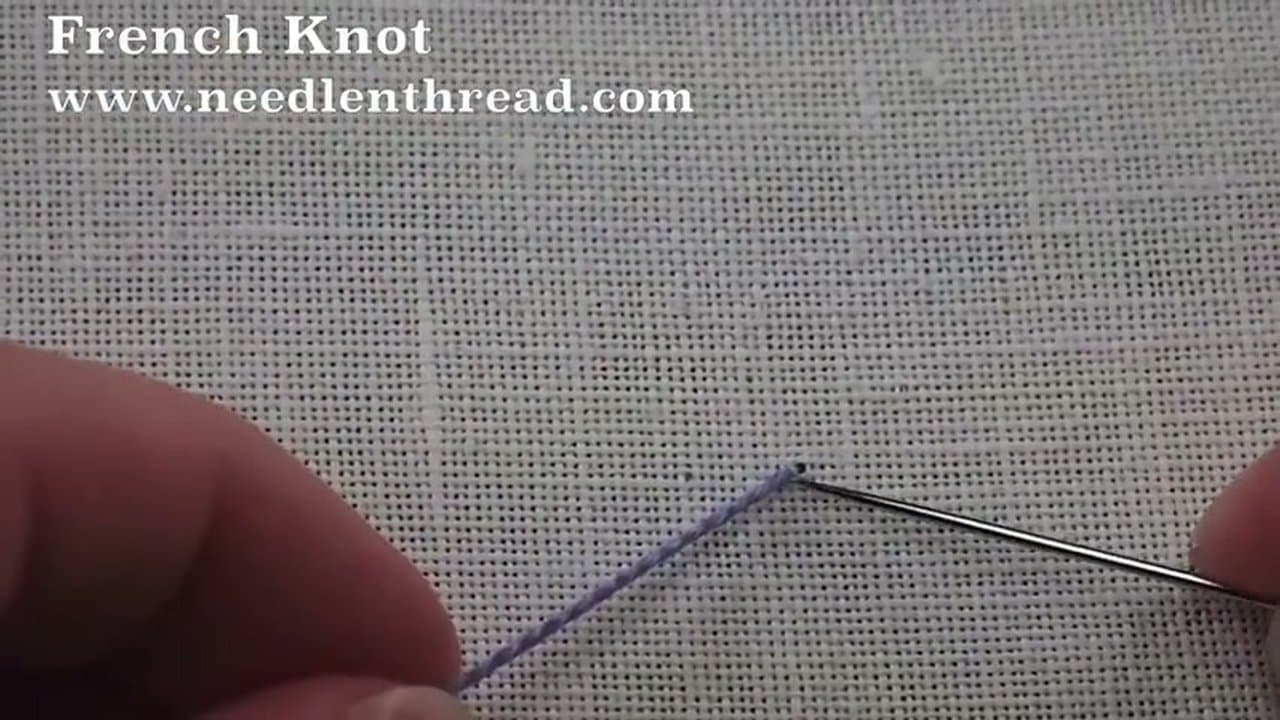
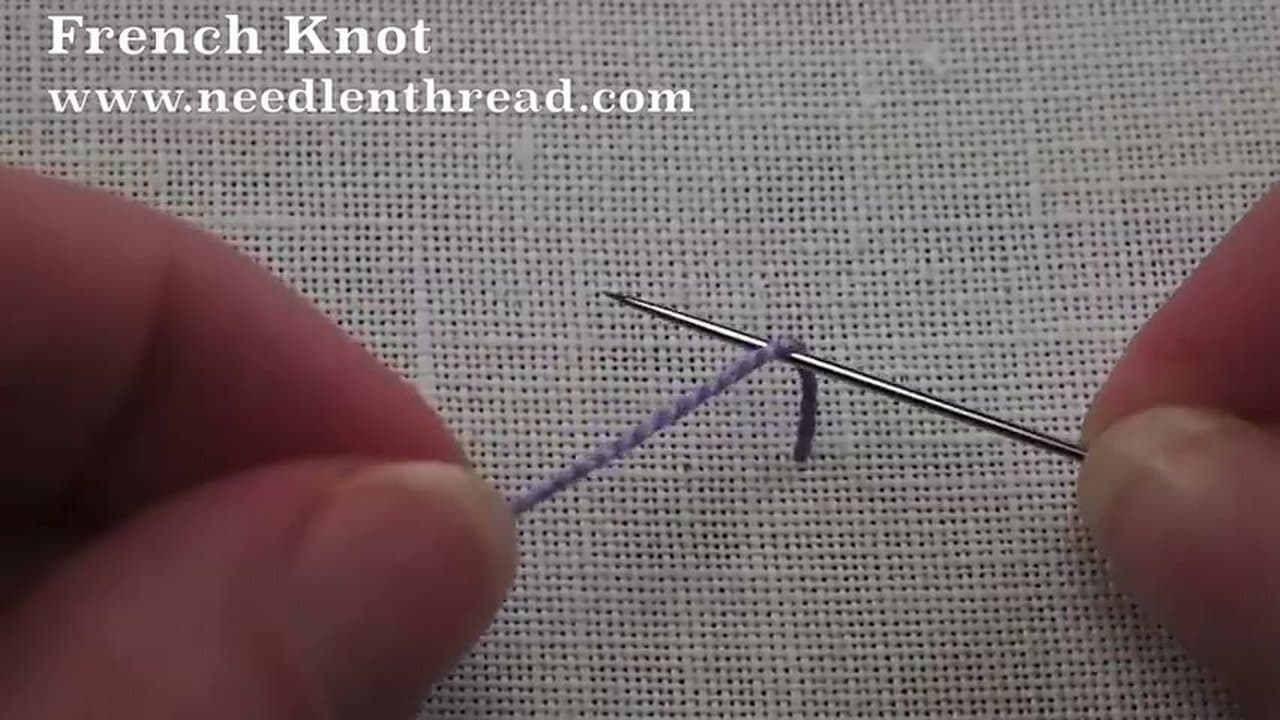
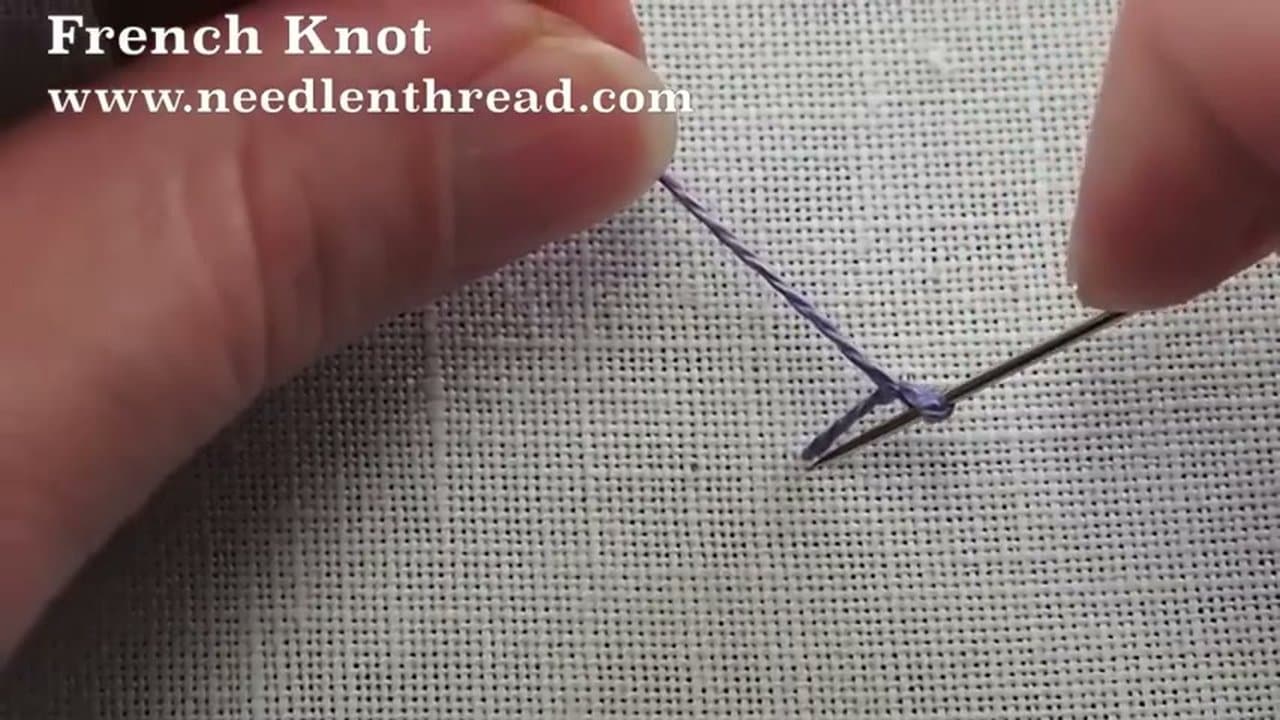
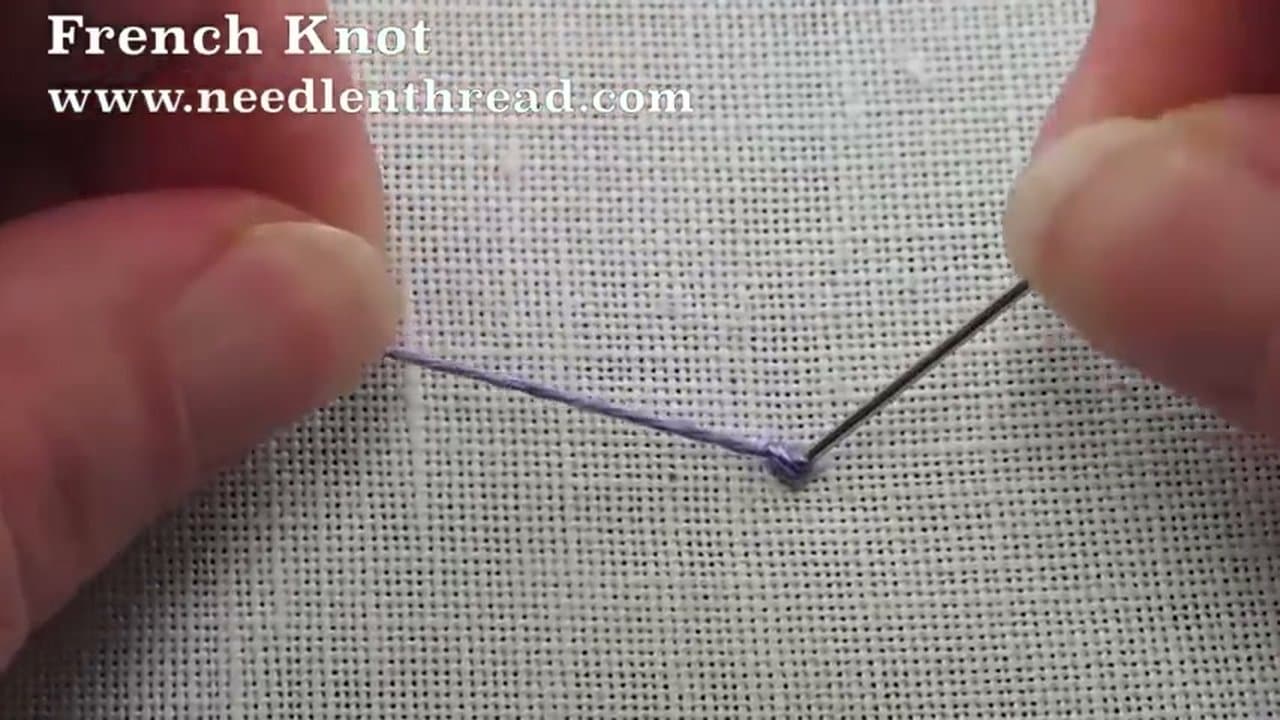
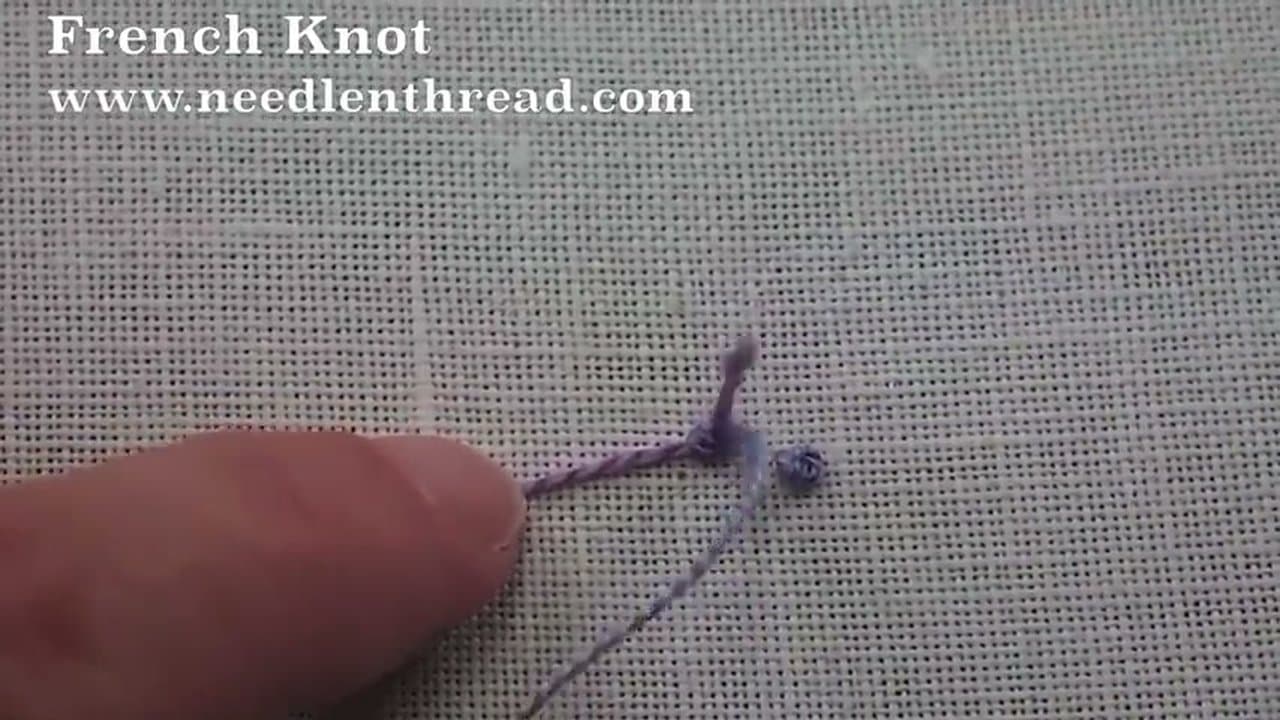
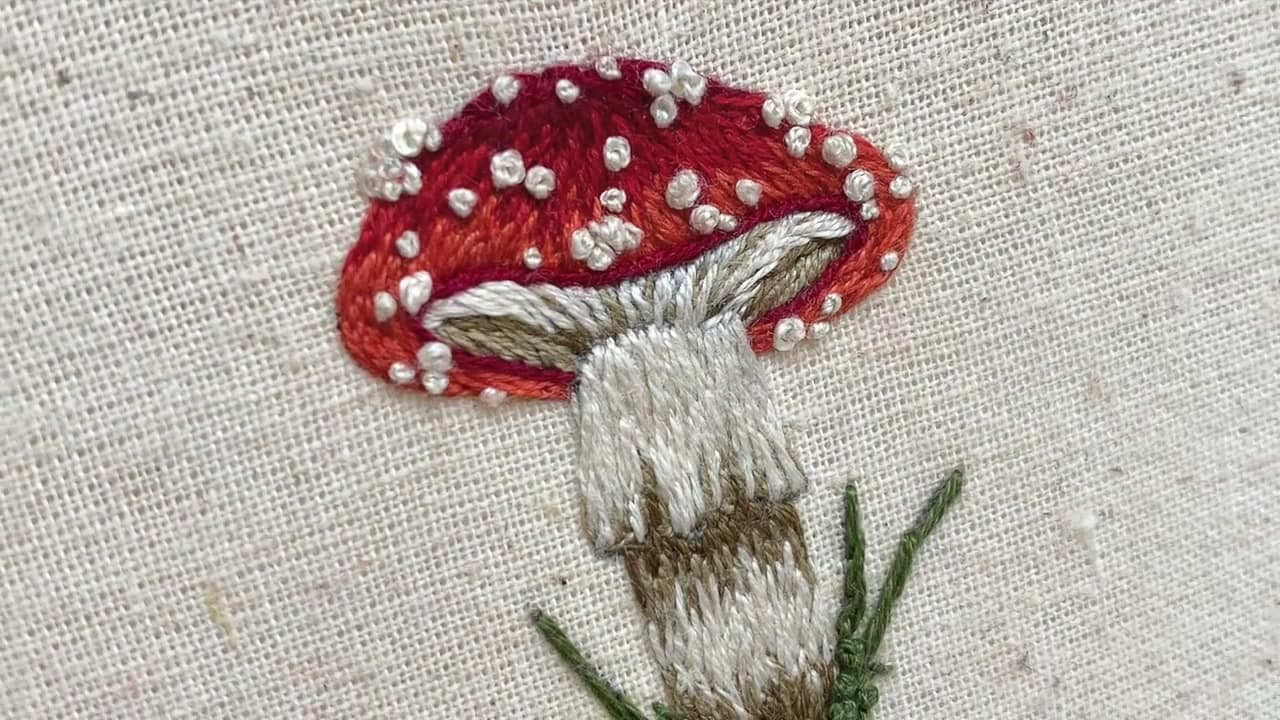
The French knot is the embroidery stitch that beginners struggle with the most and that experienced stitchers use the most. It looks like a tiny bead sitting on the fabric - perfect for the centers of flowers, scattered texture, lettering accents, or anywhere you want a small dot of color and dimension.
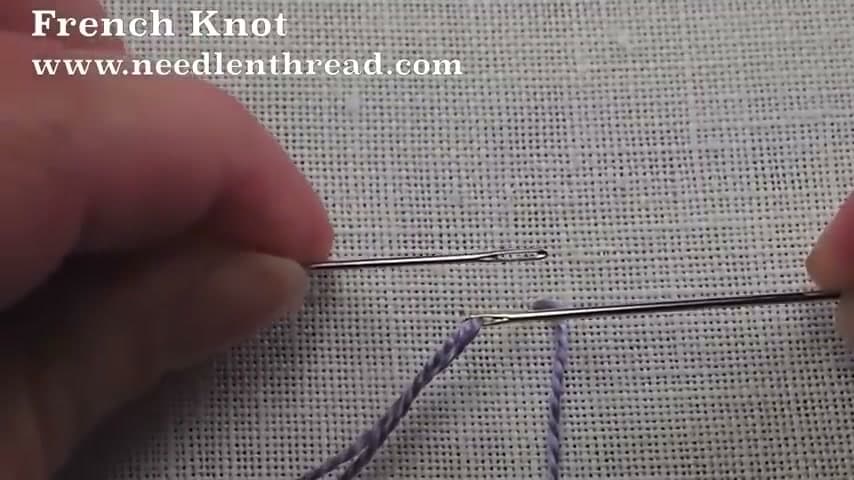
This walkthrough from Mary Corbet at Needle 'n Thread breaks the knot into six clean steps. The single biggest reason French knots fail for beginners is the wrong needle - she explains why a milliner needle (also called a straw needle) makes the technique work where a regular embroidery needle fights you.
How many wraps?
| Wraps | Knot size | Good for |
|---|
| 1 | A pin dot | Fine detail, eye highlights. Can slip through loose fabric. |
| 2 | A small bead | Most projects. Flower centers, dotted lines, snow. |
| 3 | A loose, loopy bead | Rarely worth it. Loses shape fast. |
Want a bigger knot? Add strands, not wraps. Two wraps with 6 strands of floss makes a fat, round knot that holds its shape. Three wraps with 2 strands makes a floppy one.
Hoop tension and needle choice
Keep the fabric drum-tight in the hoop. Slack fabric lets the knot sink into the weave, and it gives you nothing to push against when you tension the thread. Tighten the screw until tapping the fabric sounds like a drum.
The needle does most of the work. A milliner needle has an eye no wider than its shaft, so it slides out of the wraps without dragging them along. Size 7 to 9 suits 2 to 3 strands of floss. Go bigger for more strands.
Where French knots get used
Flower centers are the classic. Sunflowers and daisies especially - pack them close and they read as seeds. You'll also see them as eyes on animals, dots on the letter i, berries on a sprig, and the fluffy coat of a lamb.
December is when they earn their keep. White knots scattered across a dark sky make snow on Christmas ornaments and hoop art, and a few red ones become holly berries. Fifty knots sounds like a lot until you've done ten and your hands find the rhythm.
French knot vs colonial knot
They look almost the same from across the room. The colonial knot wraps the thread in a figure-eight instead of coiling it, which gives a slightly taller, more uniform knot that's harder to pull loose. Some stitchers find it more reliable when they need dozens of identical knots. Try both on a scrap and keep the one your hands prefer.
Common French knot mistakes
- The knot pulls through to the back. You went down in the same hole you came up. Leave a thread or two of fabric between them.
- Loose, loopy knots. The wraps weren't snug on the needle before you pulled through. Slide them down to the fabric and hold light tension.
- A tangle on the back. Too much tension choked the wraps, or you pulled the needle too fast. Slow down and let go in the last inch.
- Uneven sizes. The wrap count or strand count changed between knots. Pick one and stick with it.
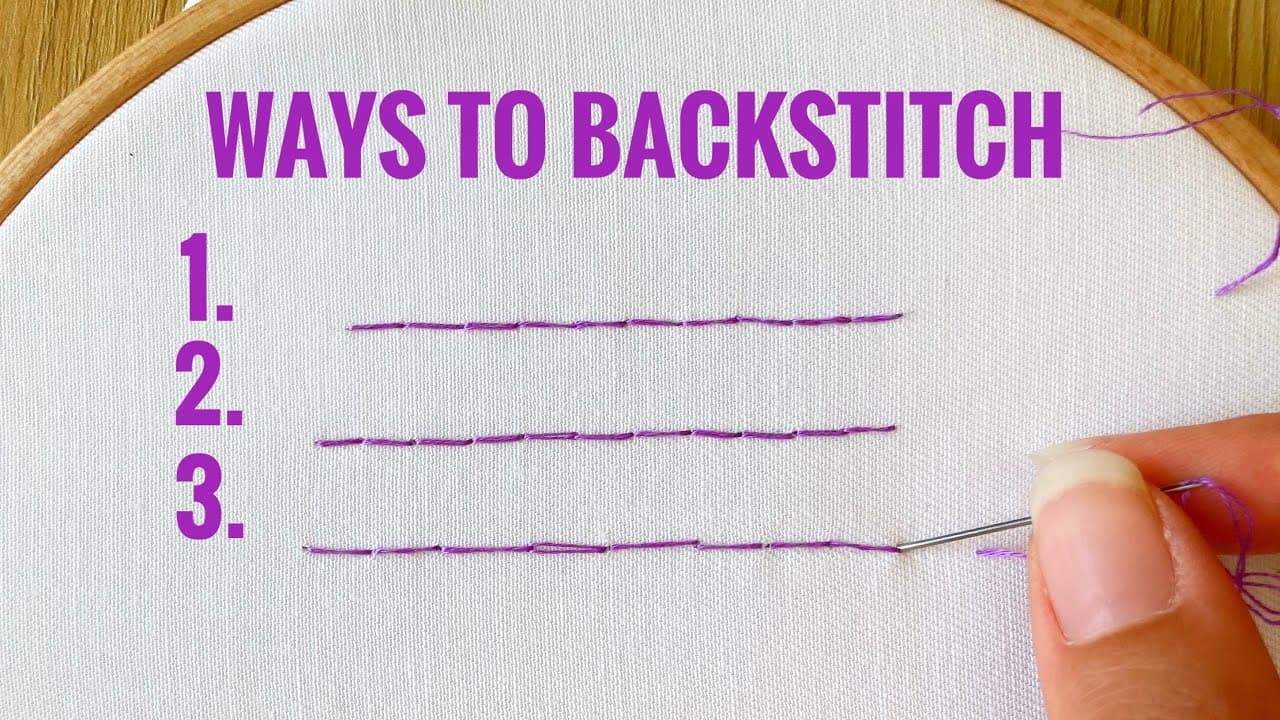
Pair French knots with a lazy daisy stitch for quick flowers, outline shapes with a backstitch or chain stitch, and edge a finished piece with a blanket stitch.