How to Crochet a Spider Web (Halloween Decor)

Based on a video by Diving Ducks Crochet

Opens their YouTube channel

Steps written out by CraftingStepByStep · Published · Updated

Watch the original video (opens YouTube)
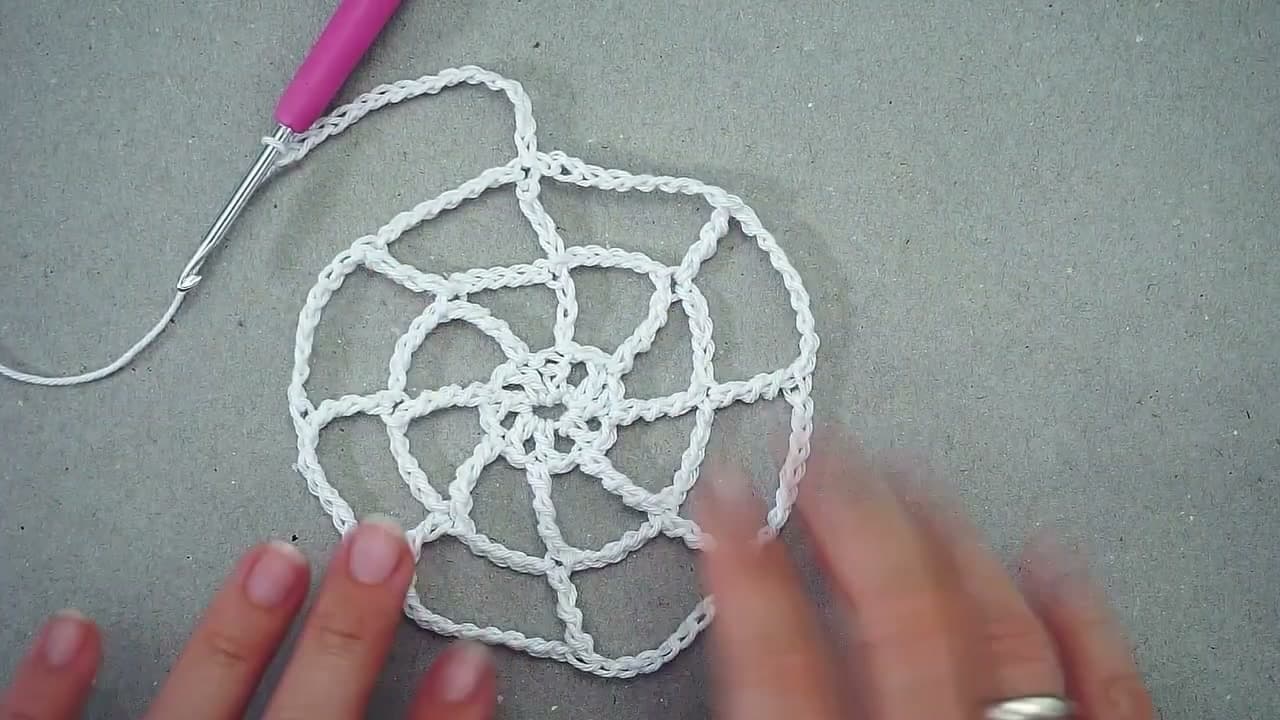
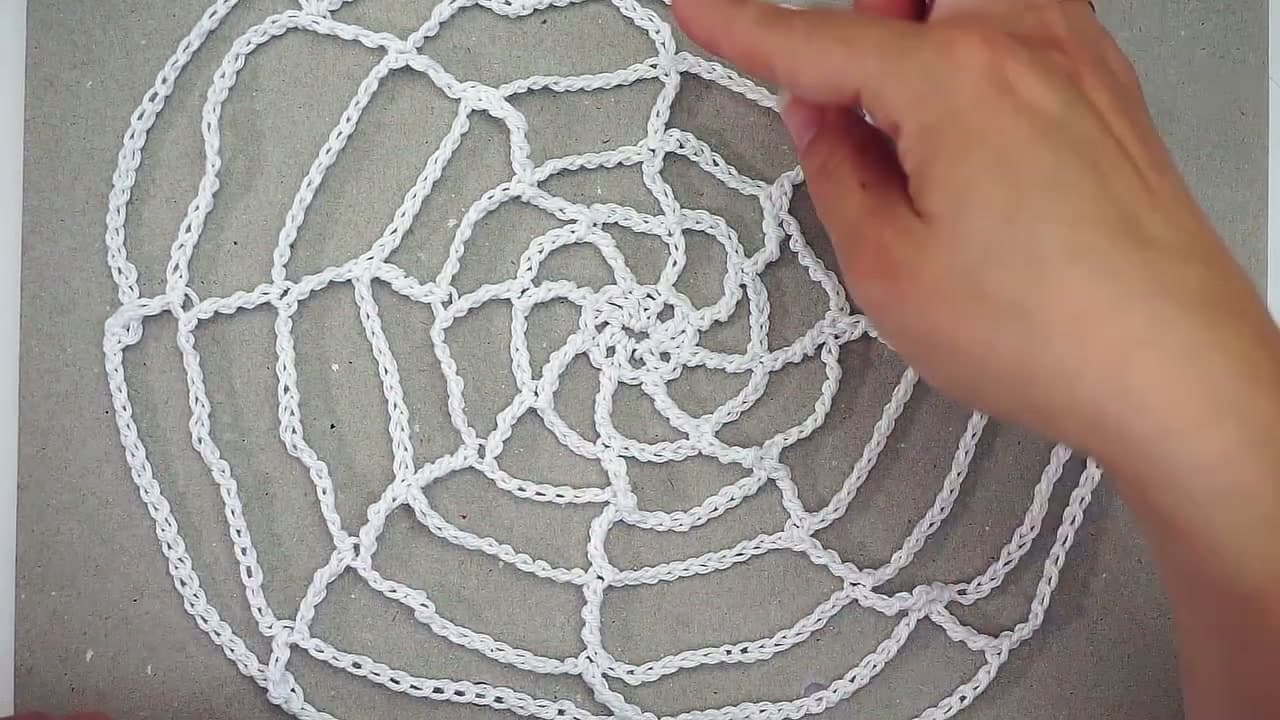
The finished result: How to Crochet a Spider Web (Halloween Decor)
Also in:Other Crafts

A crochet spider web is a Halloween decoration you make once and pull out every October. It is light, it packs flat, and one ball of yarn covers a door-sized web. The whole thing takes an evening.

The pattern starts from a magic ring with 8 spokes. Each round adds longer chain arcs between those spokes, so the web grows outward in rings. If your double crochet is solid, the rest is counting chains.

Thread or yarn: how big will your web be?

The fiber decides the size more than the round count does.

  • Crochet thread (size 10) with a 1.75mm hook - a delicate web about 5 inches across at 6 rounds. Good for windows, jars and mantel displays.
  • Worsted cotton with a 3.5mm hook - what the video uses. Three rounds give an 8-inch ornament, six rounds about 18 inches.
  • Bulky yarn with a 6mm hook - a porch-sized web of 2 feet or more. Keep adding rounds with the same chain jump of 3.

Smooth cotton shows the spokes best. Fuzzy wool blurs them.

Stiffening the web so it holds its shape

Wet blocking is enough for cotton on a wall. For a web that hangs in open air, stiffen it. Mix white school glue and water about half and half, soak the web, squeeze it out, and pin it flat on foam board. Store-bought fabric stiffener works the same way and dries clearer. Pin every spoke tip and a few points on each arc, then leave it 24 hours. Blot off pooled liquid before it dries or the gaps fill with a glassy film.

Our blocking guide covers the pinning in more detail.

Hanging it on windows, doors and the porch

Indoors, three or four small command hooks in a circle hold the outer ring taut. On glass, use clear suction hooks. On a front door, hang it from a wreath hanger and tack the bottom arcs with removable putty so wind does not flip it. For a porch corner, tie fishing line to the outer spokes and anchor each line to a railing or post. That stretched look reads far more like a real web.

Adding a crochet spider

Work a small ball for the body with the method from crocheting a sphere, then a smaller one for the head. Legs are 8 pipe cleaners, or 8 chains of 15 stitches slip-stitched back. Sew the spider off-center on an outer arc. It looks like it is out hunting, not parked in the middle.

Color ideas

  • Black - the classic, best on light walls and doors.
  • White or cream - reads like frost on a dark door or window.
  • Glow-in-the-dark yarn - charge it under a lamp and hang it by the front door for trick-or-treaters.
  • Orange or purple - fun for a kids bedroom, and it pairs with a crochet pumpkin or a crochet ghost.

Common mistakes and how to fix them

  • The web curls or cups. Your chain arcs are too short for your tension. Add one chain per arc from the next round on, then block it flat.
  • Spokes come out uneven. Mark the first dc of each round with a stitch marker and count 8 clusters before you join. One extra cluster pulls the whole web lopsided.
  • The stiffener dried thick and shiny. The mix was too strong or you skipped the squeeze. Thin it with more water next time.
  • Loose ends poke out. Weave them along a spoke, not an arc. Our guide to weaving in ends shows how.

What you'll need

Step-by-step guide

7 steps, about 9 minutes. Tap a picture to jump to that step. Your progress saves automatically.

Tick each step off as you go.

  1. Step 1: Gather your supplies

    Watch this step · 0:50
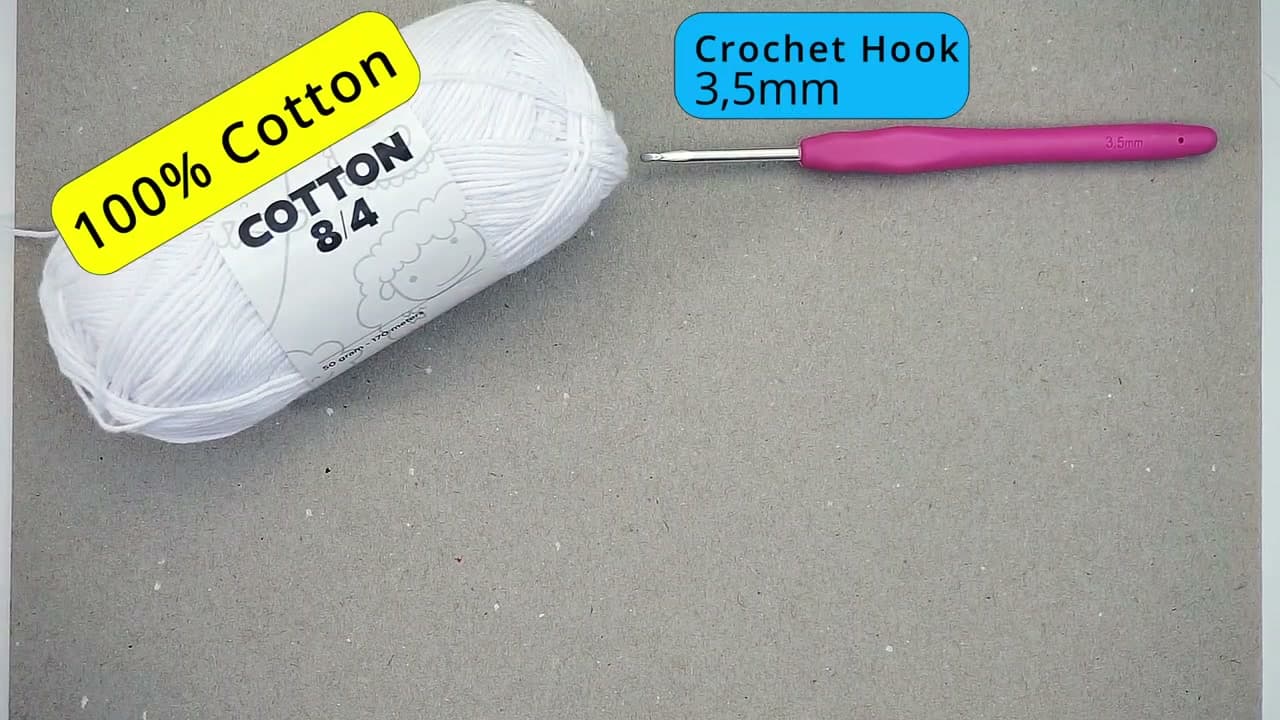
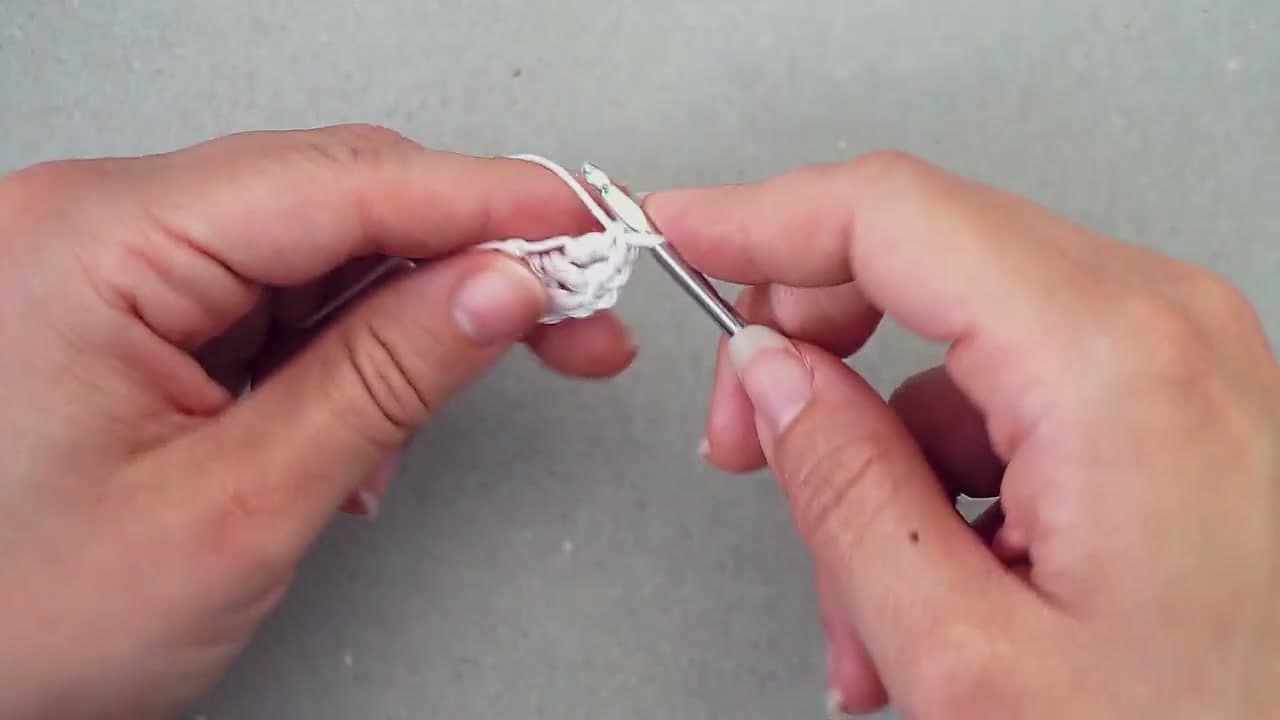
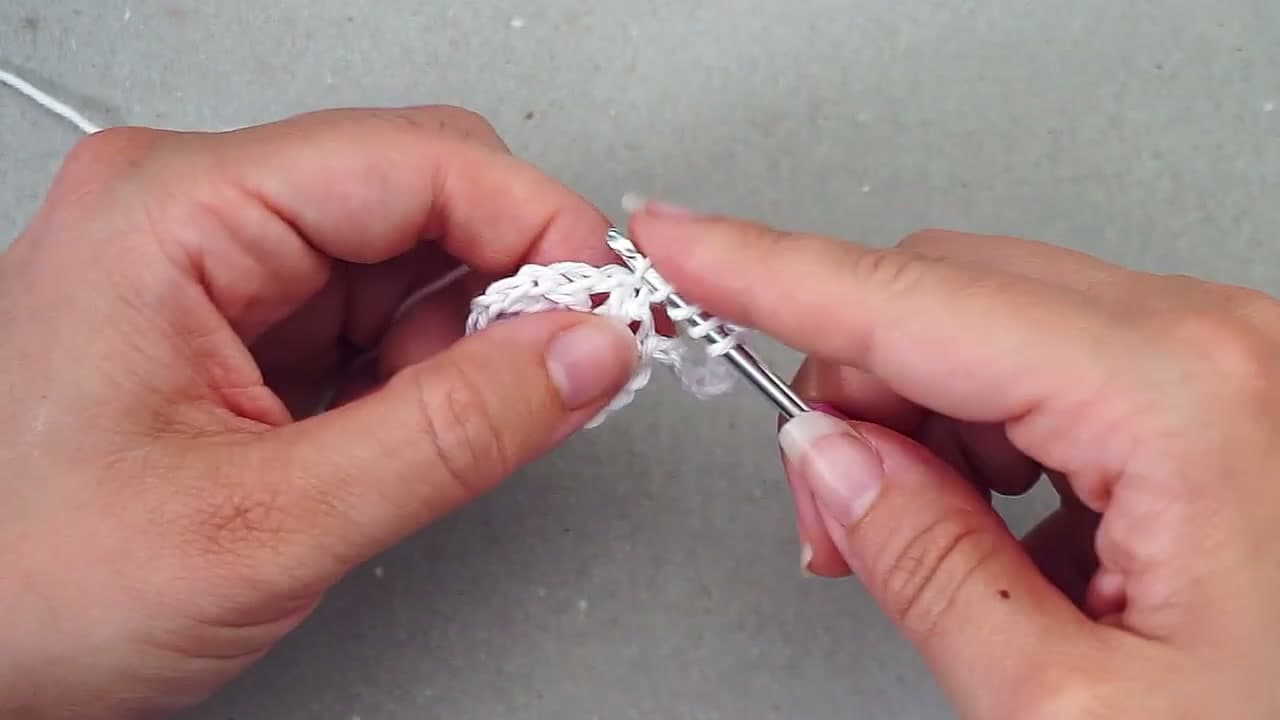
    You need a ball of cotton or worsted yarn, a 3.5mm crochet hook (size E), a small tapestry needle, and a pair of scissors. The video uses white 100% cotton 8/4 because the stiffer fiber holds the open web shape after a quick block. For the spookiest Halloween look, swap in a black worsted weight like Lion Brand Vanna's Choice in Black.

    One 50g ball is enough for a decoration-sized web. You will also want three or four command hooks ready for hanging once you are done.

    Tip:

    Cotton holds the shape better than soft acrylic. If you use a fuzzy yarn like wool, your stitches will blur and the radial spokes lose definition. Stick to cotton or a smooth acrylic.
    Back to all steps

  2. Step 2: Make a magic ring for the center

    Watch this step · 1:50

    Start with a magic ring - the adjustable loop that becomes the dead center of the web. Wrap the yarn twice around your index and middle fingers, slide the loop off, and pinch the crossing point so the loops do not unravel.

    Insert your hook into the ring, yarn over with the working yarn, and pull a loop through. You now have one loop sitting on the hook with the ring held loose in your other hand. That is your starting point for round 1. Do not cinch the ring shut yet - you need it open while you work the first round of stitches into it.

    Tip:

    If the magic ring feels slippery, try wrapping three times instead of two. The extra wrap gives you a thicker ring to anchor your first stitches into and the tail still cinches it closed at the end.

    Back to all steps

  3. Step 3: Work 8 double crochet spokes into the ring

    Watch this step · 3:20

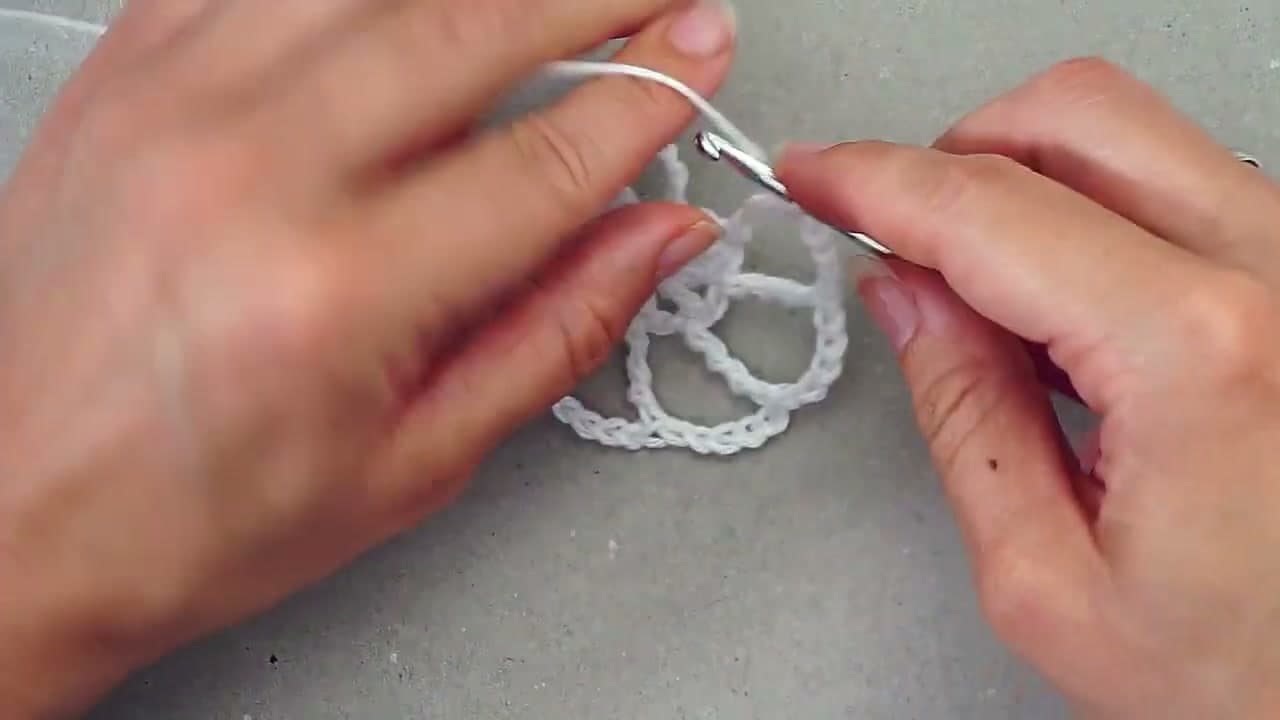
    Round 1 makes the eight radial spokes. Chain 3 (this counts as your first double crochet), then chain 1 to start the gap between spokes. Now make a real double crochet into the ring: yarn over, insert the hook into the ring, pull up a loop, then yarn over and pull through two loops, yarn over and pull through the last two loops.

    Chain 1, then another double crochet in the ring. Keep going - dc, chain 1, dc, chain 1 - until you have eight dc spokes total with eight chain-1 gaps between them. Pull the magic ring tail gently to cinch the center closed, then slip stitch into the top of your first chain-3 to join the round into a circle.

    Tip:

    Place a stitch marker in the top of the first chain-3 before you start. Eight spokes is easy to lose count of mid-round, and the marker tells you exactly where to slip stitch to join.

    Back to all steps

  4. Step 4: Add chain arcs in round 2

    Watch this step · 4:50

    Round 2 is what makes it look like a real web. Chain 5 (counts as one dc plus chain 2), then work double crochet, chain 2, double crochet, chain 2 around the round. Place each double crochet into a chain-1 space from round 1 - never into a stitch, always into the gap.

    The chain-2 arcs between each spoke give the web that classic scalloped look. By the end of the round you should have 8 dc clusters with 8 chain-2 arcs between them. Slip stitch into the top of your starting chain-5 to close the round.

    Tip:

    The chain count matters. Too few chains and the web puckers; too many and it sags in the middle. Stick with chain 2 in round 2 and let the spokes grow outward in the next rounds.

    Back to all steps

  5. Step 5: Grow the web with bigger arcs each round

    Watch this step · 6:50

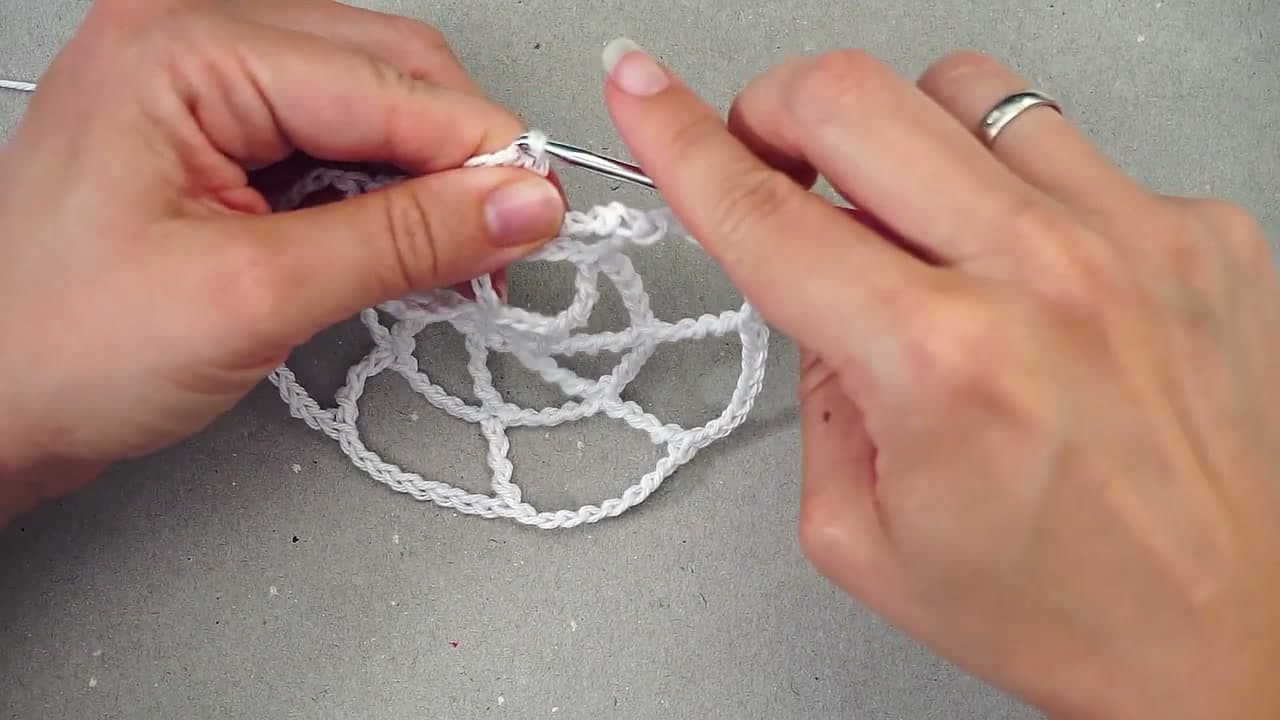
    Each new round uses a longer chain count between the spokes so the web grows outward in evenly spaced rings. The chapter chart in the video walks through it: chain 8, then 11, then 14, then 17, then 20, then 23. So round 3 uses chain-8 arcs, round 4 uses chain-11 arcs, and so on.

    The pattern stays the same the whole way - dc into the previous round's spoke, chain X to bridge the gap, dc into the next spoke. Eight clusters per round, joined with a slip stitch at the end. Most webs look great at four to six total rounds. Stop when the web is about the size you want for your wall or door.

    Tip:

    A 6-round web is roughly 18 inches across. Three rounds is 8 inches - more of an ornament size. Decide where you want to hang it before you pick a size.

    Back to all steps

  6. Step 6: Fasten off and weave in the ends

    Watch this step · 7:35

    Once the web is the size you want, fasten off. Cut the yarn leaving a 6-inch tail, then yarn over and pull all the way through the loop on your hook to lock the last stitch in place.

    Thread the tail onto your tapestry needle and weave it back and forth through several stitches along the outer ring so it disappears into the work. Do the same for the tail at the center of the magic ring. Trim both ends close to the fabric. Lay the web flat and smooth out any twisted spokes so the radial lines all run straight from the center outward.

    Tip:

    If a spoke looks crooked, give it a gentle tug from the outer edge toward the center. The chains usually straighten out once you set the tension evenly.

    Back to all steps

  7. Step 7: Block and hang the finished web

    Watch this step · 8:20

    For the crispest open look, block the web. Soak it in cool water for ten minutes, squeeze out the excess (do not wring), and pin it flat to a foam board or thick towel. Stretch each spoke evenly and pin the outer ring round. Let it dry overnight. Once dry the web holds its shape on its own.

    To hang, stick three or four small command hooks on your wall in a circle and stretch the outer ring of the web across them. The web stays taut and lightweight. Take it down after Halloween, store it flat, and it is ready for next year.

    Tip:

    If you want it to glow in the dark, mist the dry web with glow-in-the-dark fabric spray paint before hanging. Two light coats work better than one heavy one.

    Back to all steps

Keep going

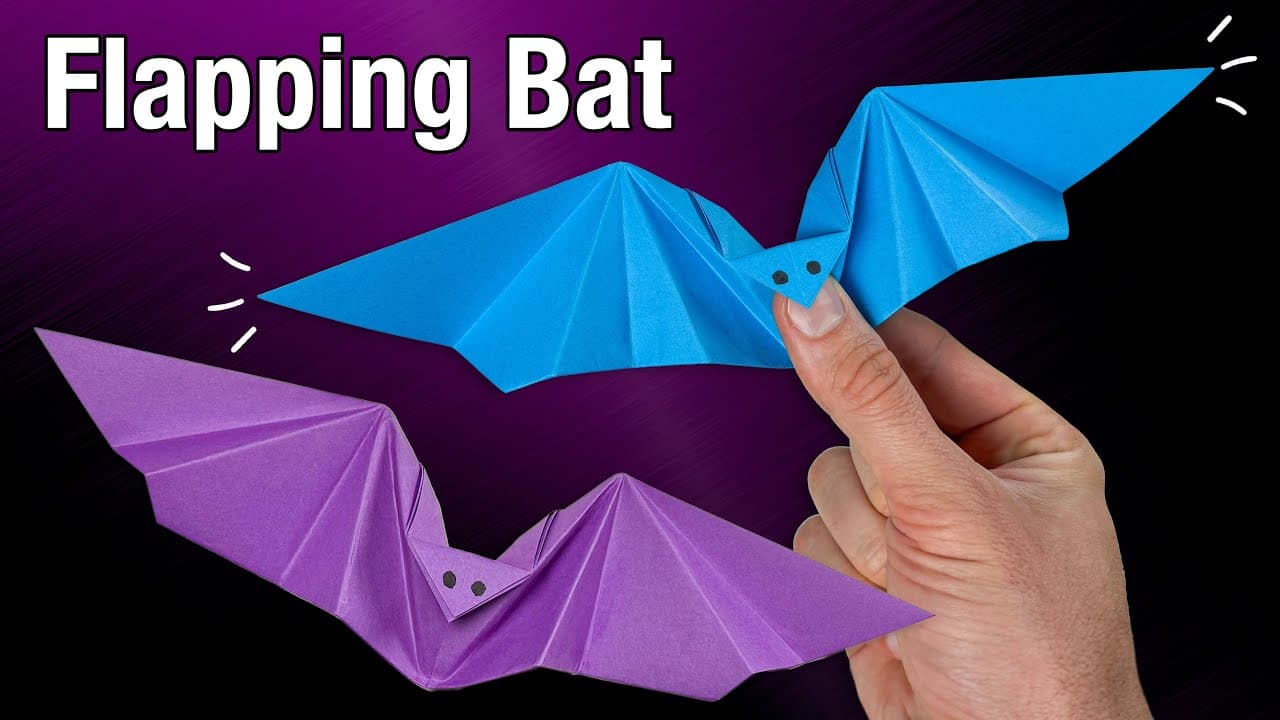
How to Make a Paper Bat (Easy Origami for Halloween)

Products Used

The Checklist

How to Crochet a Spider Web (Halloween Decor)

Tools
4
Materials
2
Steps
7
Video
9 min

Tools we recommend

As an Amazon Associate we earn from qualifying purchases. Links on this page may be affiliate links - clicking them and buying doesn't change your price, but helps support CraftingStepByStep.

Tags

Free printable

Get the Crochet Cheat Sheet

Every basic stitch on one printable page. No spam, one-click unsubscribe.

Test your knowledge

Did the lesson stick? Start with this one.

5 questions covering what you just read. No signup, no score saved, and you can stop after this one.

Question 1 of 5

Best fiber for holding the web's open shape?

Quick reference

Key takeaways from How to Crochet a Spider Web (Halloween Decor)

5 questions, answers, and one-line explanations. Tap to expand.

  1. 1.Best fiber for holding the web's open shape?

    Answer: Stiff cotton

    Cotton holds the open web shape after a quick block. Fuzzy yarns blur the stitches and the radial spokes lose definition.

  2. 2.How many double crochet spokes in round 1?

    Answer: 8 spokes

    8 dc spokes worked into the magic ring with chain-1 gaps between each. Every later round adds chain arcs between these same 8 spokes.

  3. 3.Where do you place each dc in round 2?

    Answer: Into chain-1 spaces

    Always into the chain-1 space (the gap), never into a stitch. The chain-2 arcs between dc clusters give the scalloped web look.

  4. 4.Chain count for arcs in round 3?

    Answer: Chain 8

    Round 3 uses chain-8 arcs. The chart progresses: 8, 11, 14, 17, 20, 23 - each round's arcs grow so the web spreads evenly outward.

  5. 5.How do you set the web's open lacy shape?

    Answer: Block while damp

    Soak 10 min in cool water, pin flat to foam board stretched evenly, let dry overnight. Cotton holds the blocked shape on its own.

Did this work for you?

What's next

Related collections

Curated theme pages that include this tutorial.

Similar tutorials

Hand-picked next reads based on the one you just finished.

Liked this crochet tutorial?

Pick the crafts you want to hear about. One email every Sunday with new step-by-step tutorials. No spam, easy to unsubscribe.

Get more like this in your inbox

Weekly digest. Pick the categories you want. Unsubscribe anytime.

Send me tutorials about

We only email about new tutorials. Easy unsubscribe anytime.