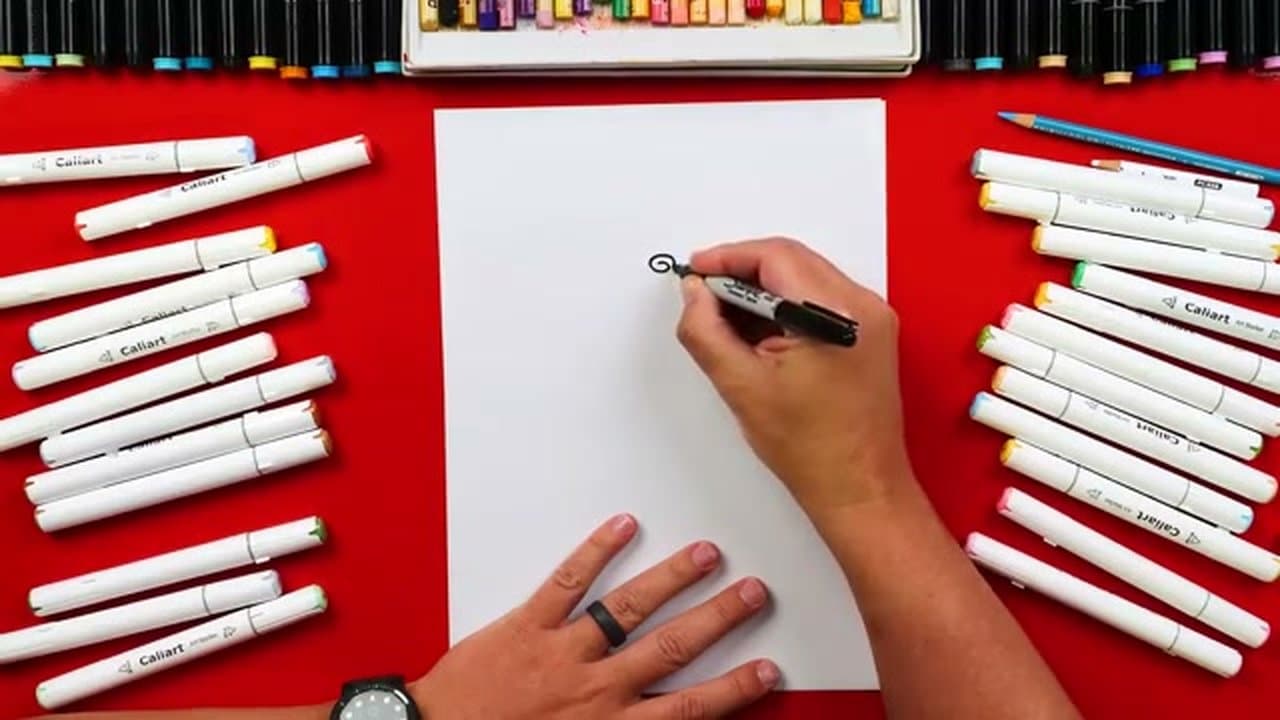
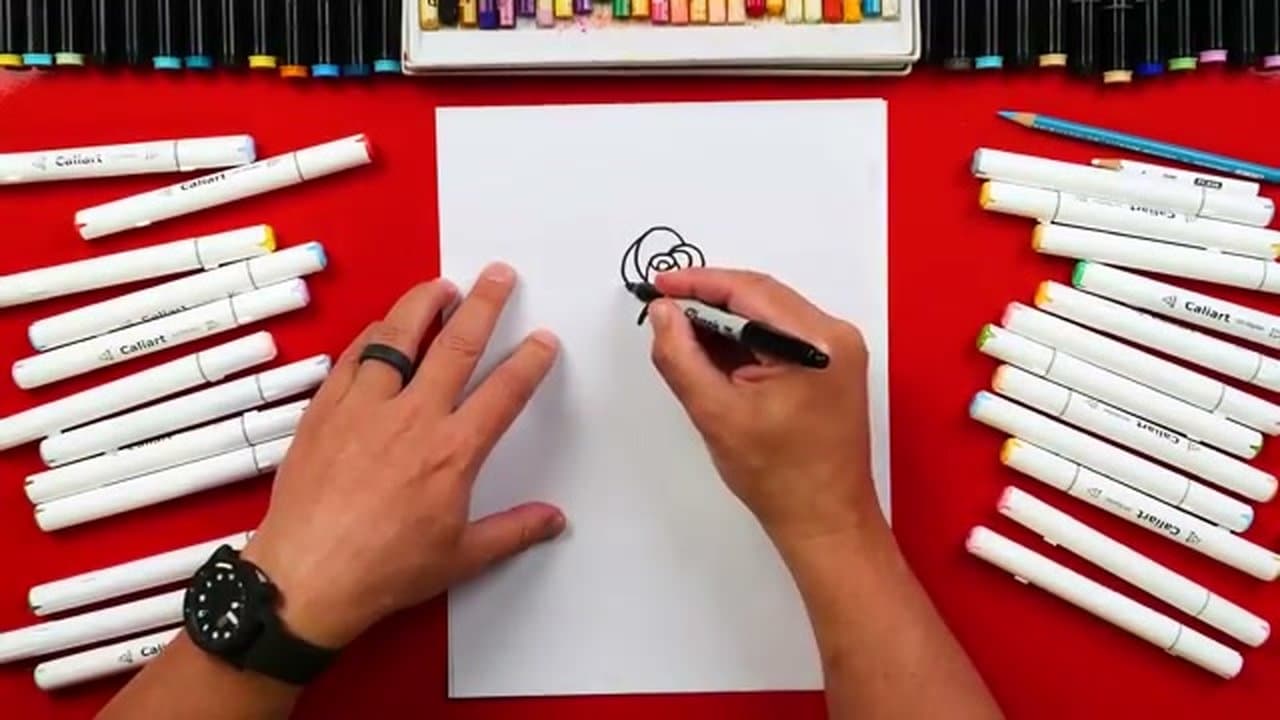
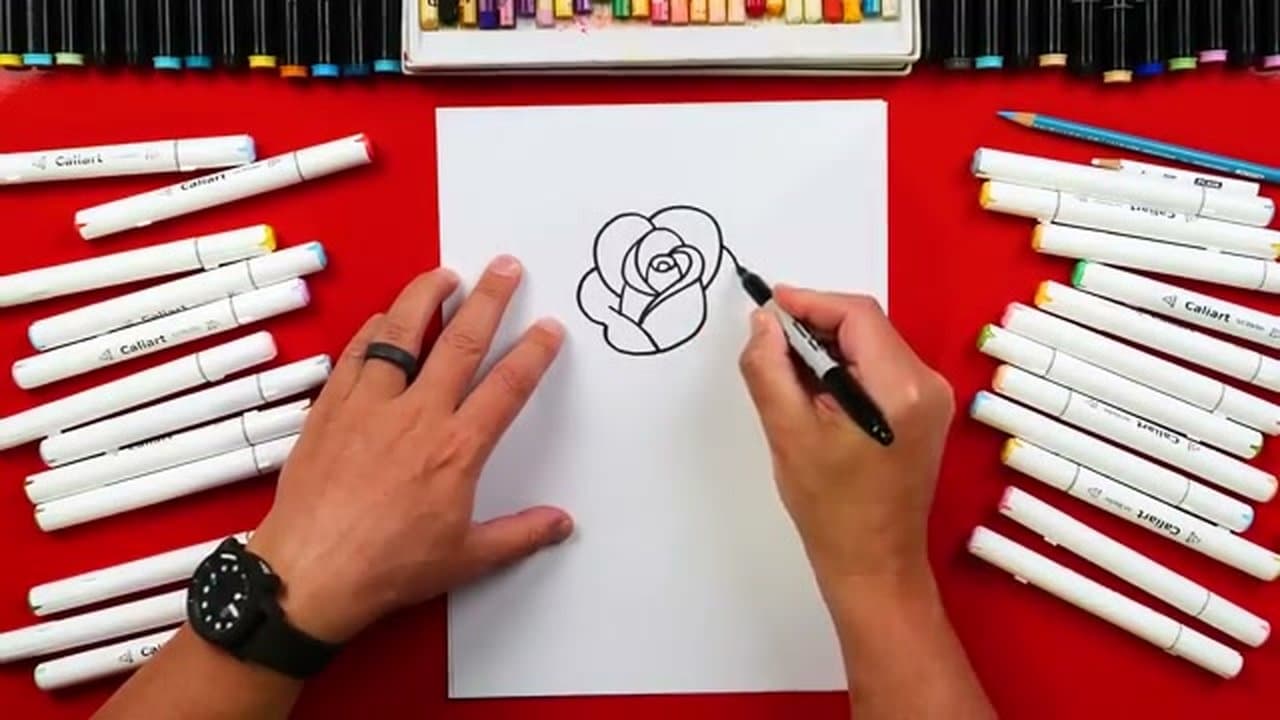
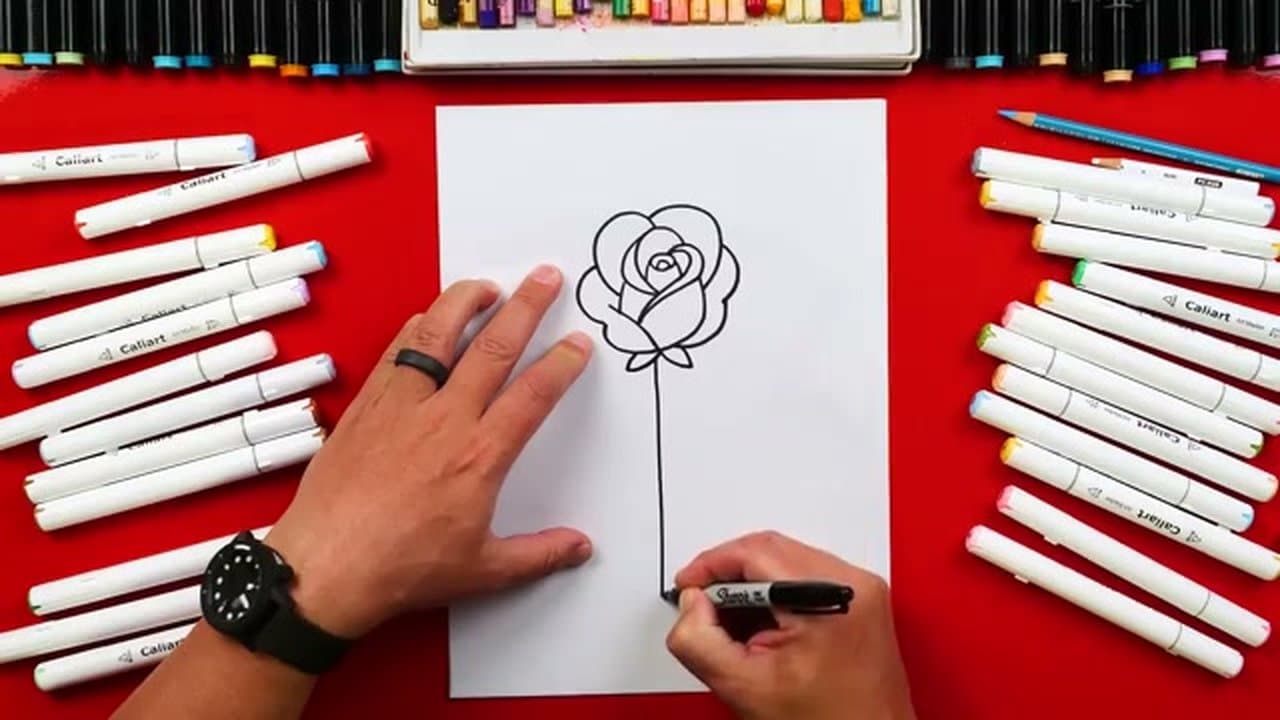
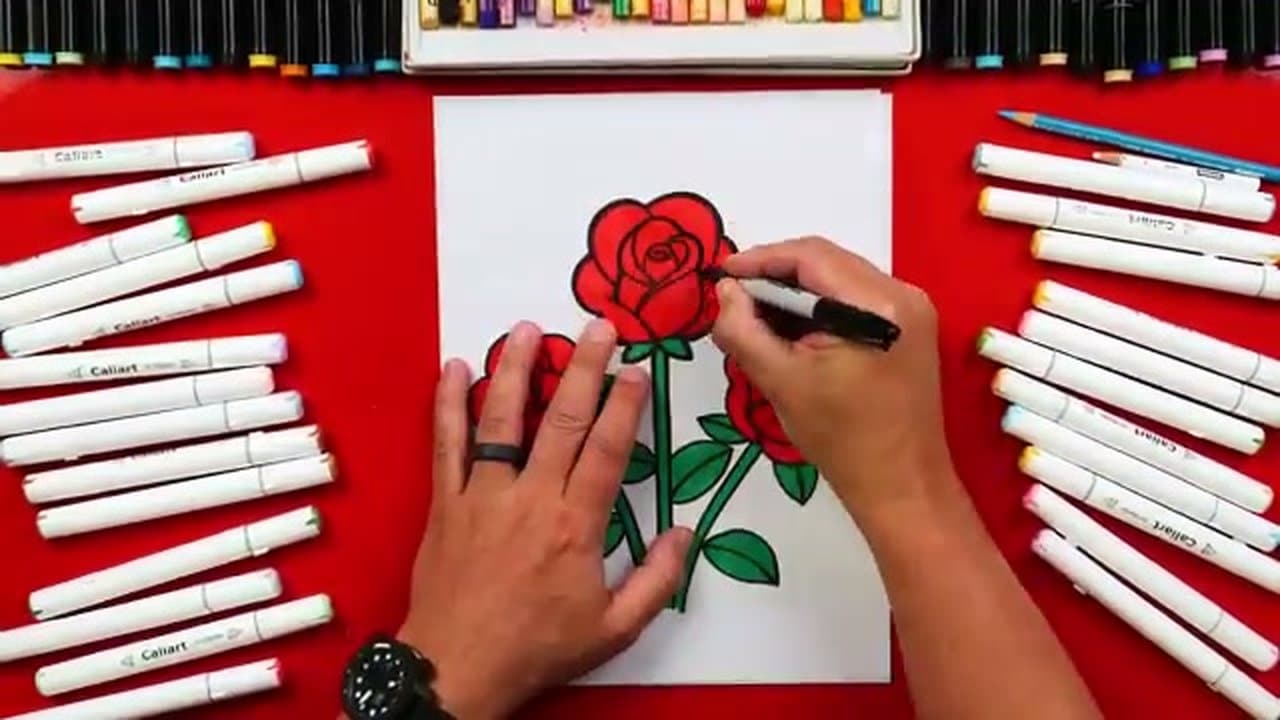
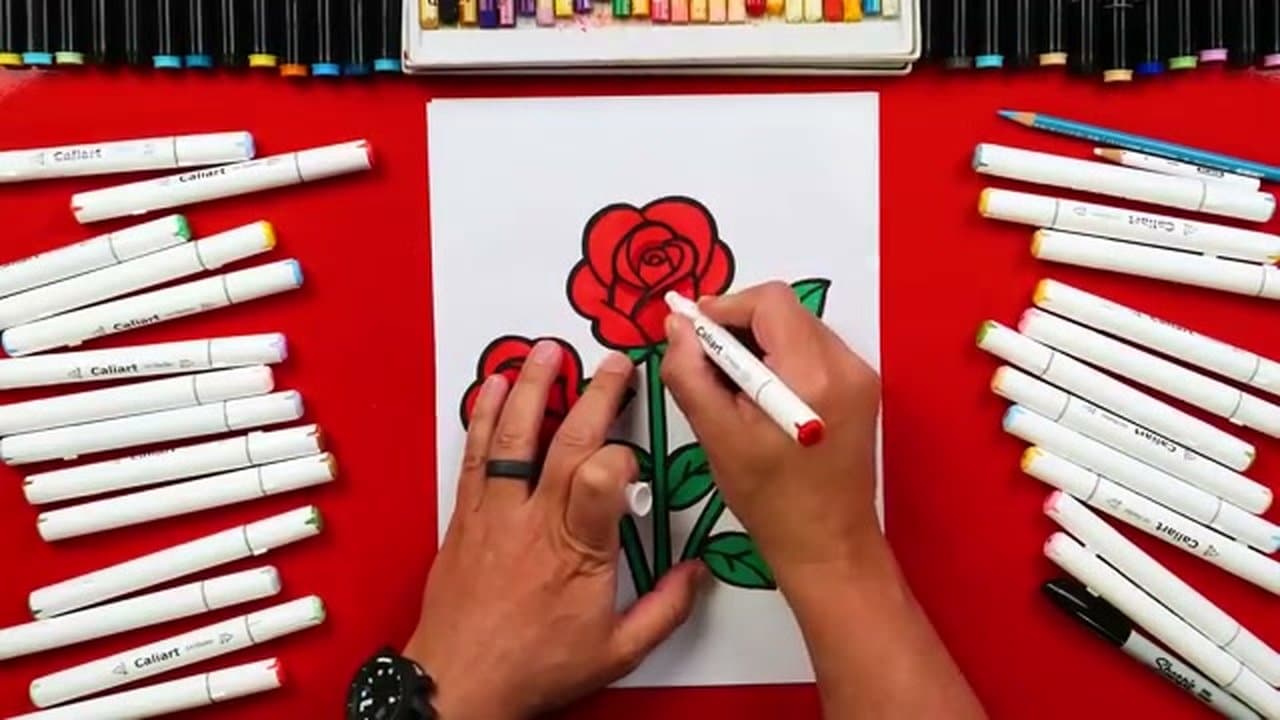
Drawing a rose looks intimidating, but the trick is to start tiny and build outward. You begin with a small spiral that becomes the bud, then add curves and S-curves around it, each layer a little bigger than the last. The flower takes shape on its own as you go.
This tutorial follows Art Hub Plus, a channel known for art lessons that work for kids, teens and adults alike. The lesson uses markers, but you can sketch first in pencil and finish in marker, or do the whole thing in pencil. The most useful part is the shading at the end: a second pass with a darker red lifts the rose off the page in about thirty seconds.
Two ways to draw a rose
The spiral-center method used here starts with a curl and wraps petals around it. It's fast, it's hard to get wrong, and it gives you a rose seen from the side and slightly above.
The cup-and-petals method starts with a cup or bowl shape for the whole bloom, then carves the petals into it. It takes longer, but it's easier to control the overall size, and it works better for a realistic pencil rose. Try the spiral first. Move to the cup when you want more control.
Open bloom or bud
A bud is the spiral and one or two tight petals, taller than it is wide, with the green sepals curling up around the base. An open bloom keeps adding wider petals until the outer ones flip back at the edges. The steps here land in between. Stop at step 4 for a bud, or keep adding outer petals with bumps for a full bloom.
Stem, leaves and thorns
- Give the stem a slight curve. A dead-straight stem looks like a stick glued on.
- Rose leaves grow in groups of three or five on one small stalk, with the biggest leaf at the tip.
- Serrated edges sell the leaf. Short zigzags along the outline are enough.
- Thorns are small hooked triangles pointing down the stem. Space them out and keep them few.
Coloring with markers
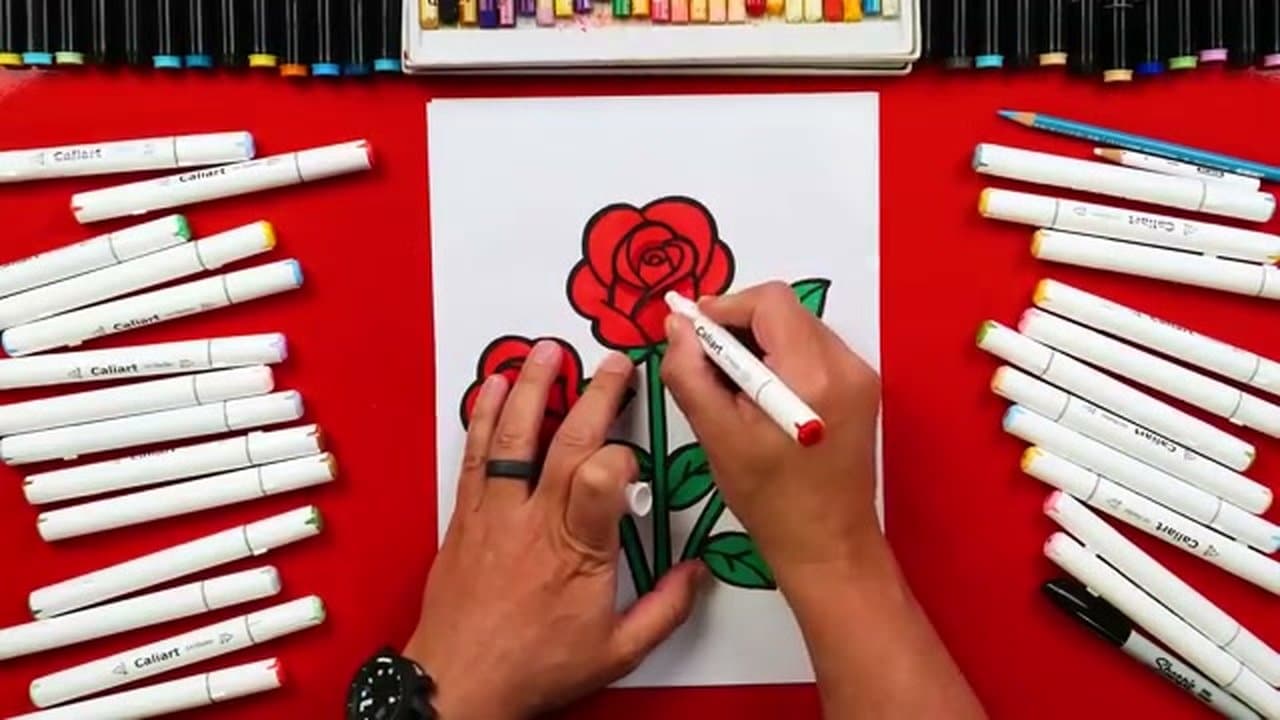
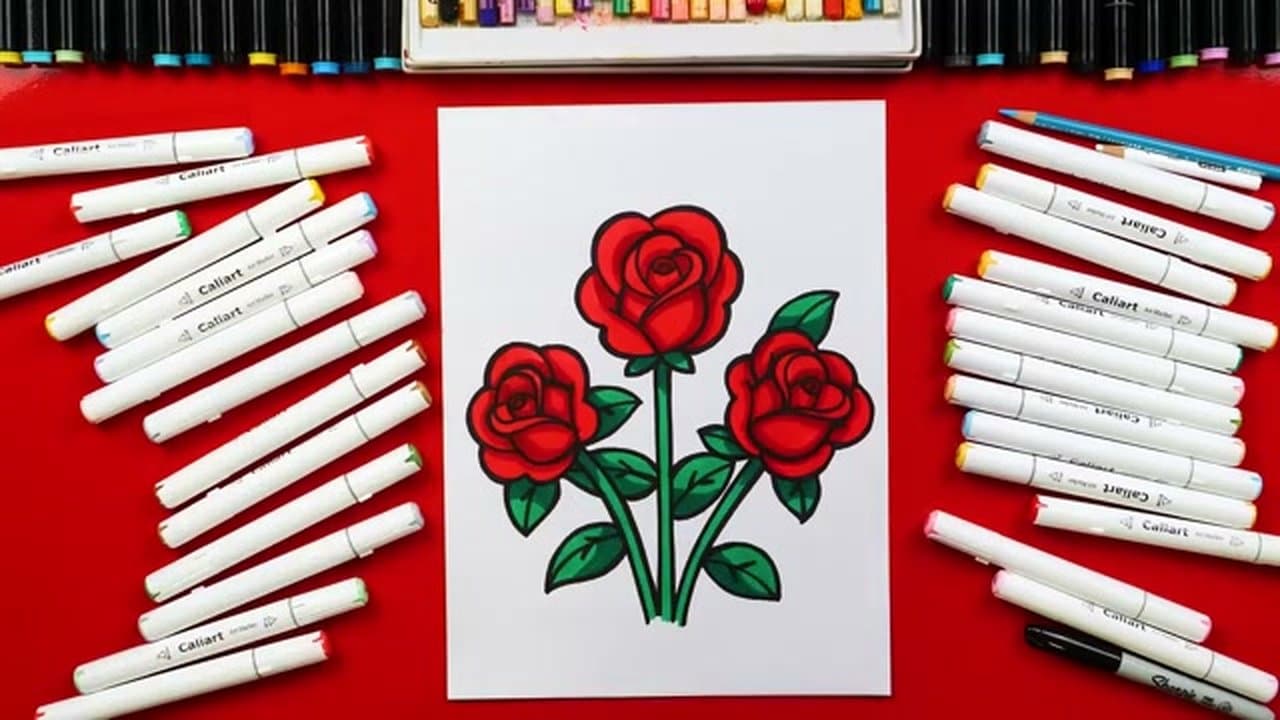
Work light to dark. Lay the base red over the whole bloom, let it dry for a few seconds, then add the darker red where petals tuck under each other and deep inside the spiral. Leave a sliver of white paper on the top edge of a few petals. Those gaps read as light hitting the rim, and they're the fastest way to make a marker rose look round. Do the same on the leaves with two greens.
No markers? Use a pencil
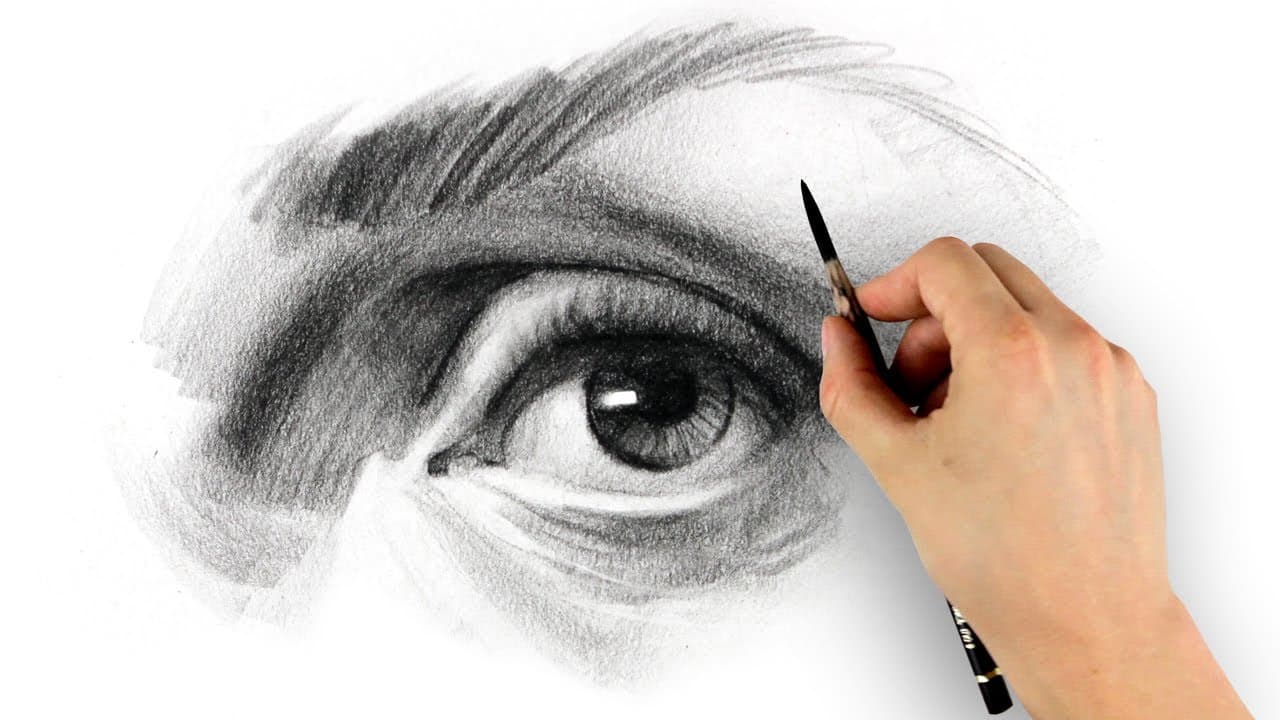
Draw the same lines lightly with an HB pencil, then shade with a 2B or 4B. Keep the petal edges light and push the darkest tones into the center and the undersides of the petals. The shading logic is the same as the marker version.
Common mistakes
- Petals all the same size. Each ring should be bigger than the one inside it.
- Flat center. The spiral needs the darkest shading on the page or it looks like a pinwheel.
- Stem too straight. Add a gentle curve and a leaf group to break it up.
- Over-shading. Stop the moment it looks finished.
For more blooms, see how to draw flowers and how to draw a sunflower, and practice leaf shapes with how to draw a leaf. If the sketching and shading here feel like guesswork, the fundamentals - pencil grades, the light-pass method and picking a light source - are at how to draw.