How to Make a Pop-Up Card with an Accordion Fan

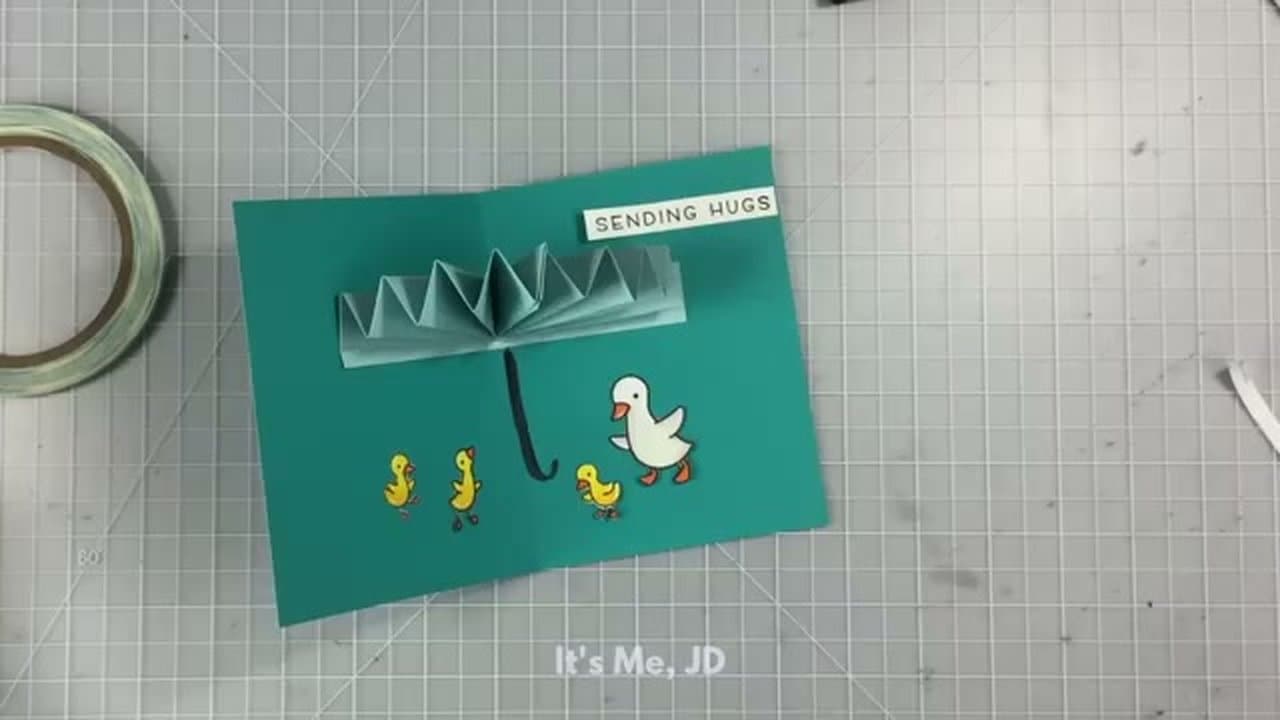
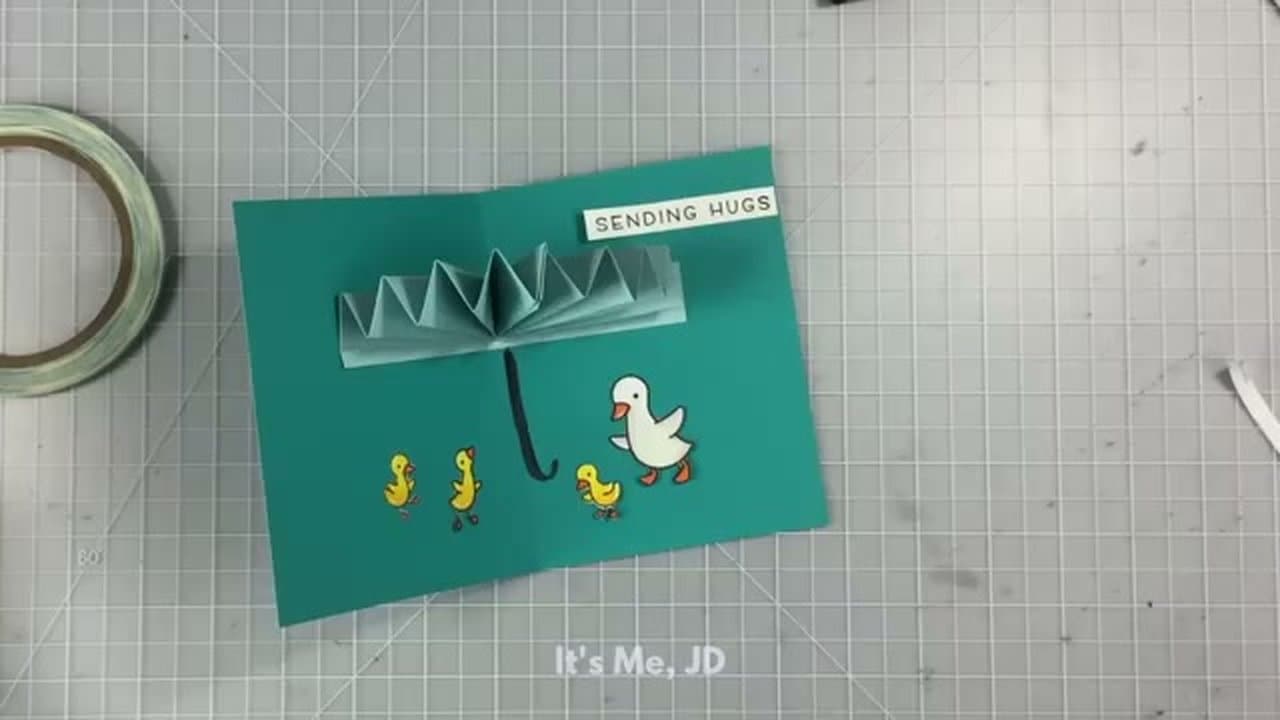
The finished result: How to Make a Pop-Up Card with an Accordion Fan

By CraftingStepByStepPublished Updated

Based on a video by It's Me, JD.

A pop-up card needs three things: a folded base, a mechanism that lies flat when the card is shut, and something mounted on it that rises. The accordion version uses a strip of paper pleated at half-inch intervals, folded in half, and taped to both inside walls so the card's own hinge does the work. Close the card and the fan squashes flat. Open it and the pleats spread into a half circle, lifting whatever you glued on top.

The seven steps below follow It's Me, JD, who builds the card from one sheet of 8.5 by 5.5 inch cardstock and a strip of lightweight patterned paper, then turns the fan into an umbrella with ducks under it. Copy that scene or swap in a sun, a rainbow or a peacock tail.

How the accordion pop-up card mechanism works

Every pop-up runs on the card's hinge. Open the card and the two inside walls swing apart, dragging anything attached to both of them. The fan is glued along its center spine and taped at its two outer faces, one on each wall, so opening the card pulls those faces apart and the pleats spread.

That is why the spine has to land dead on the score line. Sit it an eighth of an inch off and one half opens further than the other, and the card will not close flat.

Cardstock weight and fan paper: what to use and why

Use 80 to 110 lb cover cardstock (about 215 to 300 gsm) for the base. Lighter and the walls bow under the pull of the fan. The fan wants the opposite: patterned paper from a scrapbook pad or plain printer paper both crease sharply and spring back. Cardstock makes a stiff fan that fights the closure and can peel the tape off the walls.

Glue stick works for the spine because that seam is small and gets clamped under a binder clip. For fixing the fan to the walls, double-sided tape wins. It grabs on contact, does not warp the paper with moisture, and holds the fan where you put it.

Other pop-up mechanisms and when to use each

The fan is the right pick when the feature reads as a fan: a sunburst, an umbrella, a skirt, a peacock. Two other mechanisms cover most of what it cannot, but start with the fan. It has one alignment to get right, and its failure mode shows up before you have decorated anything.

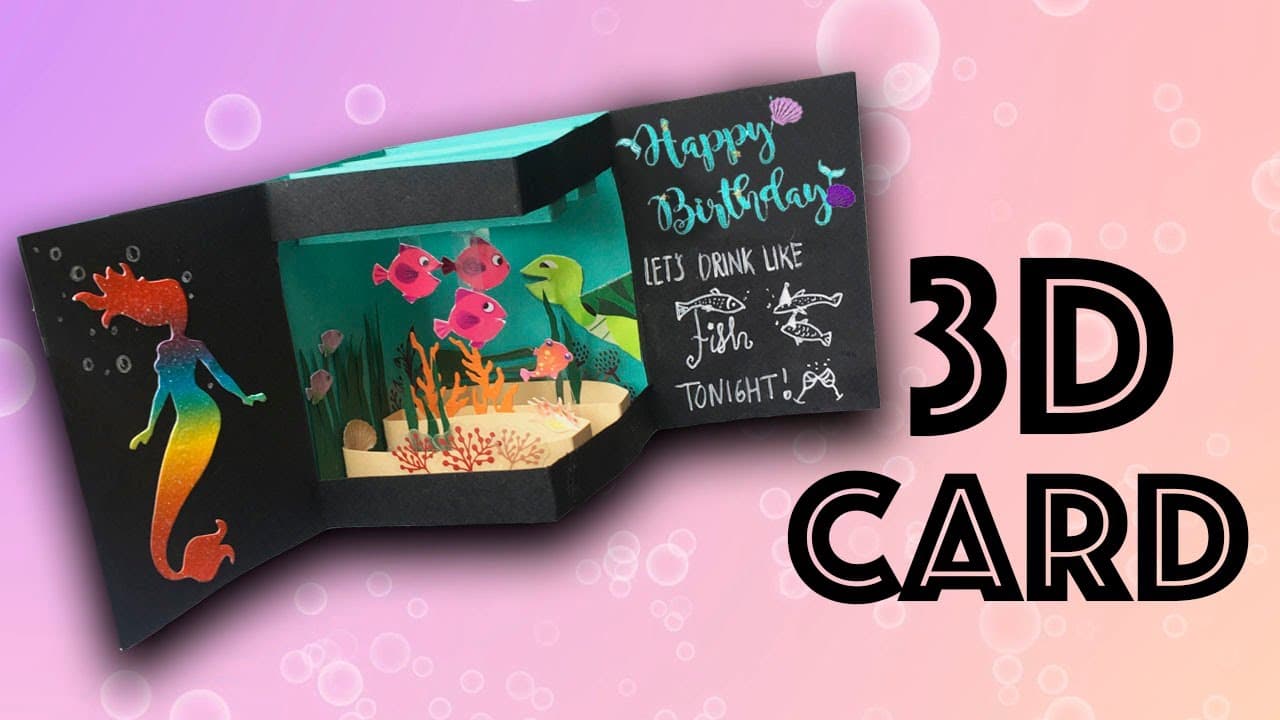
  • Box or step pop-up. Two parallel cuts across the fold, pushed inward to make a shelf. It stands up a flat cut-out like a cake or a house, and it is the mechanism behind a 3D card.
  • V-fold. A separate piece folded into a V and glued across the hinge at an angle. It pushes an element up and forward, good for a mouth that opens or a flower leaning out.
  • Moving mechanisms. A waterfall card flips a stack of panels with a pull strip, and a spinning kirigami card rotates as it opens. Both take longer and get a bigger reaction.

What to mount on the fan

The fan is the decoration, so pick the scene before the strip. Solid or small-print paper reads as an umbrella or a sun. An ombre strip reads as a rainbow. Deep green with gold dots reads as a peacock tail.

An accordion photo card is the other big use. Trim small photos to the height of the fan and glue one to every second pleat on the outward-facing side. They hide while the card is shut and spread into a strip of pictures when it opens. Print them on plain paper, not glossy photo stock, or the weight stops the fan from springing.

Occasions and what to make next

Birthday, Mother's Day, a baby shower, a get-well note: the fan suits all of them because you change the scene, not the build. A yellow fan under a "you are my sunshine" sentiment covers a lot of ground.

If this is your first handmade card, the plain folded card tutorial covers scoring and sizing. For movement without a mechanism, a shaker card gives you a window of loose sequins that rattles instead of pops.
What you'll need

Step-by-Step Guide

7 steps · about 16 minutes.Check off each step as you go and your progress saves automatically.

1

Score the Cardstock Down the Middle

0:37
Step 1: Score the Cardstock Down the Middle - How to Make a Pop-Up Card with an Accordion Fan

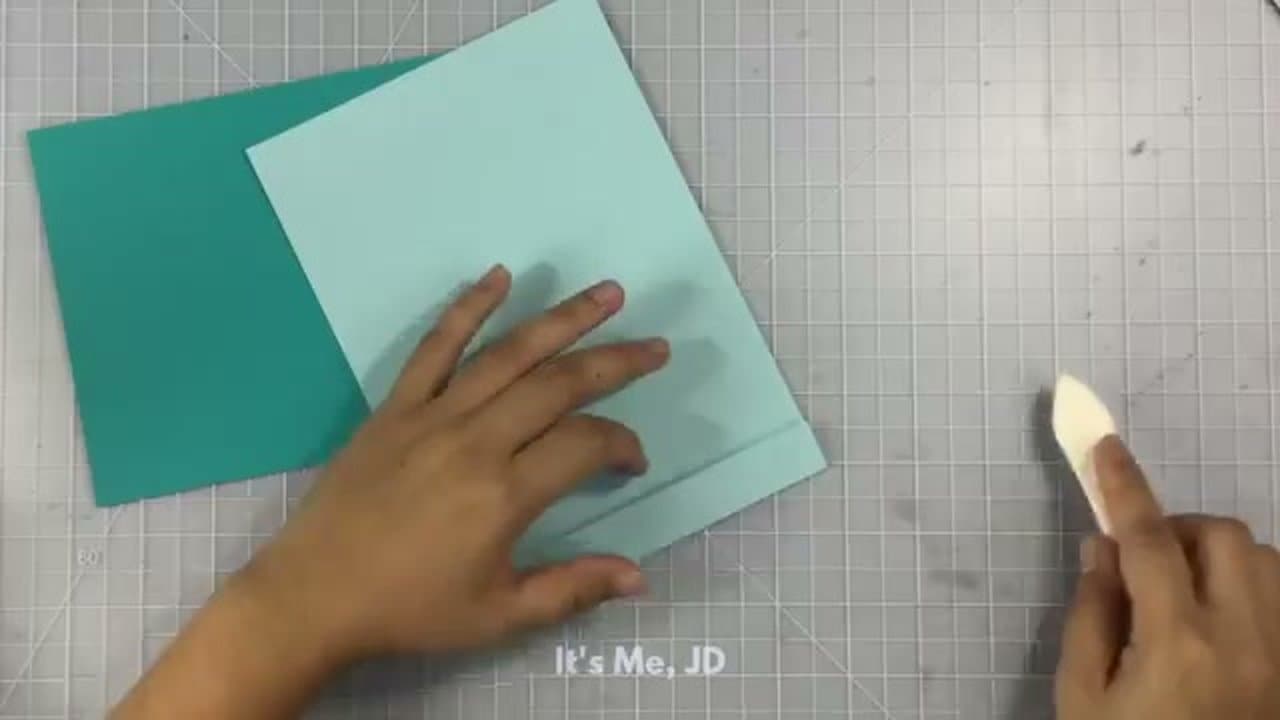
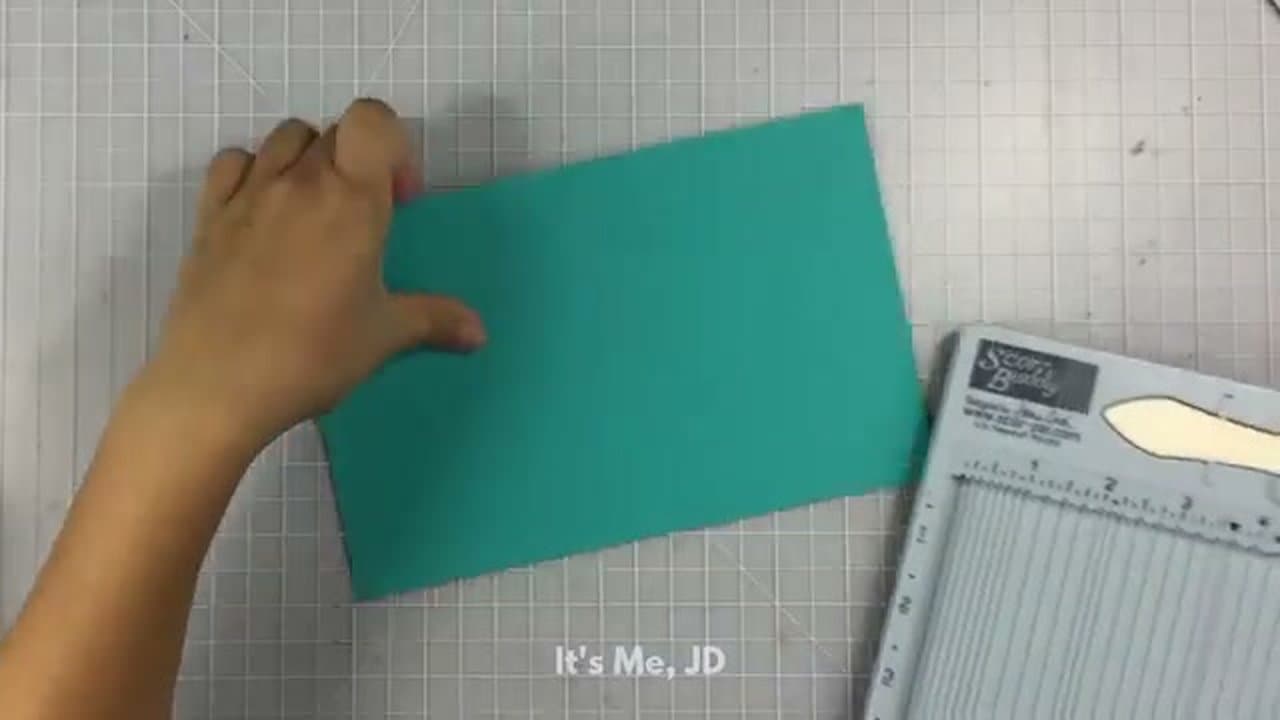
Start with a piece of cardstock about 8.5 by 5.5 inches. Run it through a scoring board down the middle so it folds cleanly in half.

If you don't have a scoring board, score with a bone folder against a ruler. A clean score line is what makes the card sit flat when closed and pop open without creasing in random places.

2

Accordion-Fold a Strip of Paper

0:50
Step 2: Accordion-Fold a Strip of Paper - How to Make a Pop-Up Card with an Accordion Fan

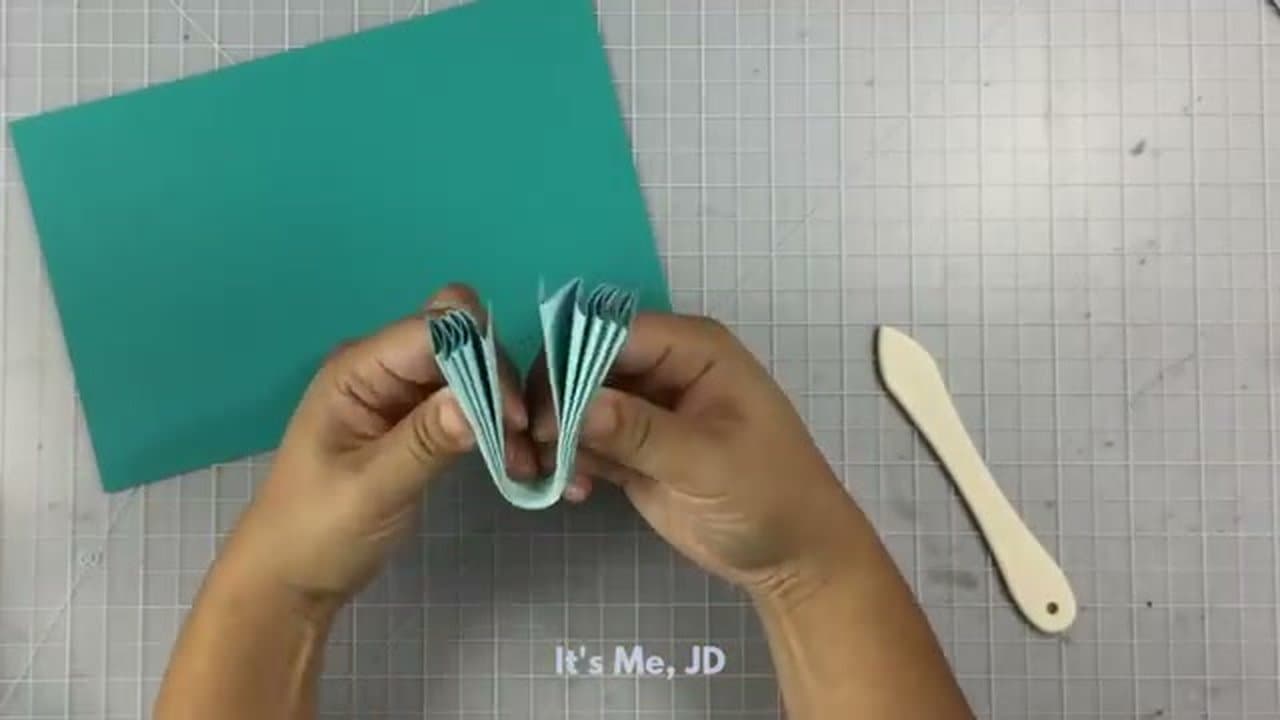
Take a separate strip of lightweight paper - lighter weight than your card so it doesn't bulk up the closure. Fold it back and forth like an accordion, with each fold about half an inch wide.

Keep the folds even by eyeballing the previous one. Continue all the way to the end of the strip. The length of the paper isn't critical - what matters is that you can fold it in half later.

3

Fold the Accordion in Half

1:02
Step 3: Fold the Accordion in Half - How to Make a Pop-Up Card with an Accordion Fan

Once the accordion is fully folded, bring the two ends together and fold the whole strip in half at its center.

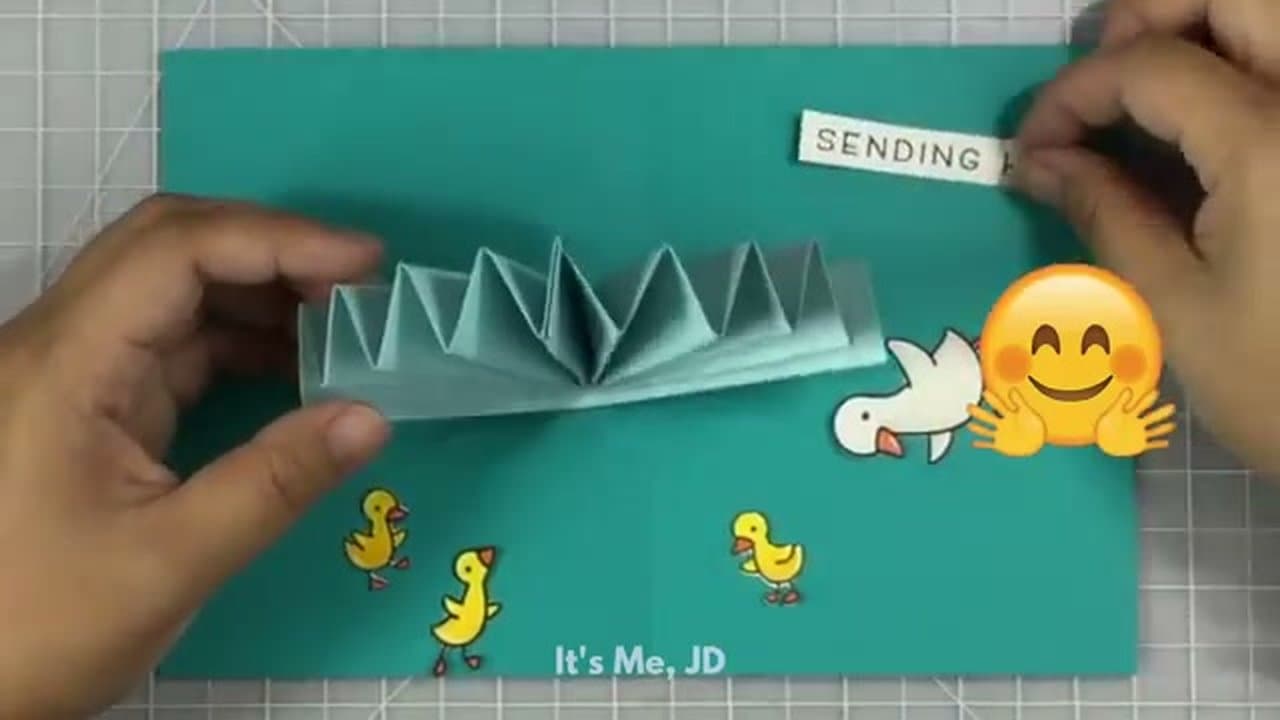
The two halves of the accordion now sit back-to-back, forming the basic fan shape. This is the pop-up mechanism - it'll compress flat in a closed card and spring open when you open the card.

4

Glue the Fan Halves Together

1:15
Step 4: Glue the Fan Halves Together - How to Make a Pop-Up Card with an Accordion Fan

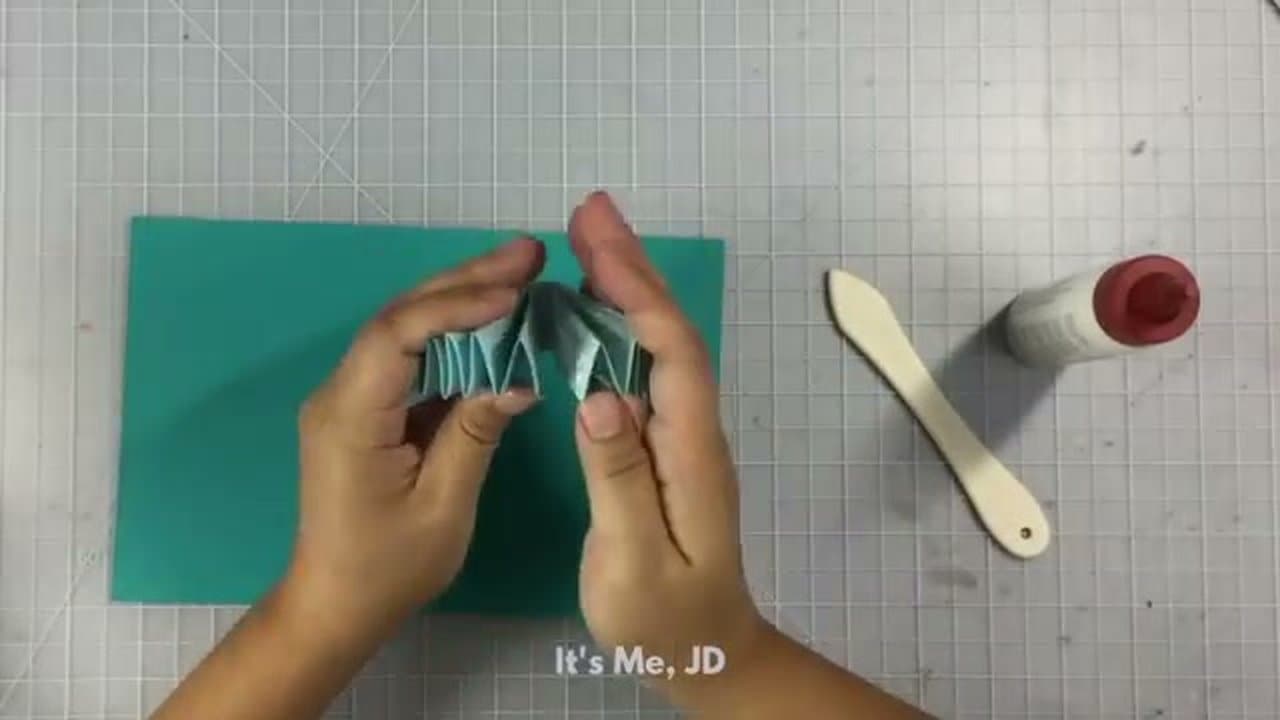
Run a thin line of glue (or double-sided tape) between the two innermost faces of the folded accordion - the two faces that touch when you fold it in half.

Press them together firmly along the spine, then clip with a binder clip and let it dry for a couple of minutes. The clip keeps the spine glued tight while the fan still opens freely from both sides.

5

Stamp or Decorate the Front

1:30
Step 5: Stamp or Decorate the Front - How to Make a Pop-Up Card with an Accordion Fan

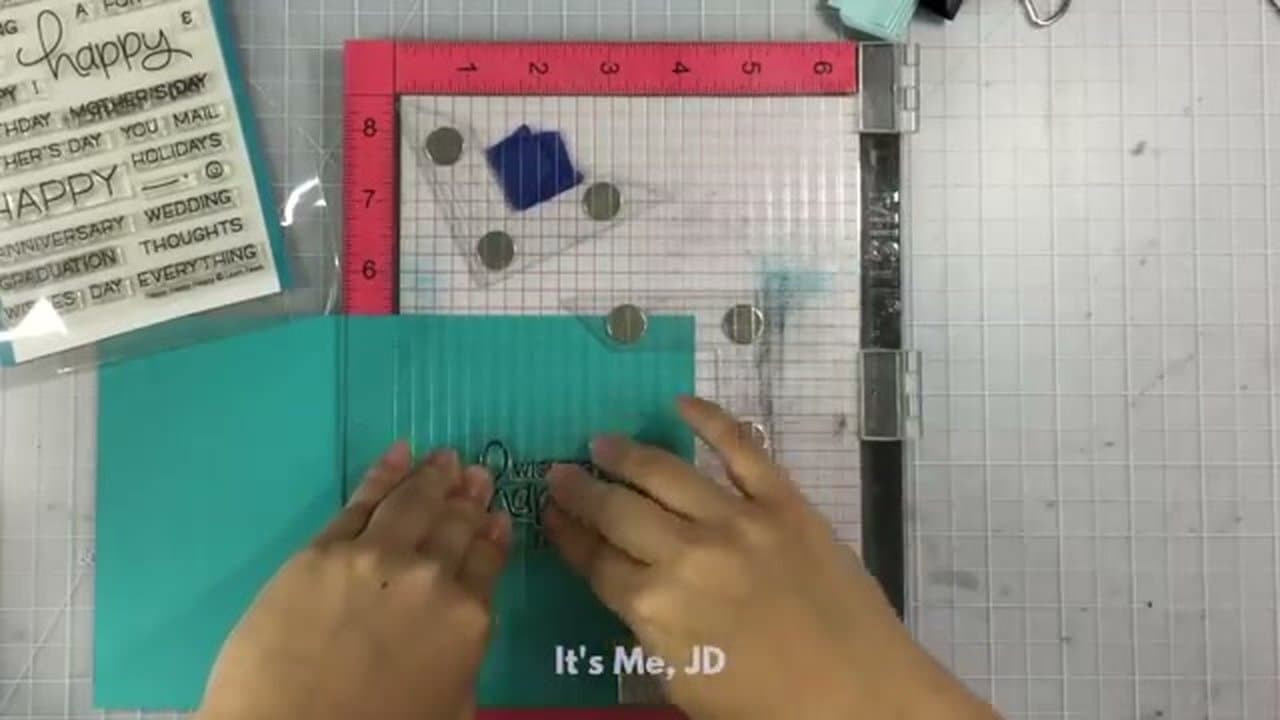
While the fan dries, work on the outside of the card. Stamp a sentiment, hand-letter a greeting, or add stickers - whatever fits the occasion.

Doing this before assembly matters. If you stamp ink onto the closed card later, it can transfer to the inside layer when you press it. Decorating the outside while the inside is empty avoids that problem entirely.

6

Tape the Fan Inside the Card

1:45
Step 6: Tape the Fan Inside the Card - How to Make a Pop-Up Card with an Accordion Fan

Add double-sided tape to the back of both halves of the fan. Peel off the backing.

Press the fan inside the card so the centerfold of the fan lines up exactly with the scoreline of the card. This alignment is what makes the fan compress and spring open cleanly. Press both halves of the fan firmly against the inside walls of the card.

Used in this stepDouble-Sided Tape
7

Add Decorative Elements

2:25
Step 7: Add Decorative Elements - How to Make a Pop-Up Card with an Accordion Fan

Now decorate the inside. Add stamped or printed elements around the fan - characters, flowers, words, anything that makes sense with your theme. Use the fan itself as a feature too: in the example, the fan reads as an open umbrella with ducks walking under it.

Glue the elements onto the flat inside areas of the card on either side of the fan. When the card opens, the fan rises and your decorations frame the scene. Close the card to test, then open it again to enjoy.

Keep going

How to Make a Shaker Card: 7 Step Easy Tutorial With a Clear Envelope

7 steps · about 6 minutes

Products Used

The Checklist

How to Make a Pop-Up Card with an Accordion Fan

Tools
5
Materials
4
Steps
7
Video
16 min

Tools we recommend

Your Guide

It's Me, JD

As an Amazon Associate we earn from qualifying purchases. Links on this page may be affiliate links - clicking them and buying doesn't change your price, but helps support CraftingStepByStep.

Tags

Sunday How-To

New card making tutorials, every Sunday

One short email with the week's best step-by-step guides. Free, no spam, unsubscribe anytime.

Test your knowledge

Did the lesson stick? Start with this one.

5 questions covering what you just read. No signup, no score saved, and you can stop after this one.

Question 1 of 5

Why use a scoring board (or bone folder + ruler) for the centerfold?

Quick reference

Key takeaways from How to Make a Pop-Up Card with an Accordion Fan

5 questions, answers, and one-line explanations. Tap to expand.

  1. 1.Why use a scoring board (or bone folder + ruler) for the centerfold?

    Answer: A clean score line makes the card sit flat when closed and pop open without random creases

    A scored fold is sharper and more reliable than a hand-folded one.

  2. 2.How wide should each accordion fold be?

    Answer: About 1/2 inch

    Half-inch folds give the fan its springy pop without bulking up the closed card.

  3. 3.What kind of paper should you use for the accordion strip?

    Answer: Lightweight paper, lighter than the card so it doesn't bulk up the closure

    Lightweight paper keeps the closed card thin and the fan flexible.

  4. 4.When attaching the fan inside the card, what must align with what?

    Answer: The fan's centerfold with the card's scoreline

    Aligning centerfold to scoreline is what makes the fan compress and spring open cleanly.

  5. 5.Why decorate the OUTSIDE of the card BEFORE assembly?

    Answer: If you stamp ink onto the closed card later, it can transfer to the inside layer when you press

    Stamping onto a closed card risks ink transfer; do the outside before assembly to avoid it.

Did this work for you?

What's next

Related collections

Curated theme pages that include this tutorial.

Weekly Digest

Liked this card making tutorial?

Pick the categories you want to hear about. Weekly digest of new step-by-step tutorials. No spam, easy unsubscribe.

Send me tutorials about

We only email about new tutorials. Easy unsubscribe anytime.