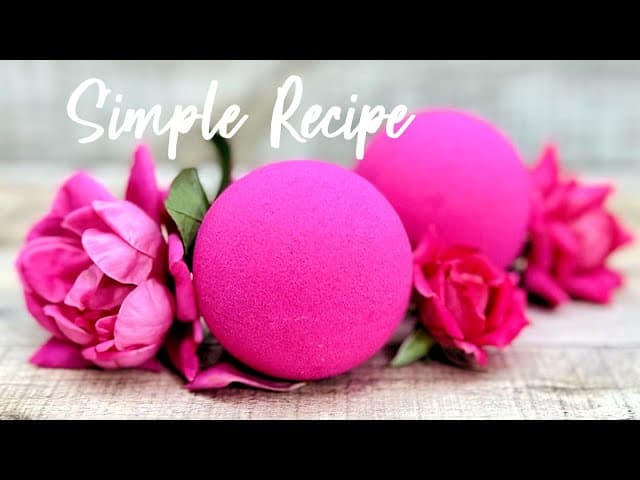
How to Make Soap from Scratch

Other CraftsAdvanced8:276 steps
Also in:Crafts

By CraftingStepByStepPublished Updated

Based on a video by TheCraftyGemini.

Cold-process soap is what your great-grandparents made at home: oils, lye (sodium hydroxide), and water react in a chemical process called saponification, and the end result is real soap. The difference between cold process and the melt-and-pour soap you'll see in craft kits is that cold process is the actual chemistry - melt-and-pour is pre-made soap base that you customize.

This walkthrough from Vanessa at TheCraftyGemini covers the basic recipe with just two oils (canola and olive) so you can see the process without juggling four or five ingredients on your first batch. The technique is the same whether you use two oils or twelve.

Lye is dangerous. It's caustic - splashes burn skin badly and the fumes are toxic when it first hits water. Wear safety gear (gloves, goggles, mask), work in a well-ventilated area, and keep kids and pets out of the room. This is the most important part of soap making.

Plan on about an hour for the active work plus 24 hours of mold-rest and 4-6 weeks of curing before the bars are ready to use.

Step-by-Step Guide

1

Step 1: Suit up with safety gear

1:40
Step 1: Step 1: Suit up with safety gear

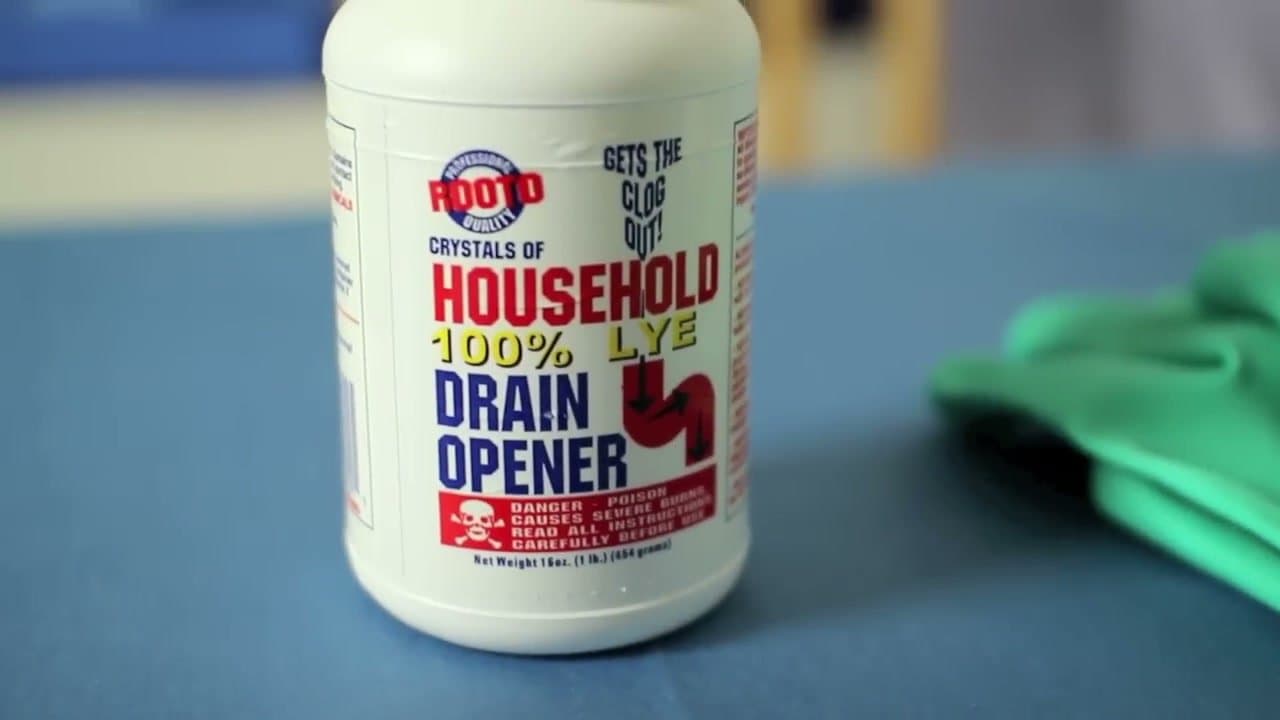
Working with lye is the most dangerous part of soap making. Sodium hydroxide is caustic and the fumes released when it first hits water are toxic for about 30 seconds. Splashes can burn skin badly.

Put on chemical-resistant rubber gloves (the long ones that cover your forearms), safety goggles (not just glasses), and a respirator mask or a regular dust mask plus an open window. Work in a well-ventilated area with no kids or pets around. None of this is optional.

Tip

Buy lye specifically labeled for soap making - 100% sodium hydroxide. Don't use generic drain cleaner that contains lye; it's mixed with other chemicals that contaminate your soap.
2

Step 2: Measure your oils, lye, and water

2:40
Step 2: Step 2: Measure your oils, lye, and water

Use a digital scale - never volume measurements (cups, teaspoons) - because soap making is a chemical reaction that needs precise ratios. A few grams off and the bar either won't saponify or will leave excess lye that burns skin.

For this beginner batch, Vanessa uses canola oil and the cheapest light olive oil she could find. You'll also need water and 100% sodium hydroxide lye. Run all your ingredient amounts through a free online soap calculator (SoapCalc, Bramble Berry Lye Calculator) to confirm the ratios before mixing.

Tip

Use containers and tools that you set aside ONLY for soap making - label them. Lye reacts with aluminum and some plastics, and you don't want soap-batter residue ending up in food prep.

3

Step 3: Carefully mix lye into water

3:40
Step 3: Step 3: Carefully mix lye into water

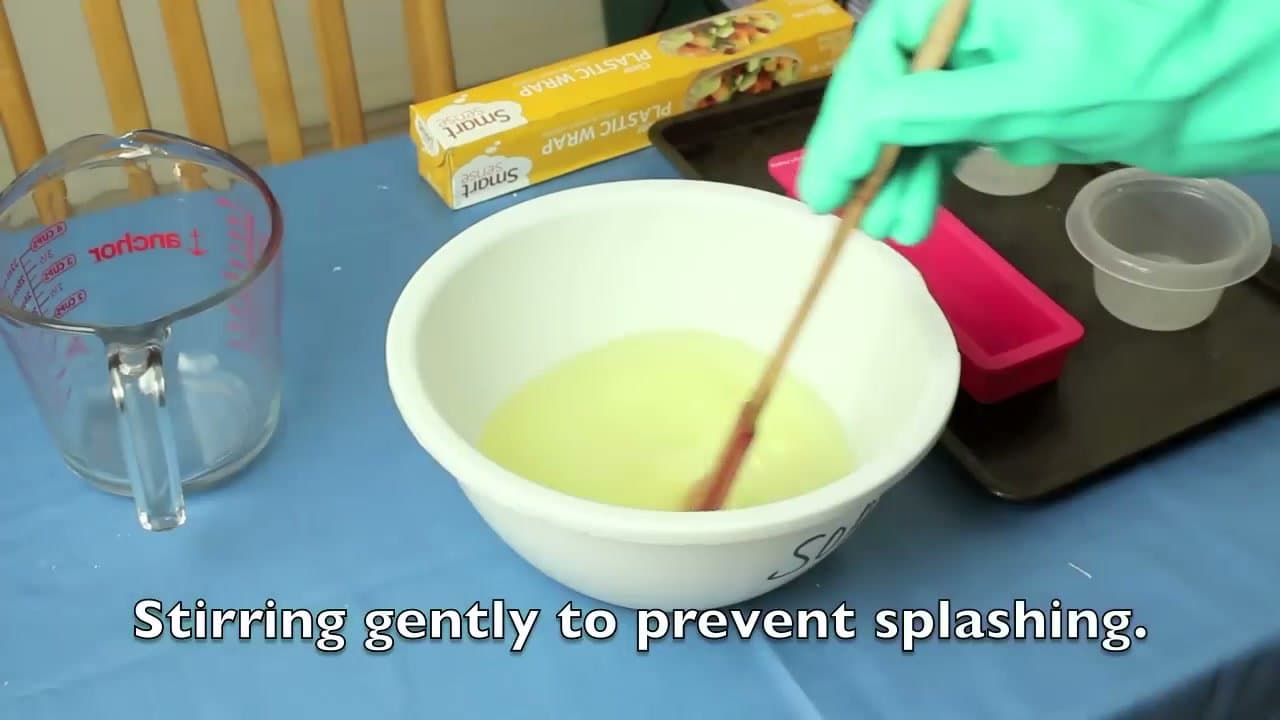
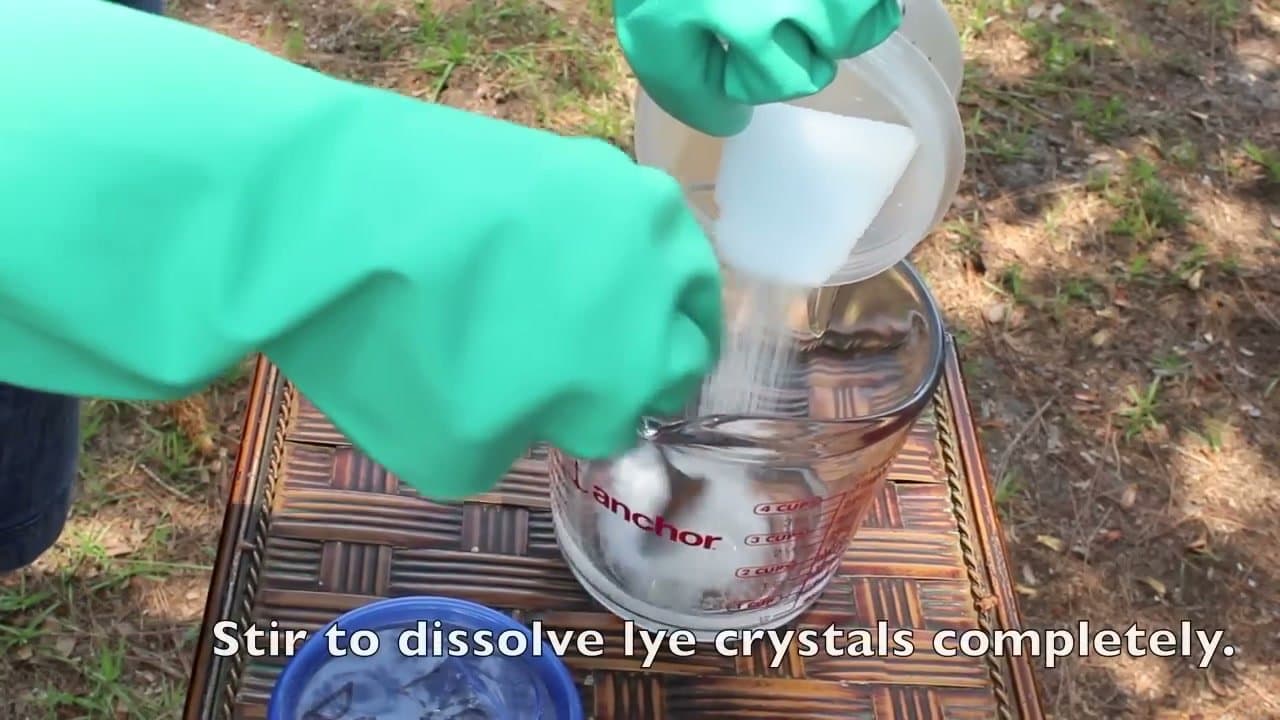
Pour the measured water into a heat-proof glass measuring cup or pitcher first. Then SLOWLY pour the lye crystals into the water (always lye into water, never the other way around - reverse order causes a violent reaction).

Stir gently with a stainless steel spoon to dissolve the crystals. The mixture will heat up to nearly 200°F instantly and release toxic fumes for about 30 seconds. This is exactly why the safety gear matters. Set the lye water aside in a safe place to cool down.

Tip

Work next to your sink so you can rinse a splash immediately. If lye touches skin, flush with cool running water for 15 minutes - don't try to neutralize with vinegar; the heat from neutralization makes the burn worse.

4

Step 4: Wait for both temperatures to match

4:50
Step 4: Step 4: Wait for both temperatures to match

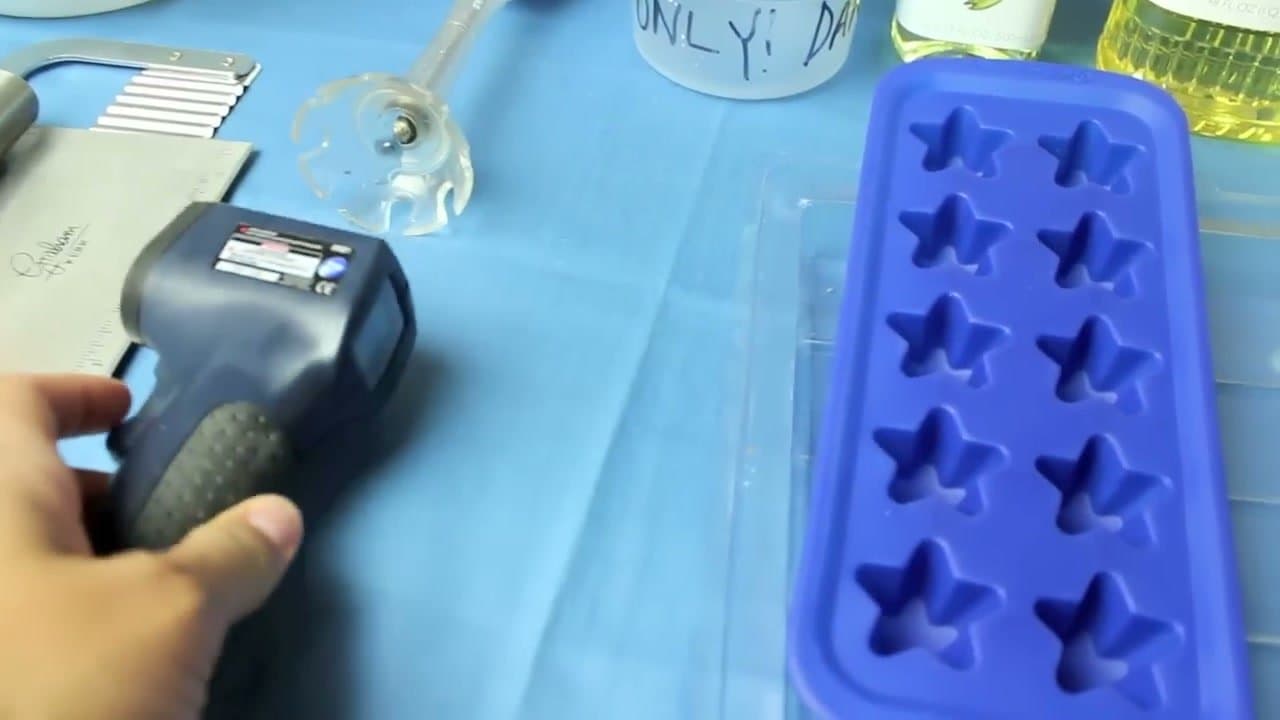
Use a thermometer (gun-style or a candy thermometer) to check the lye water and the oils separately. The lye water cools down from its 200°F peak while the oils warm up slightly to room temperature.

You want both to land around 130-140°F before combining them. This usually takes 15-30 minutes of waiting. Don't combine when temperatures are far apart - the reaction won't be even and the soap can fail.

Tip

Speed it up by setting the lye container in a sink of cool water (no ice; that thermal-shocks the glass). Don't speed up the oils - just let them warm naturally.

Products used in this step

5

Step 5: Combine and stick-blend to 'trace'

5:20
Step 5: Step 5: Combine and stick-blend to 'trace'

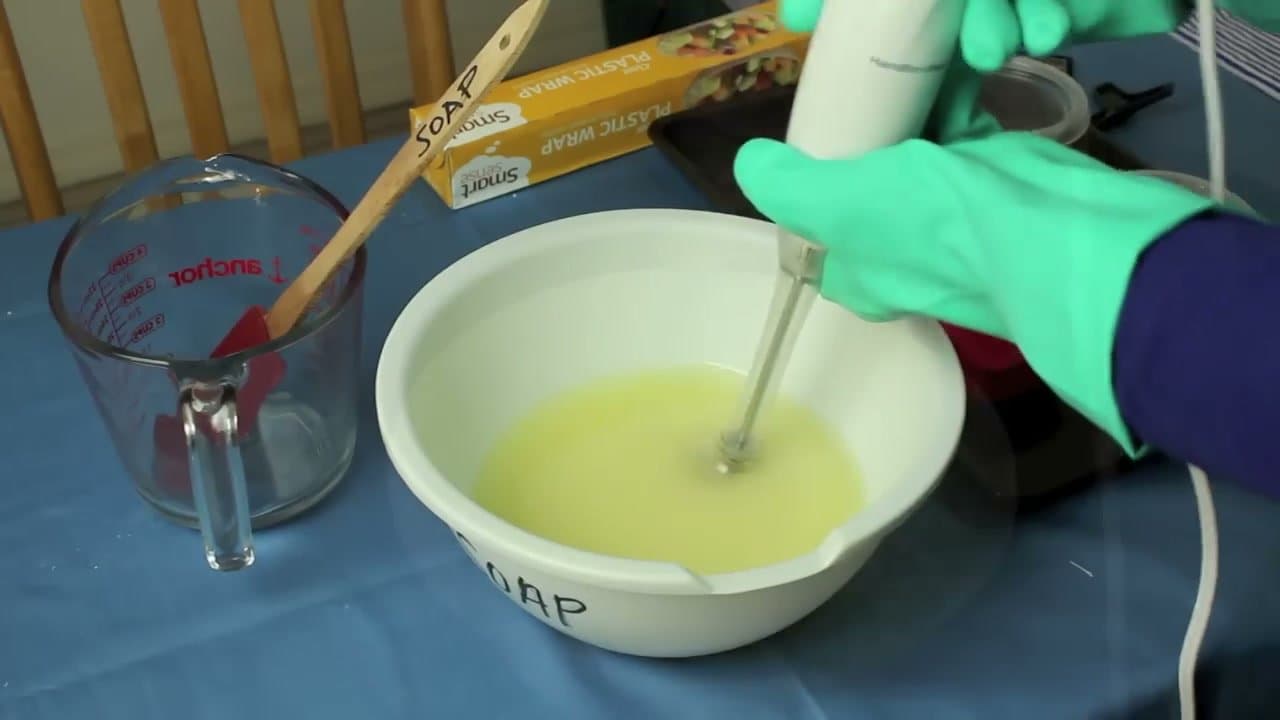
Slowly pour the lye water into the bowl of oils while stirring gently. Switch to a stick blender and pulse-blend in short bursts (5-10 seconds at a time) so you don't introduce air bubbles. Stir manually between bursts.

The mixture starts oily and separated. As you blend, it goes opaque, then thickens into a smooth, custard-like batter. You're looking for 'trace' - drizzle a spoonful across the surface and watch the trail. If it sits on top for a moment before sinking back in, you're at trace and ready to pour. If it disappears immediately, blend more.

Tip

This is the stage to add fragrance, color, or exfoliants like ground oats. Stir them in by hand once trace is reached - blending after additions can cause the batter to seize and harden in seconds.

Products used in this step

6

Step 6: Pour into molds, rest 24 hours, then cure 4-6 weeks

6:40
Step 6: Step 6: Pour into molds, rest 24 hours, then cure 4-6 weeks

Pour the traced batter into silicone or plastic soap molds (or recycled milk cartons cut in half). Tap the molds gently on the counter to release any air bubbles. Cover with a towel and leave undisturbed for 24 hours.

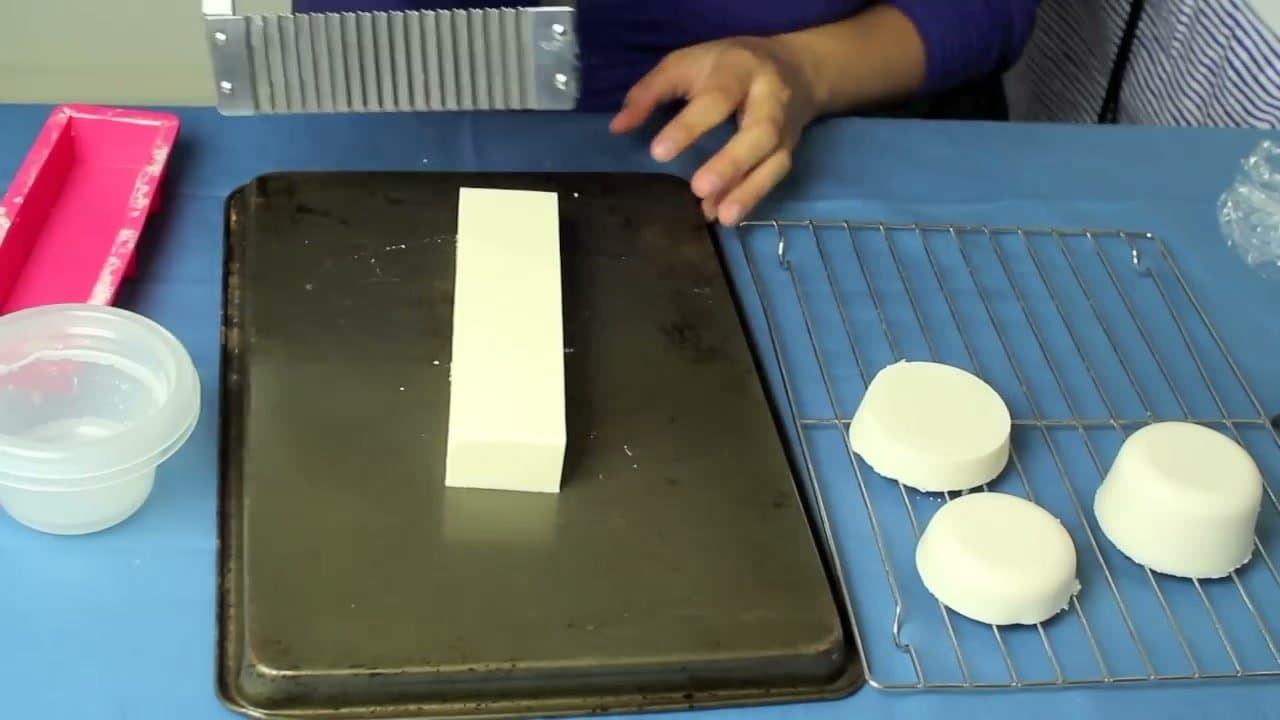
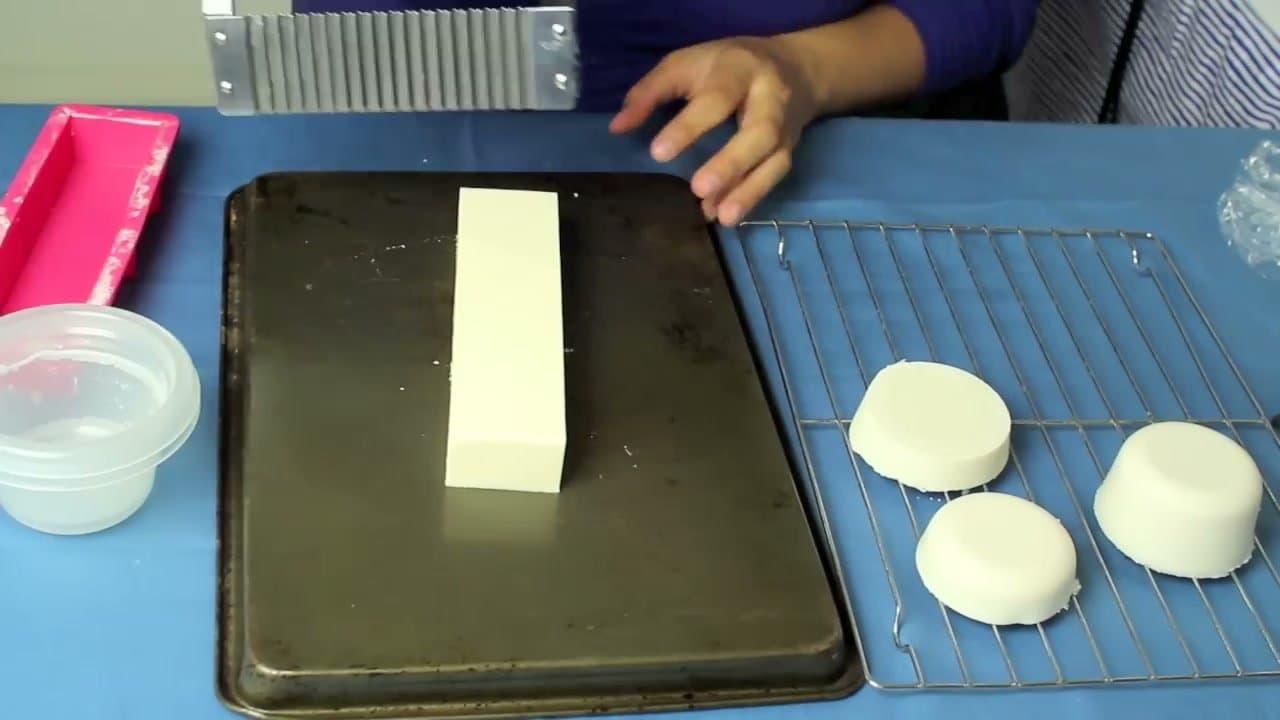
The next day, pop the bars out of the molds (they'll come out easily from silicone). Cut into bar-sized portions with a soap cutter or sharp non-serrated knife. Set the bars on a cooling rack with space around each one for airflow.

Now cure for 4-6 weeks. During curing, water evaporates out of the bars and the saponification reaction continues to completion. Soap used too early is soft, soggy, and can still have unreacted lye that burns skin. Patience pays off - a fully cured bar lasts twice as long in the shower.

Tip

Label each bar with the date it was made and the recipe. Six weeks is hard to track without a label, and 'is this cured yet?' becomes a guess otherwise.

Products Used

Your Guide

TheCraftyGemini

As an Amazon Associate we earn from qualifying purchases. Links on this page may be affiliate links - clicking them and buying doesn't change your price, but helps support ShowMeStepByStep.

Tags

Related Tutorials