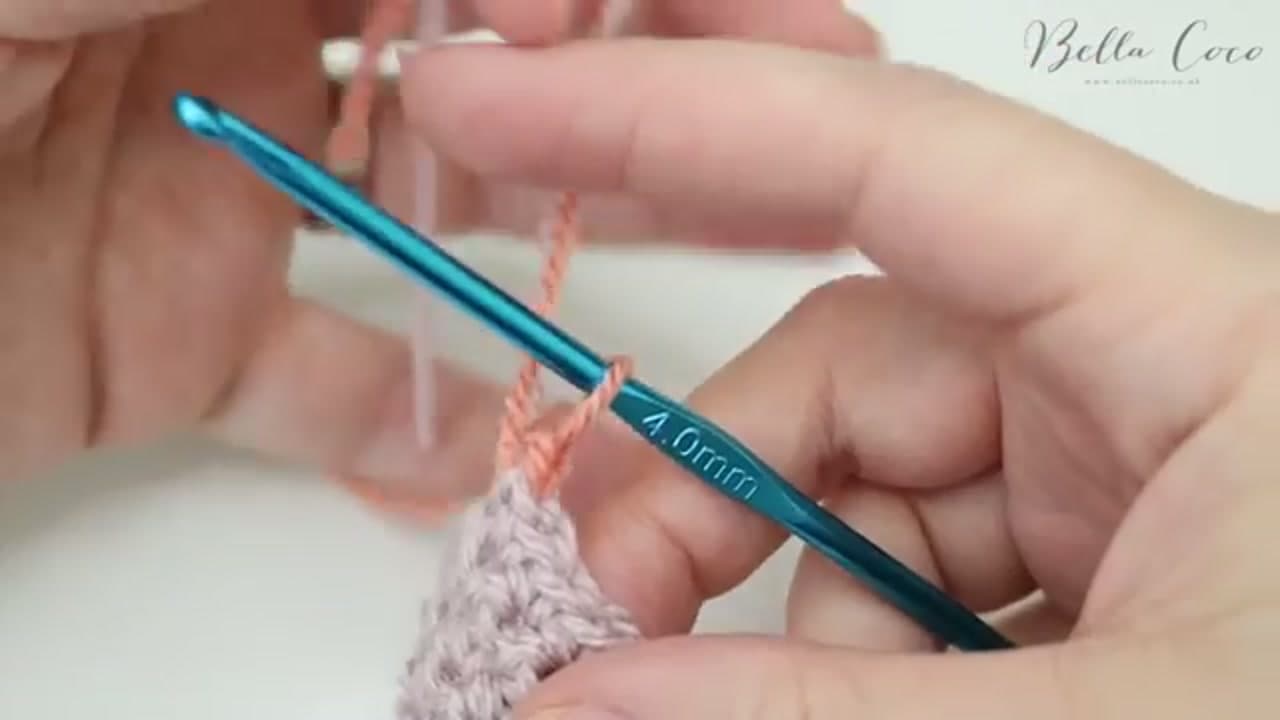
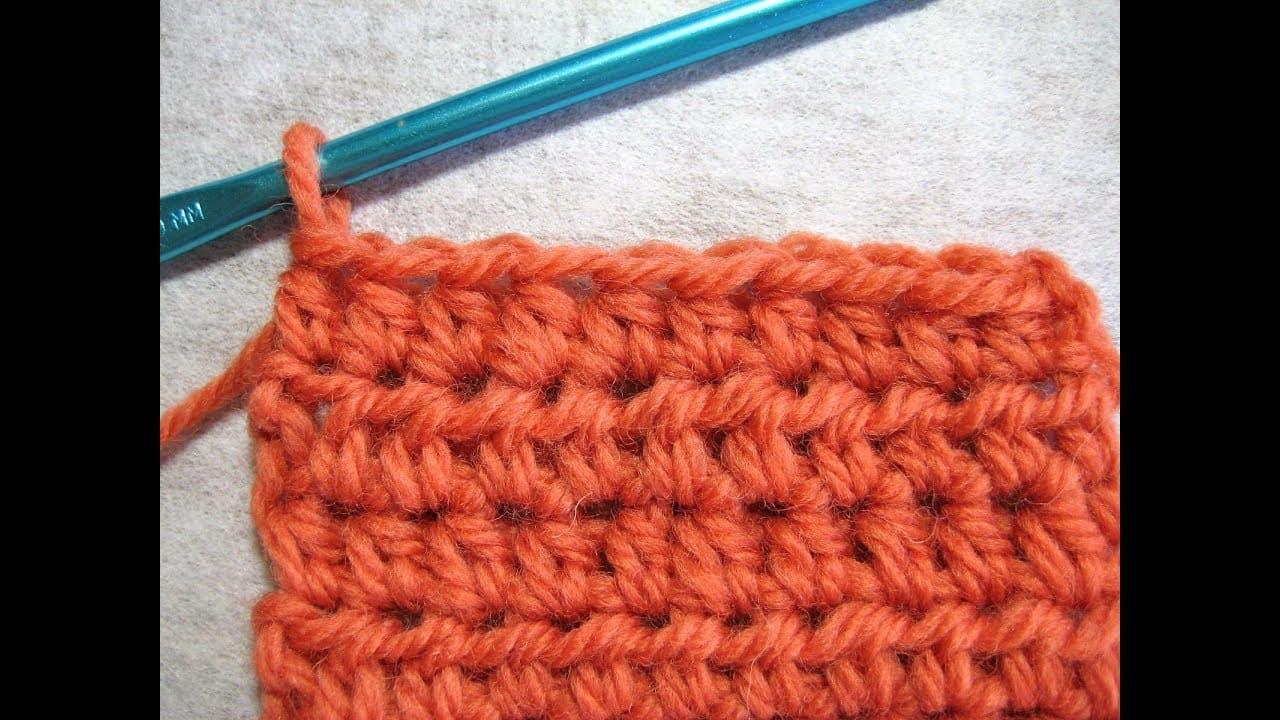
Changing colors is one of those crochet skills that looks fiddly until someone shows you the rule: never finish the stitch in the old color. Once you get that, stripes, color blocks, and pattern work all open up.
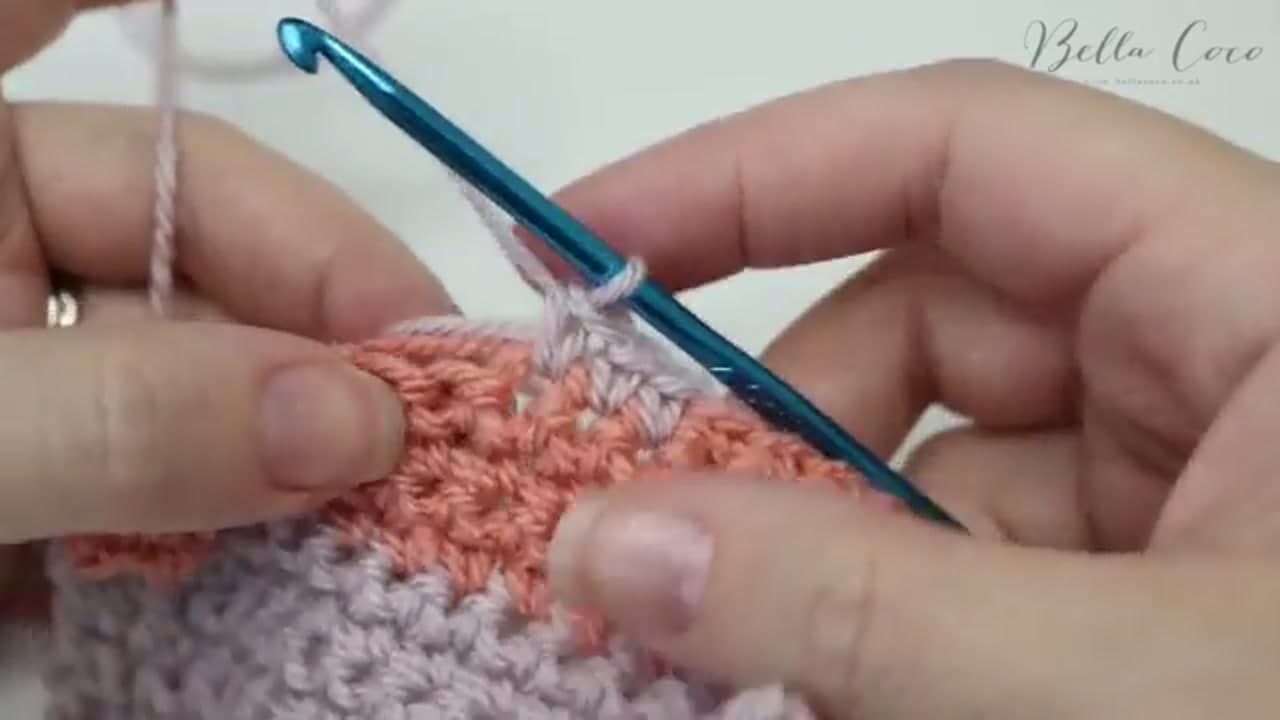
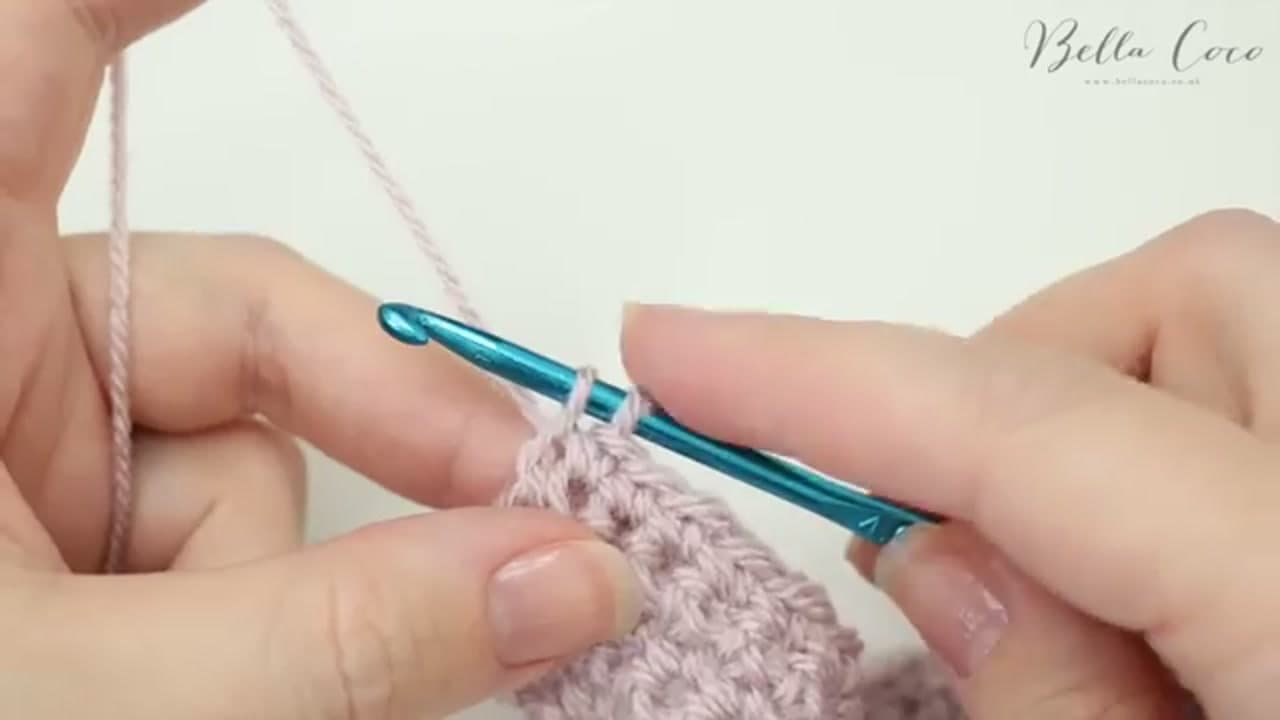
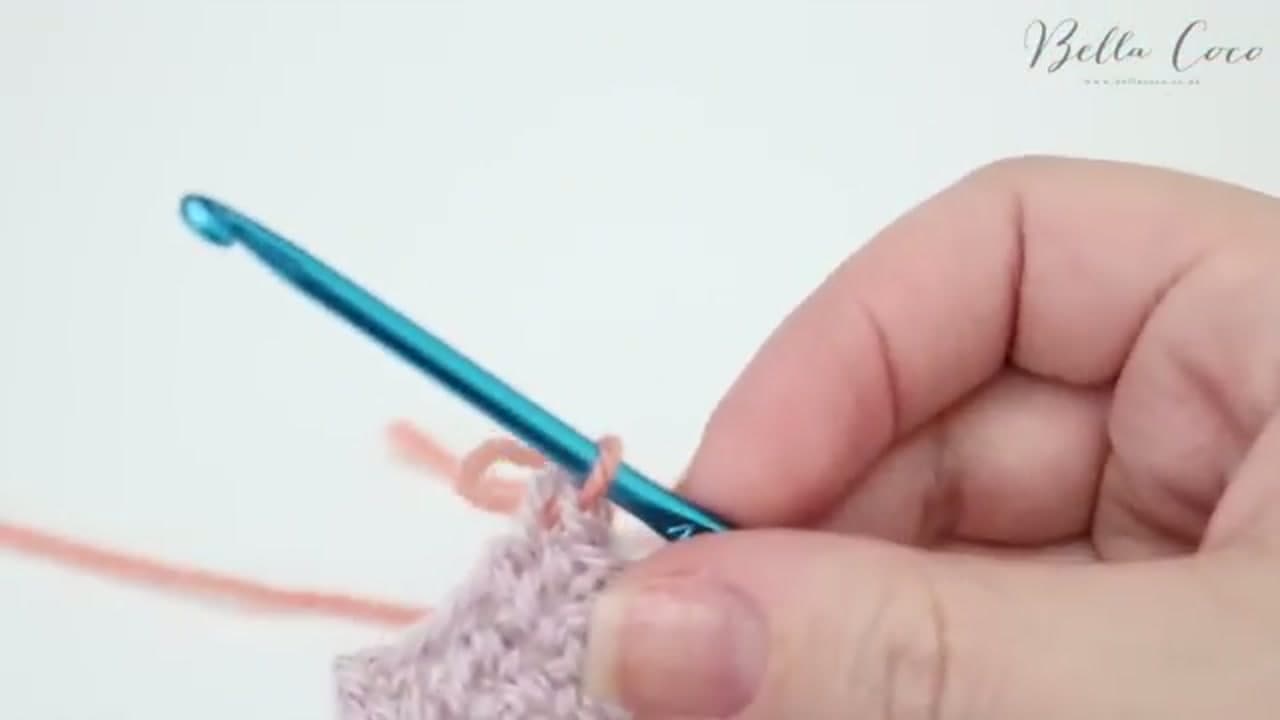
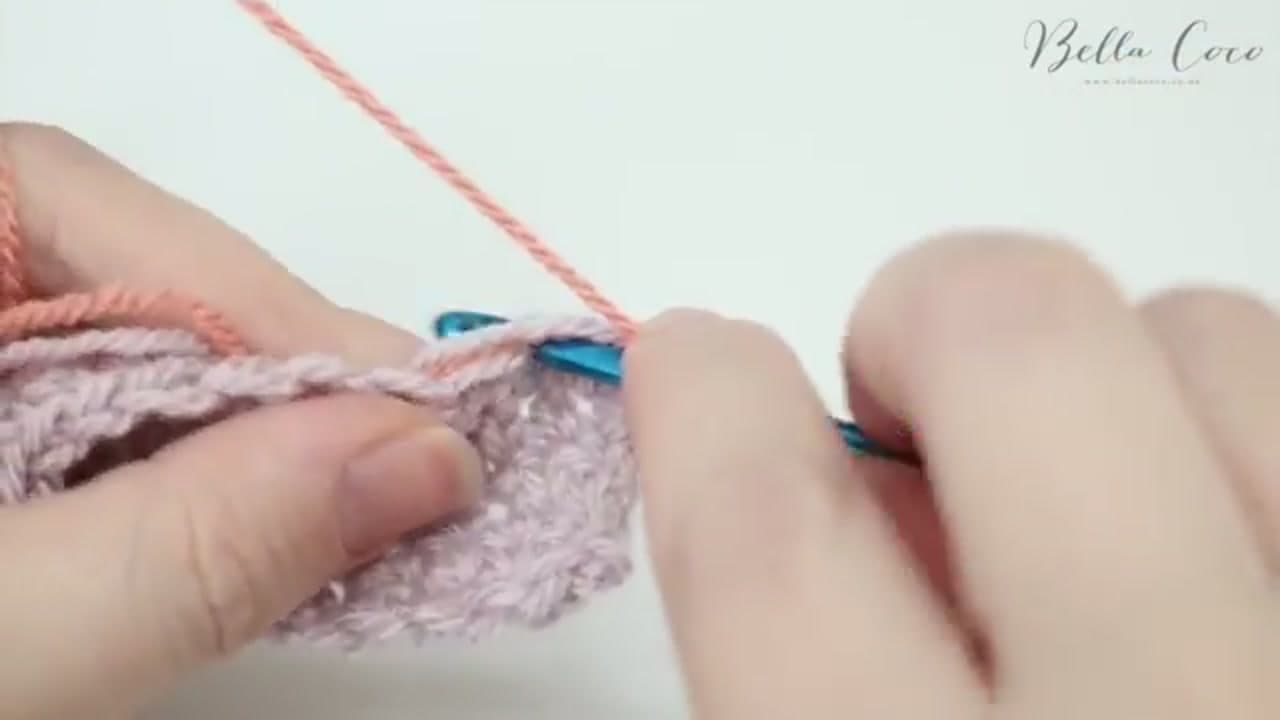
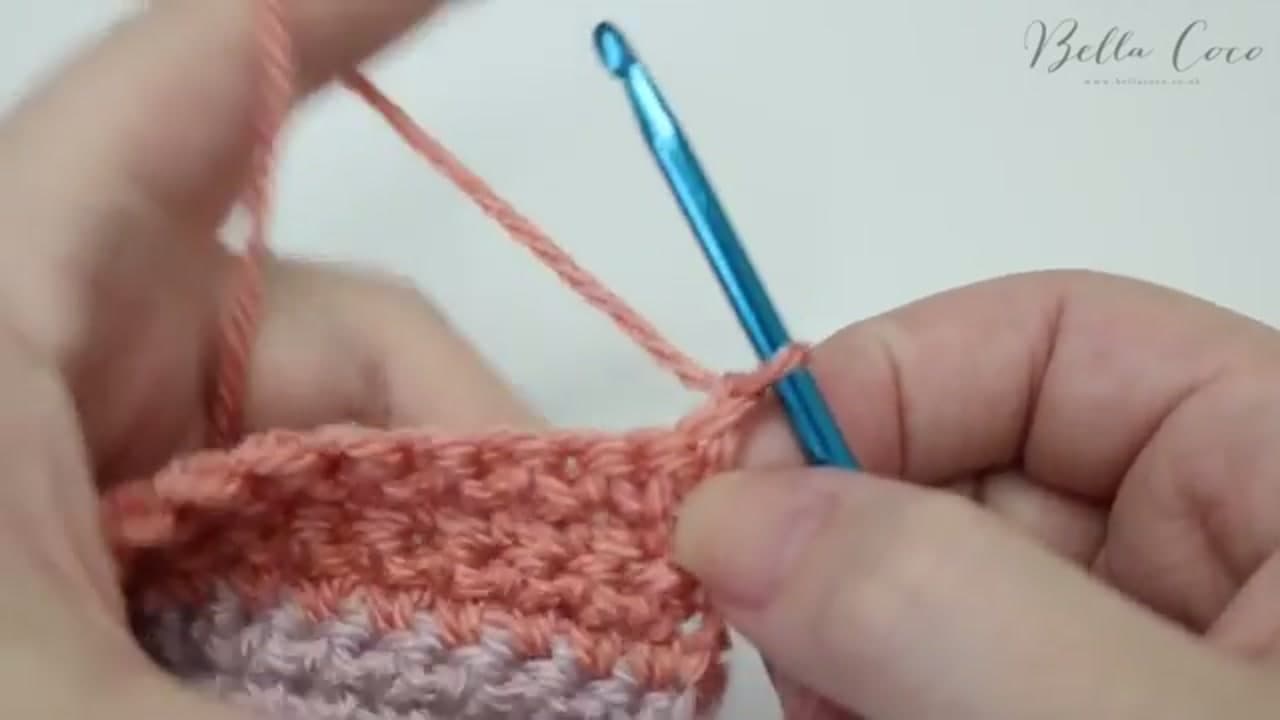
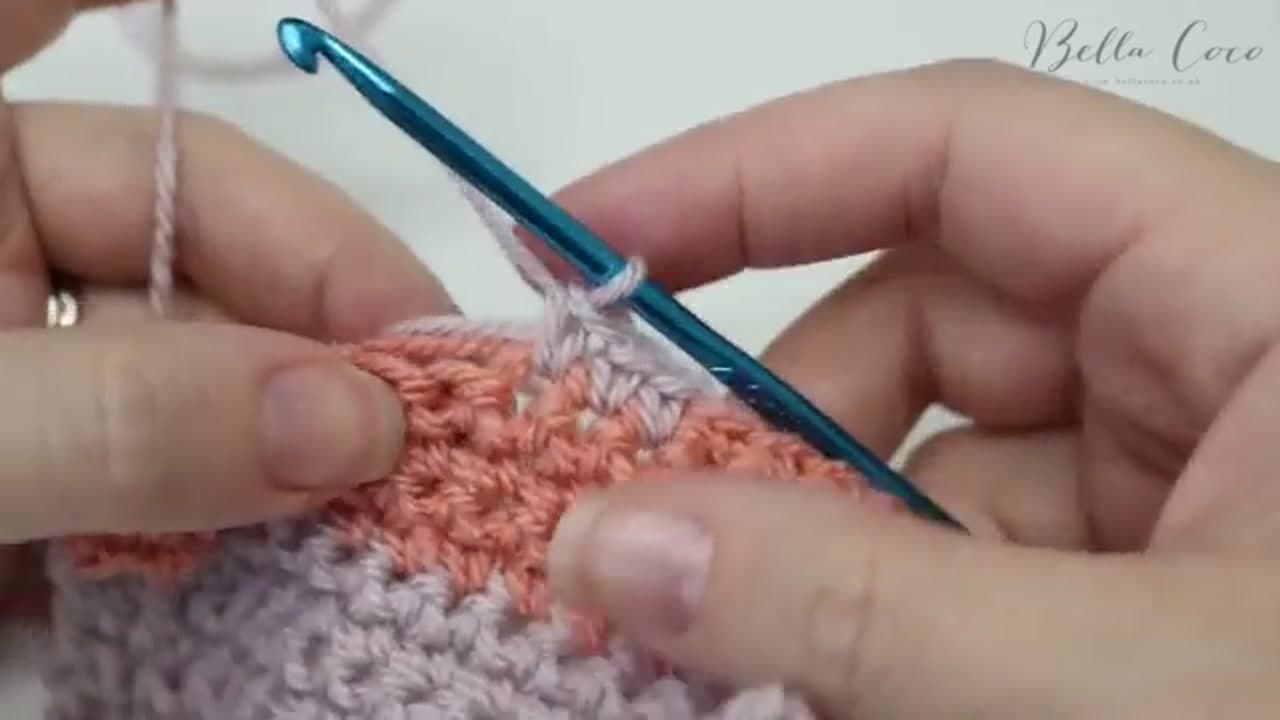
Bella Coco demonstrates this on a small swatch in Stylecraft Special DK, switching from mushroom to vintage peach to lilac. She covers both the end-of-row change and the mid-row change, and shows you how to crochet over the loose tails so you skip sewing in ends entirely. The technique works for any stitch. You stop one yarn-over short of finishing.
She uses UK terms. UK double crochet is US single crochet, and UK treble is US double crochet. The rule is the same either way.
Why the change happens on the last yarn-over
A crochet stitch is finished by its final pull-through. That loop becomes the top of the stitch you made and sits on the hook ready to start the next one. If you finish in the old color and then pick up the new one, the next stitch starts with a little loop of the wrong color on top. Switching on the last yarn-over means the loop on your hook is already the new color, so the line between colors stays crisp.
End of row vs mid-row
At the end of a row you change on the last stitch, then chain and turn in the new color. That gives you clean horizontal stripes.
Mid-row changes follow the same rule one stitch early. Change on the stitch before the one you want in the new color. Leave the unused strand at the back (the wrong side) and work over it so no long loop hangs loose behind the fabric.
Carry the yarn or cut it?
For stripes two rows tall, carry the unused color up the side. Drop it at the end of the row, pick it up two rows later, and keep the carried strand snug but not tight against the edge. An edging border hides it later.
Cut the yarn when stripes are wider than four rows or so, when the edge will show, or when you use more than two or three colors. Long carried strands snag and pull the edge in. Cutting costs you a few extra tails, which you can crochet over as shown in the steps.
Tapestry crochet
Tapestry crochet uses the same last-yarn-over change every few stitches to draw pictures in the fabric. The color you are not using rides along the top of the row below and gets trapped inside every stitch, so nothing floats at the back. It makes a stiff, dense fabric that suits bags, baskets and potholders.
Hiding the ends
Weave each tail back through stitches of its own color. A red tail run through white stitches will show through as a pink shadow. Change direction at least once so the tail cannot slide out. The full method is in how to weave in ends.
Common mistakes
- A color jog in rounds. Rounds spiral, so a stripe steps up where it starts. Change at the join, and slip stitch into the first stitch with the new color to soften the step.
- A loose first stitch. Tug both tails after the first stitch in the new color, alternating between them, until it matches its neighbors.
- Tying knots. Knots show as bumps and can work loose. The next row holds the change in place without one.
Put stripes to work in a granny stripe blanket. Related techniques: join granny squares, fasten off, and decrease.