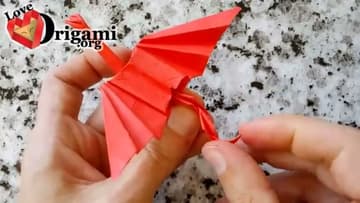
How to Make an Origami Dragon
Source: Love Origami • Full tutorial: www.craftingstepbystep.com/paper-crafts/how-to-make-an-origami-dragon
- Difficulty
- Advanced
- Hands-on time
- About 45 minutes
- Makes
- 1 origami dragon
Tools
- flat clean folding surface
- bone folder (optional)
Materials
- one square sheet of origami paper (colored one side, 15cm)
Steps
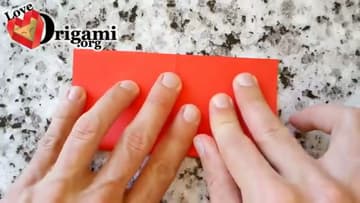
1. Crease the Square
Start with the paper colored side down. Fold it in half one way, unfold, then fold in half the other way.
Tip: Line the edges up exactly before you press. A crooked first fold throws off the whole dragon.
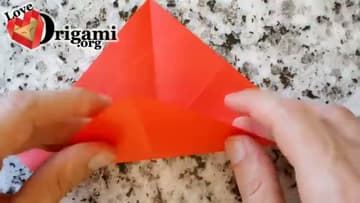
2. Collapse the Triangle Base
Add the two diagonal creases, then use all four folds to collapse the sheet into a smaller triangle. The sides tuck inward as the top layers come together.
Tip: If the layers fight you, pinch the center and let the paper fall along the creases you already made.
3. Squash and Petal Fold
Open the top flap, squash it down evenly, and petal-fold the point upward. Do the same on the back.
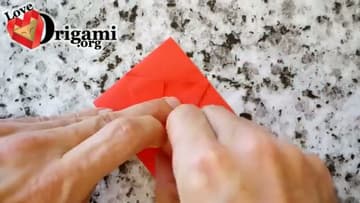
4. Finish the Crane Base
Fold the lower edges of the diamond in to the center line, front and back. This narrows the whole shape and creates two long points at the bottom.
Tip: Check that both points are the same length. Even points make a balanced dragon.
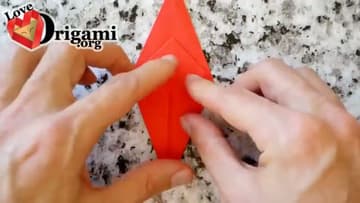
5. Slim the Neck and Tail
Take each of the two long points and fold its outer edges in toward the center again. This makes them thin and pointed, more like a neck and a tail than wide flaps.
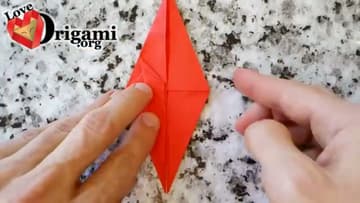
6. Reverse Fold the Neck and Tail
Now the dragon leaves the table. Inside-reverse-fold each slim point upward so the neck and tail lift and curve.
Tip: Pre-crease the fold line first by bending the point back and forth. The reverse fold snaps into place much easier.
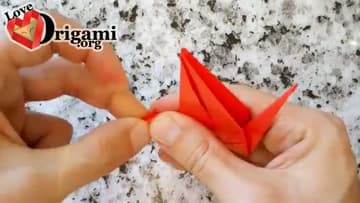
7. Shape the Head and Wings
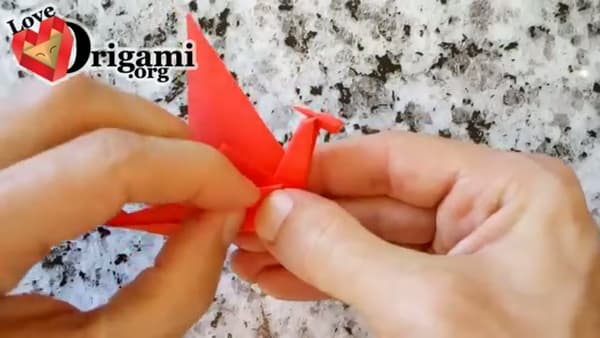
Make one more small reverse fold at the tip of the neck to form the head. Then open the two side flaps and pull them outward into wings.
Tip: Run a curved wing over the edge of a table to add a gentle arch instead of a flat sheet.
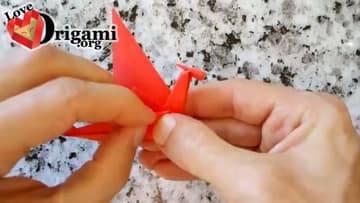
8. Finish and Display
Give the wings a final shape, adjust the neck curve, and set the tail. Stand back and look at it from the side, where the dragon reads best.