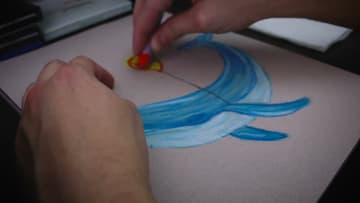
How to Use Oil Pastels
Source: Lets Create Something • Full tutorial: www.craftingstepbystep.com/painting/how-to-use-oil-pastels
- Difficulty
- Easy
- Hands-on time
- About 45 minutes
- Cost
- About $5 to $20
- Makes
- 2 practice drawings

Tools
- pencil
- paper blending stumps (optional)
- baby wipes or a damp rag
Materials
- oil pastel set
- smooth drawing paper
- textured pastel paper
Steps
1. Choose a Set of Oil Pastels for Beginners
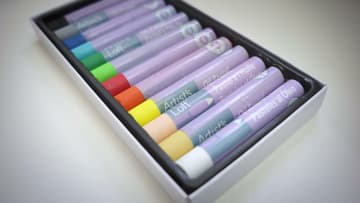
Pick a set of oil pastels and two kinds of paper. The video uses the cheapest set available, a box of Artist's Loft pastels for about $3, to show they still work.
Tip: Keep baby wipes nearby. Your fingers are the main blending tool and they get colorful fast.
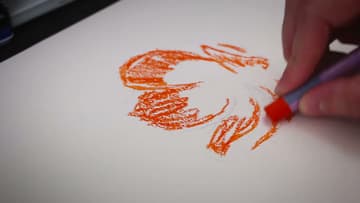
2. Scribble Color Into the Oil Pastel Flower Petals
Draw a very light pencil sketch of a flower. Go over the shapes with white oil pastel first.
Tip: Press lightly on this first layer. Heavy pressure fills the paper texture too soon.
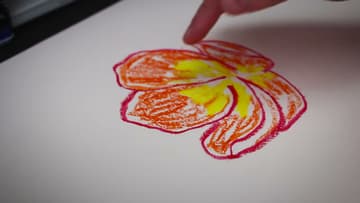
3. Outline the Oil Pastel Flower in a Darker Color
Add a second color where the light would hit, like yellow in the center of each petal. Then outline every petal in a darker color.
Tip: Lay down more pastel than looks right. You need enough color on the paper to push around.
4. Blend the Oil Pastel Petals With Your Finger
Now rub. Use your fingertip to smear and blend the colors together until the scribbles melt into smooth color.
Tip: Blend from light colors into dark ones, not the other way, to keep highlights clean.
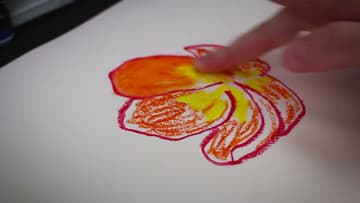
5. Scribble an Oil Pastel Background Around the Flower
On white paper, a background helps the flower stand out. Scribble green around the edges of the flower.
Tip: Use vertical strokes for the background so it reads as leaves and grass.
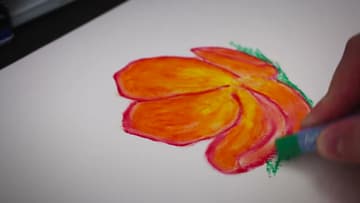
6. Add Oil Pastel Detail Lines Over the Blended Layer
Go back in with more color for a second layer. The artist adds red lines along the petals, darker accents and a few white dots for the stamens.
Tip: Stop when it looks good to you. Overworking a waxy layer can lift color off.
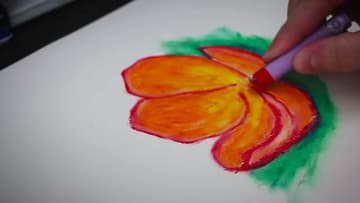
7. Start the Whale With White Oil Pastel on Pastel Paper
Now try textured pastel paper. The video starts with a light sketch of a whale on gray paper.
Tip: Toned paper means you can skip the background later. The gray already does the work.
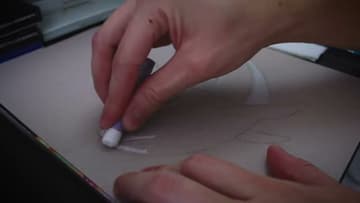
8. Block In the Whale With Blue Oil Pastel
Outline the whale in blue and start blocking in the color over the white. Fill the space fully so you have enough oil pastel to blend.
Tip: Use two blues, a dark one along the back and a lighter one near the belly.
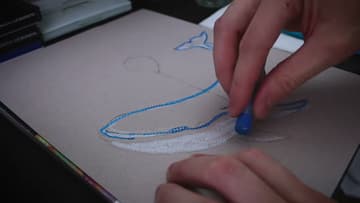
9. Blend the Blue Oil Pastel Whale With Your Fingers
Push the color around with your fingers, the same way you did on the flower. Even on textured paper, oil pastel blends well.
Tip: Wipe your fingers before touching the white belly so it stays clean.
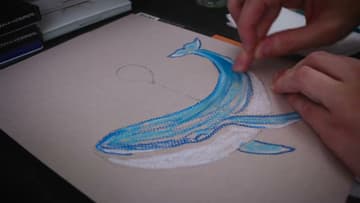
10. Add the Final Oil Pastel Details to the Whale Drawing
Add the finishing details last. The artist draws a dark string from the whale's fin and colors a red and yellow balloon at the end.
Tip: Practice every other day. Scribble a few colors and blend them to learn how they mix.