How to Thin Oil Paint: Fat Over Lean Layering
Source: Angela Bandurka • Full tutorial: www.craftingstepbystep.com/painting/how-to-thin-oil-paint
- Difficulty
- Easy
- Hands-on time
- About 30 minutes

Tools
- flat brushes
- fine detail brush
- palette knife
- palette
- nitrile gloves
Materials
- oil paint
- fast-dry alkyd medium
- walnut oil
- shop towels
- canvas
Steps
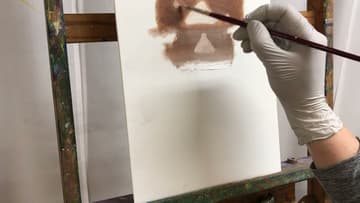
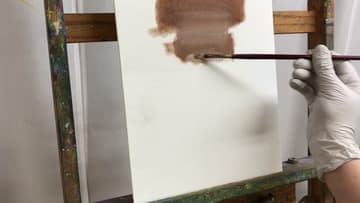
1. Scrub a Thin Lean Layer of Oil Paint Into the Canvas
Mix a fast-dry medium into your darkest color, no more than about 20 to 25 percent of the paint. Push and wiggle a flat brush in the mix so the color works deep into the bristles.
Tip: You can come back later to strengthen the darks. Keep this first pass thin.
2. Clean the Oil Paint Brush With Walnut Oil and a Shop Towel
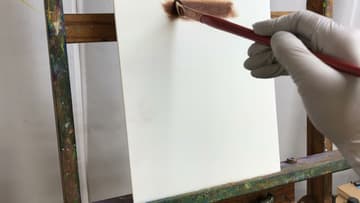
To work without solvent, dip the dirty brush in a jar of walnut oil. Pull it out and wipe the bristles hard into a shop towel or rag to get as much paint off as you can.
Tip: Blue shop towels hold up better than kitchen paper and leave less lint in the brush.
3. Brush a Second, Paint-Only Oil Layer Below the Lean Band
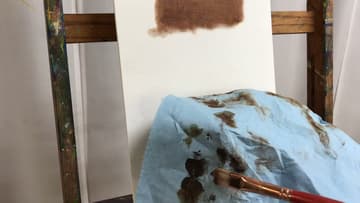
Scrape all the fast-dry medium off your palette with a palette knife and a paper towel. This layer is paint only.
Tip: No medium here at all. That alone makes this layer fatter than the first.
4. Lay a Thicker Top Layer of Oil Paint With the Brush Held Flat
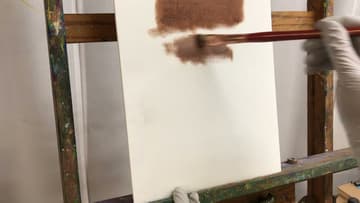
The top layers get thicker again, still with no medium. Instead of pushing paint into the bristles, scoop more of it onto the brush.
Tip: Think of setting the paint down, not brushing it in.
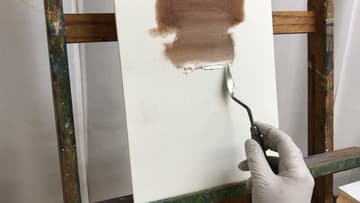
5. Spread the Thickest Light Oil Layer With a Palette Knife
The last thick layer is usually your lightest color, often the whites. A palette knife lays it on heavy and clean.
Tip: A small trowel-shaped painting knife is easier to control than a long straight one.
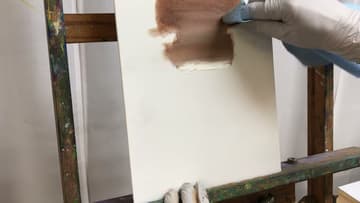
6. Wipe Out Wet Oil Paint With a Paper Towel Over Your Finger
Forgot to leave an area light? Wrap a paper towel around your finger, a brush handle or any small tool.
Tip: Turn the towel to a clean spot for each wipe so you lift paint instead of moving it.
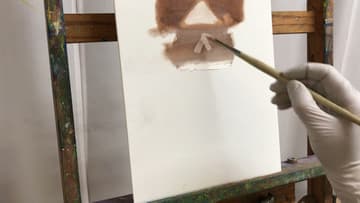
7. Paint a Light Shape Into the Wiped-Out Oil Paint Area
Now paint the light color into the area you wiped. It stays bright because there is little wet paint left under it.
Tip: Use a clean brush for light colors, or they pick up the darks on the old bristles.
8. Add Oil Paint Detail Loosened With a Drop of Walnut Oil
Fine detail work is the one place paint does not get physically thicker. It needs to flow.
Tip: A drop or two of oil is plenty. Too much and the detail slides around.