How to Prime a Canvas with Gesso
Source: Boz Art Tutorials • Full tutorial: www.craftingstepbystep.com/painting/how-to-prime-a-canvas
- Difficulty
- Easy
- Hands-on time
- About 30 minutes
- Wait time
- 8 hours
- Cost
- About $12 to $25
- Makes
- 1 primed canvas

Tools
- large putty knife or palette knife
- large metal ruler
- fine mist spray bottle
- sanding block
Materials
- gesso
- stretched canvas
- 320 grit sandpaper
- paper towels
- water
Steps
1. Shake the Gesso and Set Up
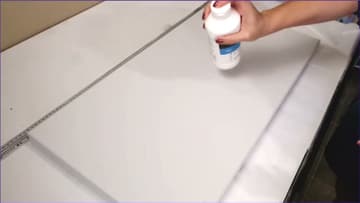
Lay the canvas on a flat surface and give it a very light mist of water - barely anything, just enough to help the gesso move. Then shake the bottle hard.
Tip: Watch this step A soaked canvas will warp. If you can see standing water, you used far too much.
2. Pour the Gesso Across the Canvas
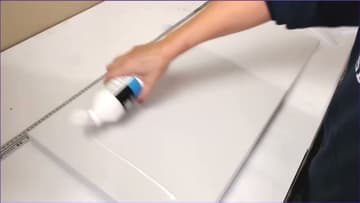
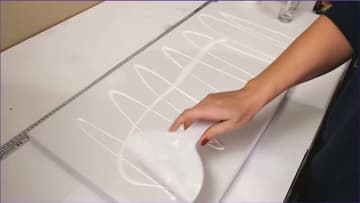
Squeeze the gesso out in lines across the surface. You want enough sitting there to cover the whole canvas in one spreading pass, because going back for more mid-coat leaves a visible seam where the first pour started to set.
Tip: Watch this step Zig-zag lines spread more evenly than one big puddle in the middle.
3. Spread It with a Putty Knife
Drag the gesso out with a putty or palette knife, pressing hard enough to work it down into the weave. Go over it several times, changing direction as you go.
Tip: Watch this step A knife beats a brush here. Brushes leave bristle marks that dry into the surface.
4. Scoop Off the Excess
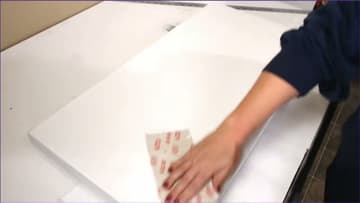
Take a paper towel and lift off the gesso pooling on the surface. This keeps the leveling pass manageable and stops thick spots from taking hours longer to dry than the rest of the canvas.
Tip: Watch this step Have plenty of towels out before you start. This stage gets everywhere.
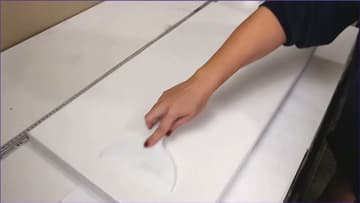
5. Level the Surface with a Ruler
Take a metal ruler at least as wide as your canvas and pull it down in one smooth stroke. One continuous pass, no starting and stopping - that is what flattens the knife marks into a clean even surface.
Tip: Watch this step Flip to the clean edge of the ruler for a second pass rather than wiping the same edge.
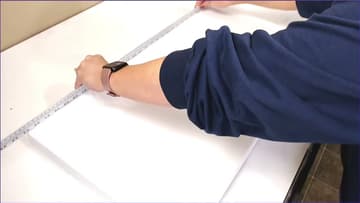
6. Dry, Then Sand with 320 Grit
Give it about two hours to dry completely. Then go over it very gently with 320 grit sandpaper.
Tip: Watch this step Sanding gesso that is not fully cured will gum up the paper and tear the surface.
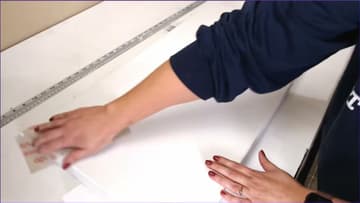
7. Apply the Second Coat
Repeat the whole process for coat two: pour, spread with the knife, level with the ruler. Have everything laid out and ready, because gesso starts tacking up fast and a half-finished coat means sanding the entire canvas back down.
Tip: Watch this step Work the gesso right out over the edge if you plan to paint the sides.
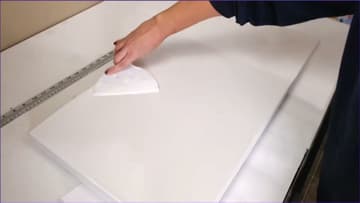
8. Sand Smooth and Let It Cure
The second sanding is the serious one. Still 320 grit, still light pressure, but now you are chasing every ridge - especially along the seam where the canvas turns the edge.
Tip: Watch this step Two coats is the minimum for a smooth surface. Three if you want detail work to sit crisply.