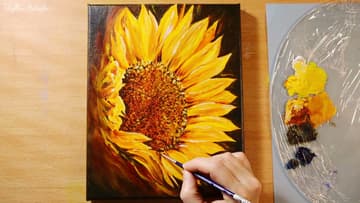
How to Paint Sunflowers in Acrylic (Step by Step for Beginners)
Source: Idyllic Acrylic Art • Full tutorial: www.craftingstepbystep.com/painting/how-to-paint-sunflowers
- Difficulty
- Easy
- Hands-on time
- About 45 minutes
- Cost
- About $10 to $18
- Makes
- 1 sunflowers painting

Tools
- 8x10 inch canvas
- flat filbert brush
- small round brush (size 0)
- palette
- water cup
- paper towel
- easel
Materials
- medium yellow acrylic paint
- burnt sienna acrylic paint
- raw umber acrylic paint
- titanium white acrylic paint
- prussian blue acrylic paint
- pencil
Steps
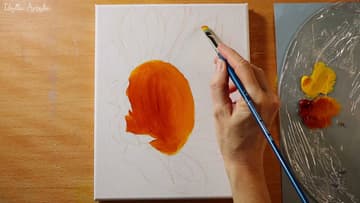
1. Lay a Warm Golden Underpainting
Start with a light pencil sketch of the sunflower on your canvas. Then mix medium yellow with a touch of burnt sienna and block the seed center in as a solid orange oval.
Tip: Watch this step Keep the underpainting a little rough and streaky. A dead-flat base looks worse under the loose petal strokes that come next.
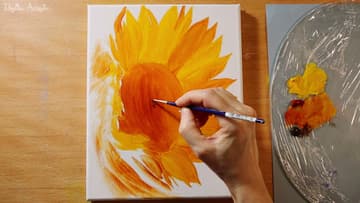
2. Block In the Petals
Load a flat filbert brush with medium yellow and burnt sienna together. Start each stroke near the center and sweep it out to the petal tip in one confident motion, then work your way around the whole flower so the petals fan out like spokes.
Tip: Watch this step Lift the brush as you reach each tip so the petal ends in a point. Do not paint back into a stroke you already laid down or it turns muddy.
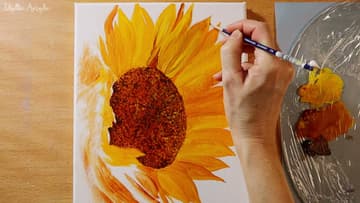
3. Stipple the Seed Center
Switch to a small round brush and go to work on the middle. Dab lots of tiny dots of burnt sienna and raw umber, keeping them close together so they clump into a rough, seedy texture rather than a smooth fill.
Tip: Watch this step Hold the brush almost upright and tap, do not drag. Dragging smears the dots into a blur and you lose that seed-packed look.
4. Shape the Petals and Add White Highlights
Now go back over the petals and give them form. Work darker sienna into the recessed areas where petals overlap, then drag bright medium yellow along the outer edges to catch the light.
Tip: Watch this step Use white sparingly. One or two clean streaks per front petal reads as sunlight; painting every petal white flattens the whole flower.
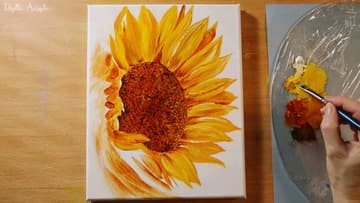
5. Paint the Dark Background
Time to make the flower pop. Mix prussian blue with burnt sienna until you get a rich, near-black brown, then cut in carefully around every petal to lock in its edge before you fill the rest of the canvas.
Tip: Watch this step Cut in around the petals with the tip of a small brush first, then switch to a bigger brush to fill the open areas fast. It keeps your petal edges crisp.
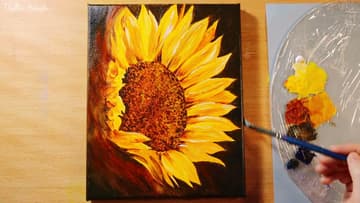
6. Add the Final Details
With the dark background dry, add the last touches that bring it to life. Paint a slightly darker circle low in the center for depth, then flick a few fresh white highlights along the petals that would catch the light.
Tip: Watch this step Squint at the painting before you stop.