How to Paint Shadows and Highlights in Acrylics With Color Theory
Source: Saena Fine Art • Full tutorial: www.craftingstepbystep.com/painting/how-to-paint-shadows-and-highlights
- Difficulty
- Easy
- Hands-on time
- About 45 minutes

Tools
- synthetic flat or round brushes
- palette paper
- color wheel
- water cup
- paper towels
Materials
- acrylic paints (red, black, white, phthalo green, light magenta, brown, gold, yellow)
- heavy paper or small canvas boards
Steps
1. Paint Flat Base Circles to Practice Shadows and Highlights
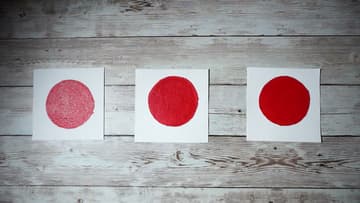
Start with a few circles on scrap paper or small cards, all in the same base color. Saena uses pyrrole red for every sphere.
Tip: Lightly pencil a small arrow in the corner to remind you where the light comes from.
2. Mix Black and White Into the Red for a Basic Shadow and Highlight
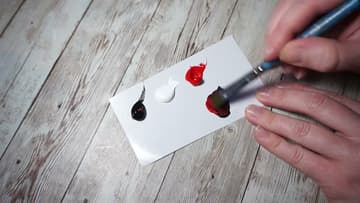
For the first sphere, squeeze out black and white on your palette paper next to the red. Mix a little black into some red for the shadow, and a little white into red for the highlight.
Tip: Add black a tiny bit at a time. It overpowers red very fast.
3. Shade the First Sphere With Black and White Acrylics
Paint the dark red mix around the lower right edge of the circle, following its curve. Blend it toward the middle.
Tip: Curve your brush strokes around the form. Straight strokes flatten a sphere.
4. Find the Complementary Color on the Color Wheel
Look at a color wheel. Complementary colors sit directly across from each other: blue and orange, yellow and purple, red and green.
Tip: Keep a small printed color wheel by your palette until the pairs are second nature.

5. Mix a Complementary Shadow Color With Phthalo Green
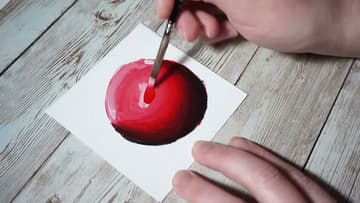
Pull a small amount of phthalo green blue shade into some red on your palette. It makes a much deeper, richer red.
Tip: Phthalo green is very strong. Start with a speck on the tip of the brush.
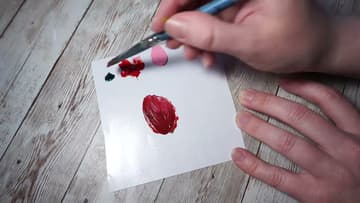
6. Paint a Pink Highlight on the Complementary Sphere
Shade the second sphere with the green red mix on the lower right. For the highlight, Saena uses a ready made light magenta instead of red plus white.
Tip: Let the shadow dry a few minutes first so the highlight does not turn muddy.
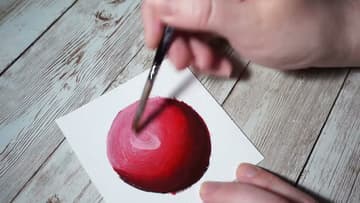
7. Mix Warm Orange Shadows and Yellow Highlights
Split the color wheel in half and you get warm colors (reds, oranges, yellows) and cool colors (greens, blues, purples). For a warm scheme, Saena mixes Van Dyke brown with a little quinacridone nickel azo gold for an orange brown shadow.
Tip: Any warm brown and gold you own will work for this exercise.
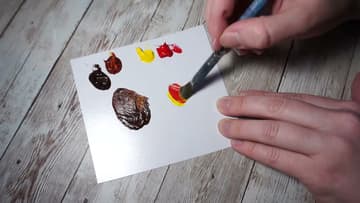
8. Paint the Warm Sphere From Shadow to Highlight
Lay the brown orange shadow around the lower edge of the third sphere. Blend the red orange into the middle, then brush the yellow highlight onto the upper left.
Tip: Work from dark to light so the yellow stays clean and bright.
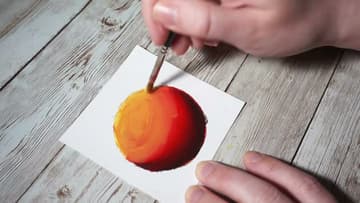
9. Shade a Sphere With an Analogous Color Scheme
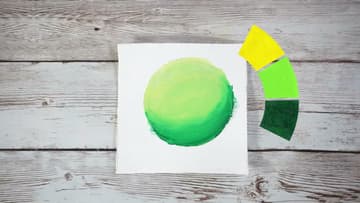
Analogous colors sit next to each other on the wheel. For this green sphere, Saena uses a dark green for the shadow, a mid green for the body and yellow for the highlight.
Tip: Try a yellow ball shaded with oranges next. It is the same idea in a warm range.