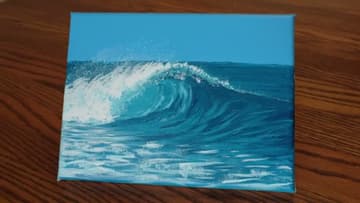
How to Paint Ocean Waves with Acrylics
Source: ABPaintingStudio • Full tutorial: www.craftingstepbystep.com/painting/how-to-paint-ocean-waves
- Difficulty
- Easy
- Hands-on time
- About 45 minutes
- Cost
- About $10 to $15
- Makes
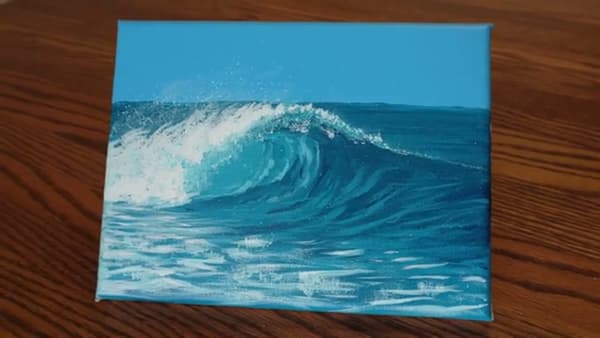
- 1 ocean waves painting
Tools
- No. 2 fan brush
- palette
- palette knife
Materials
- phthalo blue acrylic paint
- phthalo green (blue shade) acrylic paint
- titanium white acrylic paint
- canvas panel
Steps
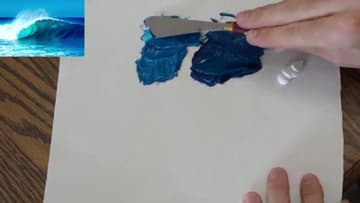
1. Mix Your Four Tones
Start on the palette. Mix a midtone from phthalo blue, phthalo green, and a little white.
Tip: Mix generous amounts now. Acrylics dry fast, and you want enough of each tone to blend wet into wet without stopping to remix.
2. Block In the Sky
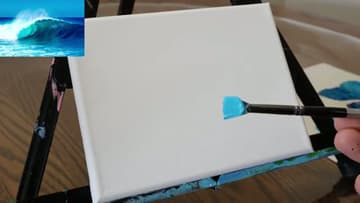
Load the sky color onto your number 2 fan brush and paint the top third of the canvas. This is your horizon and open sky, so keep it smooth and even.
3. Lay the Horizon Line
Switch to the dark tone and turn the fan brush on its flat side. Drag it straight across to set a clean horizon where the water meets the sky.
Tip: Rest your pinky on the easel or table to steady your hand and keep that horizon line straight.
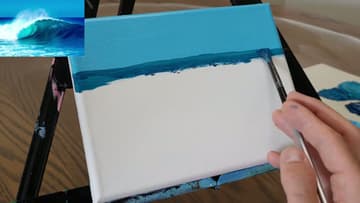
4. Paint the Foreground Water
Take your lightest tone and lay it in all along the bottom of the canvas. As you brush, think about the direction the water is moving and let your strokes follow it.
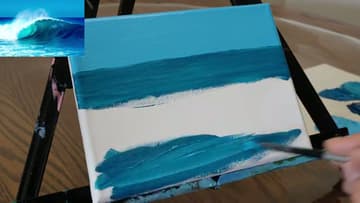
5. Build the Wave Shape
Go back to your darkest tone and sketch the top edge of the wave. Then start shaping the curl, glancing at the reference photo to match the form.
Tip: The eye of the wave is where the curl wraps over. Get that shape roughly right and the rest of the wave falls into place around it.
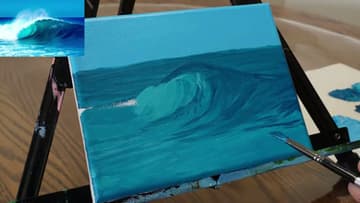
6. Add the White Foam
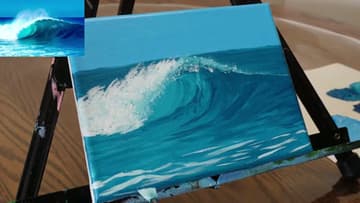
Now the fun part. Dip into bright white and dimple it along the crest where the wave is crashing.
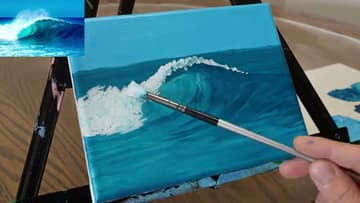
7. Work the Foamy Water
Bring that white down into the water below the crest. Start with back-and-forth strokes to suggest churning foam, then tap the flat side of the brush to build broken texture.
8. Splatter and Final Highlights
For the last touches, water down some white and tap the brush near the canvas to fling a fine spray of droplets, just like the mist in the reference photo. Add a hazy layer of thin white where you see it, then come back with pure white to sharpen your brightest highlights.
Tip: Hold the splatter brush a few inches off the canvas and tap the handle. Practice the spray on scrap paper first so you can see how wet the paint needs to be.