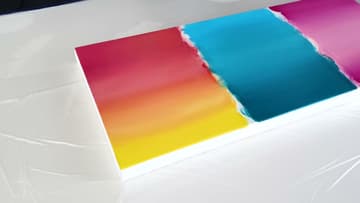
How to Blend Acrylic Paint
Source: Rinske Douna • Full tutorial: www.craftingstepbystep.com/painting/how-to-blend-acrylic-paint
- Difficulty
- Easy
- Hands-on time
- About 45 minutes
- Cost
- About $10 to $20

Tools
- flat brushes
- wide flat brush
- palette
- water jar
Materials
- opaque acrylic paints
- canvas or canvas board
- paper towel
Steps
1. Squeeze Out Opaque or Semi-Opaque Acrylic Paint
Check the tube before you start. Transparent acrylics let the canvas weave show through and go blotchy as soon as water gets involved, which is where most failed blends begin.
Tip: Most brands print an opacity square on the tube. A solid square is opaque, a half-filled one is semi-opaque, an open square is transparent.
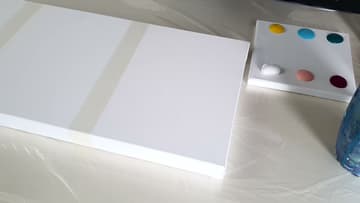
2. Lay Down the First Colour on the Canvas
Load a small amount onto a slightly damp flat brush and block in your first area. Take less paint than feels right.
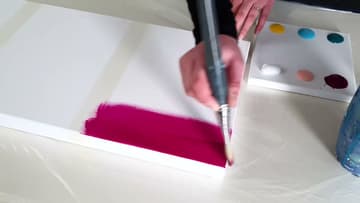
3. Brush the Second Colour Up Into the First
Paint the second colour alongside the first, then work the seam where they meet. Stroke one colour up into the other and then back down, keeping the pressure light.
Tip: Work along the seam rather than across it. Short strokes parallel to the join give a much softer gradient.
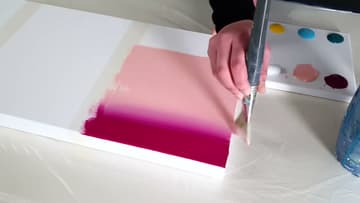
4. Lighten a Section of the Blend With White
To pull one end lighter, damp the brush and pick up a little white without washing the colour out first. The residue on the brush helps the white sit into what is already there instead of sitting on top of it as a chalky band.
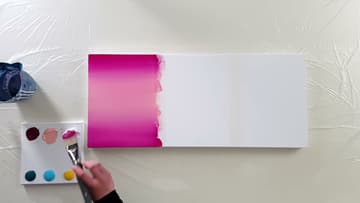
5. Leave a Gap Between the Two Colours
Second technique. Paint one colour at the top and the other at the bottom, and leave a strip of bare canvas between them.
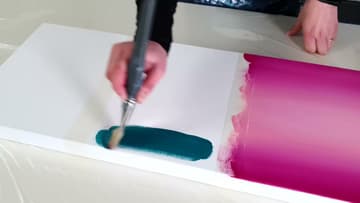
6. Mix the Middle Tone on the Palette
Mix the in-between colour on your palette rather than on the canvas, then brush it into the gap and feather it out in both directions. Mixing off the canvas gives you a cleaner transition and lets you check the tone before it is committed.
Tip: If the mixed tone looks wrong against the two colours, adjust it with a touch of white rather than more pigment.
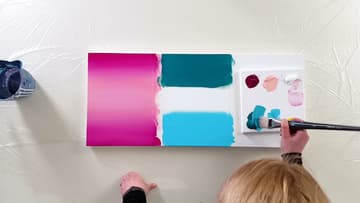
7. Load Both Colours Onto One Brush
Third technique, and the quickest. Dip a wide flat brush into one colour, then into the second, and lay it straight onto the canvas.
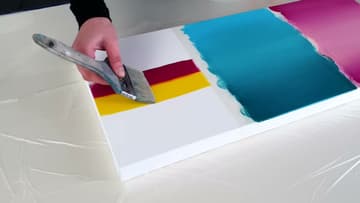
8. Check the Finished Acrylic Gradient
Step back and look at the whole panel. A good blend has no visible band where one colour stops and the next begins, and the tone should shift evenly from one end to the other.
Tip: If a section starts dragging while you work, wet the brush rather than adding more paint.