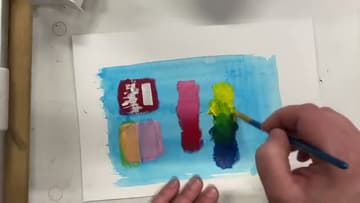
How to Paint: Acrylic Painting for Beginners (6 Essential Techniques)
Source: Jennifer Funnell • Full tutorial: www.craftingstepbystep.com/painting/acrylic-painting-for-beginners
- Difficulty
- Easy
- Hands-on time
- About 45 minutes
- Wait time
- 30 minutes
- Cost
- About $12 to $25
Tools
- Flat utility brush
- Flat paintbrush
- Round paintbrush
- Paint palette
- Paper towel
Materials
- Acrylic paint set
- Cold press watercolor paper
- Acrylic glazing medium
- Water
Steps
1. Lay a Wash for Your Background
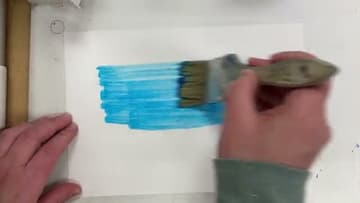
Start with a wash to set a middle-value background. Take a big flat utility brush, dip just the tips into your acrylic paint, then dip the brush in water to dilute it.
Tip: Cold press paper has more tooth (texture) than hot press, which holds the wash better and gives the paint something to grip onto.
2. Build Up Opacity with Layers
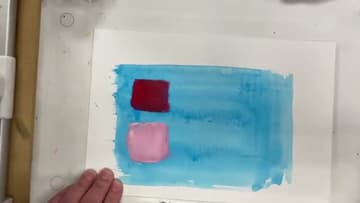
Once the wash is dry, you can build up rich color by layering. Lay down a swatch of paint, let it dry, then add another layer on top to deepen the saturation.
3. Get a Crisp Edge with Wet on Dry
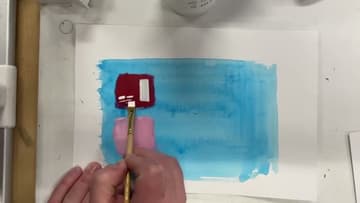
For a sharp, defined edge in your painting, wait until the bottom layer is fully dry, then paint the new color over it with a flat brush. The dry surface gives the new paint somewhere to stop instead of bleeding into wet color underneath.
4. Glaze a Transparent Layer
Glazing means painting a thin transparent layer of color over a dried opaque one. Mix a little glazing medium (or water in a pinch) into your paint until it goes see-through, then brush it lightly over the dry section.
Tip: Glazing medium dries clearer than water and won't dilute the paint binder, so it's worth the few extra dollars if you plan to paint regularly.
5. Blend Wet on Wet for Smooth Gradients
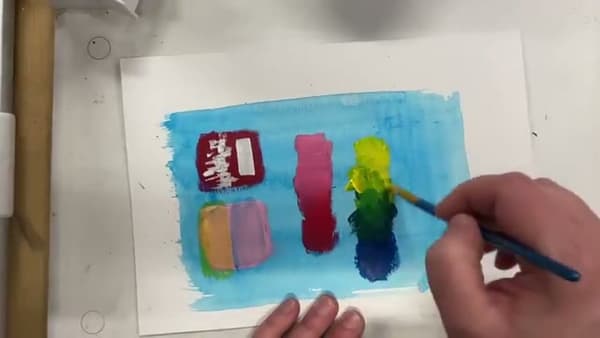
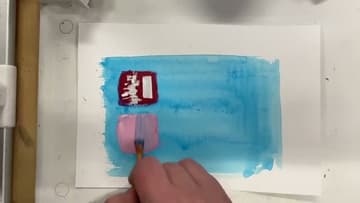
For soft transitions and smooth gradients, blend wet on wet. Lay two colors next to each other while both are still wet, then work your brush back and forth across the seam between them.
6. Add Texture with Varied Strokes
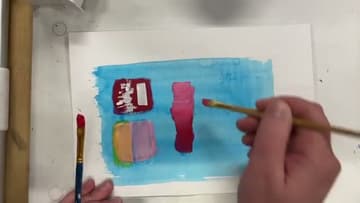
For a more expressive, painterly look, blend wet on wet but switch up your brush direction. Cross-hatch in one spot, tap with the bristle tips in another, stipple a third area.