How to Block Knitting
Source: Sheep & Stitch • Full tutorial: www.craftingstepbystep.com/knitting/how-to-block-knitting
- Difficulty
- Easy
- Hands-on time
- About 30 minutes
- Wait time
- 8 hours
- Cost
- About $15 to $30

Tools
- Sink or basin
- Cloth tape measure
- Bath towels
- Foam blocking mats
- Rust-proof T-pins
- Handheld garment steamer
Materials
- Finished knitted sweater
- Room temperature water
- No-rinse wool wash
- Printed pattern with finished measurements
Steps
1. Lower the Knitted Sweater Into a Sink of Room Temperature Water
Fill a clean sink or a basin with room temperature water. Not warm, not cold.
Tip: Read the yarn band before you fill the sink. Wool, alpaca, cotton and linen all wet block.
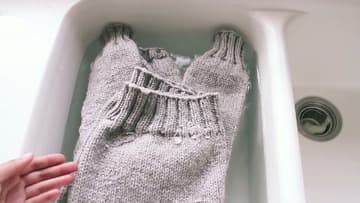
2. Press the Sweater Under the Water With Both Hands
A dry knit is full of trapped air, so the sweater rides on the surface like a raft. Put your palms flat on it and press it under, moving across the whole garment until the sleeves and the collar are all sitting below the waterline.
Tip: Set a timer. Fifteen minutes is the minimum rather than the target, and a dense wool sweater is happy sitting in there for half an hour.
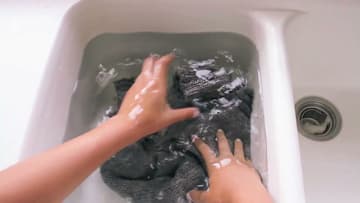
3. Lay the Damp Sweater Flat on Towels Beside the Pattern Schematic
Lift the sweater out as one bundle with both hands under it, so the weight of the water is not hanging off the shoulders. Press it against the side of the basin, then lay it on a dry towel, roll the towel up like a sleeping bag and lean on it.
Tip: Never wring a wet knit and never hang one up to dry. Both stretch the fabric out of shape, and a hanger leaves you with shoulders that poke out like a coat hook.
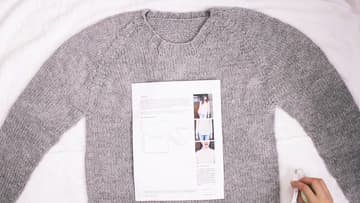
4. Measure Across the Chest From Underarm to Underarm
Pull the tape straight across the chest from one underarm to the other. Laid flat you are measuring half the body, so a pattern that says a 35 inch bust wants 17.5 inches across the towel.
Tip: Keep the tape parallel to the hem instead of following the curve of the underarm.
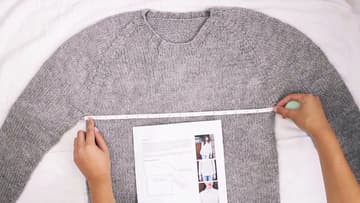
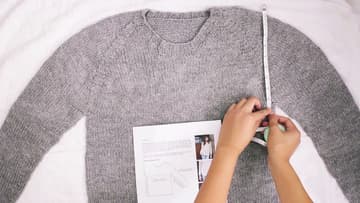
5. Measure the Armhole Depth From Underarm to Shoulder
Stand the tape on its end at the underarm and run it up to the top of the shoulder. That is your armhole depth, and on a raglan it decides whether the sweater sits on your shoulders or slides off them.
Tip: Measure both sides.
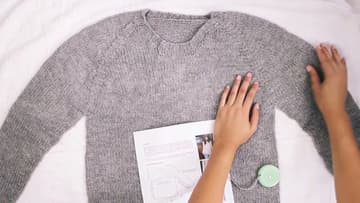
6. Push the Shoulder Fabric Into Shape and Pat It Flat
Push the underarm up with one hand and draw the shoulder down with the other until that extra inch is gone. The fabric bunches where you compressed it, so flatten the bubbling by patting the surface and pressing the stitches closer together.
Tip: Work with flat palms rather than fingertips. A fingertip digs a dent into wet wool, and that dent dries in as a visible mark on the finished sweater.
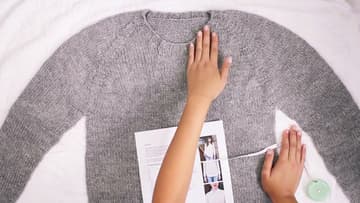
7. Ease the Neckline Into a Smooth Curve
Run your fingers around the neckline and look for corners. A neck edge that came out angular instead of round dries that way, and no amount of wearing it will talk it into a curve later.
Tip: Stand back a couple of feet and look at the neckline from there.
8. Run the Tape Down Each Sleeve From the Underarm
Measure from the underarm to the cuff on one sleeve, then do the other one. Sleeves knit weeks apart often come off the needles a half inch out of step, and this is the last chance you get to even them up.
Tip: Dry it somewhere with moving air but out of direct sun. A fan running low across the room halves the drying time.