How to Draw Clouds (Step by Step Pencil Tutorial)

CraftsMedium12:257 stepsBrowse more →
Also in:Painting

By CraftingStepByStepPublished Updated

Based on a video by Stay Creative Painting with Ryan O'Rourke.

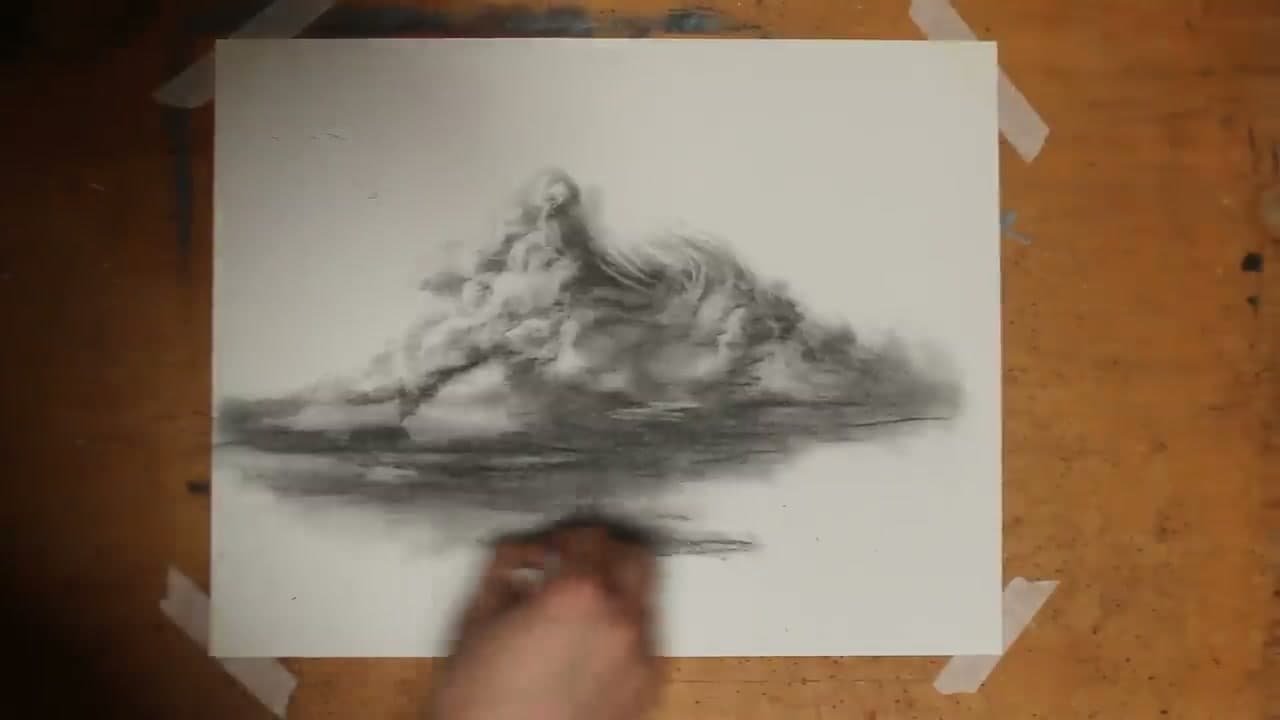
The biggest mistake beginners make with clouds is drawing them like a row of equal-sized bumps stacked on a triangle. Real clouds are messy. They have wispy edges, deep shadow valleys, and bright tops that catch the light. The good news is you can fake all of that with a soft pencil, a tissue, and a sharp eraser.

This walkthrough follows Ryan O'Rourke from Stay Creative Painting. His approach is reductive - lay down graphite, blend it, then erase highlights back out. Seven steps take you from two faint triangles to a finished cumulus that actually looks like it's floating. Once you have the cumulus method down, the same logic stretches to other cloud types - wispy sunset cirrus and dark storm clouds use the same tools with different pressure. There's a short variant guide in Step 7 once you've finished the main drawing.

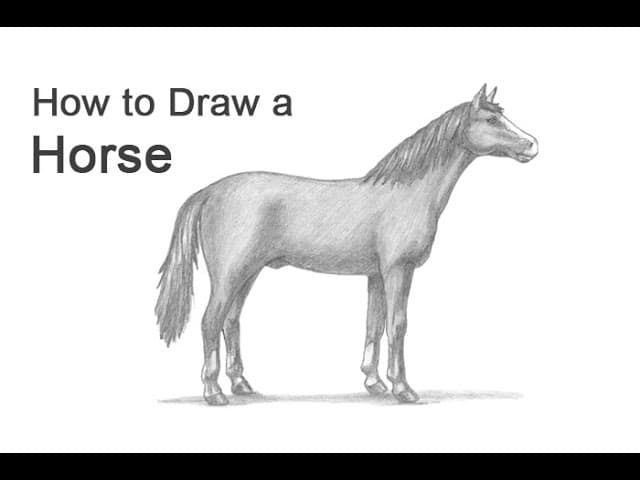
If you like this one, the same pencil-and-eraser approach scales up to a full house drawing, or a different subject entirely like a horse.

Step-by-Step Guide

1

Step 1: Sketch the Cumulus Base Shape

2:10
Step 1: Step 1: Sketch the Cumulus Base Shape

Start with two overlapping triangles drawn very lightly. The triangles set the rough silhouette of your cloud, not its final outline. Vary the sizes so one is taller than the other, and let them overlap by a third or so.

Ryan adds a small third triangle in the middle to break up the symmetry. Don't press hard. These are throwaway lines that you'll erase as soon as the cloud has its softer shape. Pencil-on-paper triangles feel wrong for a fluffy cloud, but they give you a backbone to build on.

Tip

Keep your pencil sharp and your hand light. If your guide lines are too dark, you'll fight them later when you erase and can't get the paper back to white.

Products used in this step

Faber-Castell 9000 Graphite Pencils 2B-6B Set
Strathmore 400 Series Drawing Paper Pad
2

Step 2: Build the Fluffy Cumulus Bumps

2:35
Step 2: Step 2: Build the Fluffy Cumulus Bumps

Now layer circles and ovals around the triangles to soften the outline. Vary every shape. A big oval on the left bulge, a small circle on the right, a square-ish bump where the cloud meets the sky. Inconsistency is what makes the shape read as a real cloud instead of a cartoon.

Let some bumps overlap. Let others stick out into the sky. The top right corner can taper into a thin wisp instead of a round bump. Ryan calls this the moment the cloud stops being a triangle and starts becoming weather.

Tip

If two bumps end up the same size next to each other, redraw one of them larger or smaller. Matching bumps next to each other is the fastest way to make a cloud look fake.

Products used in this step

Faber-Castell 9000 Graphite Pencils 2B-6B Set
Strathmore 400 Series Drawing Paper Pad
3

Step 3: Feather the Windward Edge

3:15
Step 3: Step 3: Feather the Windward Edge

Pick a side of the cloud where the wind is pushing. Ryan picks the top right. On that side, taper your outline so the bumps trail off into the paper instead of stopping in a hard edge. A few short broken strokes work better than one continuous line.

Now erase the inner pencil lines from the triangles. You only want the outer cloud shape and the wispy fade on the windward side. Use a tissue wrapped tightly around a pencil tip to lightly soften any line that still looks too sharp.

Tip

Tissue paper wrapped around a pencil works as a free blending stump. It picks up graphite and smudges it just enough to soften an edge without erasing it.

Products used in this step

Faber-Castell Kneaded Eraser
General's Paper Blending Stumps Set
4

Step 4: Block in the Shadow Side with 6B

4:10
Step 4: Step 4: Block in the Shadow Side with 6B

Decide where the light is coming from. Ryan picks the top left, which means the right side and the underside of the cloud are darker. Switch to a 6B pencil and lay down loose strokes on the shadow side. Don't try to be neat. You're going to blend it.

Push the darkest values into the spots where one bump overlaps another. Those crevices are where the cloud casts shadow on itself. Keep the top of the cloud lighter than the underside. A cloud bottom should be the darkest area on the whole drawing.

Tip

If 6B feels too dark too fast, drop to 4B for the first pass. You can always layer 6B on top, but you can't take pure black back out without an eraser fight.

Products used in this step

Faber-Castell 9000 Graphite Pencils 2B-6B Set
Derwent Pencil Sharpener (Twin Hole)
5

Step 5: Lift Highlights with a Kneaded Eraser

5:10
Step 5: Step 5: Lift Highlights with a Kneaded Eraser

Pinch your kneaded eraser into a sharp point and start pulling pigment out of the cloud where the light hits hardest. Top of every bump on the light side. Round dabs work better than swipes - they read as actual highlights instead of streaks.

This is the move that turns a flat gray smudge into a three-dimensional cloud. You're carving brightness back in by subtraction. Reshape the eraser tip on a scrap of paper between lifts so it stays clean and sharp.

Tip

If your kneaded eraser is leaving more gray than it's lifting, knead it to expose a clean surface. Old kneaded erasers full of graphite will just smear.

Products used in this step

Faber-Castell Kneaded Eraser
Tombow Mono Eraser (Sharp Point)
6

Step 6: Blend Mid-Tones with a Stump

6:50
Step 6: Step 6: Blend Mid-Tones with a Stump

Grab your blending stump - or wrap a fresh piece of tissue around a pencil tip - and start working the mid-tones. Use light cross-hatching motions: a few diagonal strokes left, a few right, a few horizontal. This builds a smooth gradient instead of a flat smudge.

Keep blending until the dark side fades smoothly into the light side. There should be no hard edge where shadow stops and highlight starts. The gradient is what makes the cloud look soft. If you lose detail you wanted to keep, go back in with the kneaded eraser and lift it again.

Tip

Brush eraser shavings off with a clean tissue, not your hand. Hand oils smear pencil and you can flatten an hour of careful blending in one swipe.

Products used in this step

General's Paper Blending Stumps Set
Tombow Mono Eraser (Sharp Point)
7

Step 7: Sharpen the Silhouette and Add Depth

10:20
Step 7: Step 7: Sharpen the Silhouette and Add Depth

Take a sharp 2B and tighten the outline where the cloud meets the sky on the light side. Deepen the very darkest spot on the underside - this should be the blackest point in the drawing. Then sketch one or two small clouds in the background. Lower contrast and less detail makes them recede.

Step back. If the eye doesn't travel around the cloud in a loop, add another bright lift or one more deep shadow until it does. A cloud that locks your eye in one spot looks dead.

That's the basic cumulus method. Save it - the same three-stage rhythm (block in, blend, erase back) is the foundation of every cloud type you'll ever draw.

Tip

Variant tip - cirrus and storm clouds. The video covers cumulus only, but the method bends two ways. For wispy cirrus (high mares-tail clouds), skip the 6B shadow block entirely - draw thin horizontal pencil strokes, then use only the kneaded eraser to pull soft streaks across the sky. For storm clouds, push the opposite direction: layer 4B and 6B repeatedly on the underside, keep the silhouette broken and ragged instead of smooth, and let the darkest values sit nearly black. Same hands, same paper, different pressure.

Products used in this step

Faber-Castell 9000 Graphite Pencils 2B-6B Set
Derwent Pencil Sharpener (Twin Hole)

Products Used

Faber-Castell 9000 Graphite Pencils 2B-6B SetStrathmore 400 Series Drawing Paper PadFaber-Castell Kneaded EraserGeneral's Paper Blending Stumps SetDerwent Pencil Sharpener (Twin Hole)Tombow Mono Eraser (Sharp Point)
☐ The Checklist

How to Draw Clouds (Step by Step Pencil Tutorial)

Tools
6
Steps
7
Video
12 min

Your Guide

Stay Creative Painting with Ryan O'Rourke

As an Amazon Associate we earn from qualifying purchases. Links on this page may be affiliate links - clicking them and buying doesn't change your price, but helps support ShowMeStepByStep.

Tags

What's next

Weekly Digest

Liked this crafts tutorial?

Pick the categories you want to hear about. Weekly digest of new step-by-step tutorials. No spam, easy unsubscribe.

Send me tutorials about

We only email about new tutorials. Easy unsubscribe anytime.