How to Color Concrete for Crafts
Source: Cool Hand Robyn • Full tutorial: www.craftingstepbystep.com/crafts/how-to-color-concrete-for-crafts
- Difficulty
- Medium
- Hands-on time
- About 45 minutes
- Wait time
- 24 hours
- Cost
- About $20 to $40

Tools
- digital gram scale
- silicone mixing bowl
- mixing spatula or trowel
- measuring cups
- silicone casting molds
- nitrile gloves
- dust mask
Materials
- white Portland cement
- sand
- iron oxide pigment
- synthetic concrete pigment
- water reducer
- outdoor-rated concrete sealer
- fine grit sandpaper
- white vinegar
Steps
1. Pick Your Pigment Type
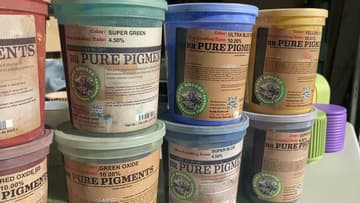
Three families do this job. Oxides are where most people should start, because they are cheap, forgiving, and your set time and workability barely change from an uncolored batch.
Tip: Buy small. Pigment goes a long way and a sample-size tub will outlast several projects while you work out which shades you actually reach for.
2. Weigh Your Cement and Find Your Pigment Ceiling
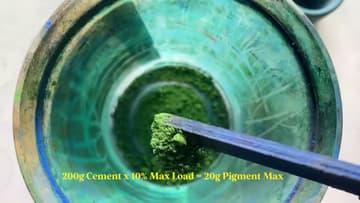
The max loading rate is a percentage of cement weight. Not sand, not water, not the whole batch.
Tip: White Portland is a specialty product and your local hardware store may only carry grey. Grey works fine.
3. Dissolve the Pigment Into Your Mix Water
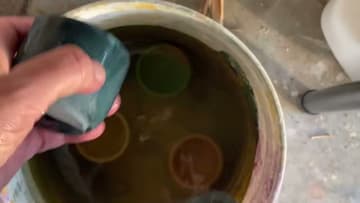
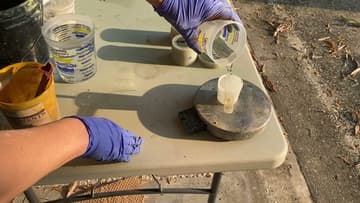
Pigment goes into the water first, before it meets anything dry. Measure out your one part water, pour it onto the powder, and add your water reducer at the same time.
4. Stir Until Nothing Is Left on the Bottom
Pigment settles. Tip the cup, chase the corners, and keep going until the liquid is uniform and there is no grit sitting underneath.
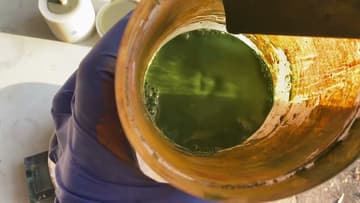
5. Fold the Colored Water Into Your Dry Mix
Now combine it the way you normally would. The mix here is three parts sand, two parts cement, one part water, with a little water reducer.
Tip: Aim for thick oatmeal. Too wet and you lose strength. Too dry and the mix will not settle into the detail of the mold.
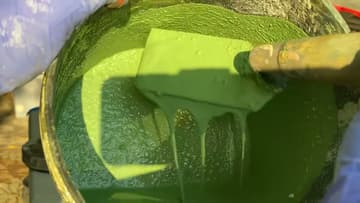
6. Check the Color and Decide If You Want More
This batch used about half the maximum and landed on a soft sage. You have room to keep going up to your ceiling if you want it deeper and more saturated.
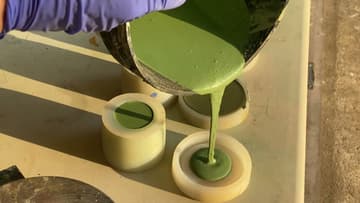
7. Blend Two Pigments for a Custom Shade
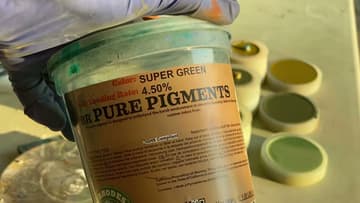
When the color you want is not in any single tub, mix. Yellow oxide and ultra blue at 10 grams each gives a yellow-leaning desert green.
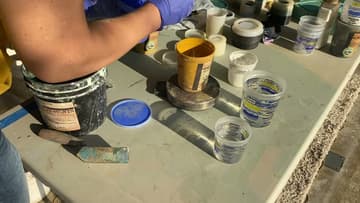
8. Switch to Synthetic for Bright Colors
Synthetics are what you reach for when you want saturation that oxides cannot reach. Purple is the obvious case, since violet barely exists in the natural pigment catalog.
Tip: Skip the acrylic paint and fabric dye.
9. Seal the Piece and Handle Efflorescence
Efflorescence is the ashy film that turns up on concrete that has been in contact with water. Darker pieces show it worst, and anything living outdoors unsealed will get there eventually.