How to Make an Embroidered Father's Day Card

By CraftingStepByStepPublished

Based on a video by Alice Marini’s Hand Embroidery | Gingers Leaves.

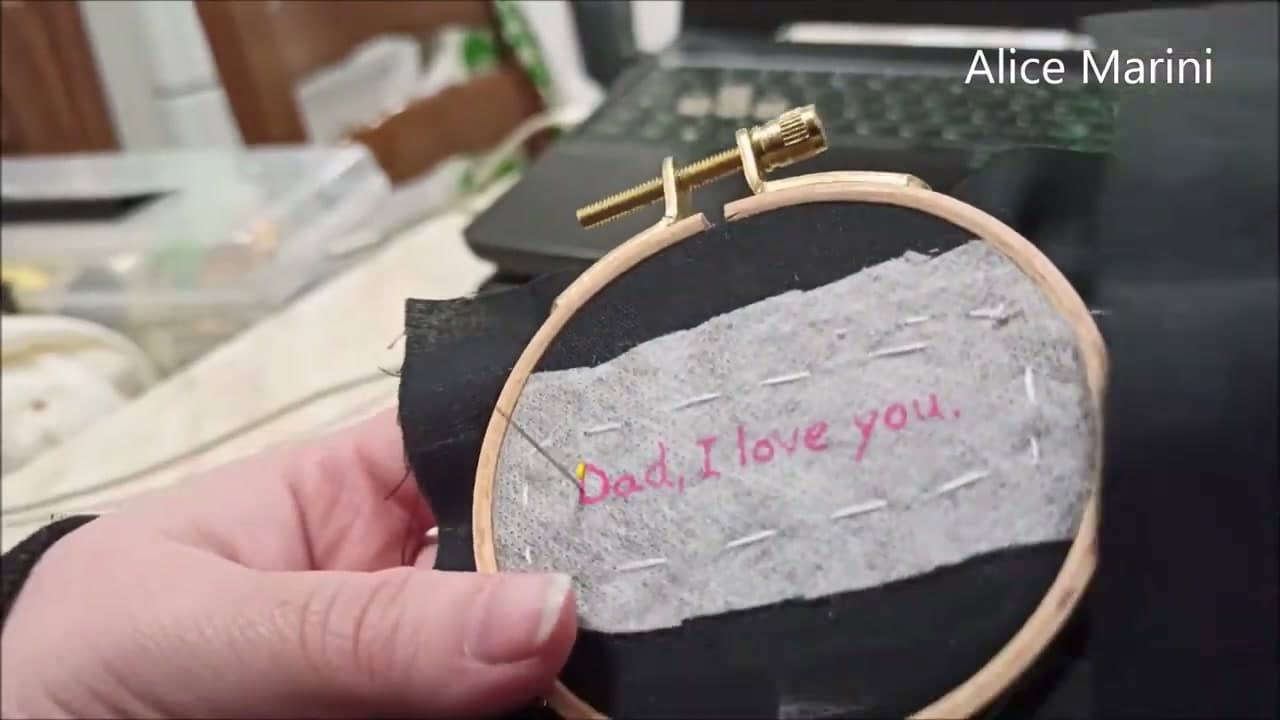
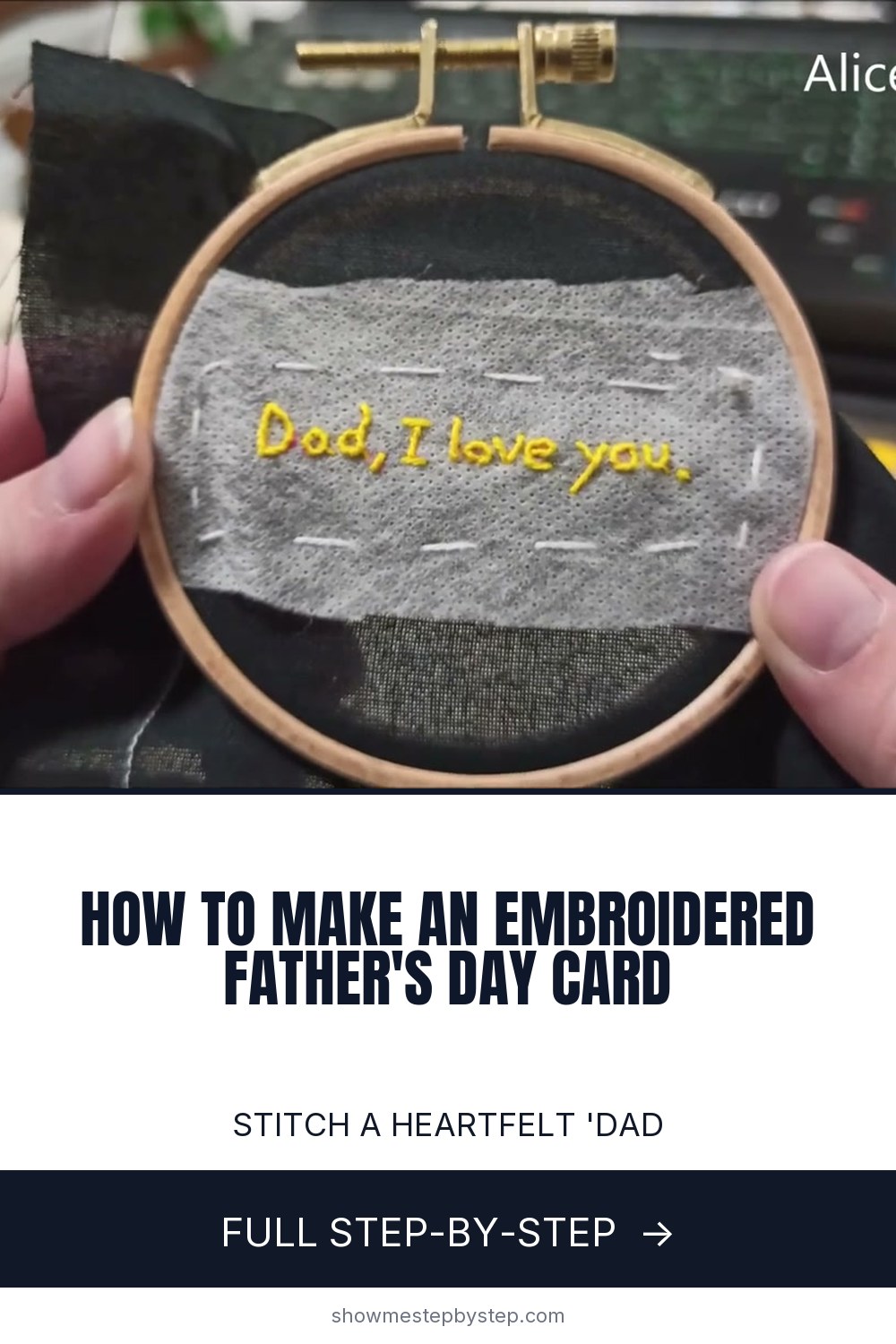
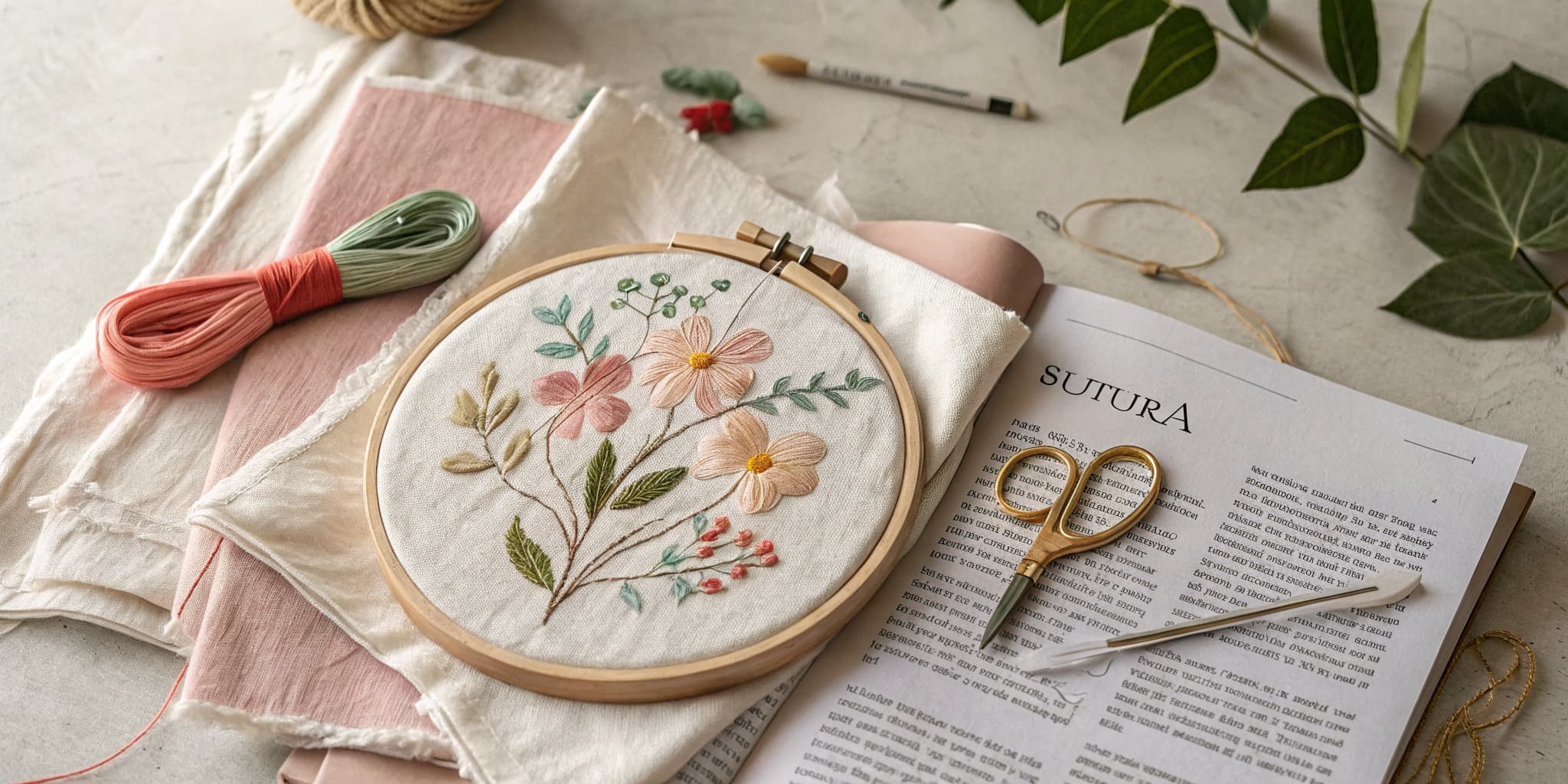
A handmade card beats a store-bought one every time, and an embroidered card feels like an heirloom. This Father's Day version stitches a quick 'Dad, I love you' onto a piece of grey linen, then mounts the finished embroidery into a card front.

The technique here is back stitch, the friendliest embroidery stitch for letters. One color of floss, one needle, one small hoop. If you have a quiet hour and a steady hand, you can finish this start to finish in an afternoon.

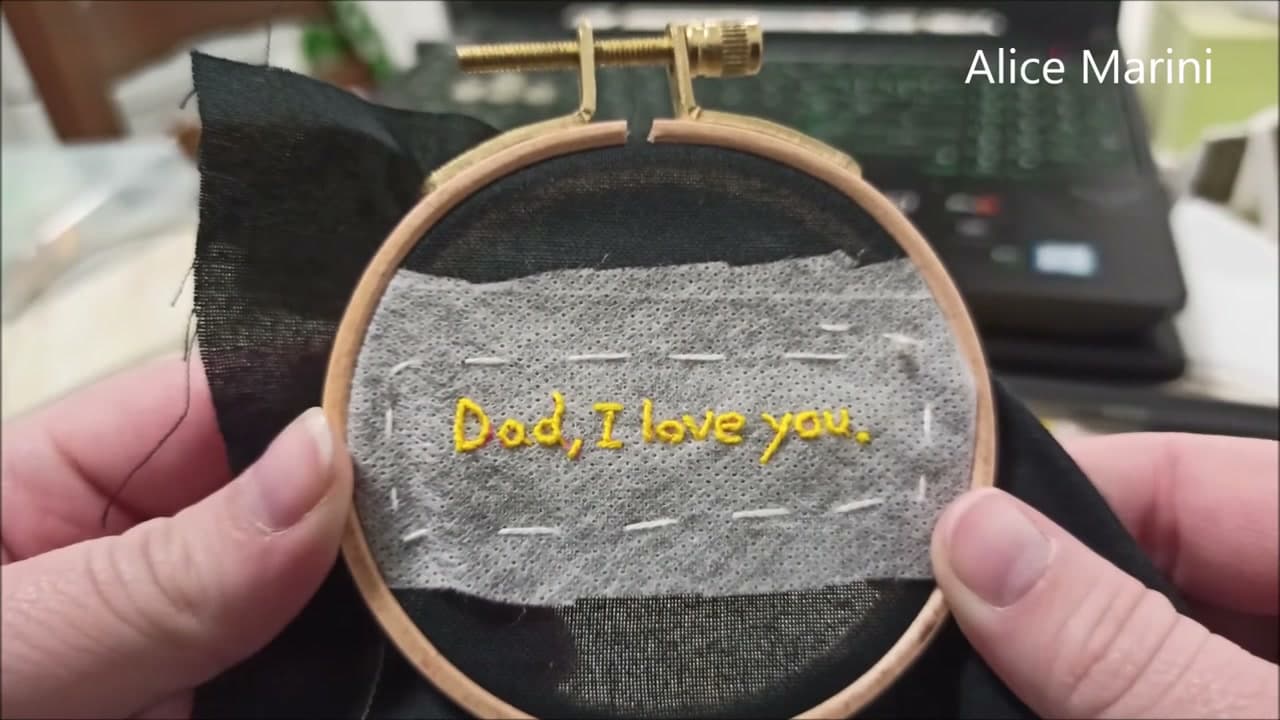
This walkthrough is built around Alice Marini's silent stitching demo. Watch her hands move, follow the steps below, and don't worry if your letters wobble a little. Hand-stitched letters always look hand-stitched, which is exactly the point.

Step-by-Step Guide

1

Step 1: Set Up the Hoop and Fabric

0:08
Step 1: Step 1: Set Up the Hoop and Fabric

Stretch a piece of grey linen or light cotton tight inside a 4-inch wooden embroidery hoop. Loosen the screw at the top, separate the two rings, lay the fabric over the inner ring, push the outer ring down on top, and tighten until the fabric is drum-tight.

Trim the excess fabric so it sits roughly flat against the back, or leave a generous border for tucking later. The fabric needs real tension - any slack and your stitches will pucker.

Tip

Pull the fabric edges evenly around the hoop as you tighten. Pulling from one side stretches it crooked.
2

Step 2: Transfer the 'Dad, I Love You' Text

0:32
Step 2: Step 2: Transfer the 'Dad, I Love You' Text

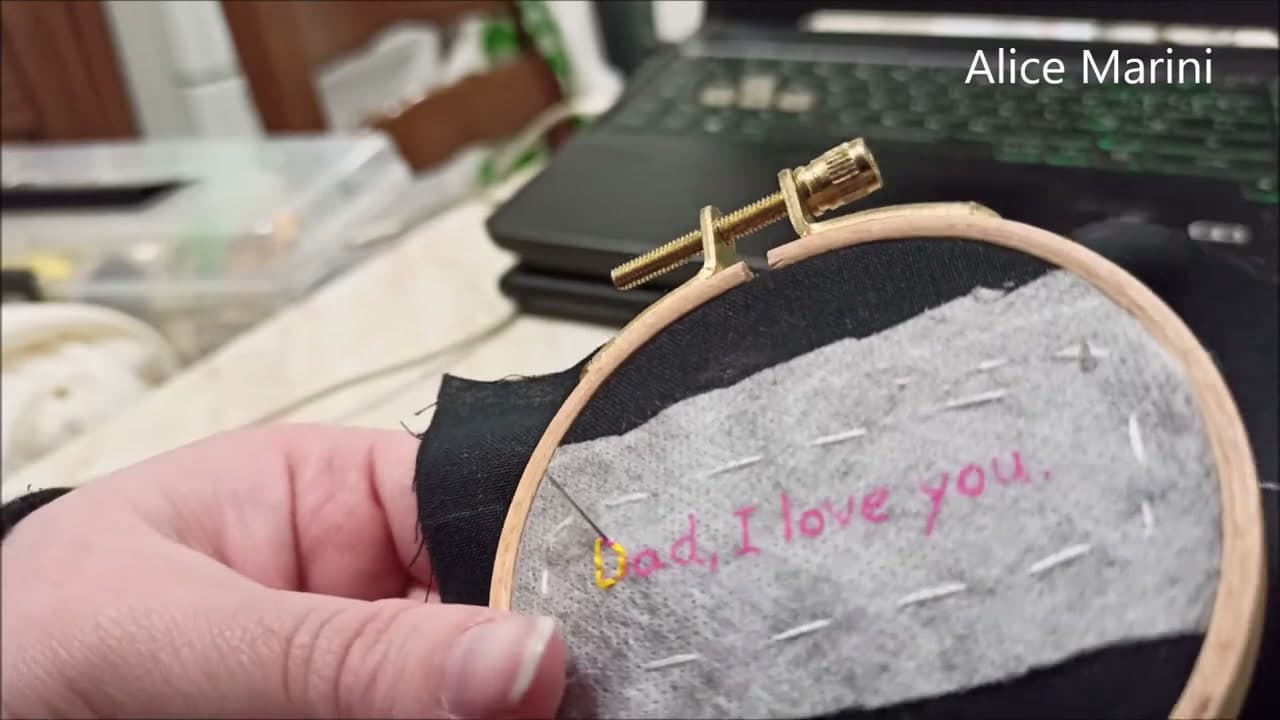
Write 'Dad, I love you' onto the stretched fabric in the center of the hoop. The fastest way is a water-soluble fabric pen and a steady hand - draw the phrase like you'd write it on paper.

If your handwriting isn't where you want it, print the phrase in a script font, slip transfer paper between the printout and the fabric, and trace the outline. Either way, keep the letters centered and the line about an inch tall.

Tip

Water-soluble pen marks rinse away with a damp cloth after stitching. Regular pens stay. Test on a scrap first.

3

Step 3: Thread the Needle with Three Strands

1:10
Step 3: Step 3: Thread the Needle with Three Strands

Cut about 18 inches of yellow embroidery floss. DMC six-strand floss is the standard, and for letters this size you only want three of the six strands.

Separate three strands from the bundle, thread them through the eye of an embroidery needle, and tie a small knot at the long end so the very first stitch holds against the back of the fabric.

Tip

Three strands gives a soft, readable line. Six is too thick for small letters and looks lumpy.

4

Step 4: Start the First Letter with a Back Stitch

2:10
Step 4: Step 4: Start the First Letter with a Back Stitch

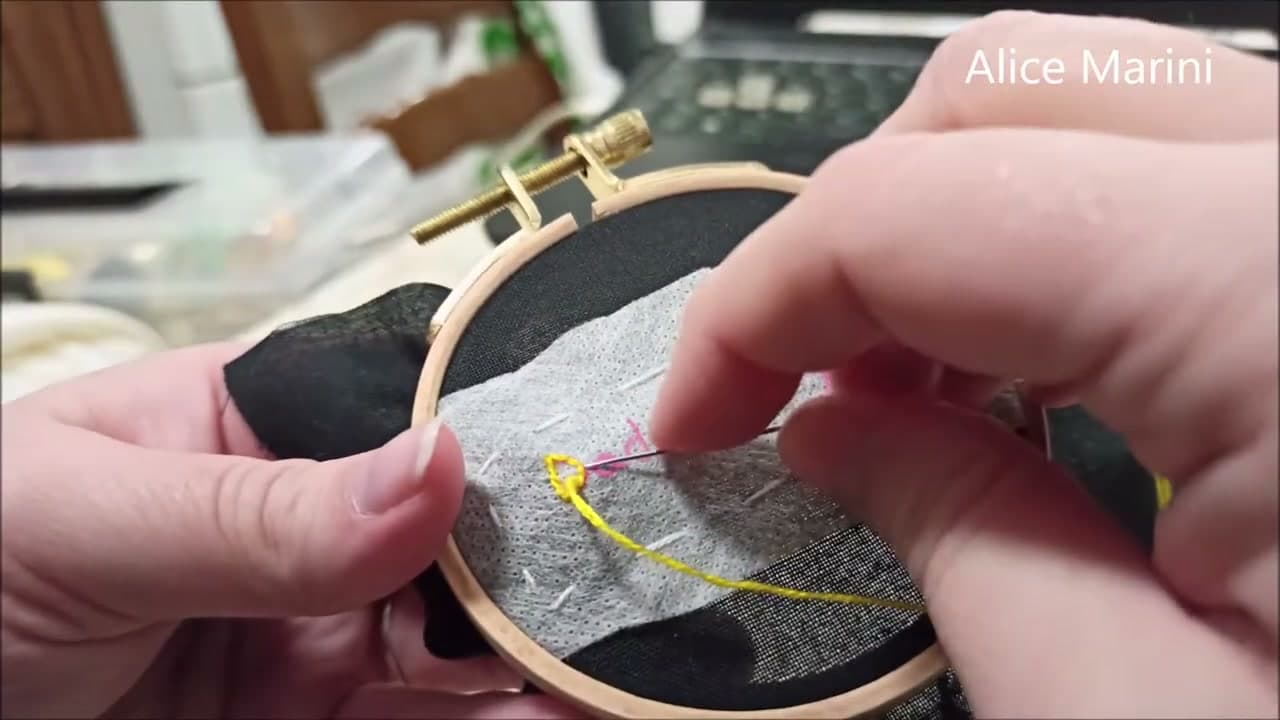
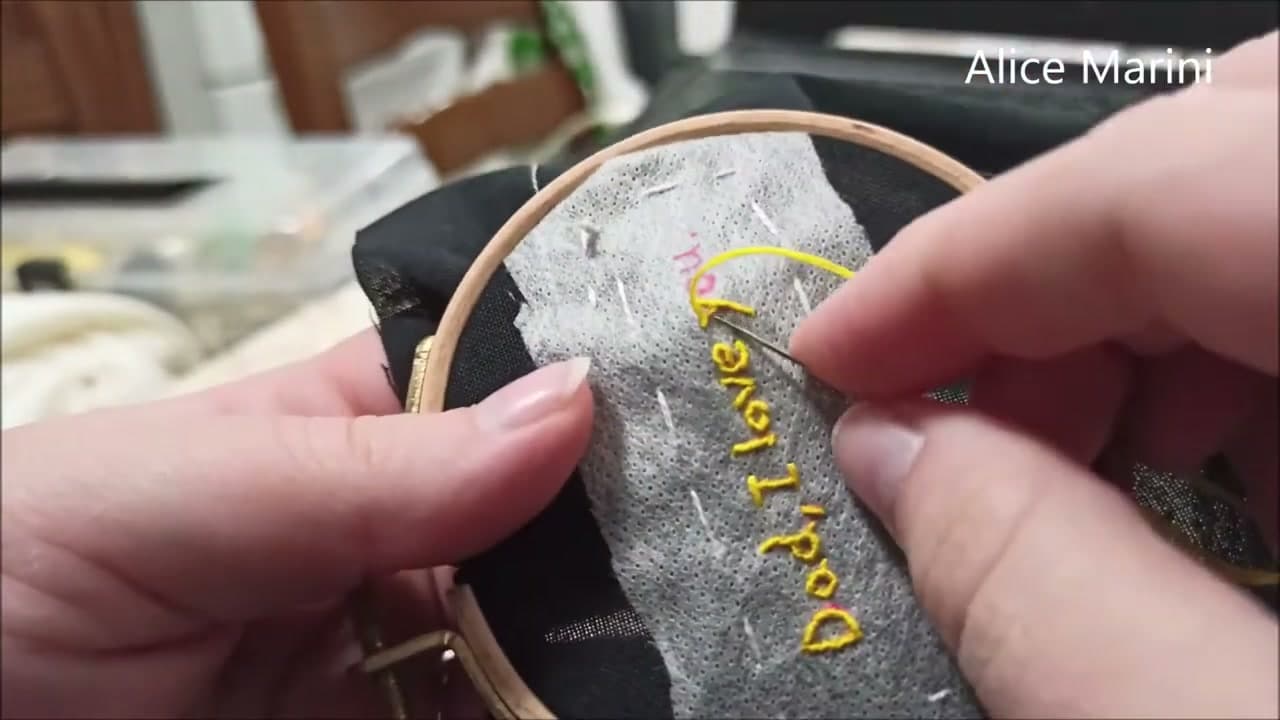
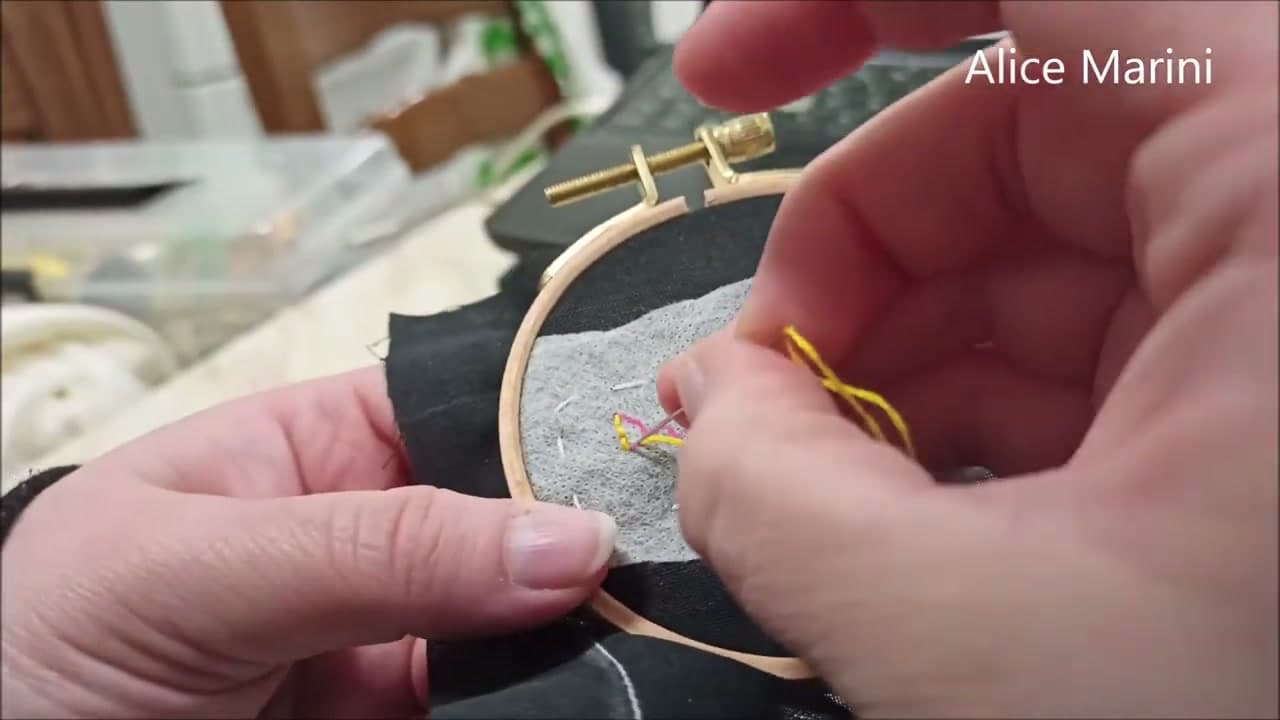
Bring the needle up through the back of the fabric at the very start of the 'D'. Take a small forward stitch along your drawn line - about a quarter inch - and push the needle back down through the fabric.

For the next stitch, come up one stitch length ahead and go back down where the previous stitch ended. Every new stitch goes backwards into the end of the last one. That's the back stitch, and it's what makes the line read continuous.

Tip

Keep your stitch length consistent. Tiny stitches read neat; long ones look loose and uneven on curves.

5

Step 5: Work Along Each Letter One Stitch at a Time

5:10
Step 5: Step 5: Work Along Each Letter One Stitch at a Time

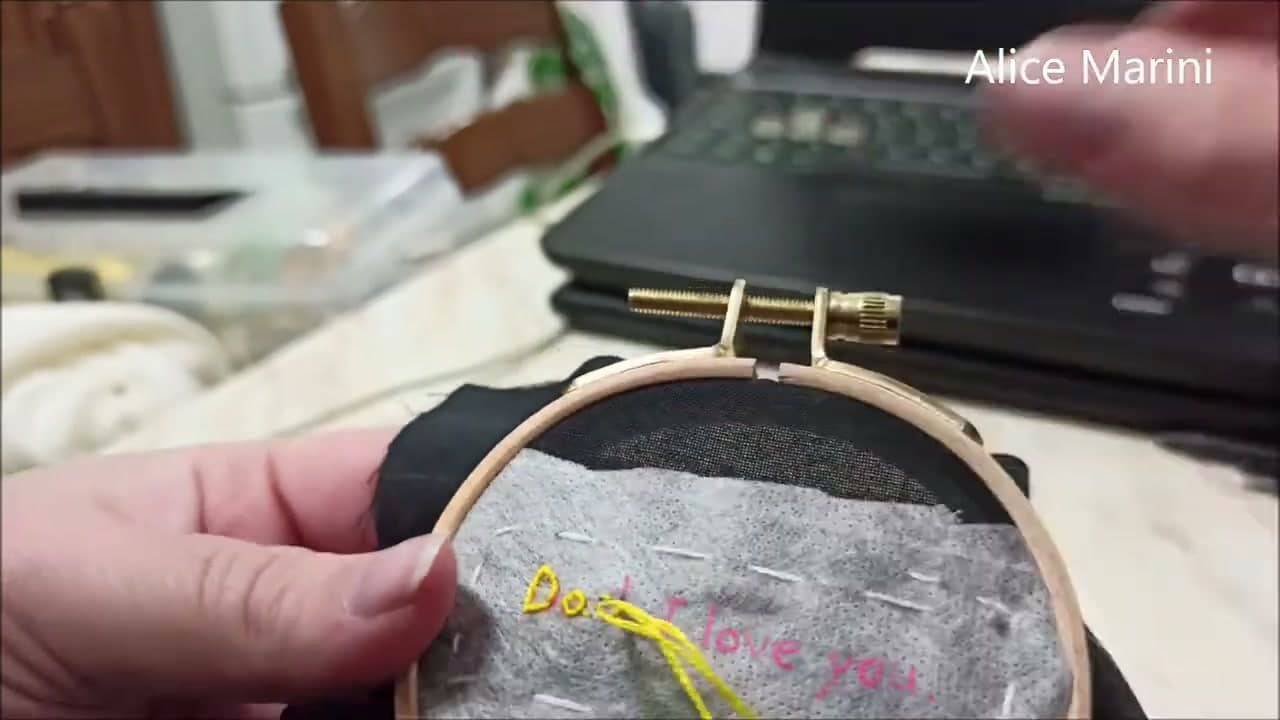
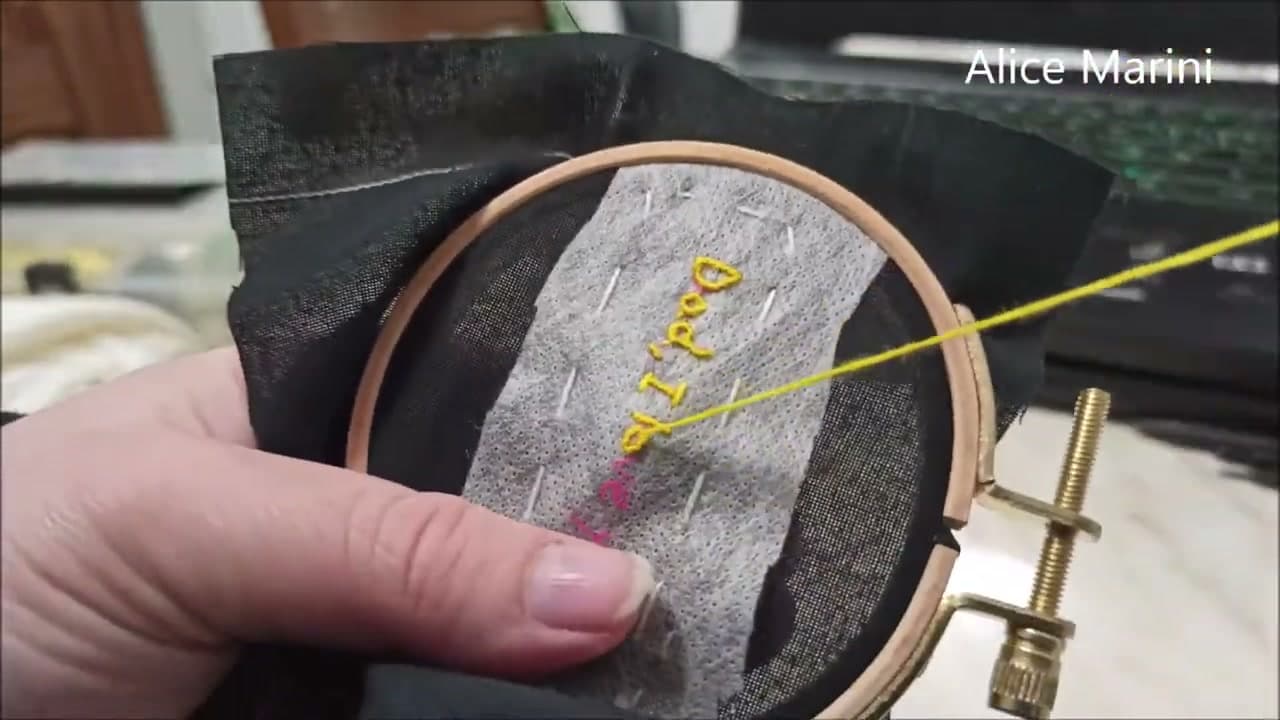
Follow the curve of each letter with short back stitches. On tight curves like the bowl of the 'D' or the loops in 'love', shorten your stitches so the line bends smoothly instead of going faceted.

Take your time. This is the part where most beginners rush and end up with wobbly letters. Stop, breathe, and look at where the next stitch needs to land before you put the needle in.

Tip

If a stitch looks wrong, pull it out before adding more. Fixing one stitch is easy; ripping back six is a chore.

6

Step 6: Keep the Back of the Fabric Tidy

9:40
Step 6: Step 6: Keep the Back of the Fabric Tidy

When you finish a letter or run out of floss, end the thread on the back by weaving it under two or three of your existing stitches, then snip it. Don't carry long strands of floss across the back to the next letter.

Why it matters: light grey linen is thin enough that long carries show through to the front as faint shadows. Clean ends keep your front looking crisp.

Tip

Flip the hoop over every few minutes to check the back. Catching a tangle early saves a re-do later.

Products used in this step

7

Step 7: Finish the Last Letter and Tie Off

14:00
Step 7: Step 7: Finish the Last Letter and Tie Off

Once you reach the period after 'you', bring the needle through to the back, weave it under your last few stitches twice, and snip the floss close. No knot needed - the woven tail holds.

Re-tighten the hoop screw so the fabric is fully taut again. Stitching loosens the tension a little, and a final tighten makes the finished piece look crisp.

Tip

If you used water-soluble pen, dab the visible pen lines now with a damp cotton swab. They disappear in seconds.

8

Step 8: Mount the Embroidery in a Father's Day Card

17:50
Step 8: Step 8: Mount the Embroidery in a Father's Day Card

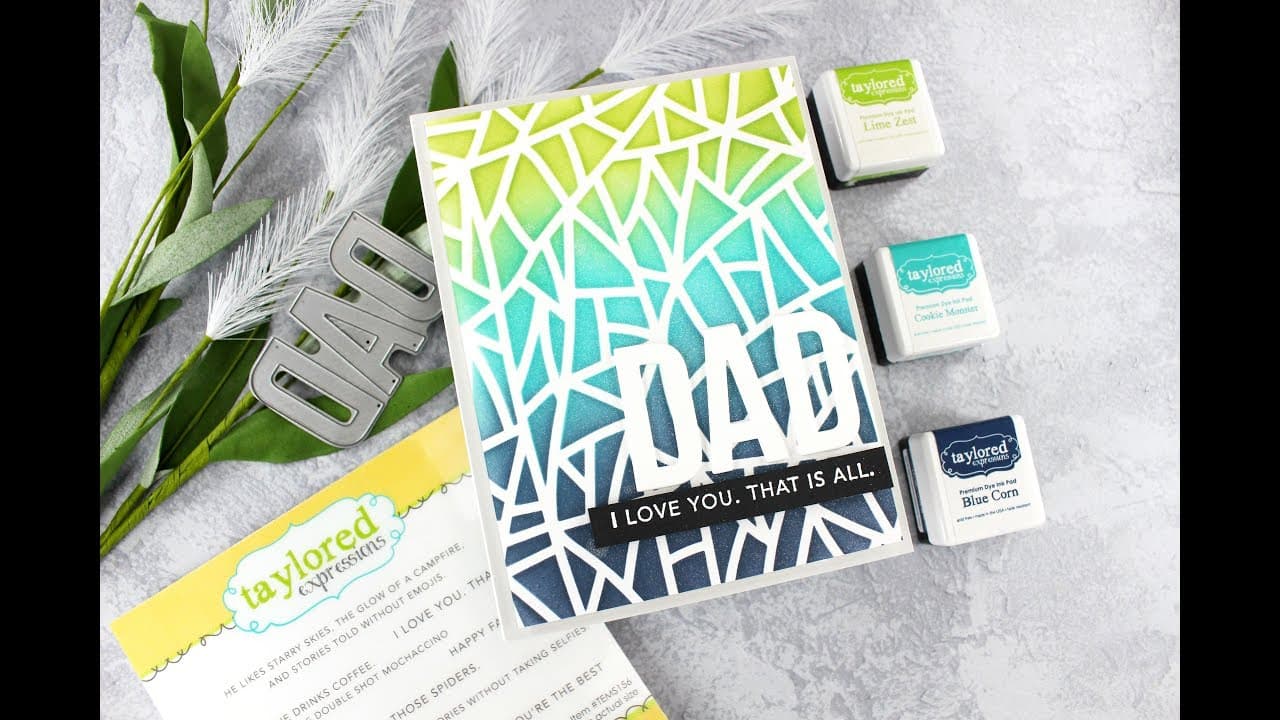
Now turn the finished embroidery into a card. The simplest finish: trim the fabric into a circle slightly larger than the window in a pre-cut card blank, then glue the fabric behind the cut-out so the embroidery shows through the window.

For a gift-style version, leave the embroidery stretched in the hoop, trim the back fabric flush with the hoop, glue a backing felt over the back to hide the stitches, and tie a ribbon at the top. Hand-deliver with the card folded around it.

Tip

If the card window is bigger than your embroidered area, mount the fabric onto a piece of contrasting cardstock first so there's no awkward gap.

Products Used

☐ The Checklist

How to Make an Embroidered Father's Day Card

Tools
4
Materials
5
Steps
8
Video
18 min

Your Guide

Alice Marini’s Hand Embroidery | Gingers Leaves

As an Amazon Associate we earn from qualifying purchases. Links on this page may be affiliate links - clicking them and buying doesn't change your price, but helps support ShowMeStepByStep.

Tags

What's next

Weekly Digest

Liked this card making tutorial?

Pick the categories you want to hear about. Weekly digest of new step-by-step tutorials. No spam, easy unsubscribe.

Send me tutorials about

We only email about new tutorials. Easy unsubscribe anytime.